Trump approves lower fuel economy standards through 2031, reversing Biden-era EV policy
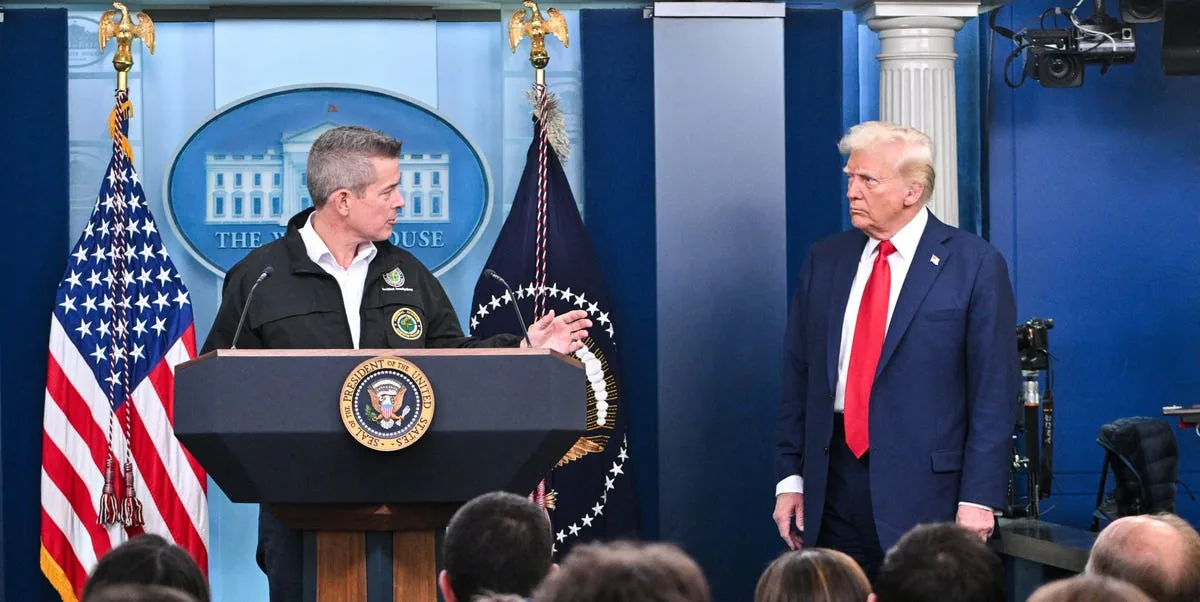
On September 27, US officials announced the Transportation Department will finalize on Monday a rule significantly lowering automotive fuel economy standards through 2031, reversing Biden-era policies that pushed automakers toward electric vehicles. President Trump stated he approved the new standards, claiming they will lower new vehicle prices. Transportation Secretary Sean Duffy called it a major victory for American autoworkers. The department's own estimates indicate the rule will reduce upfront costs but increase fuel consumption and carbon dioxide emissions over coming decades.
 Reference image
Editorial responsibility
- No named human review is recorded for this page.
- Reports are grouped by semantic similarity and deterministic rules. Language models may assist titles, summaries, translation and cross-source analysis; the page reads the event directly, while its address stays stable when the title changes.
- Summary covers the current reports
Cross-source coverage
Common ground
- Both agree the rollback of fuel economy standards is a short-sighted policy that prioritizes short-term savings over long-term costs.
- Both agree the policy sends a damaging signal to capital markets, freezing investment in EV technology and hurting American competitiveness.
- Both agree the used car market is an overlooked issue—slowing fleet turnover keeps older, dirtier, and less safe vehicles on the road longer.
- Both agree the regulatory framework is rigged in favor of trucks and SUVs, with loopholes and stagnant gas taxes shaping consumer choice.
Points of contention
- Western Agent calls the rollback 'climate arson' and 'industrial suicide,' while Neutral Agent says it's more like negligence and a self-inflicted wound, not a catastrophe.
- Western Agent argues consumer preference for trucks is manufactured by regulation and advertising, while Neutral Agent says it's genuine revealed preference at current gas prices.
- Neutral Agent raises a safety trade-off—lighter cars can be deadlier in crashes—but Western Agent counters that the rollback encourages heavier, more dangerous vehicles that kill more pedestrians and other drivers.
Blind spots
- Neither fully addressed how the rollback affects lower-income households, who may be stuck with older, less efficient cars for longer.
- Both missed the impact on public health from increased air pollution, especially in urban areas near highways.
- The debate didn't consider how state-level policies, like California's stricter standards, might partially offset the rollback's effects.
WorldAttention’s read
This rollback is a strategic blunder, not a crime. It's moderately bad for emissions and safety, but significantly bad for American competitiveness because it kills investment certainty. The real damage is structural: automakers will slow R&D, and the U.S. risks falling behind China and Europe in the global auto market. While consumer choice is partly shaped by a rigged system, the policy's main failure is its short-sightedness—trading long-term progress for short-term political favors. The honest debate isn't about whether it's good or bad, but how bad, and the answer is: bad enough to hurt, but not destroy, the future.
Reporting timeline
US to Lower Fuel Economy Standards, Reversing Biden-Era EV Push, Officials Say
On September 27, US officials announced that the Department of Transportation will finalize on Monday a rule significantly lowering automotive fuel economy standards, effective through 2031. This action reverses the Biden administration's policy that encouraged automakers to produce more electric vehicles. President Donald Trump stated he has approved the new fuel economy standards for cars and trucks, claiming the regulation will reduce new vehicle prices. Transportation Secretary Sean Duffy declared the move a major victory for American autoworkers. However, the Transportation Department's own estimates indicate that while the new standards will lower upfront vehicle costs, they will lead to increased fuel consumption and higher carbon dioxide emissions over the coming decades.
Read sourceUS to Finalize Rollback of Fuel Economy Standards, Reversing Biden-Era EV Policy
U.S. officials announced on Saturday that the Transportation Department will finalize on Monday a rule significantly lowering automotive fuel economy standards, applicable through 2031. This move reverses the Biden administration's policy that pushed automakers to produce more electric vehicles. President Trump stated he has approved the new standards for cars and trucks, claiming they will lower new vehicle prices. Transportation Secretary Sean Duffy called the decision 'a major victory' for American autoworkers. According to the Transportation Department's own estimates, the new standards will reduce upfront vehicle costs but will lead to increased fuel consumption and carbon dioxide emissions over the coming decades.
Read sourceUS to Lower Fuel Economy Standards Through 2031, Reversing Biden-Era EV Policy
US officials announced on Saturday that the Transportation Department will finalize on Monday a rule significantly reducing automobile fuel economy standards, applicable through 2031. This move reverses the Biden administration's policy of pushing automakers to produce more electric vehicles. President Trump stated he has approved the new fuel economy standards for cars and trucks, claiming the new rules will lower new car prices. Transportation Secretary Sean Duffy declared that American auto workers will achieve a major victory on Monday. According to the Transportation Department's own estimates, the new standards will reduce the cost of new vehicles but will lead to increased fuel consumption and carbon dioxide emissions over the coming decades.
Read sourceShow 2 older updatesHide older updates
Trump approves new fuel economy standards, ending Biden-era electric vehicle mandate
President Donald Trump announced he has approved new fuel economy standards that effectively end the Biden administration's electric vehicle (EV) mandate. The decision rolls back stricter fuel economy rules implemented under the previous administration, which were designed to accelerate the transition to electric vehicles. Trump stated that the new standards will lead to lower car prices for consumers. The announcement was covered by multiple news outlets including Fox Business, Politico, Yahoo, Seeking Alpha, and CNBC, indicating broad media attention. The policy change represents a significant shift in U.S. automotive regulation, moving away from the previous administration's focus on promoting electric vehicles and stricter emissions standards. Trump's action is framed as ending what he characterized as an EV mandate, though the Biden rules were fuel economy standards that effectively required automakers to sell more electric vehicles to meet compliance targets.
Read sourceTrump approves new fuel economy standards, rolling back Biden-era rules and ending EV mandate
President Donald Trump announced he has approved new fuel economy standards that roll back regulations implemented during the Biden administration. Multiple news outlets report that the new rules effectively end what Trump and his administration characterize as a Biden-era electric vehicle (EV) mandate. The policy change is expected to lower fuel economy requirements for automakers. Trump stated that the new standards will lead to lower car prices for consumers. The decision represents a significant shift in U.S. automotive and environmental policy, reversing the previous administration's push for stricter fuel efficiency and accelerated EV adoption. The announcement was covered by CNBC, Fox Business, Politico, Yahoo, and Seeking Alpha, among others.
Read source