UBS: Market overprices October Fed rate hike; sees one final move in December
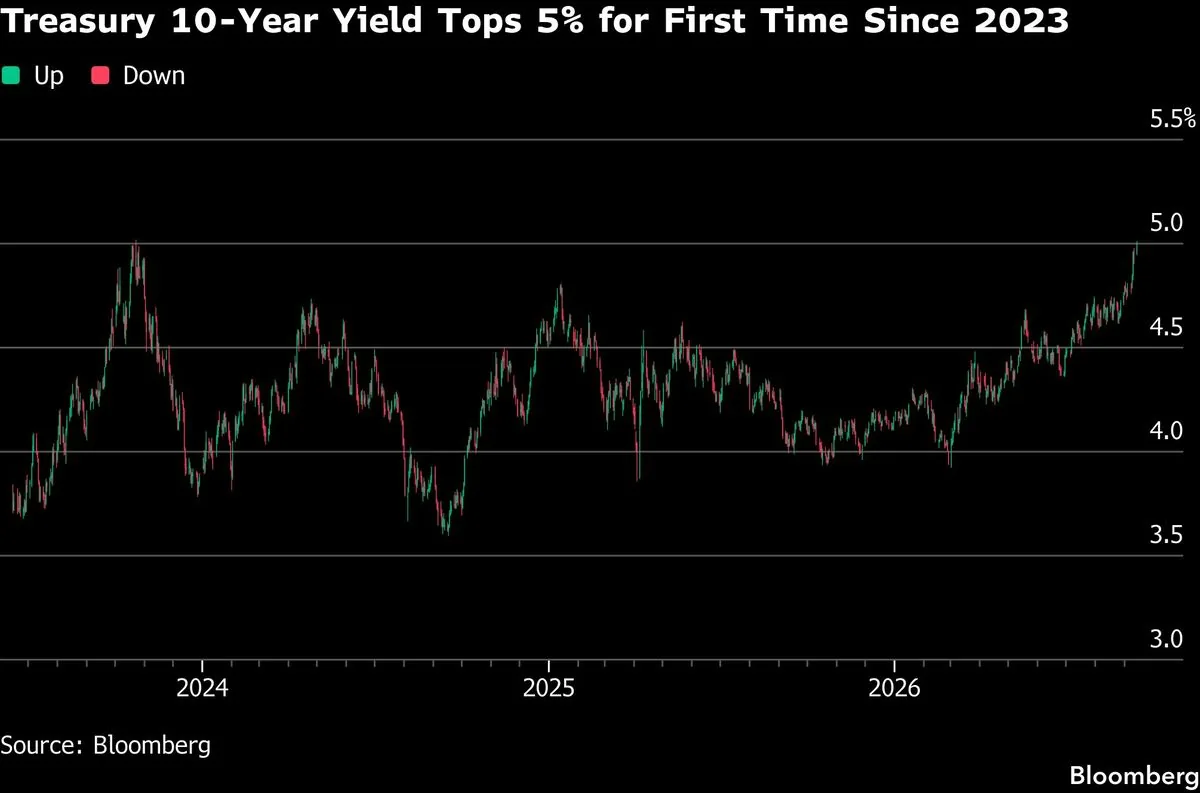
UBS argues market pricing for a Federal Reserve rate hike in October is overly aggressive, with implied probability at 70%. The bank expects one final rate hike in December followed by a pause, citing an expected 0.2 percentage point downward revision to core PCE inflation and favorable base effects in early 2025. Despite strong PMI data and hawkish Fed rhetoric, UBS sees fundamentals not supporting consecutive rate increases. The 10-year Treasury yield surged above 5.1%, highest since 2007, while the S&P 500 fell 0.8%.
 Illustration
Editorial responsibility
- No named human review is recorded for this page.
- Reports are grouped by semantic similarity and deterministic rules. Language models may assist titles, summaries, translation and cross-source analysis; the page reads the event directly, while its address stays stable when the title changes.
- Summary covers the current reports
Cross-source coverage
Common ground
- Both agents agree that the Fed's credibility is a major factor, with Powell unlikely to pivot based on a single data revision due to past mistakes.
- Both acknowledge that the 5.1% 10-year yield is a significant signal from the bond market, though they disagree on what it means.
- Both agree that UBS's thesis is conditional and fragile, relying on multiple factors aligning perfectly.
Points of contention
- Neutral Agent sees the falling quits rate as a reliable leading indicator for wage cooling, while Western Agent dismisses it as noisy and less relevant in a post-pandemic economy.
- Neutral Agent argues the two-speed economy (services booming, manufacturing contracting) gives the Fed reason to pause, but Western Agent says services dominate and the Fed must focus on aggregate demand.
- Western Agent believes the Fed will keep hiking due to political pressure and past reputational scars, while Neutral Agent thinks the Fed could pause if labor and inflation data cool further.
Blind spots
- Both agents overlook how fiscal dominance—massive Treasury issuance—could force the Fed to keep rates high regardless of economic data.
- Neither fully addresses the impact of remote work and structural labor market changes on traditional indicators like the quits rate.
- The debate misses the possibility that the Fed might hold rates steady for an extended period without hiking or cutting, which could satisfy both sides partially.
WorldAttention’s read
After a thorough debate, both agents agree that UBS's call for a Fed pause is plausible but fragile, resting on a narrow set of conditions like a PCE revision and labor cooling. The main split is over how much weight to give leading indicators like the quits rate versus current data like wage growth and the services PMI. Western Agent argues the Fed's institutional memory and bond market signals make a dovish pivot unlikely, while Neutral Agent sees room for a pause if the two-speed economy and fiscal constraints come into play. Ultimately, both lean toward 'higher for longer' as the path of least resistance, with the real question being whether the economy or the Fed blinks first—likely not until 2025.
Reporting timeline
UBS Says Market Overprices October Rate Hike, Fed Unlikely to Hike Consecutively
UBS Chief Investment Office argues that market pricing for a Federal Reserve rate hike in October is too aggressive, and the actual tightening is likely to be less than implied. The bank's base case is for one final rate hike in December, followed by a hold. Key factors include an expected downward revision of 0.2 percentage points to core PCE inflation in the annual revision by the Bureau of Economic Analysis, combined with favorable base effects in the first half of next year, which should weaken the case for consecutive rate increases. Despite recent hawkish Fed rhetoric, UBS sees the market's pricing as exceeding fundamental support. On the positive side, strong U.S. PMI data supports corporate earnings, with UBS forecasting 25% S&P 500 earnings growth this year. The bank maintains a constructive view on fixed income, citing attractive yields, and sees gold's recent drop below $4,300/oz as a buying opportunity, with a 12-month target of $5,400/oz. In Europe, UBS notes widening French-German bond spreads due to French fiscal concerns but does not see an imminent crisis.
Read sourceUBS Says Market Overpricing October Rate Hike, Core PCE Revision May Limit Fed Tightening
UBS Chief Investment Office argues that market pricing for a Federal Reserve rate hike in October is overly aggressive, citing an expected downward revision of 0.2 percentage points to core PCE inflation via the Bureau of Economic Analysis annual update and favorable base effects in early 2025. The bank's base case is one final rate hike in December followed by a hold through 2027. Despite recent hawkish Fed rhetoric, UBS believes the scope for consecutive rate increases is diminishing. On the positive side, strong U.S. composite PMI data (58.4 in September) supports corporate earnings, with UBS forecasting 25% S&P 500 earnings growth this year and 14% in 2027. The bank maintains an attractive rating on fixed income, seeing structural opportunities at higher yields. In Europe, the France-Germany bond spread widened to 110 basis points, the highest since 2012, driven by French fiscal concerns. UBS remains positive on eurozone equities. For gold, short-term pressure from rate expectations is expected, but UBS sees medium-term support from central bank buying and geopolitical uncertainty, forecasting a price of $5,400/oz by September 2027.
Read sourceUBS Says Market Overprices October Rate Hike; Core PCE Revision May Deter Fed
UBS Chief Investment Officer Mark Haefele argues that market pricing for Federal Reserve tightening is overly aggressive. The report states that the probability of an October rate hike, which jumped to 70% in futures markets, is likely overblown. UBS's base case is for one final rate hike in December, followed by a pause. Key factors supporting this view include an expected downward revision of 0.2 percentage points to core PCE inflation by the Bureau of Economic Analysis and favorable base effects in the first half of next year, which should weaken the case for consecutive rate increases. Despite recent strong economic data and hawkish Fed rhetoric, UBS believes the fundamentals do not support the current level of tightening priced in by markets. The report also covers positive implications for equities from resilient PMI data, structural opportunities in fixed income due to higher yields, and a constructive long-term outlook for gold despite short-term pressure from a strong dollar and rate expectations.
Read sourceShow 2 older updatesHide older updates
UBS Says Market Overprices October Rate Hike; Core PCE Revision May Curb Fed Tightening
UBS Chief Investment Officer Mark Haefele argues that market pricing for Federal Reserve tightening is overly aggressive, with the implied probability of an October rate hike jumping to 70%. The bank's base case is for one more rate hike in December, followed by a pause. UBS cites two key factors that reduce the need for consecutive rate hikes: an expected downward revision of 0.2 percentage points to core PCE inflation in the upcoming annual revision by the Bureau of Economic Analysis, and favorable base effects in the first half of next year. Despite recent strong economic data, including a PMI flash reading of 58.4, UBS sees this as supportive for corporate earnings, forecasting 25% S&P 500 earnings growth this year. The bank maintains a constructive view on fixed income, seeing opportunities in short-duration bonds and high-quality investment-grade credit. For gold, UBS expects short-term volatility due to hawkish rate expectations but remains positive over a 12-month horizon, citing central bank buying and geopolitical uncertainty, with a price target of $5,400/oz by September 2027.
UBS Says Market Overprices October Rate Hike; Core PCE Revision May Deter Fed
UBS Chief Investment Officer Mark Haefele argues that market pricing for a Federal Reserve rate hike in October is excessive, as the actual tightening path is likely less aggressive than implied by futures. The report cites an expected downward revision of 0.2 percentage points to core PCE inflation in the upcoming annual update by the Bureau of Economic Analysis, combined with favorable base effects in the first half of next year, which together reduce the need for consecutive rate increases. UBS maintains a base case of one more rate hike in December followed by a pause. Despite recent strong economic data, including a September PMI flash reading of 58.4, UBS sees this as supportive for corporate earnings, forecasting 25% S&P 500 earnings growth this year and 14% next year. The firm also views higher bond yields as creating structural opportunities in fixed income, particularly in short-duration and high-quality investment-grade credit. On gold, UBS expects short-term volatility but a constructive 12-month outlook, with a price target of $5,400/oz by September 2027. In Europe, the widening French-German bond spread is attributed to French fiscal concerns rather than global yield trends.