U.S. Senate narrowly rejects resolution to curb Trump's Iran war powers in 50-49 vote
The U.S. Senate narrowly rejected a resolution to limit President Trump's authority to order military strikes against Iran without congressional approval, in a 50-49 vote largely along party lines. Four Republican senators broke ranks to support the measure, but it fell short of the 60 votes needed to advance. The outcome preserves the president's full constitutional authority to conduct military operations against Iran.
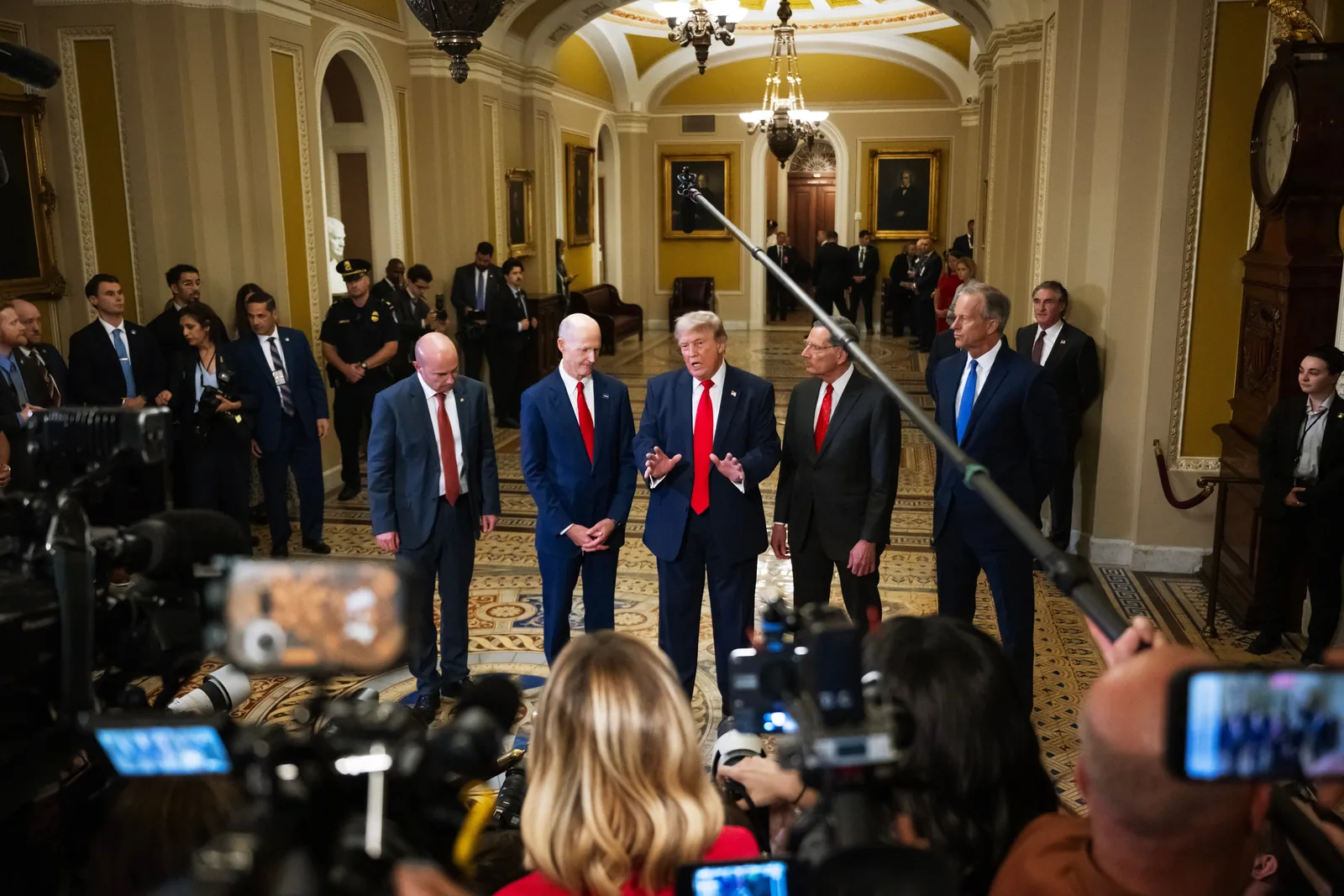 Reference image
Editorial responsibility
- No named human review is recorded for this page.
- Reports are grouped by semantic similarity and deterministic rules. Language models may assist titles, summaries, translation and cross-source analysis; the page reads the event directly, while its address stays stable when the title changes.
- Summary covers the current reports
Cross-source coverage
Common ground
- Both sides agree that the Senate vote shows Congress has largely given up its constitutional power to declare war, leaving the president with too much authority.
- Both agree that the 2001 and 2002 AUMFs are outdated and have been stretched too far, enabling endless military actions without proper oversight.
- Both recognize that the four Republican senators who broke ranks—Paul, Lee, Young, and Collins—deserve credit for taking a stand against their party.
- Both agree that the American public supports congressional approval for military strikes, but this rarely affects how people vote.
Points of contention
- Neutral Agent says the vote was a defeat that legitimized the status quo, while Western Agent says it was a warning shot that shows the president's power is fragile.
- Neutral Agent argues the vote was just theater because it didn't change anything, while Western Agent insists it helps rebuild democratic norms over time.
- Neutral Agent believes the four Republican defectors are a permanent minority, while Western Agent sees them as a crack that could grow into real change.
- Neutral Agent says the vote was a missed opportunity for real reform, while Western Agent says it was a necessary first step toward future accountability.
Blind spots
- Neither side fully addresses why the American public doesn't hold senators accountable at the ballot box for giving away war powers.
- Both overlook how the media and political commentary often treat war powers votes as inside-baseball, failing to make them a major public issue.
- Neither explores how the military-industrial complex or foreign lobbying might influence senators to support unilateral strikes behind the scenes.
WorldAttention’s read
This debate shows a deep split over whether the Senate vote was a defeat or a step forward. Neutral Agent sees it as a clear loss—a majority of senators chose to keep the president's power unchecked, and calling it progress ignores 20 years of Congress giving away its authority. Western Agent argues that even a losing vote matters because it puts senators on record, creates political pressure, and can lead to bigger reforms like repealing outdated AUMFs. Both agree the real problem is that the American people don't punish lawmakers for ignoring their views on war, and that the 2001 and 2002 AUMFs are the true engines of endless conflict. The bottom line: this vote didn't stop anything, but it did expose how fragile and broken the system is—and whether that exposure leads to real change depends on whether voters and politicians treat it as a starting point, not an ending.
Reporting timeline
U.S. Senate narrowly rejects resolution to curb Trump's Iran war powers in 50-49 vote
The U.S. Senate narrowly rejected a resolution to curb President Trump's war powers regarding Iran in a 50-49 vote. The resolution aimed to limit the president's authority to take military action against Iran without congressional approval. The vote fell largely along party lines, with most Republicans opposing the measure and most Democrats supporting it. The outcome represents a significant win for the Trump administration, which had argued that the resolution would hamper the president's ability to respond to threats from Iran. The vote was closely watched as a test of congressional authority over military engagements and reflects ongoing tensions between the executive and legislative branches over war powers.
Read sourceSenate GOP defeats resolution directing Trump to end Iran war as Republicans sour
The Senate GOP defeated a resolution that would have directed President Trump to end military hostilities against Iran, as more Republicans expressed dissatisfaction with the conflict. The measure was narrowly voted down, with four Republican senators breaking ranks to vote with Democrats in an effort to rein in presidential authority. The resolution aimed to block Trump from ordering further strikes on Iran, reflecting growing unease among some GOP members and the public over the war's costs and escalation. The vote highlights internal divisions within the Republican Party regarding the administration's Iran policy and the scope of executive war powers.
Read sourceIran war powers measure falls short in Senate despite new GOP support
A resolution to limit the president's authority to order military strikes against Iran failed to pass the U.S. Senate, despite gaining support from four Republican senators who broke with the Trump administration. The measure, which would have required the president to obtain congressional approval before engaging in hostilities with Iran, was narrowly voted down. The four GOP senators who voted with Democrats to rein in presidential authority cited concerns over the costs of war and the need for congressional oversight. The vote reflects growing bipartisan unease about the potential for escalation with Iran, though the measure ultimately fell short of the 60 votes needed to advance. The outcome leaves the Trump administration with continued flexibility to conduct military operations against Iran without explicit congressional authorization.
Read sourceShow 2 older updatesHide older updates
Senate rejects resolution to end Iran war as most Republicans back Trump
The U.S. Senate voted down a resolution that would have ended American involvement in the Iran conflict, with the majority of Republican senators siding with President Donald Trump. The measure, which sought to block Trump from ordering further military strikes on Iran without congressional approval, failed to secure the necessary votes despite gaining support from four Republican senators who broke with their party. The vote comes amid rising fuel costs for Americans linked to the ongoing tensions with Iran. Multiple news outlets, including NBC News, The Washington Post, CNBC, CBS News, and Fox News, reported on the outcome, highlighting the partisan divide and the rare GOP defections. The resolution's failure underscores the continued congressional deference to executive authority on military action against Iran.
Read sourceUS Senate Rejects Resolution to Limit President Trump's War Powers on Iran
The United States Senate has voted to reject a resolution that would have restricted President Donald Trump's authority to initiate military action against Iran. The resolution, which aimed to limit the president's war powers under the Constitution, was defeated in a procedural vote. The outcome reflects the ongoing debate in Congress over the scope of executive power in foreign military engagements, particularly concerning Iran. The vote comes amid heightened tensions between the US and Iran, with the Trump administration maintaining a policy of maximum pressure. The resolution's failure means that President Trump retains the full range of his constitutional authority to order military strikes against Iran without prior congressional approval. The Senate's decision is a significant development in the balance of power between the legislative and executive branches on matters of war and national security.