U.S. Senate passes Protect College Sports Act in 77-22 bipartisan vote to overhaul college athletics
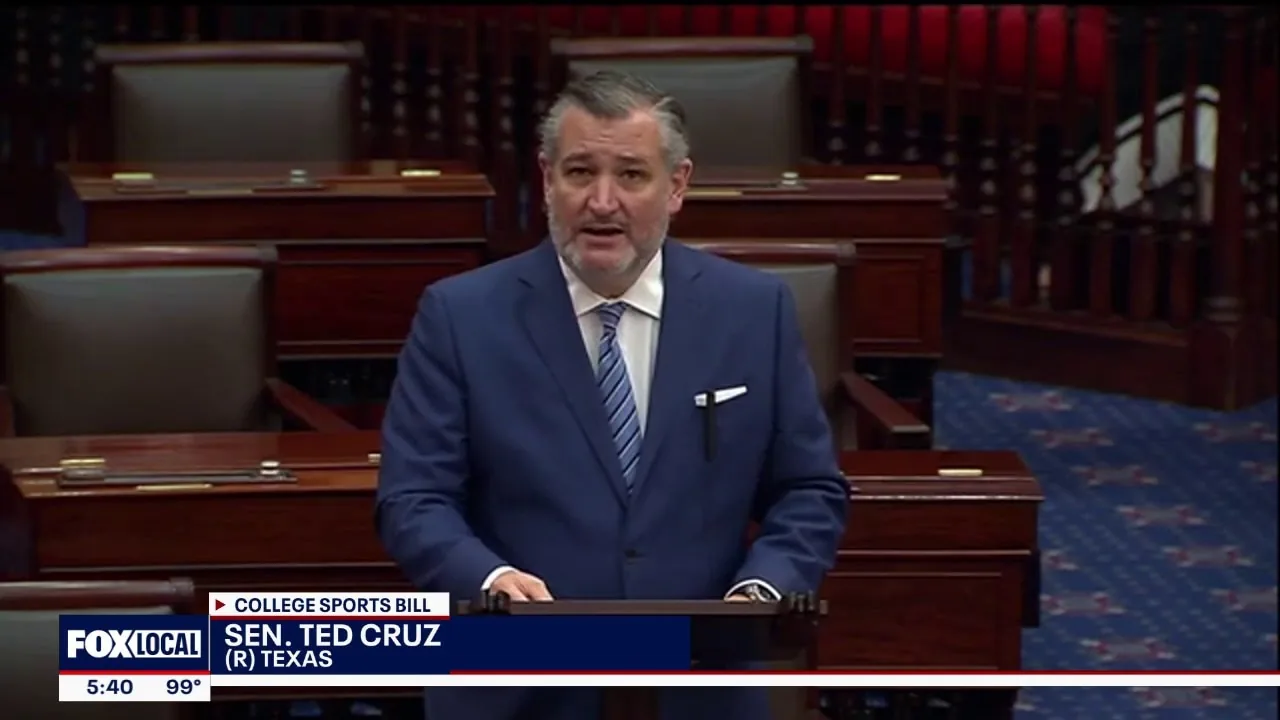
The U.S. Senate passed the bipartisan Protect College Sports Act with a 77-22 vote, creating the first federal framework for college athletics. The legislation addresses name, image, and likeness (NIL) deals, re-imposes transfer limits, and restores NCAA eligibility rules. Sponsored by Commerce Chairman Ted Cruz, the bill now moves to the House of Representatives, where its future is uncertain amid opposition from the Congressional Black Caucus and House Majority Leader Steve Scalise. President Trump expressed support for signing the bill by year-end.
 Reference image
Editorial responsibility
- No named human review is recorded for this page.
- Reports are grouped by semantic similarity and deterministic rules. Language models may assist titles, summaries, translation and cross-source analysis; the page reads the event directly, while its address stays stable when the title changes.
- Summary covers the current reports
Cross-source coverage
Common ground
- Both sides agree the bill is a power grab that protects institutional interests over athlete welfare.
- There is agreement that the bill's silence on health insurance and multi-year scholarships is a major failure.
- Both recognize that the bipartisan 77-22 vote is cynical and serves to protect the status quo.
- They agree that the transfer restrictions are a key problem, trapping athletes while coaches can leave freely.
Points of contention
- Western Agent argues the bill creates a de facto cap on NIL payments through enforcement, while Neutral Agent says the text explicitly prohibits dollar limits and only regulates pay-for-play.
- Western Agent claims athletes had real leverage in the unregulated NIL market, while Neutral Agent says only the top 1% benefited and most athletes got nothing but instability.
- Neutral Agent believes some regulation of NIL is necessary to stop fraud, while Western Agent sees any regulation as a return to the NCAA's old control system.
- Western Agent dismisses athlete division as manufactured by coaches, while Neutral Agent cites polling showing many mid-major athletes want structure.
Blind spots
- Neither side fully addresses how the bill affects athletes in non-revenue sports beyond transfer limits and scholarship budgets.
- The debate overlooks the role of boosters and collectives in the current system and how they might adapt to the new rules.
- Both miss the question of whether federal preemption of state NIL laws could actually help athletes by creating uniform standards.
- There is no discussion of how the bill's enforcement body would be funded or what recourse athletes have if it acts unfairly.
WorldAttention’s read
This bill is a bipartisan power grab that locks athletes into institutions with transfer limits and no guaranteed health insurance or multi-year scholarships, while creating a regulatory body stacked with university officials to oversee NIL deals. The core disagreement is whether the NIL regulation amounts to a hidden cap on earnings or just closes loopholes, but both sides agree the real damage is the transfer restrictions and the complete failure to provide basic athlete protections. The 77-22 vote shows both parties are more interested in controlling revenue than empowering the people who generate it.
Reporting timeline
Trump celebrates Senate passage of legislation to overhaul college sports
President Donald Trump celebrated the U.S. Senate's passage of the Protect College Sports Act, which aims to overhaul college athletics. The bill passed with a bipartisan vote of 77-22. The legislation addresses the governance and compensation structure of college sports, particularly in the wake of recent changes allowing student-athletes to profit from their name, image, and likeness (NIL). The New York Times notes that Congress is now seeking to restore the NCAA's authority, which had been diminished by court rulings and state laws. The Washington Post highlights Senator Ted Cruz's role as a bipartisan dealmaker in advancing the bill. The legislation now moves to the House of Representatives, where its future remains uncertain. The bill represents a significant federal intervention into the business of college sports, aiming to create a uniform national standard for athlete compensation and institutional regulations.
Read sourceU.S. Senate passes bipartisan Protect College Sports Act to overhaul industry amid 'chaos'
The U.S. Senate passed the bipartisan Protect College Sports Act with a 77-22 vote, aiming to bring structure to the college sports industry, which has been described as being in 'chaos'. The legislation seeks to overhaul the current system, addressing issues such as athlete compensation and governance. President Trump celebrated the Senate's passage of the bill. However, critics, including Joe Nocera of The Free Press, argue that the legislation is a loss for college athletes, as it may limit their rights and benefits. SMU coach Rhett Lashlee acknowledged the bill is not perfect but provides some needed structure. The bill now moves to the House of Representatives for consideration.
Read sourceSenate passes Protect College Sports Act in 77-22 bipartisan vote to regulate NIL deals
The United States Senate passed the Protect College Sports Act in a bipartisan 77-22 vote, advancing legislation aimed at restoring NCAA eligibility rules, re-imposing transfer limits, and regulating Name, Image, and Likeness (NIL) deals for college athletes. The bill now moves to the House of Representatives for further consideration. The vote reflects a rare moment of bipartisan agreement on the contentious issue of college athlete compensation and governance. The legislation seeks to create a federal standard for NIL agreements, which have been governed by a patchwork of state laws since the NCAA lifted its ban on athlete compensation. Supporters argue the bill will bring stability and fairness to college sports, while critics have raised concerns about federal overreach and restrictions on athlete rights. The outcome of the House vote remains uncertain, with potential amendments and political dynamics likely to shape the final version of the bill.
Read sourceShow 2 older updatesHide older updates
U.S. Senate passes bipartisan bill to overhaul college sports, limit player transfers
The U.S. Senate has passed a bipartisan bill to overhaul college sports, with a vote of 77-22 according to ESPN. The legislation, referred to as the Protect College Sports Act by some outlets, aims to rein in athlete payments and transfers, as reported by AP News. Politico, Bloomberg, and The New York Times also covered the passage, highlighting the bill's sweeping nature and its focus on limiting college player transfers. The bill represents a significant federal intervention into the governance of college athletics, addressing issues of athlete compensation and mobility that have been subjects of debate and legal challenges.
Read sourceSenate passes college sports bill, sending it to House with uncertain future
The U.S. Senate passed a sweeping bipartisan bill (77-22) to create the first federal framework for college athletics, addressing issues like NIL deals, transfer chaos, and rising costs. Sponsored by Commerce Chairman Ted Cruz and key cosponsors including Maria Cantwell, the bill aims to stabilize a system described as 'broken' by Senator Chris Coons. Several amendments were adopted, including one requiring disclosure of foreign funding over $600 and another raising the conference size cap to 20. However, the bill faces an uncertain path in the House, where the Congressional Black Caucus opposes it for not protecting Black athletes enough, and House Majority Leader Steve Scalise pushes for a version prohibiting employee status for athletes. President Trump has expressed support for signing the bill by year-end. Critics like Senators John Kennedy and Cory Booker argued the bill fails fans and athletes, with Booker calling it a 'money play.'