Turkey pledges military-technical aid to Saudi Arabia under Mecca defense pact after Houthi attacks
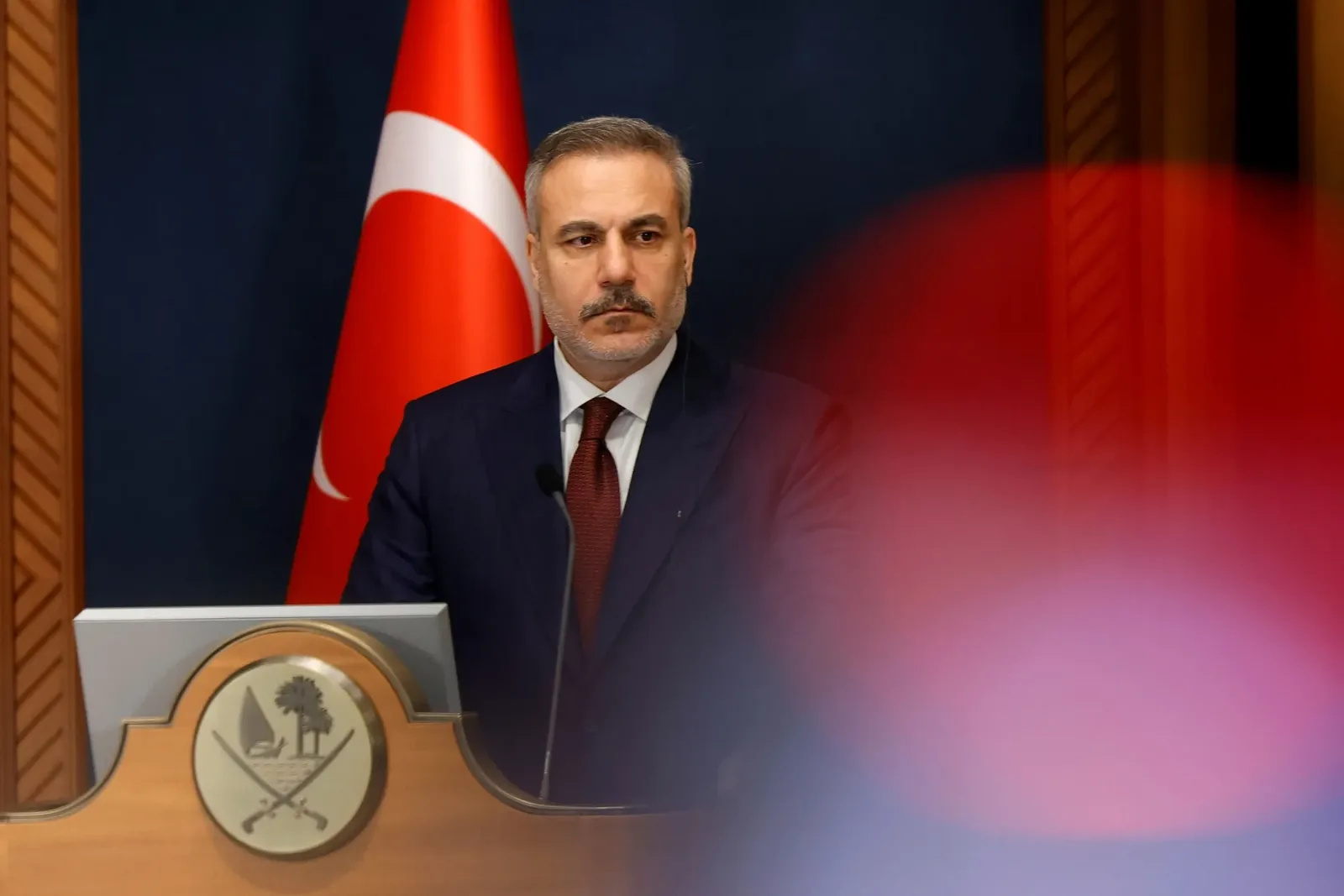
Turkish Foreign Minister Hakan Fidan stated on September 19 that Turkey will honor the Mecca Mutual Defense Agreement and may provide military-technical assistance to Saudi Arabia following intensified Houthi attacks on Saudi oil infrastructure. The pact, signed August 7 by Saudi Arabia, Turkey, and Pakistan, considers an attack on one signatory as an attack on all. Saudi air defense interceptor stocks are critically low, prompting Riyadh to also seek support from France, the UK, Pakistan, and Egypt.
 Reference image
Editorial responsibility
- No named human review is recorded for this page.
- Reports are grouped by semantic similarity and deterministic rules. Language models may assist titles, summaries, translation and cross-source analysis; the page reads the event directly, while its address stays stable when the title changes.
- Summary covers the current reports
Cross-source coverage
Common ground
- The US security guarantee to Saudi Arabia has proven unreliable, especially after depleting Patriot missile stocks for Ukraine.
- The Houthi attacks on Saudi Arabia are a serious security threat, not just a pretext for other agendas.
- The Yemen war is a humanitarian catastrophe with no clean hands on any side.
- The Mecca Defense Pact exists but has not yet shown concrete military cooperation or effectiveness.
- Turkey's involvement in the pact is partly driven by its own economic and strategic interests, including defense exports.
Points of contention
- Whether the Mecca Pact is a genuine step toward multipolar security or just a diplomatic photo op with no real substance.
- Whether the Houthis are primarily an Iranian proxy or a resistance movement with their own local roots and grievances.
- Whether Saudi Arabia's diversification away from US weapons is a significant trend or just a small tactical hedge.
- Whether the Israeli angle proves the pact is theater or shows how desperate Riyadh is for any reliable partner.
- Whether the root cause of the crisis is Saudi aggression in Yemen or Iranian expansionism through the Houthis.
Blind spots
- The debate largely ignores the human cost in Yemen, focusing on strategic calculations rather than civilian suffering.
- There is little discussion of how to actually end the war or lift the blockade, which could address the root cause of the conflict.
- The role of other regional powers like Iran, Israel, and the UAE is mentioned but not deeply analyzed in terms of their direct interests and actions.
- The economic impact of the war on ordinary Yemenis and the long-term viability of Saudi Arabia's Vision 2030 under ongoing threats is underexplored.
WorldAttention’s read
This debate reveals a deep divide between those who see the Mecca Defense Pact as a hopeful sign of regional self-reliance and those who view it as a cynical distraction from the ongoing catastrophe in Yemen. While all sides agree that the US security guarantee has weakened and that the Houthi attacks are a real threat, they disagree sharply on whether the pact is a genuine solution or just a Band-Aid. The biggest blind spot is the human cost: the conversation focuses on geopolitics and procurement data, but rarely on the millions of Yemenis suffering from war and blockade. Ultimately, the pact may be a step toward multipolarity, but it does nothing to address the root cause of the conflict—the war itself—and until that is resolved, any security arrangement is just managing symptoms rather than curing the disease.
Reporting timeline
Houthi-Saudi Conflict Escalates: Missile Attacks on Riyadh, Air Defense Strains, and Regional Alliance Tested
The conflict between Yemen's Houthi forces and Saudi Arabia has escalated sharply since mid-July, marking the most severe clashes in years. On September 19, Houthi spokesman Yahya Saree claimed two successful military operations using ballistic missiles, cruise missiles, and drones targeting sensitive sites in Riyadh and Saudi Aramco facilities in Yanbu. Saudi air defenses intercepted a ballistic missile over Riyadh, but reports indicate interceptor missile stocks are running low, prompting Riyadh to seek air defense support from France, the UK, Pakistan, and Egypt, as the US shows limited willingness to intervene. Analysts suggest the Houthis are testing Saudi red lines. The August 7 Mecca Mutual Defense Agreement among Saudi Arabia, Turkey, and Pakistan is being tested; Turkey's Foreign Minister Hakan Fidan pledged military-technical assistance, and Pakistan's military spokesperson Ahmed Sharif Chaudhry promised support 'at all costs.' However, analysts believe direct involvement by Turkey and Pakistan remains unlikely due to the agreement's nascent institutional framework. US embassies issued security alerts warning of rapid escalation, and open-source intelligence reported large-scale US troop movements in the Middle East.
Read sourceSaudi air defense stocks critically low; seeks aid from allies as Houthi attacks intensify
Reports on October 19 indicate that Saudi Arabia's air defense interceptor missile stocks are critically low due to intensified Houthi rebel attacks. Riyadh has requested air defense support from France, the UK, Pakistan, and Egypt, as its key ally the United States shows little willingness to intervene, with U.S. inventories depleted by the conflict with Iran. Saudi Arabia has also made an unusual request for support from Israel to protect oil infrastructure. Analysts note that the Mecca Mutual Defense Agreement signed by Saudi Arabia, Turkey, and Pakistan in August faces implementation tests, as it still requires formal ratification and the three countries have differing military capabilities and strategic interests. Turkish Foreign Minister Hakan Fidan stated Turkey might provide military-technical aid, while Pakistani military spokesperson Ahmed Sharif Chaudhry pledged support through 'substantive actions.' However, analysts question whether political commitments can translate into actual military coordination. The U.S. State Department warned that the conflict could escalate rapidly, while Fidan emphasized that Saudi Arabia does not wish to be drawn into the U.S.-Iran conflict.
Read sourceTurkey Says It May Offer Assistance to Saudi Arabia Under Mecca Defense Pact
On September 19, Turkish Foreign Minister Hakan Fidan stated that Turkey is prepared to provide assistance to Saudi Arabia under the Mecca Common Defense Agreement, following recent attacks by Yemen's Houthi rebels against the Kingdom. Fidan noted that signatories of the agreement are closely monitoring the attacks and that Saudi Arabia's military needs may focus on certain technical issues, which Turkey will be able to address. Saudi Arabia, Turkey, and Pakistan signed the Mecca Common Defense Agreement on August 7. According to a joint statement issued by the three countries on that day, the agreement aims to strengthen common deterrence against any acts of aggression. The pact stipulates that an armed attack against any one of the three nations shall be considered an attack against all three. The report was sourced from CCTV International News via Cailian Press on September 20.
Read sourceShow 4 older updatesHide older updates
Turkey Says It May Offer Technical Military Aid to Saudi Arabia Under Defense Pact
On September 19, Turkish Foreign Minister Hakan Fidan stated that Turkey is prepared to provide assistance to Saudi Arabia under the Mecca Mutual Defense Agreement, following recent attacks by Yemen's Houthi rebels. Fidan noted that signatory countries are closely monitoring the attacks on Saudi Arabia, and that Saudi military needs may focus on certain technical issues, which Turkey will be able to meet. Saudi Arabia, Turkey, and Pakistan signed the Mecca Mutual Defense Agreement on August 7. According to a joint statement, the agreement aims to strengthen common deterrence against any act of aggression, stipulating that an armed attack against any one of the three countries shall be considered an attack against all three. The report is sourced from CCTV International News via Jin10 Data.
Read sourceTurkey May Provide Military Technology Aid to Saudi Arabia, Says Foreign Minister
Turkish Foreign Minister Hakan Fidan stated on September 19 that Turkey may provide military technology assistance to Saudi Arabia in response to recent attacks on the kingdom. Speaking on Turkish NTV television, Fidan said that signatory countries of the Mecca Mutual Defense Agreement are closely monitoring attacks by Yemen's Houthi rebels against Saudi Arabia. He emphasized unity among the signatories and confirmed that Turkey will honor its commitments under the agreement, which contains relevant provisions. Fidan specifically condemned the attacks targeting oil infrastructure. The statement signals Turkey's willingness to support Saudi Arabia militarily amid ongoing regional tensions.
Read sourceTurkey May Provide Saudi Arabia with Military Technology Aid, Turkish Foreign Minister Says
Turkish Foreign Minister Hakan Fidan stated on September 19 that Turkey will honor its commitments under the Mecca Mutual Defense Agreement in response to recent Houthi attacks on Saudi Arabia, and may provide military-technical assistance to the kingdom. Speaking on Turkish NTV television, Fidan said signatory countries are closely monitoring Houthi rebel attacks from Yemen on Saudi Arabia, particularly those targeting oil infrastructure. He emphasized unity on the issue and that the agreement contains relevant provisions that Turkey will keep. Fidan noted that Saudi Arabia's need for assistance may focus on certain technical areas where Turkey is capable. He also refuted claims that substantive progress under the agreement has been slow, describing it as transformative and open to all regional countries.
Read sourceTurkey Says Will Honor Mecca Defense Pact, May Aid Saudi Arabia After Houthi Attacks
Turkish Foreign Minister Hakan Fidan stated on the 19th that Turkey will honor its commitments under the Mecca Mutual Defense Agreement and may provide military-technical assistance to Saudi Arabia in response to recent attacks by Yemen's Houthi movement. Speaking on Turkish NTV television, Fidan said signatory countries are closely monitoring the Houthi attacks, specifically condemning those targeting oil infrastructure. He noted that Saudi Arabia's needs may focus on certain technical areas, which Turkey is prepared to meet. Fidan also refuted claims that progress under the agreement has been slow, calling it transformative and open to all regional countries. The Mecca Common Defense Agreement was signed on August 7 by Saudi Arabia, Turkey, and Pakistan, stipulating that an armed attack on any one signatory is considered an attack on all three.