TSMC accelerates 2nm chip expansion to 120,000 monthly wafers by year-end 2025
TSMC is accelerating its 2-nanometer chip production expansion, targeting a monthly capacity of 120,000 wafers by the end of 2025, surpassing earlier estimates of 90,000-100,000 wafers and achieving a 2027 target two years early. Major clients including Apple, Nvidia, AMD, Qualcomm, and MediaTek have increased orders by 10% to 20%. TSMC Senior Vice President Hou Yung-ching confirmed five 2nm fabs will ramp simultaneously this year, with first-year output 45% higher than the 3nm ramp in 2023.
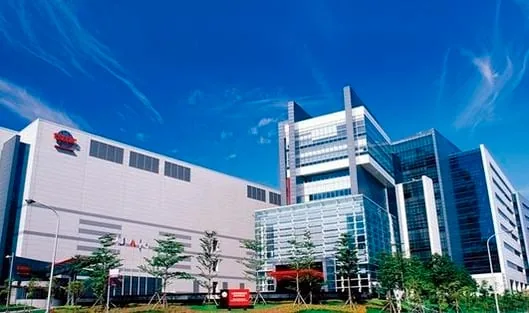 Reference image
Editorial responsibility
- No named human review is recorded for this page.
- Reports are grouped by semantic similarity and deterministic rules. Language models may assist titles, summaries, translation and cross-source analysis; the page reads the event directly, while its address stays stable when the title changes.
- Summary covers the current reports
Cross-source coverage
Common ground
- TSMC is a world-class company with exceptional execution capabilities, and the 120,000 wafer target is likely achievable due to their track record.
- The 2nm expansion is driven by strong demand from AI and major clients like Apple and Nvidia, not just geopolitical posturing.
- TSMC's expansion has real local impacts on water, housing, and energy in Taiwan, which the company has started to address through investments in recycling and compensation.
- The US CHIPS Act and export controls have not fully succeeded in decoupling advanced chip production from Taiwan, as TSMC continues to expand there.
Points of contention
- Whether TSMC's expansion is a form of colonial extraction benefiting foreign corporations or a mutually beneficial economic partnership with Taiwan.
- Whether the 120,000 wafer target is a genuine production goal or a negotiating tactic to secure equipment from vendors like ASML.
- Whether Taiwan's semiconductor industry is under foreign control (US corporate and military interests) or operates with genuine local sovereignty and democratic accountability.
- Whether the expansion proves the failure of US decoupling strategy or simply reflects market forces that TSMC is hedging against by building overseas fabs.
- Whether the human costs (long hours, housing prices, water use) are being adequately addressed by TSMC or are being externalized onto vulnerable populations.
Blind spots
- The debate largely ignored the perspectives of non-semiconductor workers in Taiwan, such as small business owners and farmers, who may bear costs without direct benefits.
- There was little discussion of environmental sustainability beyond water use, such as the carbon footprint of ramping five fabs simultaneously.
- The role of other global players, like Japan and Europe, in shaping TSMC's capacity decisions was barely mentioned, despite TSMC building fabs there.
- The potential for technological breakthroughs (e.g., beyond 2nm nodes) to disrupt current capacity plans was not explored.
WorldAttention’s read
This roundtable revealed deep ideological divides about TSMC's 2nm expansion, with the Regional Agent framing it as a colonial extraction that harms Taiwanese workers and communities, the Eastern Agent seeing it as a victory for Chinese sovereignty and a failure of US decoupling, and the Neutral Agent insisting it's primarily a technical supply chain decision driven by physics, contracts, and yield curves. While all agreed TSMC is highly capable and the 120,000 wafer target is plausible, they disagreed on whether it's a genuine production goal or a negotiating tactic, and whether the benefits flow to Taiwan or to foreign corporations. The debate highlighted blind spots around local non-tech workers, environmental impacts beyond water, and the role of other global players. Ultimately, the conversation showed that TSMC's expansion cannot be reduced to a single narrative—it is simultaneously a technical achievement, a geopolitical chess piece, and a source of real human costs and benefits that require more nuanced, data-driven discussion beyond ideological posturing.
Reporting timeline
AI Demand Spurs TSMC to Accelerate 2nm Expansion, Targeting 120,000 Monthly Wafers by End of 2025
According to a report by Taiwan's Economic Daily cited by Wall Street CN, TSMC is dramatically accelerating its 2nm process expansion due to surging demand from AI chip customers. Apple, Nvidia, AMD, Qualcomm, and MediaTek have collectively increased their 2nm capacity reservations by 10% to 20%. TSMC's year-end monthly capacity target for 2nm has been raised to 120,000 wafers, far exceeding the market's previous estimate of 90,000 to 100,000 and achieving a 2027 goal two years early. TSMC Senior Vice President Hou Yung-ching confirmed at the North America Technology Forum that five 2nm fabs (two in Hsinchu, three in Kaohsiung) will ramp simultaneously this year, a first for the company. He stated that 2nm's first-year output will be 45% higher than 3nm's first-year output, with a compound annual growth rate of 70% from 2026 to 2028. Concurrently, TSMC is expanding 3nm capacity, with its Southern Taiwan fab reaching nearly 180,000 wafers per month in Q4 2025, and new 3nm fabs planned in Taiwan, Arizona (mass production in 2027), and Japan. Analysts cited in the report view this expansion as crucial for securing supply chains for AI product roadmaps and further solidifying TSMC's dominance in foundry.
Read sourceTSMC Accelerates 2nm Expansion to 120k Monthly Wafers by End of 2025, Driven by AI Chip Demand
According to a report by Taiwan's Economic Daily cited by Wall Street Sights, TSMC is dramatically accelerating its 2nm family capacity expansion, targeting a monthly output of 120,000 wafers by the end of 2025, far exceeding earlier market estimates of 90,000 to 100,000 wafers and achieving a 2027 target two years early. The move is driven by collective order increases of 10% to 20% from major clients including Apple, Nvidia, AMD, Qualcomm, and MediaTek, all seeking to secure advanced chip supply for AI and high-performance computing. TSMC Senior Vice President Hou Yung-ching confirmed at the North America Technology Forum that five 2nm fabs will ramp simultaneously this year—two in Hsinchu and three in Kaohsiung—marking the fastest capacity ramp in company history. First-year 2nm output is expected to be 45% higher than the first-year output of 3nm in 2023, with a compound annual growth rate of 70% from 2026 to 2028. Concurrently, TSMC is expanding 3nm capacity globally, with a new fab in Arizona set to begin 3nm production in the second half of 2027. Analysts view the expansion as strengthening TSMC's dominance and reflecting the rapid transmission of AI infrastructure investment from chip design to manufacturing.
Read sourceTSMC 2nm Chip Capacity May Reach 120K Wafers by Year-End, Exceeding Estimates
An article from National Business Daily reports that TSMC's monthly production capacity for 2-nanometer chips could reach 120,000 wafers by the end of the year, surpassing earlier market estimates of 90,000 to 100,000 wafers. This accelerated timeline, originally set for 2027, is driven by a 10% to 20% increase in orders from major clients such as Apple and Nvidia, reflecting strong demand for advanced process technology in chip design. The report is accompanied by market data showing the Kechuang Chip Design ETF (Tianhong, 589070) fell 3.10% in intraday trading, with a turnover of 1.15 billion yuan, ranking first among similar products. The ETF has seen net inflows of 2.15 billion yuan over the past 30 trading days and has a scale of 21.49 billion yuan. Guojin Securities emphasizes that AI is driving dual growth in storage and computing power, with advanced process foundry price hikes strengthening profit elasticity, and that ASIC demand and self-sufficiency logic are accelerating domestic substitution in storage and advanced packaging.
Read sourceShow 7 older updatesHide older updates
TSMC Accelerates 2nm Chip Expansion as Major Clients Boost Orders by 10-20%
According to a report cited by the source, TSMC is accelerating its 2nm process capacity expansion as key clients including Apple, Nvidia, AMD, Qualcomm, and MediaTek increase orders by 10% to 20%. The monthly capacity for 2nm chips could reach 120,000 wafers by the end of the year, exceeding earlier market estimates of 90,000 to 100,000 wafers. This faster expansion pace may bring forward the capacity level originally targeted for 2027. Research institutions cited in the article note that AI server volume growth will drive investment in GPU, HBM, PCB, and other critical supply chain segments. Cloud vendors' capital expenditure expansion is expected to propagate demand through the industry chain, from server shipments to key component shortages, upstream expansion, and equipment orders, boosting demand for wafer fabrication equipment, components, PCB, and advanced packaging equipment. The article includes a risk disclaimer that the information is for reference only and does not constitute investment advice.
Read sourceTSMC 2nm Chip Monthly Capacity May Reach 120,000 Wafers by Year-End, Sources Say
According to a report by CLS (财联社) on September 28, citing unnamed sources, TSMC is accelerating its expansion of 2nm chip production capacity. The monthly capacity for 2nm chips could reach 120,000 wafers by the end of this year, surpassing earlier market estimates of 90,000 to 100,000 wafers. The faster expansion pace is expected to bring forward the capacity level originally planned for 2027. The report attributes the acceleration to increased orders from major clients including Apple, Nvidia, AMD, Qualcomm, and MediaTek, which have raised their order volumes by 10% to 20%.
Read sourceTSMC's 2nm Chip Monthly Capacity May Reach 120,000 Wafers by Year-End, Report Says
A report citing industry sources indicates that Taiwan Semiconductor Manufacturing Company (TSMC) is accelerating its expansion of 2-nanometer chip production capacity. Major clients including Apple, Nvidia, AMD, Qualcomm, and MediaTek have increased their orders by 10% to 20%. As a result, TSMC's monthly capacity for 2nm chips could reach 120,000 wafers by the end of this year, surpassing the previous market estimate of 90,000 to 100,000 wafers. The report also suggests that TSMC's original target capacity for 2nm chips, previously set for 2027, will be achieved ahead of schedule.
Read sourceTSMC's 2nm Capacity Snapped Up by AI Giants, Expansion Accelerated Ahead of Schedule
According to a report by Semiconductor Industry Observer, major tech firms including Apple, Nvidia, AMD, Qualcomm, and MediaTek are placing additional orders for TSMC's 2nm family capacity, with increases of 10% to 20%. In response, TSMC is accelerating its 2nm capacity expansion, aiming for a monthly capacity of 120,000 wafers by the end of this year, reaching a target originally set for 2027. TSMC executive Hou Yongqing confirmed that five 2nm fabs will begin volume production this year, with first-year output 45% higher than the 3nm ramp in 2023. Analysts from Taiwan's Chung-Hua Institution for Economic Research and IDC attribute the surge to AI data center buildouts and high-performance computing demand. TSMC is also expanding 3nm capacity, with monthly output expected to reach 180,000 wafers by Q4 this year and 200,000-210,000 by 2027. Citigroup notes TSMC's manufacturing scale as a core advantage, projecting total advanced-node capacity of 350,000-400,000 wafers by 2028. The report concludes that TSMC's dual-node strategy secures its leadership in next-generation AI computing.
Read sourceTSMC 2nm Chip Monthly Capacity May Reach 120,000 Wafers by Year-End, Report Says
According to a report citing industry sources, Taiwan Semiconductor Manufacturing Company (TSMC) is accelerating its 2-nanometer chip production expansion as major clients including Apple, Nvidia, AMD, Qualcomm, and MediaTek increase orders by 10% to 20%. The report states that TSMC's monthly capacity for 2nm chips could reach 120,000 wafers by the end of this year, surpassing earlier market estimates of 90,000 to 100,000 wafers. The original target for 2nm capacity, previously set for 2027, is expected to be achieved ahead of schedule. The information was reported by Jin10 Data on September 28, citing industry sources.
TSMC's 2nm Chip Monthly Capacity May Reach 120,000 Wafers by Year-End: Sources
According to a report on September 28, citing unnamed sources, Taiwan Semiconductor Manufacturing Company (TSMC) is expected to achieve a monthly production capacity of 120,000 wafers for its 2nm chips by the end of this year. This figure surpasses the previous market estimate of 90,000 to 100,000 wafers. The accelerated capacity expansion could allow TSMC to reach its 2027 capacity target earlier than planned. The report, originally from Jiemian News, was republished by East Money. The chips are reportedly for clients including Apple, Nvidia, and Qualcomm.
Read sourceReport: TSMC's 2nm Chip Monthly Capacity May Reach 120,000 Wafers by Year-End
A report from stockstar_stock_live indicates that Taiwan Semiconductor Manufacturing Company (TSMC) is accelerating its 2-nanometer chip capacity expansion, driven by increased orders of 10% to 20% from major clients including Apple, Nvidia, AMD, Qualcomm, and MediaTek. According to the report, TSMC's monthly production capacity for 2nm chips could reach 120,000 wafers by the end of this year, surpassing previous market estimates of 90,000 to 100,000 wafers. The report also states that TSMC's original target of achieving a certain 2nm capacity level by 2027 is expected to be achieved ahead of schedule. This forecast reflects strong demand for advanced semiconductor technology across key sectors such as mobile devices, high-performance computing, and artificial intelligence.
Read source