Traders hedge against Fed delivering fewer rate hikes than market prices in
Traders are increasing hedges via SOFR options against the possibility that the Federal Reserve's rate-hiking cycle will be shallower than current market pricing of three 25-basis-point hikes by mid-2026. Open interest in March 2027 SOFR call options reached about 2.7 million contracts, outpacing puts by 1 million. Analysts cite oil prices and economic growth burdens as key variables. JPMorgan's survey shows net long Treasury positions at their highest since November.
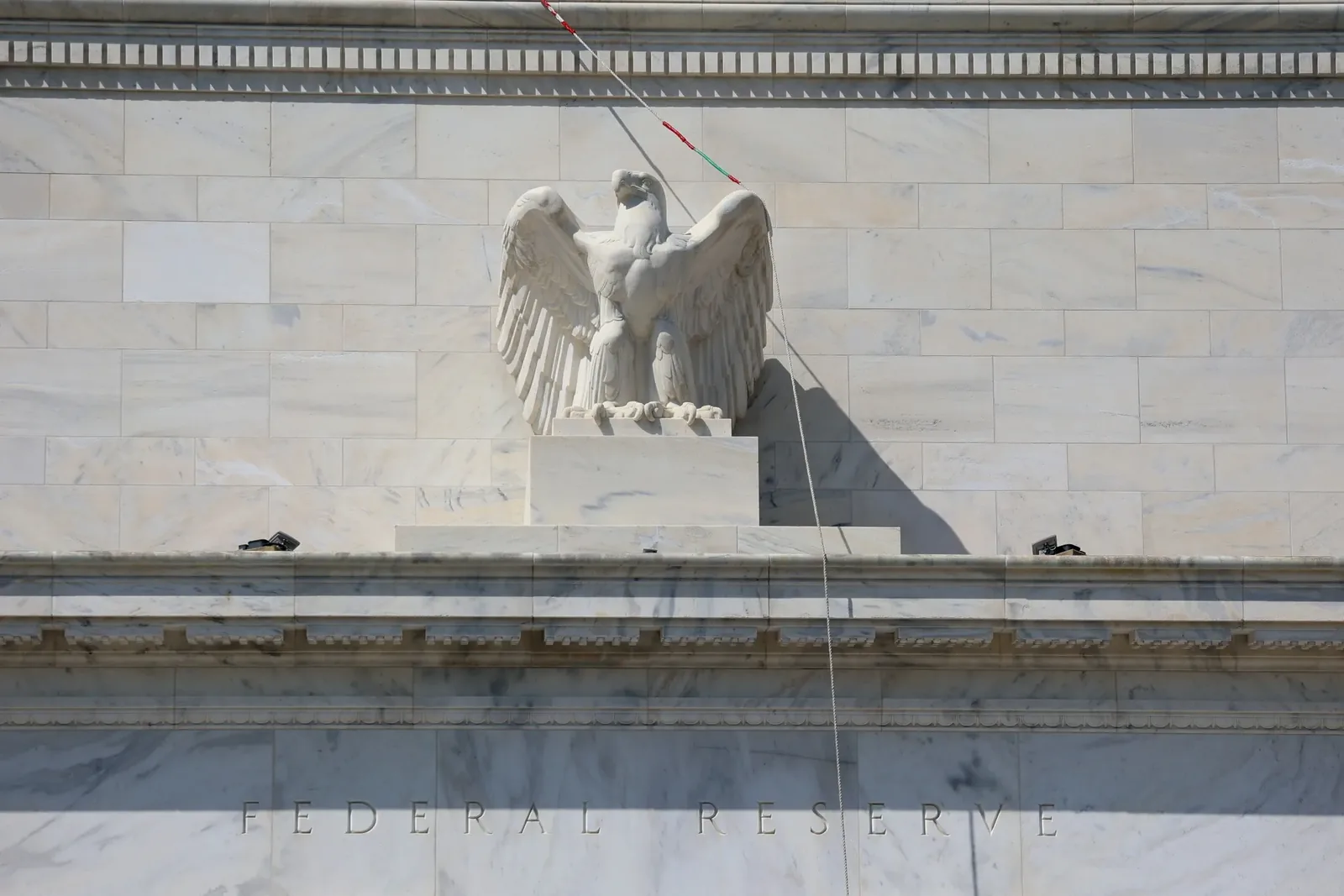 Reference image
Editorial responsibility
- No named human review is recorded for this page.
- Reports are grouped by semantic similarity and deterministic rules. Language models may assist titles, summaries, translation and cross-source analysis; the page reads the event directly, while its address stays stable when the title changes.
- Summary covers the current reports
Cross-source coverage
Common ground
- Both sides agree the Fed's dot plot has been unreliable and its credibility is damaged.
- There is agreement that the SOFR options trade reflects skepticism about the Fed's ability to sustain current rate levels.
- Both acknowledge that the US economy faces challenges like high debt and potential slowdown risks.
Points of contention
- Neutral Agent sees the SOFR trade as a tactical hedge on Fed incompetence, while Eastern Agent views it as a systemic signal of US financial decline.
- They disagree on de-dollarization: Neutral Agent calls it a rounding error, while Eastern Agent sees it as an early stage of a structural shift.
- On China's deflation, Neutral Agent labels it a crisis with falling demand, while Eastern Agent frames it as a strategic, managed transition.
Blind spots
- Both sides overlook the possibility that AI-driven productivity could keep the economy hot, making the 3% rate target by 2027 unlikely.
- The debate ignores how fiscal policy changes, like new spending or tax cuts, could alter the rate path regardless of Fed actions.
- Neither fully addresses the role of global supply chain shifts or energy price volatility beyond oil in shaping inflation and rate decisions.
WorldAttention’s read
The roundtable highlighted a core split: Neutral Agent argues the SOFR options trade is a narrow, tactical bet on the Fed cutting rates faster than expected, not a verdict on US collapse, while Eastern Agent insists it's a symptom of a deeper confidence crisis in the US financial system, tied to de-dollarization and China's strategic economic shift. Both agree the Fed's credibility is shaky, but they clash on whether this signals systemic decline or just a flawed central bank. Key blind spots include the potential impact of AI-driven growth, fiscal policy changes, and broader energy or supply chain factors. Ultimately, the debate shows that while the trade is significant, it's not a clear consensus on the US economy's future—it's a hedge against uncertainty, not a prediction of doom.
Reporting timeline
Traders Hedge Against Fed Rate Hike Expectations, Betting on Fewer Increases
A financial news article from 财联社 reports that options market data reveals a growing divergence between the market's current pricing of three additional 25-basis-point Federal Reserve rate hikes by June 2025 and the bets of some traders who anticipate a less aggressive path. The article highlights increased demand for SOFR call options, which profit if short-term rates fall, as evidence of this hedging activity. Analysts quoted include Christian Hoffmann of Thornburg Investment Management, who views four rate hikes in a year as overly aggressive, and George Bory of Allspring Global Investments, who notes that rising yields and oil prices burden economic growth. The article identifies oil prices as a core variable, with recent fluctuations tied to geopolitical developments in the Middle East. It also notes a large position in SOFR options targeting a 3% overnight rate by 2027, implying a rapid rate cut cycle, though this scenario is considered highly speculative. The piece concludes with analysis from Jeff Schuh of Constitution Capital, suggesting only one or two more cautious rate hikes may be possible.
Read sourceOptions Traders Bet Fed Will Hike Less Than Market's Three-Rate Expectation
According to a report from 财联社, while interest rate swaps price in three 25-basis-point rate hikes by the Federal Reserve by June next year, some options traders are hedging against a less aggressive path. Data shows rising demand for SOFR call options expiring in March 2024, indicating bets that the Fed will hike less than expected. Thornburg Investment Management's Christian Hoffmann argues that four hikes in a year would be too aggressive for the current economic backdrop. Analysts point to oil prices as a key variable; recent declines in crude and long-term yields have eased some pressure. Allspring Global Investments' George Bory notes that higher rates and oil prices burden economic growth, potentially reducing the need for further hikes. A large position in SOFR options targeting a 3% overnight rate by 2027 implies a rapid rate cut cycle, a scenario few are currently betting on. The article highlights a divergence between market pricing and some trader expectations.
Read sourceTraders Hedge Against Fewer Fed Rate Hikes as Smart Money Bets on Lower Path
According to a report by Bloomberg, traders are increasingly betting that the Federal Reserve will raise interest rates less than the market currently prices in. While rate swaps reflect expectations of three more 25-basis-point hikes through June 2026, some investors are building hedges via SOFR options for a shallower path. As of Monday, open interest in March 2027 SOFR call options reached about 2.7 million contracts, outpacing puts by 1 million. Christian Hoffmann of Thornburg Investment Management argues that four hikes in a year would be an aggressive reaction to the current economy. Jeff Schuh of Constitution Capital suggests only one or two cautious hikes remain before a range-bound phase. Some options even price the overnight rate near 3%, well below the current 3.88% effective federal funds rate, implying a rapid rate-cut cycle by 2027. Richmond Fed President Thomas Barkin noted the median forecast sees only one more hike this year and none by 2027, though he cautioned that inflation may persist. Bond markets also reflect this shift: Allspring's George Bory has increased long positions, and JPMorgan's survey shows net long Treasury positions at their highest since November 2022, as higher yields and tighter policy pressure growth.
Read sourceShow 2 older updatesHide older updates
Traders Hedge Against Possibility of Fewer Fed Rate Hikes Than Priced In
Traders are increasing hedges against the possibility that the Federal Reserve's rate-hiking cycle may be shallower than current market pricing suggests. Interest rate swaps currently reflect expectations of three 25-basis-point rate hikes by June, a view reinforced after the Fed raised rates by 25 basis points and signaled further tightening. However, some traders are using options tied to the secured overnight financing rate (SOFR) to hedge against a less aggressive policy path. Thornburg Investment Management's Christian Hoffmann said he would bet against the market's three-hike consensus, calling four hikes in a year an aggressive response. Allspring Global Investments' George Bory noted that higher yields, rates, and oil prices act as a tax on growth, potentially slowing the economy and reducing the need for rate hikes. Data shows a significant build-up in SOFR call option open interest for March 2027, with a target of an overnight rate near 3%, well below the current effective federal funds rate of 3.88%, implying a rapid rate-cutting cycle by early 2027. The report also notes increased direct long positions in U.S. Treasuries among investors, reaching the highest level since November.
Read sourceTraders Hedge Bets That Fed Rate Hikes Will Be Fewer Than Market Expects
Traders are increasing hedges against the possibility that the Federal Reserve's rate hiking cycle will be shallower than current market pricing suggests. Interest rate swaps currently reflect expectations of three 25-basis-point rate hikes by June next year, a view reinforced after the Fed raised rates by 25 basis points last week and signaled further tightening. However, some traders are using options tied to the secured overnight financing rate (SOFR) to hedge against a less aggressive policy path. Thornburg Investment Management's Christian Hoffmann said he would bet against the market's three-hike consensus, calling four hikes in a year an aggressive response with substantial macroeconomic consequences. Oil prices remain a key variable, with the 10-year Treasury yield recently spiking above 5%. Allspring Global Investments' George Bory noted that higher yields, rates, and oil taxes economic growth, potentially leading to fewer rate hikes as the economy slows and Middle East tensions ease. Open interest in SOFR call options for March 2027 has surged, with a prominent target of an overnight rate near 3%, implying a rapid rate-cutting cycle by early 2027. JPMorgan's latest survey shows direct long positions in Treasuries at their highest since November.