Tashan Tech completes share reform, raises hundreds of millions in robot tactile sensor boom
Beijing-based Tashan Technology, a tactile sensor firm for robots, completed a shareholding reform and raised hundreds of millions of yuan in Series B funding from Taiping Innovation and Junsheng Electronics. The company holds over 80% of the global market for tactile fingertips in humanoid robots, with monthly deliveries of tens of thousands of units and H1 2026 orders quadrupling year-on-year. Revenue exceeded 100 million yuan in 2025 and is projected to reach hundreds of millions in 2026. Tashan faces competition from rival PaxiNi, which has completed IPO guidance at a valuation over 10 billion yuan.
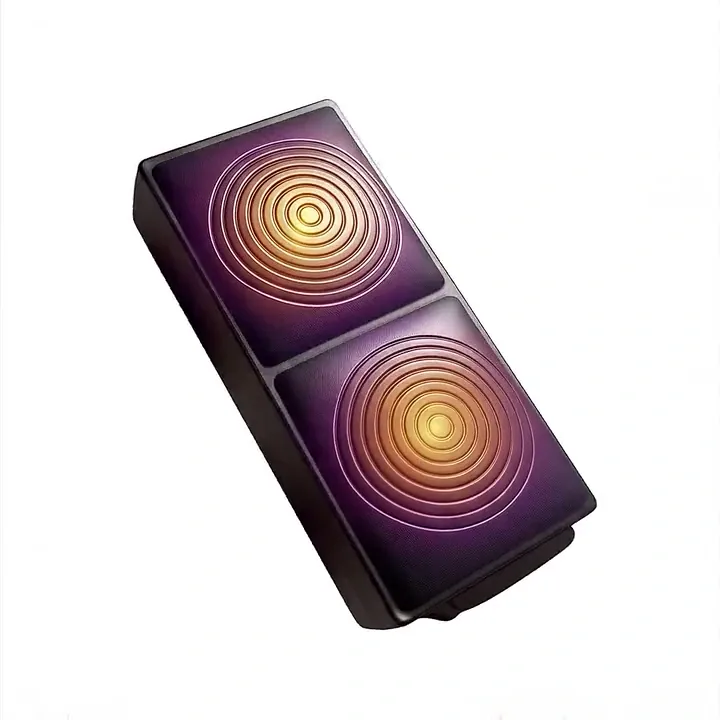 Reference image
Editorial responsibility
- No named human review is recorded for this page.
- Reports are grouped by semantic similarity and deterministic rules. Language models may assist titles, summaries, translation and cross-source analysis; the page reads the event directly, while its address stays stable when the title changes.
- Summary covers the current reports
Cross-source coverage
Common ground
- Tashan Tech has real engineering capability, shown by their 95% shrimp peeling success rate and 80% market share in tactile fingertips for humanoid robots.
- The market for tactile sensors in humanoid robots is still tiny and early-stage, making the current market share fragile and the IPO narrative overblown.
- The labor displacement caused by automation is a legitimate concern, but it's more a policy failure than a technology failure.
- The partnership with Richard Sutton is a smart strategic move to move up the value chain from component supplier to system integrator.
- The 'build first, distribute later' approach in China lacks evidence of actual benefits reaching displaced workers.
Points of contention
- Whether Tashan's 80% market share is a strategic beachhead or a fragile position in a tiny market that could evaporate if big players build in-house sensors.
- Whether the company can be analyzed separately from China's labor policies and state subsidies, or if those are inseparable from its success.
- Whether the Sutton collaboration is genuine multipolar collaboration or a new form of extractive global division of labor.
- Whether the shrimp peeling robot solves a real labor shortage or is a political choice to avoid paying living wages.
- Whether technological progress and worker welfare are zero-sum or can be balanced with proper policy.
Blind spots
- No one addressed how Tashan's technology might be used in non-industrial settings like healthcare or elder care, which could change the social impact calculus.
- The debate ignored the environmental costs of mass-producing tactile sensors and the e-waste from rapid hardware iteration.
- There was no discussion of how smaller economies or developing countries might be affected by this technology race.
- The role of consumer demand and public acceptance of humanoid robots in homes was barely mentioned.
WorldAttention’s read
Tashan Tech is a solid engineering company with genuine innovation in tactile sensors, but the hype around its IPO and market share is overblown given the tiny, early-stage market. The real strategic question is whether they can move from component supplier to system integrator before bigger players like Tesla or Xiaomi build their own sensors. While the labor displacement concern is real, it's a policy failure—not a technology failure—and blaming Tashan alone misses the bigger picture of China's demographic challenges and industrial strategy. The 'build first, distribute later' approach has yet to deliver on its promises for workers, and that gap remains the most critical unresolved issue. Ultimately, this debate showed that you can't separate a company from the system it operates in, but you also can't reduce a complex technology story to just politics or just market analysis.
Reporting timeline
Beijing-Based Tactile Sensor Firm Tashan Tech Raises Hundreds of Millions in Robot Boom
Tashan Technology, a Beijing-based company specializing in tactile sensing for robots, has completed a series B funding round worth hundreds of millions of yuan, with investors including Taiping Innovation and Junsheng Electronics. Founded in 2017, the company has developed a touch sensor chip that enables robots to perform delicate tasks such as peeling shrimp with 95% success rate and handing over objects. According to Vice President Fu Yihui, the company shipped tens of thousands of tactile sensors monthly in 2025, with first-half orders quadrupling year-on-year. Annual revenue is expected to reach hundreds of millions of yuan in 2026, up from over 100 million yuan in 2025. Tashan holds an estimated 80% of the global market for tactile fingertips used in humanoid robots, serving over 200 clients including Galaxy General, Autovariable, and Xingdong Era. The company has also expanded into automotive (supplying BYD) and consumer electronics. It recently completed a share reform and is progressing toward an IPO. Tashan has opened tactile data collection centers in Beijing and Qianjiang, and launched a 'robot kindergarten' with Turing Award winner Richard Sutton to explore autonomous robot learning.
Read sourceBeijing-Based Tactile Sensor Firm Tashan Tech Raises Hundreds of Millions, Targets Robot Boom
Tashan Technology, a Beijing-based company specializing in tactile sensing for robots, has raised hundreds of millions of yuan in a Series B funding round led by Taiping Innovation and Junsheng Electronics, its third round in six months. The company, founded in 2017, has developed a tactile sensor chip that enables robots to perform delicate tasks like peeling crayfish with 95% success. It claims 80% of the global market for tactile fingertips used in humanoid robots, with over 200 clients including major robot makers. Revenue exceeded 100 million yuan in 2025 and is expected to reach hundreds of millions in 2026. The company is also building tactile data centers and a 'robot kindergarten' with Turing Award winner Richard Sutton to explore autonomous robot learning. Vice President Fu Yihui forecasts that robots will enter home scenarios on a large scale by 2027-2028, estimating the tactile market at tens of billions of yuan.
Read sourceBeijing-Based Tactile Sensor Firm Tashan Tech Raises Hundreds of Millions in Robot Boom
Tashan Technology, a Beijing-based company specializing in tactile sensing technology, has secured hundreds of millions of yuan in Series B funding from investors including Taiping Innovation and Junsheng Electronics, marking its third funding round in six months. Founded in 2017, the company has developed a touch sensor chip that enables robots to perform fine manipulation tasks such as peeling shrimp with a 95% success rate. According to Vice President Fu Yihui, the company's monthly delivery of tactile sensors has reached tens of thousands of units, with orders in the first half of 2025 quadrupling year-on-year. Tashan Tech holds an 80% global market share for tactile fingertips used in humanoid robots and has partnered with over 200 clients including Galaxy General, Autovariable, and Xingdong Era. The company has also expanded into automotive and consumer electronics sectors, supplying BYD and achieving a 20-fold order increase from one consumer electronics client in 2025. Revenue exceeded 100 million yuan in 2025 and is projected to reach hundreds of millions in 2026. The company has completed a share reform and is progressing toward an IPO. Fu Yihui forecasts that overseas robot manufacturers will begin large-scale deployment in home scenarios between 2027 and 2028, estimating the tactile market alone to be worth tens of billions of yuan.
Show 2 older updatesHide older updates
Tashan Tech Completes Share Reform, Vies for 'Tactile Intelligence First Stock' with 80%+ Market Share
Beijing-based Tashan Technology has completed a shareholding reform, changing from a limited liability company to a joint-stock company, a move widely seen as a precursor to an IPO for the 'first stock of tactile intelligence.' The company holds over 80% of China's robot tactile sensor market, with monthly deliveries reaching tens of thousands of units and H1 2026 orders quadrupling year-on-year. Tashan has built a full-stack tactile technology system covering chips, sensors, algorithms, and applications, including its self-developed Green Gem E10A tactile chip. It faces direct competition from PaxiNi, which has completed IPO guidance and is valued at over 10 billion yuan. While Tashan's technology and market position are strong, the article notes risks including intensifying competition, the early stage of the humanoid robot industry, reliance on prototype and small-batch orders, and high R&D costs that may pressure cash flow. The company's ability to convert its technological lead into sustainable revenue will be key for capital markets.
Read sourceTashan Tech's Share Reform Signals Race for 'Tactile Intelligence First Stock' with 80% Market Share
Beijing Tashan Technology Co., Ltd. has completed a shareholding reform, changing to a joint-stock company, a move widely seen as a precursor to its IPO bid for the title of 'first stock in tactile intelligence.' The company holds over 80% of China's robot tactile sensor market, with monthly deliveries reaching tens of thousands of units and H1 2026 orders quadrupling year-on-year. Tashan has built a full-stack tactile technology system covering chips, sensors, algorithms, and applications, including its self-developed Green Emerald E10A tactile chip. However, it faces stiff competition from rival PaxiNi, which has completed IPO辅导 (guidance) and is valued at over 10 billion yuan, backed by BYD and JD.com. The article notes that while Tashan has a first-mover advantage, the humanoid robot industry is still in its early stages, and challenges remain in converting technical advantages into sustainable revenue amid rising competition and long verification cycles for mass production. The company's 'Robot Kindergarten' project with reinforcement learning pioneer Richard Sutton's team is highlighted as a long-term investment in training paradigms.