Alibaba’s T-Head unveils Zhenwu V900 AI chip, claims 3x performance, mass production in Q1 2027
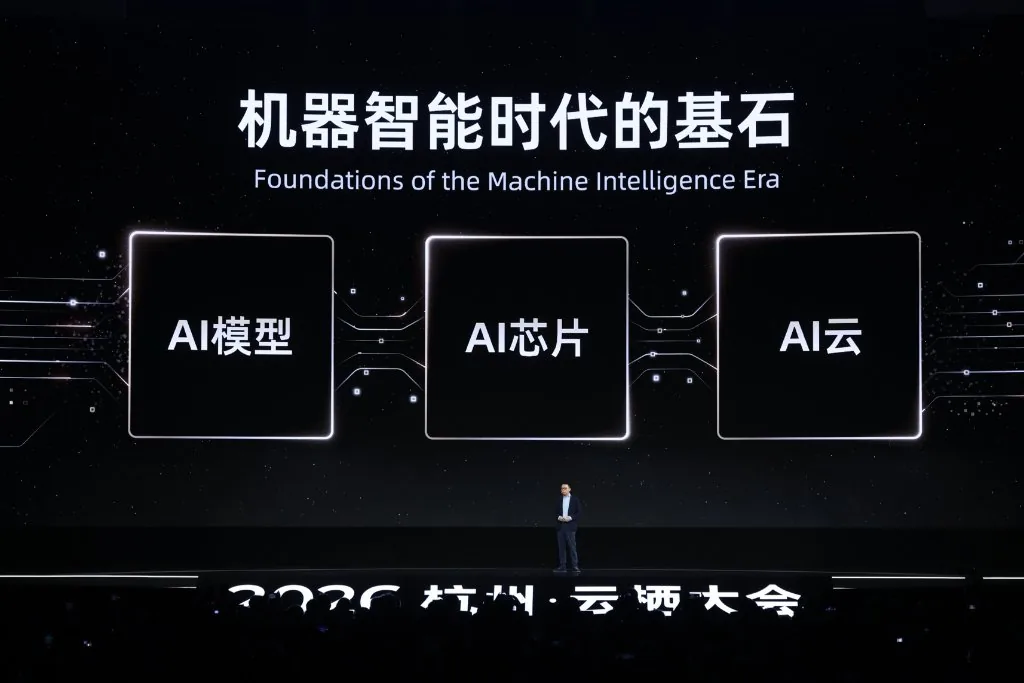
On September 22, 2025, at the Hangzhou Yunqi Conference, Alibaba’s chip subsidiary T-Head released the Zhenwu V900, a training-inference AI chip with 216GB memory and 1200GB/s interconnect, claiming three times the performance of its predecessor. Mass production is planned for Q1 2027. The following day, T-Head announced expanded open-source efforts for its SAIL software stack, which has served over 650 clients across 20+ industries. Alibaba also outlined AI infrastructure investments targeting 20 GW data center capacity by 2032.
 Reference image
Editorial responsibility
- No named human review is recorded for this page.
- Reports are grouped by semantic similarity and deterministic rules. Language models may assist titles, summaries, translation and cross-source analysis; the page reads the event directly, while its address stays stable when the title changes.
- Summary covers the current reports
Cross-source coverage
Reporting timeline
T-Head Opens AI Software Stack SAIL to Build Ecosystem After Serving 650+ Clients
On September 22, 2025, at the Hangzhou Yunqi Conference, Alibaba's chip subsidiary T-Head (Pingtouge) unveiled its next-generation training-inference AI chip, Zhenwu V900, claiming 3x the performance of its predecessor and planning mass production by Q1 2027. The following day, T-Head announced expanded open-source efforts for its AI software stack, T-Head SAIL, which has been validated in production environments serving over 650 clients across 20+ industries. The stack covers drivers, compilers, libraries, and tools, and is compatible with over 260 mainstream frameworks like PyTorch and vLLM. T-Head aims to foster a developer ecosystem by opening code on GitHub, with further open-source releases planned. Customer examples include Ant Group optimizing large model inference, Xiaohongshu developing an AI agent for automated performance tuning, and XPeng Motors migrating autonomous driving models. T-Head's software ecosystem director Lu Shenghua stated that open source does not mean loss of control, and that the company will establish governance rules to encourage community contributions.
Read sourceT-Head Opens AI Software Stack SAIL After Zhenwu V900 Chip Launch, Aims to Build Ecosystem
At the 2026 Yunqi Conference on September 22, T-Head, Alibaba's chip subsidiary, launched the Zhenwu V900, a new training-inference AI chip with three times the performance of its predecessor, the Zhenwu M890, slated for mass production in Q1 2027. The following day, T-Head announced expanded open-source efforts for its AI software stack, T-Head SAIL, which has been validated in production environments serving over 650 clients across 20+ industries, including Ant Group, Xiaohongshu, and XPeng Motors. SAIL covers five layers from drivers to tools, supports 260+ mainstream frameworks like PyTorch and vLLM, and enables model migration with minimal code changes. T-Head aims to foster a developer ecosystem by opening up code on GitHub, with further open-source releases planned by end-September to early October. Executives acknowledged increased maintenance costs but emphasized that open governance and community contributions will drive long-term agility and innovation.
Read sourceAlibaba's T-Head Unveils Zhenwu V900 AI Chip; New Server to Launch in Q1 2027
At the 2026 Apsara Conference held from September 22 to 24 in Hangzhou, Alibaba Group's chip design unit, T-Head, announced the release of the Zhenwu V900, described as the strongest domestic AI chip. The chip is a training-inference integrated AI processor with three times the computing power of its predecessor, the Zhenwu M890, supporting 216GB of memory, 1200GB/s inter-chip interconnect, and FP8/FP4 precision. Alibaba stated that a new Pangu super-node server equipped with the Zhenwu V900, ICN Switch, Panmai, and Zhenyue chips will be available in Q1 2027. Additionally, Alibaba Cloud's Lingjun Zhenwu M890 super-node instance GP9A is already in service, claimed to be the first in China to successfully run a large model with over 2 trillion parameters. T-Head also previewed a next-generation AI chip, the Zhenwu J900, featuring a new parallel computing architecture, scheduled for release in March 2028.
Read sourceShow 2 older updatesHide older updates
T-Head Unveils AI Chip Zhenwu V900 at 2026 Apsara Conference, Mass Production Planned for Q1 2027
On September 22, at the 2026 Apsara Conference in Hangzhou, Alibaba's chip subsidiary T-Head released its next-generation training-inference integrated AI chip, the Zhenwu V900. According to T-Head, the chip is based on a proprietary parallel computing architecture, features 216GB of high-capacity memory, and achieves 1200GB/s inter-chip interconnect bandwidth. It natively supports FP8 and FP4 low-precision computing, aiming to significantly increase computing density while reducing inference costs, suitable for high-precision training and low- to ultra-low-precision inference across all scenarios. T-Head claims this is the most powerful domestically produced AI chip in China. For training and inference of trillion-parameter large models, the Zhenwu V900 works with T-Head's self-developed networking and storage chips. At the conference, Alibaba also launched an upgraded super-node server integrating the Zhenwu V900, ICN Switch, Panmai intelligent network card, and Zhenyue SSD controller chip, achieving full-stack system-level coordination. Alibaba's new intelligent computing center network architecture allows a single cluster to scale to 500,000 cards. T-Head revealed that the Zhenwu series has served over 650 enterprise customers across industries including autonomous driving, finance, large models, embodied intelligence, energy, and manufacturing, making it one of the most widely applied domestically produced AI chips in China. Mass production of the Zhenwu V900 is planned for the first quarter of 2027.
Read sourceAlibaba's T-Head Releases Zhenwu V900 AI Chip, Hong Kong Shares Surge 5%
On September 22, Alibaba Group's Hong Kong-listed shares rose 5% following announcements at the Apsara Conference. Alibaba CEO Eddie Wu stated that customer demand for AI is very strong and that the company will fully invest in AI infrastructure, targeting a global data center capacity of over 20 gigawatts for Alibaba Cloud by 2032. On the same day, Alibaba's chip subsidiary T-Head released the domestically produced AI chip Zhenwu V900, which offers three times the computing power of its predecessor, the Zhenwu M890. The report also indicated that T-Head's annual shipment volume of AI chips will increase significantly.
Read source