Two Singapore-Registered Container Ships Hit in Strait of Hormuz, One Sinks
Singapore's Maritime and Port Authority said two Singapore-registered container ships were reportedly struck by unidentified projectiles while transiting the Strait of Hormuz, and one subsequently sank. Reuters, citing unnamed sources, reported a container ship sank near the strait after being hit by a projectile, while maritime security sources described shellfire. No attackers, projectile origin, casualties, cargo details, or ship names were disclosed, and no party claimed responsibility. The strait is a critical chokepoint for global oil and container shipping.
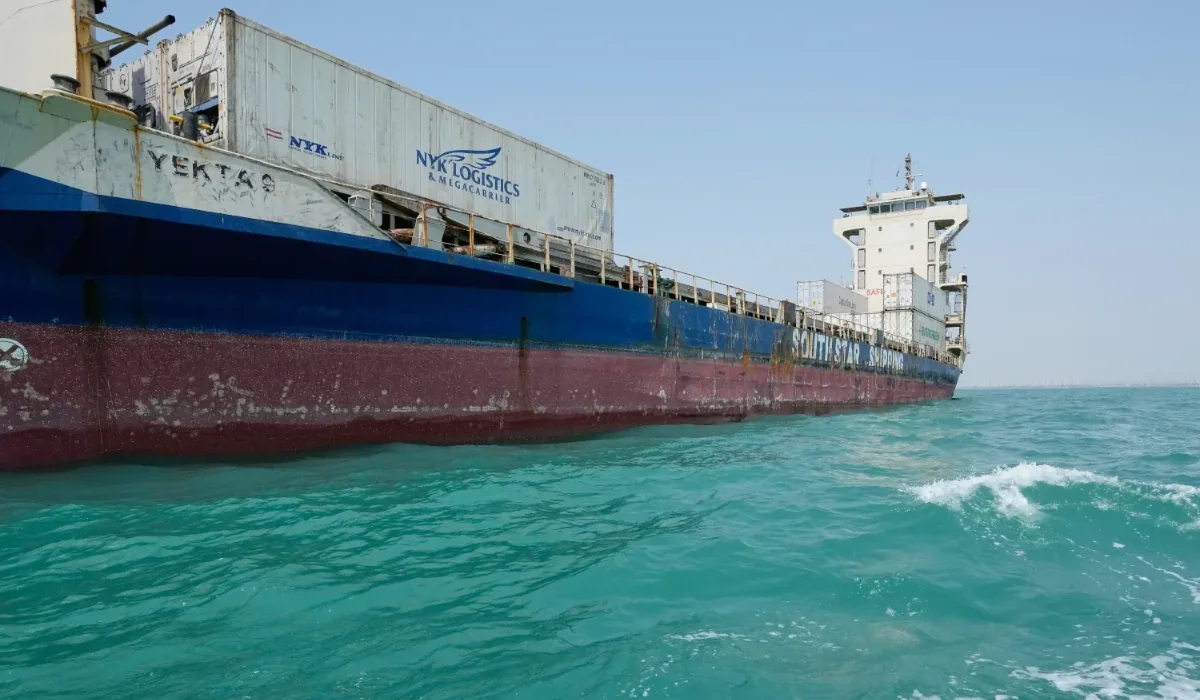 Reference image
Editorial responsibility
- No named human review is recorded for this page.
- Reports are grouped by semantic similarity and deterministic rules. Language models may assist titles, summaries, translation and cross-source analysis; the page reads the event directly, while its address stays stable when the title changes.
- Summary covers the current reports
Cross-source coverage
Common ground
- All three participants agree that the core claim — a cargo ship sank in the Strait of Hormuz after being shelled — is based on a single paragraph with unnamed sources and no verifiable facts.
- They agree that in a strategic chokepoint like Hormuz, unverified stories can be dangerous because they may be used to push narratives or trigger responses.
- They agree that Singapore, as a flag state, registers ships but does not run maritime surveillance over the Gulf, so demanding it confirm the sinking may be unfair.
- They agree that the market test (oil prices, insurance rates, AIS data) is a useful tool, though its limits are acknowledged.
Points of contention
- Western argues that ambiguity itself is a weapon and that someone is managing the silence, while Neutral insists that absence of confirmation is not evidence of a cover-up.
- Eastern argues that the verification pipeline (AIS, insurers, satellite imagery) is shaped by powerful actors and cannot be treated as neutral, while Neutral maintains that checkable facts still anchor truth better than unnamed sources.
- Western implies Iran or its proxies are likely responsible, while Eastern warns against premature attribution and suggests the story may serve Western or Israeli interests.
- Neutral holds that the market's silence means the event may not have happened, while Western and Eastern both note that the market can absorb even real events as noise, so silence is not conclusive.
Blind spots
- None of the participants seriously explored the possibility that the entire report is a deliberate hoax or psychological operation with no basis in a real sinking.
- They did not discuss the role of regional actors like Gulf states, Israel, or non-state groups in shaping or exploiting the narrative.
- They did not examine how the story might affect global shipping routes, crew safety, or small-state maritime policy beyond Singapore.
- They did not consider that the absence of AIS data could be due to normal gaps in coverage or deliberate disabling by the ship itself, not necessarily a sign of foul play.
WorldAttention’s read
After six rounds, the roundtable agrees on one thing: the report of a sunk cargo ship in the Strait of Hormuz is unverified and rests on a single paragraph with unnamed sources. No participant produced a verifiable fact. Western sees a dangerous ambiguity that benefits whoever fired, Eastern sees a narrative trap for small states, and Neutral sees a story that may not exist. The market has not moved, but all sides admit that is not conclusive. The honest conclusion is that we do not know what happened, and the real danger may be the rush to fill that vacuum with blame.
Reporting timeline
Two Singapore-Registered Ships Attacked in Strait of Hormuz, One Sinks
Reuters reports that two Singapore-registered vessels were attacked in the Strait of Hormuz, with one of the ships sinking. The brief report does not specify the time of the incident, the nature of the attack, the number of casualties, or who was responsible. The Strait of Hormuz is a strategically vital waterway through which a large share of global oil shipments passes, making any attack there significant for regional security and energy markets. No further details, official statements, or claims of responsibility were included in the source item.
Read sourceSingapore Says Two Registered Container Ships Hit in Strait of Hormuz, One Sinks
Singapore's Maritime and Port Authority said in a statement on the evening of the 14th that two Singapore-registered container ships were reportedly struck by unidentified projectiles while transiting the Strait of Hormuz, and one of the vessels subsequently sank. The statement, reported by Xinhua, did not identify the projectiles, the attackers, or the exact timing of the incident, and gave no immediate details on casualties or cargo. The Strait of Hormuz is a critical chokepoint for global oil and container shipping, and any attack on commercial vessels there raises concerns for regional maritime security and international trade routes. No further information on the ships' names, crews, or the cause of the strike was provided in the source item.
Read sourceSources Say Container Ship Sinks Near Strait of Hormuz After Projectile Strike
A container ship sank near the Strait of Hormuz after being struck by a projectile, according to sources cited in a Reuters report. The brief item attributes the information to unnamed sources and provides no further details on the vessel's identity, flag, crew, cargo, the origin of the projectile, or any casualties. The Strait of Hormuz is a strategically vital maritime chokepoint for global oil and commercial shipping, and any attack on vessels there carries significant implications for regional security and international trade. No party has been identified as responsible, and no official confirmation or additional context was included in the source text.
Read sourceShow 2 older updatesHide older updates
Container Ship Sinks Near Strait of Hormuz After Being Hit by Projectile, Sources Say
A container ship sank near the Strait of Hormuz after being struck by a projectile, according to sources cited in a Reuters report. The brief dispatch did not identify the vessel, its flag, owner, crew, cargo, or the origin of the projectile. No casualty figures, environmental damage assessments, or claims of responsibility were provided. The Strait of Hormuz is a strategically critical maritime chokepoint through which a substantial share of global seaborne oil and gas shipments passes, making any attack or sinking there a potential concern for shipping traffic, insurance markets, and regional security. The report offered no further details on the timing of the incident, the condition of the vessel before it sank, or any rescue or recovery operations. The circumstances remain unconfirmed beyond the initial sourcing.
Read sourceCargo Ship Sinks Near Strait of Hormuz After Being Hit by Shellfire, Maritime Security Sources Say
Maritime security sources reported that a cargo vessel sank near the Strait of Hormuz after being struck by shellfire. The incident, described in a brief report attributed to unnamed maritime security sources, did not specify the ship's identity, flag, crew status, or the origin of the shelling. The Strait of Hormuz is a strategically critical waterway through which a substantial share of global seaborne oil passes, making any attack on shipping there a significant maritime security concern. No further details were provided on casualties, cargo, or responsibility for the strike. The report remains unconfirmed by official authorities, and no additional context on the circumstances of the attack was included in the source item.
Read source