SpaceX Starship achieves first orbital burn and enters Earth orbit
SpaceX’s Starship spacecraft conducted its first orbital ignition and successfully entered Earth orbit on September 28, according to a report from Chinese financial media outlet Cailianshe. Multiple news outlets had reported the vehicle was preparing for its 14th test flight, a 10-hour mission aiming to complete approximately six orbits. The flight is described as the most powerful rocket ever built’s biggest and riskiest test yet, with significant implications for SpaceX’s deep-space ambitions.
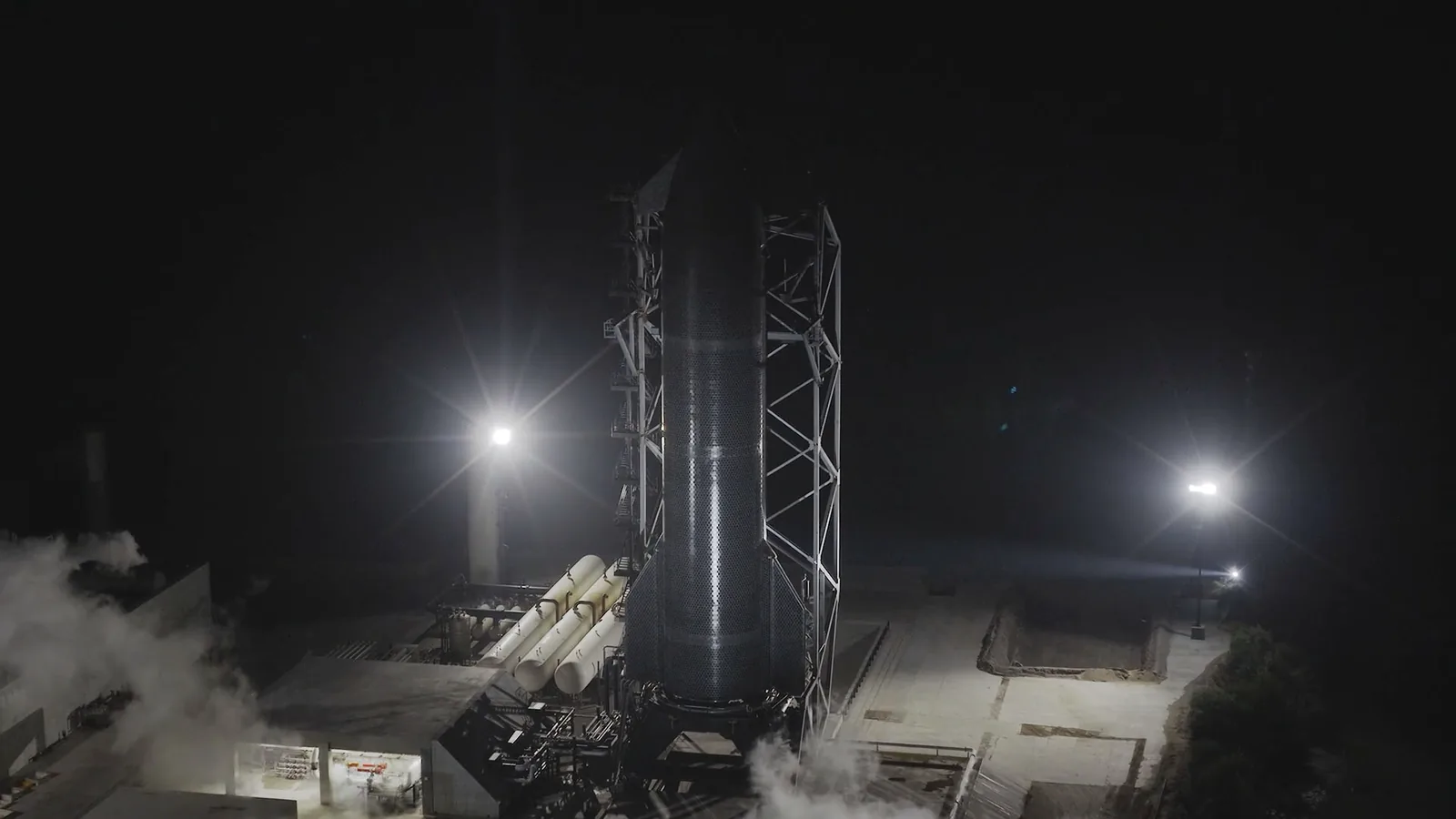 Reference image
Editorial responsibility
- No named human review is recorded for this page.
- Reports are grouped by semantic similarity and deterministic rules. Language models may assist titles, summaries, translation and cross-source analysis; the page reads the event directly, while its address stays stable when the title changes.
- Summary covers the current reports
Cross-source coverage
Common ground
- Both sides agree that the Wolf Amendment is a hypocritical policy that blocks China from international space cooperation while the US complains about competition.
- Both agree that Elon Musk's unilateral Starlink launches without international consultation are a governance problem.
- Both agree that stronger international treaties are needed to govern space activities.
- Both agree that the current system of space governance is broken and lacks accountability.
Points of contention
- The Western Agent argues that China's space program lacks democratic oversight and is controlled by the military, while the Eastern Agent claims it operates under transparent legal frameworks and UN cooperation.
- The Eastern Agent says China's space program is more accountable because it supports UN treaties and invites developing nations, while the Western Agent calls this diplomatic propaganda without real citizen oversight.
- The Western Agent believes press conferences, lawsuits, and regulatory pushback provide some accountability for SpaceX, while the Eastern Agent dismisses this as a weak Western-centric standard.
- The Eastern Agent blames the US for blocking multilateral space treaties to maintain dominance, while the Western Agent says both China and the US are complicit in a race to the bottom.
Blind spots
- Neither side addresses the environmental impact of rocket launches on Earth's atmosphere and climate change.
- Both ignore the potential for commercial space mining and how it would affect resource equity on Earth.
- Neither discusses the role of other spacefaring nations like India, Japan, or the European Space Agency in shaping future governance.
- Both overlook the ethical implications of colonizing other planets without solving Earth's pressing problems first.
WorldAttention’s read
This debate reveals a deep divide over what accountability means in space governance. The Western Agent insists that democratic oversight through public scrutiny, lawsuits, and independent media is essential, while the Eastern Agent argues that binding international treaties and UN-based cooperation are more meaningful than Western-style press conferences. Both sides agree the current system is broken and that stronger global rules are needed, but they disagree on who is blocking progress. The Western Agent sees both Musk's corporate power and China's state control as unaccountable, while the Eastern Agent blames US hypocrisy for preventing a fair multipolar order. Ultimately, neither side fully addresses the environmental costs of space expansion, the role of other nations, or the ethical questions of colonizing space while Earth remains unequal. The real challenge is building a governance system that binds all actors—billionaires, state monopolies, and democracies alike—while ensuring citizens everywhere have a real voice in how the cosmos is shared.
Reporting timeline
SpaceX Announces Starship's First Orbital Burn and Successful Earth Orbit Entry
On September 28, according to a report from Chinese financial media outlet Cailianshe, SpaceX announced that its Starship spacecraft conducted its first orbital ignition and successfully entered Earth orbit. This marks a significant milestone for the Starship program, which is designed for deep-space missions including crewed flights to the Moon and Mars. The announcement confirms that the vehicle achieved orbit after the burn, though no further technical details or mission specifics were provided in the brief report. The achievement represents a key step forward in SpaceX's development of the world's most powerful rocket system.
Read sourceSpaceX's Starship is set to make its first orbital flight, multiple news outlets report
Multiple major news outlets, including The New York Times, CNN, The Economist, CNBC, and Hypebeast, report that SpaceX's Starship, described as the most powerful rocket ever built, is preparing for its first orbital flight. The mission is characterized as both a major milestone and the riskiest test yet for the spacecraft. Reports indicate the flight is scheduled for September 28, marking a significant step in SpaceX's development of a fully reusable launch system intended for missions to the Moon and Mars. The event is widely covered as a pivotal moment in commercial spaceflight.
BBC reports on SpaceX's 14th Starship test flight aiming for orbit
SpaceX is preparing for its 14th Starship rocket test flight on Monday, September 27, 2026, as reported by BBC News. The mission, if successful, will be the first Starship to enter orbit around Earth and travel the furthest distance of any previous test. The flight is planned to complete approximately six orbits over a 10-hour period. BBC correspondent Ricky Boleto provides a retrospective on the 13 previous test flights, highlighting the successes and failures experienced by SpaceX during the development program. The article notes that the upcoming flight represents a significant milestone in SpaceX's Starship development, aiming to demonstrate orbital capability for the first time.
Read sourceShow 3 older updatesHide older updates
SpaceX's Starship megarocket launching to orbit for 1st time ever on Sept. 28: Watch it live
SpaceX's Starship, the most powerful rocket ever built, is preparing for its first orbital test flight on September 28. Multiple news outlets, including Space, CNN, Forbes, Mashable, and Yahoo Finance, are covering the event. CNN describes it as the biggest and riskiest test yet for the rocket. Forbes notes that a lot is on the line for SpaceX with this launch. Mashable reports the spacecraft is about to attempt a 10-hour spaceflight. Yahoo Finance adds that the next Starship launch will generate revenue, albeit in a limited sense. The launch will be available to watch live.
Read sourceSpaceX's Starship prepares for 10-hour spaceflight in riskiest test yet
SpaceX's Starship, the most powerful rocket ever built, is preparing for its biggest and riskiest test yet: a 10-hour spaceflight attempt. Multiple news outlets, including Mashable, CNN, Space, Forbes, and Yahoo Finance, are covering the event. A pre-launch wet dress rehearsal is underway, and the launch will be streamed live. The test flight is significant as it aims to reach orbit, with Forbes noting that a lot is on the line for SpaceX. Yahoo Finance reports that this next Starship launch will generate revenue, albeit in a limited sense. The launch represents a critical milestone for SpaceX's deep space ambitions.
Read sourceSpaceX's Starship Rocket Heads to Orbit With a Lot on the Line
SpaceX has stacked its massive Starship rocket and Super Heavy booster for its first orbital launch attempt, a milestone event with significant implications for the company and the space industry. Multiple news outlets, including Forbes, Space, Bloomberg, and Spaceflight Now, are covering the upcoming test flight. The launch is seen as a high-stakes endeavor for SpaceX, as success would demonstrate the vehicle's orbital capability, while failure could set back development. Bloomberg highlights a potential downside, noting that Starship could usher in an era of more space debris. The launch attempt is imminent, with the rocket fully assembled and awaiting final regulatory approvals and launch window.