Musk: SpaceX’s Colossus 2 AI cluster could more than double Nvidia chips by year-end
Elon Musk announced on September 25 that the Colossus 2 AI computing cluster, now part of SpaceX, currently houses 550,000 Nvidia chips (110,000 GB200 and 440,000 GB300). He outlined a plan to deploy up to 660,000 additional GB300 chips by the end of 2025, potentially more than doubling the total to 1.21 million. The expansion is constrained by fiber optic cable capacity. Musk claimed SpaceX could lead in AI within six months despite only three years of AI research. The cluster will also serve external clients including Google and Anthropic.
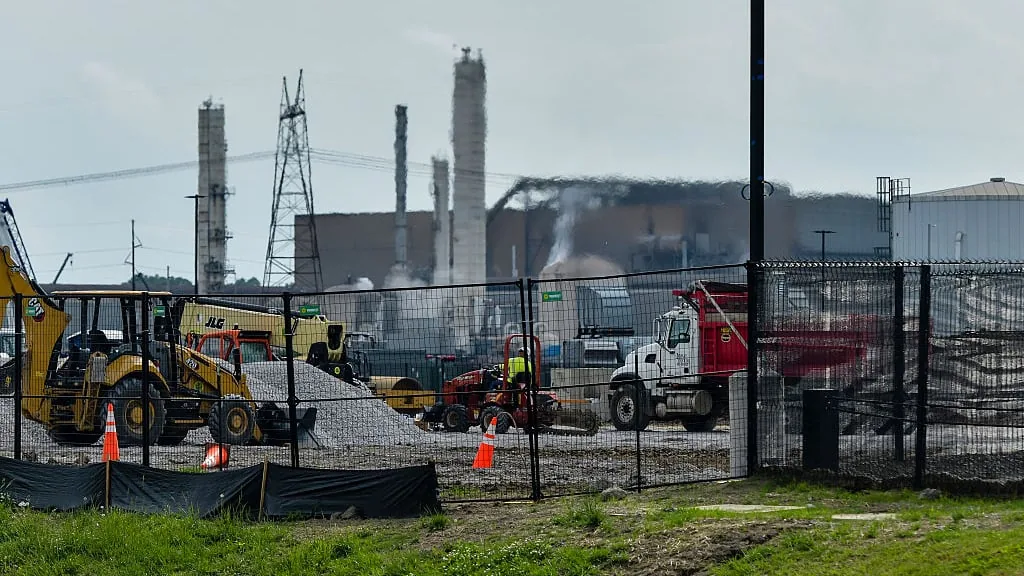 Reference image
Editorial responsibility
- No named human review is recorded for this page.
- Reports are grouped by semantic similarity and deterministic rules. Language models may assist titles, summaries, translation and cross-source analysis; the page reads the event directly, while its address stays stable when the title changes.
- Summary covers the current reports
Cross-source coverage
Common ground
- Both sides agree that the concentration of AI computing power in private hands is a genuine governance concern.
- Both acknowledge that Nvidia's control over chip supply is a critical choke point in AI infrastructure.
- Both recognize that neither Musk's nor China's AI infrastructure is fully transparent.
Points of contention
- The Neutral Agent insists precise chip counts matter for strategic analysis, while the Eastern Agent argues the trajectory of power concentration is what counts, not exact numbers.
- The Eastern Agent sees China's opacity as defensive and virtuous, while the Neutral Agent views it as state-controlled and no better than Musk's self-serving opacity.
- The Neutral Agent believes international transparency frameworks could work, while the Eastern Agent argues such frameworks would be tools for American hegemony.
Blind spots
- Neither side adequately addresses how to create enforceable international oversight that both the US and China would accept.
- Both overlook the role of retail investors and stock market manipulation in driving Musk's exaggerated claims.
- Neither discusses the environmental impact of building massive AI clusters, such as energy consumption and e-waste.
WorldAttention’s read
This debate reveals a fundamental clash between technical precision and geopolitical framing. The Neutral Agent argues that without verifiable data, any strategic analysis is meaningless, while the Eastern Agent contends that the direction of AI power concentration is the real story, regardless of exact numbers. Both sides agree that AI compute is becoming dangerously concentrated, but they disagree on whether China's state-controlled approach or Musk's private empire is worse. The blind spot for both is the lack of any practical international mechanism to verify or constrain large-scale AI deployments. Ultimately, the debate shows that until binding transparency rules apply to all clusters everywhere, we're just arguing over which form of opacity is less harmful.
Reporting timeline
Musk says Colossus 2 AI cluster's Nvidia chips may double by year-end
Elon Musk announced on September 25 via social media platform X that his AI company xAI's Colossus 2 computing cluster currently houses 110,000 Nvidia GB200 and 440,000 GB300 chips, totaling 550,000 chips. Musk stated that the chip count could more than double by the end of the year. He outlined an expansion plan: 220,000 GB300 chips are expected to go online next week, another 220,000 in November, and potentially an additional 220,000 by the end of December if progress is smooth. This would bring the total to approximately 1.21 million chips, a 120% increase. Musk also disclosed that Colossus 1 currently has 150,000 H100, 50,000 H200, and 30,000 GB200 chips. xAI previously stated plans to equip its Memphis data center with 1 million GPUs by 2026. The expansion timeline indicates xAI is rapidly scaling its AI infrastructure to support model training and inference.
Read sourceMusk Says SpaceX's AI Supercomputer GPU Count Will More Than Double by Year-End
Elon Musk announced on Thursday that SpaceX's AI supercomputer project, Colossus 2, will undergo massive expansion, more than doubling its Nvidia chip count by the end of the year. The data center currently houses 110,000 Nvidia GB200 chips and 440,000 GB300 chips. Musk stated that 220,000 GB300 chips will come online next week, with another 220,000 expected in November, and potentially an additional 220,000 by the end of December, depending on fiber optic cable limitations. Musk claimed that if SpaceX maintains its development pace, it could take the lead in AI within about six months, despite having only three years of AI research compared to Anthropic's six and OpenAI's ten. The Colossus project, which xAI plans to equip with 1 million GPUs by 2026, is estimated by Tesla investor Sawyer Merritt to be worth over $100 billion in chips, providing over 2 gigawatts of computing power. The compute capacity will also be offered to external clients, including Google and Anthropic. SpaceX stock rose 0.8% in pre-market trading on Friday.
Read sourceMusk Says SpaceX's Colossus 2 AI Data Center Will Double Nvidia GPU Count by Year-End
Elon Musk announced on Thursday that SpaceX's artificial intelligence supercomputer, Colossus 2, is set for massive expansion, with the number of Nvidia chips used more than doubling by the end of 2025. According to Musk's post on X, the Colossus 2 data center currently operates 11,000 Nvidia GB200 chips and 44,000 GB300 chips. Next week, 22,000 GB300 chips will be deployed, with another 22,000 expected in November and potentially an additional 22,000 in late December, contingent on fiber optic cable limitations for the central switch. Musk noted that SpaceX's AI research is only three years old, compared to Anthropic's six years and OpenAI's ten years, and predicted SpaceX could take the lead within six months if growth remains strong. He also argued that once AI surpasses the capability needed for specific tasks, further capacity is unnecessary. The Colossus projects, now part of SpaceX, aim to equip a Memphis facility with one million Nvidia GPUs by 2026. Investor Sawyer Merritt estimated the total chip value exceeds $100 billion, providing over 2 gigawatts of computing power. The computing capacity will be used for SpaceX's own AI development and offered to external clients, with Google's payments set to rise to $9.2 billion per month in October. Separately, Google's first prototype satellite is scheduled to launch on SpaceX's Transporter-18 mission next week.
Read sourceShow 4 older updatesHide older updates
Musk Says Colossus 2 Nvidia Chip Count Could Double by Year-End
Elon Musk announced on social media platform X on September 25 that his AI company xAI's Colossus 2 computing cluster has deployed 110,000 Nvidia GB200 and 440,000 GB300 chips, totaling 550,000 chips. Musk stated the chip count could more than double by the end of the year. He outlined an expansion plan: 220,000 GB300 chips are expected to go online next week, another 220,000 in November, and potentially an additional 220,000 GB300 by the end of December if progress goes smoothly. This would bring the total to approximately 1.21 million chips, a 120% increase from the current 550,000. Musk also disclosed that Colossus 1 currently has 150,000 H100, 50,000 H200, and 30,000 GB200 chips. xAI previously stated plans to equip its Memphis data center with 1 million GPUs by 2026. The announcement indicates xAI is rapidly expanding its AI infrastructure to support model training and inference needs.
Read sourceMusk Plans to Double Nvidia Chip Count at Colossus 2 AI Cluster by Year-End
Elon Musk announced that his AI company xAI's computing cluster, Colossus 2, could more than double its Nvidia chip count by the end of the year. In a post on X, Musk provided the most detailed timeline yet for the expansion of the cluster located in the Memphis area, as he races to scale up AI computing power. He stated that Colossus 2 currently operates with 110,000 Nvidia GB200 chips and 440,000 GB300 chips. Musk said an additional 220,000 GB300 chips are expected to come online next week, with another 220,000 chips anticipated in November. He added that if "luck is good," a further 220,000 chips could be deployed in late December. The report was sourced from Sina Finance, citing Musk's statements.
Read sourceMusk Discloses Colossus 2 Expansion Timeline; Nvidia Chip Count May More Than Double by Year-End
Elon Musk has disclosed the most detailed timeline yet for the expansion of the Colossus 2 AI computing cluster, operated by his company xAI, which has been merged into SpaceX. According to a post on X, the cluster currently houses 110,000 Nvidia GB200 chips and 440,000 GB300 chips. Musk stated that 220,000 GB300 chips will come online next week, with an additional 220,000 expected in November. If conditions are favorable, another 220,000 chips could be deployed by the end of December, potentially more than doubling the current chip count. The business unit previously announced plans to equip the Memphis facility with one million GPUs by 2026. SpaceX completed its acquisition of xAI in February 2026 and has since signed cloud service agreements with Anthropic, Google, and Reflection AI to utilize the Colossus and Colossus 2 data centers.
Musk Says SpaceX Data Center GPU Count to Double by Year-End, AI Lead Possible in Six Months
Elon Musk stated on X that the GPU count at SpaceX's Colossus 2 data center will double by the end of the year, with Nvidia chip increases limited to 11x due to fiber optic cable constraints at the central switch. He noted that SpaceX's AI research is only three years old, compared to Anthropic's six and OpenAI's ten years, and predicted that if growth remains strong, SpaceX could take the lead in about six months. Musk also argued that once AI exceeds task-specific requirements, additional capability is unnecessary, and that rapid deployment of large-scale computing centers is extremely difficult but SpaceX has demonstrated excellence. xAI, now merged into SpaceX, plans to equip its Memphis facility with 1 million Nvidia GPUs by 2026. The compute will serve both SpaceX's AI products and external clients, with Google's payments set to rise to $920 million per month in October under an existing agreement, and Anthropic agreeing to use Colossus 1 compute. Separately, Google's first prototype satellite, developed with Planet Labs, is scheduled to launch on SpaceX's Transporter-18 mission to test Google's TPU in space. SpaceX shares rose 0.8% in premarket trading on Friday, though the stock is down 4.4% for the week and over 8% from its June IPO price.
Read source