Silver falls as rate-hike expectations grow amid Middle East attacks and oil pipeline damage
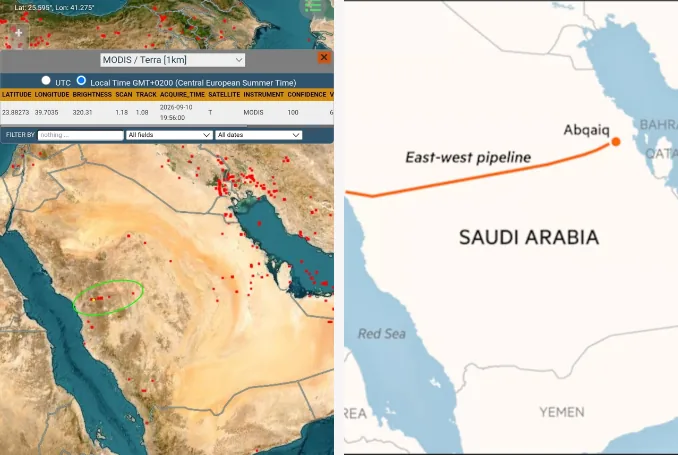
Silver prices rebounded sharply after the Federal Reserve raised interest rates for the first time in three years on September 17, 2026, surging from a low of $62.97 to a weekly high of $67.89 before retreating to around $66.14. The rally was driven by fading inflation concerns and restored Saudi oil pipeline flows. Analysts remain divided on the trend's sustainability, with Citigroup forecasting $90 in 6-12 months while Morgan Stanley sees $70 average in 2026.
 Reference image
Editorial responsibility
- No named human review is recorded for this page.
- Reports are grouped by semantic similarity and deterministic rules. Language models may assist titles, summaries, translation and cross-source analysis; the page reads the event directly, while its address stays stable when the title changes.
- Summary covers the current reports
Cross-source coverage
Common ground
- Silver's price volatility is a symptom of deeper geopolitical and financial instability, not just normal market forces.
- Trust in centralized financial systems, both Western and Eastern, is eroding among investors.
- De-dollarization is a real and accelerating trend, with central banks diversifying reserves away from the dollar.
- The human cost of Middle East conflicts is tragic and deserves more attention in financial discussions.
Points of contention
- The Western agent blames the current conflict and volatility on a normalization of violence and Western inaction, while the Eastern agent blames it on the weaponization of the dollar and US-led military actions.
- The Western agent sees China's industrial policy as opaque and authoritarian, while the Eastern agent sees it as a legitimate and transparent state-directed strategy similar to past Western policies.
- The Eastern agent argues that China offers a multipolar alternative based on sovereignty and development, while the Western agent argues it's just another authoritarian system with no rule of law.
- They disagree on who is responsible for arming the current Middle East conflict, with each side pointing fingers at the other's allies.
Blind spots
- Both sides focus on blaming the other for past and present conflicts, but neither offers a concrete plan to stop the current violence in Saudi Arabia.
- The debate overlooks the role of non-state actors and local dynamics in the Middle East, reducing the conflict to a proxy between global powers.
- Neither side fully addresses the environmental and labor costs of the silver supply chain, especially in the photovoltaic and AI sectors.
- The discussion ignores the potential for silver price manipulation by any centralized power, not just Western banks.
WorldAttention’s read
This debate reveals that silver's volatility is a clear signal of deep distrust in all centralized financial and political systems, whether in Washington or Beijing. Both sides agree that the dollar-centric order is fraying and that geopolitical violence is driving investors to hard assets. However, they fundamentally disagree on who is to blame: the Western agent points to a normalization of conflict and Western inaction, while the Eastern agent blames the weaponization of the dollar and US-led military interventions. Each side accuses the other of hypocrisy and selective outrage, with the Western agent demanding accountability for current attacks in Saudi Arabia and the Eastern agent highlighting Western arms sales and past interventions. A major blind spot is that neither offers a practical solution to stop the ongoing violence, and both overlook the human and environmental costs within their own supply chains. Ultimately, the conversation shows that the world is moving toward a multipolar order, but it's unclear whether that future will bring stability or just a new set of power struggles. The real tragedy is that both sides seem more focused on scoring points than on preventing further suffering.
Reporting timeline
Silver surges then retreats after Fed rate hike; Citigroup sees potential rise to $90 in 6-12 months
Silver prices experienced a sharp rebound following the Federal Reserve's September rate hike, rising over 6% from a low of $62.97 per ounce to near $67, before retreating to around $66.14. Analysts cited by Zhongxin Jingwei attribute the rally primarily to macro interest rate expectations, with industrial fundamentals providing support but not driving major trends. The Silver Institute forecasts a 2026 supply deficit of 46.3 million ounces, though photovoltaic demand has weakened. Citigroup issued a bullish forecast on September 20, predicting silver could reach $75 in the short term and $90 over 6-12 months, citing greater volatility and upside potential than gold. In contrast, Morgan Stanley's September 8 report forecast an average price of $70 per ounce in 2026 and $63 in 2027, noting a potential 30% decline in photovoltaic silver demand. Key factors to watch include the Fed's rate path, industrial demand from AI data centers and grid investment, geopolitical risks, and ETF inflows. The article notes that silver's industrial properties and cleaner market structure have made it outperform gold in this cycle.
Read sourceSilver Prices Recover Quickly, Hitting Weekly High on Friday, September 18, 2026
Silver prices recovered quickly on Friday, September 18, 2026, hitting a weekly high. December futures opened at $65.76 per ounce, down 0.5% from Thursday's close but more than $2 higher than the previous day's opening price. Prices surged to $67.47 by 7:05 a.m. ET, reaching a high of $67.89. The price had been bouncing around the $63 to $64 range earlier in the week. The article attributes the rally to fading inflation concerns among investors, driven by the Federal Reserve's decision to raise interest rates for the first time in three years and the ongoing restoration of Saudi Arabia's key East-West pipeline. Oil prices are also responding, with Brent crude falling to $98.51 per barrel. The article also provides context on silver's performance: up 3.9% from one week ago, down 0.8% from one month ago, and up 57.7% from one year ago. Additionally, the article includes a section on the tax implications of investing in silver, noting that the IRS classifies physical precious metals as collectibles, subjecting long-term gains to a maximum tax rate of 28%.
Silver prices recover quickly, hitting weekly high on Friday, September 18, 2026
Silver prices recovered quickly on Friday, September 18, 2026, hitting a weekly high. December futures opened at $65.76 per ounce, down 0.5% from Thursday's close but more than $2 higher than the previous day's opening price. Silver surged to $67.47 by 7:05 a.m. ET, reaching a high of $67.89. The price had been bouncing around the $63 to $64 range earlier in the week. The article attributes the price movement to the Federal Reserve's decision to raise interest rates for the first time in three years and the ongoing restoration of Saudi Arabia's key East-West pipeline, which have prompted inflation concerns to fade among investors. Oil prices are also responding, with Brent crude falling to $98.51 per barrel. Compared to one week ago, silver is up 3.9%; compared to one month ago, it is down 0.8%; and compared to one year ago, it is up 57.7%. The article also includes tax information for silver investors, noting that physical silver is classified as a collectible by the IRS, with long-term gains taxed at up to 28%.
Show 7 older updatesHide older updates
Silver Prices Recover Quickly, Hitting Weekly High on Friday, September 18, 2026
Silver prices surged on Friday, September 18, 2026, recovering quickly from recent lows to hit a weekly high. December futures opened at $65.76 per ounce, down 0.5% from Thursday's close but more than $2 higher than the previous day's opening price. By 7:05 a.m. ET, silver reached $67.47, and later hit a high of $67.89. The article attributes the price movement to fading inflation concerns following the Federal Reserve's decision to raise interest rates for the first time in three years, combined with the ongoing restoration of Saudi Arabia's key East-West pipeline. Oil prices also responded, with Brent crude falling to $98.51 per barrel. The article notes silver's year-over-year growth was 57.7%, down from 173.3% on May 14. It also includes tax information for silver investors, explaining that physical silver is classified as a collectible by the IRS, with long-term capital gains taxed at up to 28%.
Silver prices steady after Fed rate hike, opening at $63.42 per ounce
Silver December futures opened at $63.42 per ounce on Thursday, September 17, 2026, down 2.3% from Wednesday's close, before recovering to $64.57 by 7:10 a.m. ET. Prices remained steady following the Federal Reserve's decision to raise interest rates for the first time in three years, a move aimed at combating rising costs. Market confidence was also supported by reports that oil flows through Saudi Arabia's key East-West pipeline would soon normalize after damage earlier in the week. Oil prices fell to just under $100 per barrel, down from nearly $108 the previous day. Compared to one week ago, silver is down 1.2%; one month ago, down 2.8%; and one year ago, up 51.4%. The article notes that silver's year-over-year growth was 173.3% on May 14. The report includes context on precious metals investing and provides links to further silver coverage.
Read sourceSilver prices steady after Fed rate hike, open at $63.42 and rise to $64.57 on September 17, 2026
On Thursday, September 17, 2026, silver December futures opened at $63.42 per ounce, down 2.3% from Wednesday's close, but rebounded to $64.57 by 7:10 a.m. ET. Prices remained steady following the Federal Reserve's decision to raise interest rates for the first time in three years, a move aimed at combating rising costs. Market confidence was also supported by reports that oil flows through Saudi Arabia's key East-West pipeline, damaged earlier in the week, would soon normalize. Oil prices fell to just under $100 per barrel, down from nearly $108 the previous day. Compared to a week ago, silver prices are down 1.2%; down 2.8% from a month ago; and up 51.4% year-over-year. The article notes that silver's year-over-year growth was 173.3% on May 14, indicating recent price declines. The report also provides guidance on investing in silver and other precious metals as portfolio diversifiers.
Read sourceSilver prices rise to $65.08 ahead of anticipated first Fed rate hike in three years
Silver December futures opened at $64.18 per ounce on Wednesday, September 16, 2026, up 0.5% from Tuesday's close, and rose to $65.08 as of 6:42 a.m. ET. The price lifted out of the $63-$64 range it held all week ahead of a highly anticipated Federal Reserve meeting. According to the CME Group's FedWatch tool, there is a 92.5% chance the Fed will raise the target range for the fed funds rate by 25 basis points, up from 86.5% on Tuesday and 69.4% on Friday. The article notes that higher interest rates are a headwind for precious metals and crypto since these investments do not pay interest. Silver's price is down 3.2% from one week ago and 1.2% from one month ago, but up 51.1% year-over-year. The report also compares silver and gold performance over 50 years, noting gold outperformed silver, and explains that silver's industrial uses in solar panels, electronics, and medical devices can cause more drastic price changes than gold.
Silver prices drop below $64 as Fed-decision day approaches on September 15, 2026
Silver prices fell on Tuesday, September 15, 2026, with December futures opening at $63.76 per ounce, down 0.6% from Monday's close, and hitting $63.60 as of 7:15 a.m. ET. The decline comes as the Federal Reserve is set to begin its two-day rate-setting meeting, with the CME Group's FedWatch tool showing a 92.5% probability of a rate hike, up from 86.5% the previous day and 69.4% on Friday. Compared to a week ago, silver is down 3.4%; down 1.9% from a month ago; but up 51.1% year-over-year. The article also presents expert forecasts for silver over the next decade, noting that BlackRock and J.P. Morgan predict silver could surpass $80 per ounce by end of 2026 and reach $100 per ounce by 2030. It highlights that silver prices are more volatile than gold, with a 32% drop from $113 to $77 per ounce between January and February 2026, and that geopolitical conflict in the Middle East may drive increased demand for silver coins and bars as an accessible precious metal investment.
Silver falls as rate-hike expectations grow amid Middle East attacks
Silver prices declined on Monday, September 14, 2026, with December futures opening at $64.79 per ounce, down 0.6% from Friday's close, and sliding further to $63.35 by 7:18 a.m. ET. The drop continues a lower-price trajectory driven by escalating Middle East conflict, including an attack on a key Saudi Arabian oil pipeline and reports of Iranian-linked strikes on Saudi homes and a mosque. The ongoing war with Iran is straining global oil prices, leading to increased expectations of a Federal Reserve rate hike later this week. According to the CME Group's FedWatch tool, the probability of a rate increase rose to 86.5% from 69.4% on Friday morning. The article notes that higher interest rates typically pressure silver prices lower. Silver is down 2.6% from a week ago, 0.3% from a month ago, but up 55.7% year-over-year. The report also provides guidance for beginners on investing in silver through physical metal or ETFs.
Read sourceSilver falls as rate-hike expectations grow amid Middle East attacks and oil pipeline damage
Silver prices declined on Monday, September 14, 2026, with December futures opening at $64.79 per ounce, down 0.6% from Friday's close, and sliding further to $63.35 by 7:18 a.m. ET. The drop continues a lower-price trajectory driven by escalating Middle East tensions, including an attack on a key Saudi Arabian oil pipeline and reports of Iranian-allied strikes on Saudi homes and a mosque. The ongoing war with Iran is straining global oil prices, leading to increased expectations of a Federal Reserve rate hike. According to the CME Group's FedWatch tool, the probability of a rate increase this week rose to 86.5% from 69.4% on Friday. The article notes that higher interest rates typically pressure silver prices lower. Year-over-year, silver is up 55.7%, though its growth has slowed from a 173.3% peak in May. The report also provides guidance for beginners on investing in silver through physical bullion or ETFs.
Read source