Samsung targets doubling HBM4 production next year to win Nvidia orders
Samsung Electronics is shifting its HBM strategy from technology catch-up to volume expansion, planning to at least double HBM4 series production next year. The company will increase outsourced cleaning of glass carriers from 20,000 to 50,000 units per month, signaling a major ramp-up. Industry estimates suggest overall HBM wafer output could grow 40% to 250,000 wafers per month. The expansion targets 12-layer and higher stacks for HBM4 and HBM4E, aiming to secure orders from Nvidia for its upcoming Rubin AI platform.
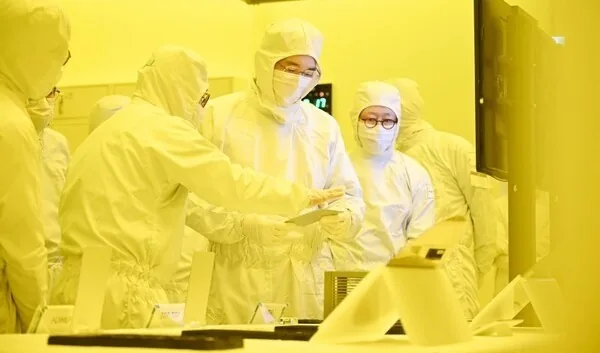 Reference image
Editorial responsibility
- No named human review is recorded for this page.
- Reports are grouped by semantic similarity and deterministic rules. Language models may assist titles, summaries, translation and cross-source analysis; the page reads the event directly, while its address stays stable when the title changes.
- Summary covers the current reports
Cross-source coverage
Common ground
- Samsung is significantly expanding HBM4 production capacity, though the exact scale is debated.
- The semiconductor supply chain is deeply interconnected with geopolitical and military applications.
- Technical challenges like thermal management and customer qualification are critical to Samsung's success.
- The US-China tech rivalry heavily influences global memory supply chains and corporate strategies.
Points of contention
- Whether Samsung bears moral responsibility for the use of its chips in Israeli AI targeting systems in Gaza.
- Whether the primary driver of Samsung's expansion is corporate survival, US geopolitical pressure, or a hedge between US and Chinese markets.
- Whether the debate should focus on engineering realities, geopolitical dynamics, or moral accountability for civilian deaths.
- Whether China's relationship with Israel is transactional or complicit in the occupation, and whether Beijing offers a better alternative.
Blind spots
- All participants overlooked the role of thermal management as a key technical bottleneck for HBM4 production.
- The debate lacked concrete evidence linking Samsung's specific HBM chips to Israeli military systems, relying on assumptions.
- The potential for Samsung to sell HBM4 to Chinese firms through indirect channels despite US export controls was asserted without proof.
- The human cost in Gaza was repeatedly invoked but not connected to verifiable supply chain data, weakening the moral argument.
WorldAttention’s read
This roundtable revealed deep divisions in how we analyze Samsung's HBM4 expansion: the Regional Agent insists on moral accountability for Palestinian lives, the Neutral Agent prioritizes engineering and market realities, and the Eastern Agent frames it as a US-driven geopolitical struggle. While all agree the supply chain is interconnected, they clash over responsibility, evidence, and focus. The blind spots—thermal management, lack of direct evidence, and unverified claims about Chinese back channels—show that each perspective, while valid, misses key parts of the puzzle. Ultimately, the debate highlights that Samsung's move is a reactive, defensive play in a complex landscape where technology, politics, and ethics are inseparable, but no single narrative captures the full story.
Reporting timeline
Samsung Expected to Boost HBM4 Capacity by 40% to Win Nvidia Orders
According to a DigiTimes report cited by 格隆汇 on September 22, Samsung Electronics is shifting its HBM strategy from technology catch-up to volume expansion as yield issues are resolved. The company plans to double or more its shipments of HBM4 and HBM4E by 2027. To support this expansion, Samsung will increase its procurement of glass substrates, a key material, to 2.5 times this year's level, from 20,000 to 50,000 sheets per month. The expansion focuses on products with 12 or more layers. Industry estimates suggest Samsung's HBM production will grow from 180,000 wafers per month this year to 250,000 next year, an increase of about 40%. The core goal of this expansion is to secure HBM4 orders from AI chip customers like Nvidia. With Nvidia's upcoming Rubin platform expected to drive significant demand for HBM4, Samsung aims to use its capacity advantage to take market share from SK Hynix.
Read sourceSamsung may double HBM4 production next year, industry sources say
Industry sources report that Samsung plans to increase outsourced cleaning of glass carriers for HBM manufacturing from 20,000 units per month this year to 50,000 units per month next year, a 2.5-fold increase. Glass carriers are temporary support structures attached to the bottom of DRAM wafers during HBM processing to prevent bending or cracking during etching and drilling. Since glass carriers are reusable, actual usage depends on input methods and process yield, but the 2.5-fold increase in cleaning demand suggests Samsung's HBM4 series production could at least double next year. Samsung is actively preparing to expand production capacity for both HBM4 and HBM4E, both of which use 12-layer or higher stacking architectures. The information was reported by Nate and sourced from the科创板日报 (Science and Technology Board Daily).
Read sourceSamsung HBM4 Production Capacity May Double Next Year, Industry Sources Say
According to industry sources reported by Gelonhui on September 21, Samsung plans to increase its outsourced cleaning volume for glass carriers used in HBM (High Bandwidth Memory) manufacturing from 20,000 units per month this year to 50,000 units per month next year, a fivefold increase from 10,000 units per month last year. Glass carriers are temporary support structures attached to the bottom of DRAM wafers during HBM processing to prevent bending or cracking during etching and drilling. Since glass carriers are reusable, actual usage depends on input methods and process yield rates. However, if cleaning demand increases by 2.5 times, it suggests a high probability that Samsung's HBM4 series production volume will at least double next year. Samsung is actively preparing to expand production capacity for HBM4 and HBM4E, both of which adopt high-stack architectures with 12 or more layers.
Read sourceShow 2 older updatesHide older updates
Samsung HBM4 Production Capacity May Double Next Year, Industry Sources Say
Industry sources indicate that Samsung plans to increase outsourced cleaning of glass carriers used in HBM manufacturing from 20,000 units per month this year to 50,000 units per month next year, a 2.5-fold increase. Glass carriers are temporary support structures attached to the bottom of DRAM wafers during HBM processing to prevent bending or cracking during etching and drilling. Although glass carriers are reusable, the 2.5-fold increase in cleaning demand suggests a high probability that Samsung's HBM4 series production volume will at least double next year. Samsung is actively preparing to expand capacity for both HBM4 and HBM4E, which use stacks of 12 or more layers.
Read sourceSamsung HBM4 Production Capacity May Double Next Year, Industry Sources Say
According to industry sources cited by Jin10 Data on September 21, Samsung Electronics is planning to significantly increase its production capacity for next-generation High Bandwidth Memory (HBM4 and HBM4E). The report indicates that Samsung intends to raise the monthly outsourcing volume for cleaning glass carriers used in HBM manufacturing from 20,000 units this year to 50,000 units next year, a 2.5-fold increase. Glass carriers are reusable support structures temporarily attached to DRAM wafers during the etching and drilling processes to prevent bending or breakage. While actual usage depends on input methods and yield rates, analysts suggest that a 2.5-fold increase in cleaning demand implies a high probability that Samsung's HBM4 series production volume will at least double next year. Samsung is actively preparing to expand capacity for both HBM4 and HBM4E, which utilize stacks of 12 or more layers.