Samsung and SK Hynix Q3 earnings test AI-driven semiconductor super cycle
Samsung Electronics and SK Hynix are set to report third-quarter earnings with combined operating profit forecast near a record 189.9 trillion won, driven by AI demand. Analyst estimates have been trimmed slightly due to won strength, not a market downturn. Investors are watching memory price sustainability, long-term supply agreements, and HBM4 profitability to gauge if the boom is structural or temporary.
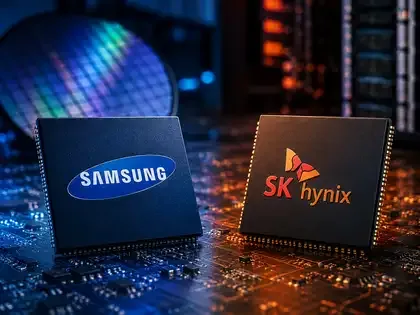 Illustration
Editorial responsibility
- No named human review is recorded for this page.
- Reports are grouped by semantic similarity and deterministic rules. Language models may assist titles, summaries, translation and cross-source analysis; the page reads the event directly, while its address stays stable when the title changes.
- Summary covers the current reports
Cross-source coverage
Common ground
- All agree that Samsung and SK Hynix will report strong earnings, but the real debate is whether this marks a peak or a lasting shift.
- Everyone acknowledges that worker exploitation and burnout are serious problems in the semiconductor industry across all countries.
- There is agreement that AI demand is real, driven by massive spending from companies like Microsoft and Google, but supply chains face physical limits like water and equipment shortages.
- All three recognize that geopolitics—especially US-China tensions and export controls—heavily shape the industry, not just market forces.
Points of contention
- Neutral Agent sees the earnings as a cyclical upswing with structural risks, while Eastern Agent frames it as a stress test for Western dominance, and Regional Agent says it's a distraction from human costs.
- Eastern Agent argues China's chip industry is catching up fast and its system offers real worker protections, but Neutral and Regional Agents say China's progress is still behind and its labor practices are just as exploitative.
- Regional Agent insists the focus should be on who benefits from the technology, while Neutral Agent emphasizes technical data like margins and bottlenecks, and Eastern Agent prioritizes geopolitical sovereignty.
- Neutral Agent believes Samsung's foundry and DX losses are a house of cards that will collapse when HBM demand normalizes, but Eastern Agent sees those losses as a deliberate long-term investment strategy.
Blind spots
- All three overlook the physical limits of resources like clean water and rare earths, which are real engineering constraints that no policy or ideology can fix.
- The debate ignores the role of consumers and end-users in the Global South who pay higher prices for chips but have no voice in the system.
- No one addresses how smaller countries like Vietnam or Malaysia, which host semiconductor assembly, are affected by the power struggles between the US, China, and Korea.
WorldAttention’s read
This earnings season for Samsung and SK Hynix shows strong profits, but the real story is deeper. The AI boom is real, driven by huge investments from tech giants, but it's built on fragile supply chains, exploited labor, and physical limits like water and chip-making machines. The three viewpoints—market-focused, geopolitical, and human-centered—each highlight a piece of the truth, but they miss how these pieces connect. The system works for shareholders in Silicon Valley, but it burns out workers in Korea, China, and beyond. The key question isn't just whether profits will last, but whether we can build a tech economy that serves people, not just stock prices. Until that changes, any success is temporary.
Reporting timeline
Samsung and SK Hynix Face High Expectations as Q3 Earnings Test Global AI Trade
South Korean chip giants Samsung Electronics and SK Hynix are approaching their third-quarter earnings reports amid a global semiconductor 'super cycle' driven by AI demand. Market expectations are extremely high, with combined operating profit forecast near a record 189.9 trillion won. However, analyst estimates have been slightly trimmed over the past three months due to won strength, not a demand downturn. The reports will be a key test of the sustainability of the 'AI trade,' with investors focused on the persistence of memory chip price increases, the profit-locking effect of long-term agreements (LTAs), and the profitability of next-generation HBM4 memory. Samsung's foundry business is expected to return to profit, while its device experience (DX) division faces cost pressures from rising chip prices. Analysts from KB Securities and Mirae Asset Securities provide forecasts, noting that price growth is slowing and that AI agents are driving demand for higher memory bandwidth. The earnings will determine if the current boom is a temporary spike or a structural shift.
Samsung and SK Hynix Face High Expectations Ahead of Q3 Earnings, Testing AI Trade
As Samsung Electronics and SK Hynix prepare to release their third-quarter earnings, the market holds extremely high expectations for the two South Korean chip giants, viewing their performance as a key test of the durability of the global 'AI trade.' According to FnGuide data cited by the Seoul Economic Daily, Samsung is forecast to post 199.1 trillion won in revenue and 105.6 trillion won in operating profit, while SK Hynix is expected to report 94.1 trillion won in revenue and 74.1 trillion won in operating profit. However, analyst estimates have been slightly downgraded over the past three months due to the won's strength, not a decline in the memory market itself. The article highlights several key signals for investors: the sustainability of memory chip price increases, the impact of long-term supply agreements (LTAs) on profit margins, and the profit potential of next-generation high-bandwidth memory (HBM4). It notes that while DRAM and NAND prices are expected to rise in Q3, the pace is slowing. Samsung's foundry business is expected to return to profitability, but its device experience (DX) division faces cost pressures from rising chip prices. The earnings reports will be crucial in determining whether the current semiconductor super-cycle is sustainable or if the market has peaked.
Read sourceSamsung and SK Hynix Q3 Earnings to Test AI Trade Profitability
South Korean chip giants Samsung Electronics and SK Hynix are at the center of a global semiconductor 'super cycle' driven by AI demand. As their third-quarter earnings approach, the results will serve as a key test of the 'AI trade's' profitability. According to FnGuide, Samsung is expected to report revenue of 199.1 trillion won and operating profit of 105.6 trillion won, while SK Hynix is forecast to post 94.1 trillion won in revenue and 74.1 trillion won in operating profit. However, analyst estimates have been trimmed over the past three months due to a stronger won, not a market downturn. The report highlights that DRAM and NAND average selling prices (ASPs) are rising but at a slowing pace, with Samsung's Q3 DRAM ASP expected to rise 16.5% but only 5.4% in Q4. The article notes that next-generation HBM4 memory is a key turning point, with Samsung's HBM4 sales expected to more than triple in Q3. Analysts cited suggest that AI services are entering a new era requiring ten times the data processing power, shifting focus to memory. Samsung's non-memory foundry business is expected to return to profit, while its device experience (DX) division faces cost pressures from rising chip prices. The earnings will test whether the current super cycle is more resilient than past cycles.
Read sourceShow 5 older updatesHide older updates
Samsung and SK Hynix Q3 Earnings to Test AI Trade Profitability
As Samsung Electronics and SK Hynix prepare to report third-quarter earnings, their performance is seen as a key test of the durability of the global 'AI trade.' According to FnGuide data cited by the Seoul Economic Daily, Samsung is expected to post revenue of 199.1 trillion won and operating profit of 105.6 trillion won, while SK Hynix is forecast to report 94.1 trillion won in revenue and 74.1 trillion won in operating profit. However, analyst estimates have been trimmed over the past three months due to the won's strength, not a downturn in the memory market. The report highlights that rising DRAM and NAND average selling prices (ASPs) are the main growth engine, though price increases are expected to slow in the fourth quarter. A key focus is the next-generation HBM4 memory, where Samsung expects Q3 sales to more than double sequentially, while SK Hynix aims to expand production. The article also notes that agentic AI, requiring ten times the token processing speed of traditional generative AI, is shifting data center architecture to prioritize memory. Samsung's non-memory businesses, including its foundry and device experience (DX) divisions, are also under scrutiny, with the foundry expected to return to profit while the DX unit faces cost pressures from rising chip prices.
Read sourceSamsung, SK Hynix Face High Expectations as Q3 Earnings Test AI Chip Boom
South Korean chip giants Samsung Electronics and SK Hynix are set to report third-quarter earnings amid extremely high market expectations, serving as a key test for the sustainability of the global AI-driven semiconductor boom. According to FnGuide data cited by the Seoul Economic Daily, Samsung is forecast to post 199.1 trillion won in revenue and 105.6 trillion won in operating profit, while SK Hynix is expected to report 94.1 trillion won and 74.1 trillion won, respectively. However, analyst estimates have been trimmed over the past three months due to the won's strength, which reduces dollar-denominated sales. Investors are closely watching the persistence of memory chip price increases, the impact of long-term supply agreements (LTAs) on profit margins, and the profitability of next-generation high-bandwidth memory (HBM4) as a gauge of whether the current cycle is a temporary spike or a structural shift. The article notes that DRAM and NAND price growth is expected to slow in the fourth quarter, while Samsung's foundry business is anticipated to return to profit. Conversely, Samsung's device experience (DX) division faces cost pressures from rising chip prices. The upcoming earnings reports are seen as pivotal for determining the short-term market direction of the two companies and setting the tone for global tech infrastructure investment.
Read sourceSamsung and SK Hynix face high expectations ahead of Q3 earnings, testing global AI trade
South Korean chip giants Samsung Electronics and SK Hynix are at the center of a global semiconductor 'super cycle' driven by AI demand and next-generation memory technology. As their third-quarter earnings approach, the market holds extremely high expectations, with combined operating profit forecast to approach a record 189.9 trillion won, according to FnGuide data cited by the Seoul Economic Daily. However, analyst estimates have been trimmed over the past three months due to the won's strength, not a market downturn. Key investor concerns include the sustainability of memory price increases, the impact of long-term supply agreements (LTAs) on profit margins, and the profitability of next-generation HBM4 memory. Samsung's foundry business is expected to return to profit, while its device experience (DX) division faces cost pressure from rising chip prices. The earnings will serve as a critical test of whether the current AI-driven boom is a temporary spike or a structural shift with long-term resilience.
Samsung and SK Hynix Face High Expectations as Q3 Earnings Test AI Trade
South Korean chip giants Samsung Electronics and SK Hynix are approaching their third-quarter earnings reports with extremely high market expectations, as their performance is seen as a key test of the durability of the global 'AI trade.' According to FnGuide data cited by the Seoul Economic Daily, Samsung is expected to post 199.1 trillion won in revenue and 105.6 trillion won in operating profit, while SK Hynix is forecast to report 94.1 trillion won in revenue and 74.1 trillion won in operating profit. However, analyst consensus has been slightly trimmed over the past three months due to won strength reducing dollar-denominated sales. Investors are closely watching the sustainability of memory chip price increases, the impact of long-term supply agreements (LTAs) on profit margins, and the profitability of next-generation HBM4 memory. The article notes that DRAM and NAND price growth is expected to slow in Q4, and that Samsung's foundry business is expected to return to profitability after losses since 2023. Meanwhile, Samsung's device experience (DX) division faces cost pressures from rising chip prices. The earnings results will influence whether the current semiconductor upcycle is seen as a temporary boom or a structural shift.
Read sourceSamsung and SK Hynix Face High Expectations Ahead of Q3 Earnings, Testing AI Trade
South Korean chip giants Samsung Electronics and SK Hynix are approaching their third-quarter earnings reports with extremely high market expectations, as their performance is seen as a key test of the durability of the global 'AI trade.' According to FnGuide data cited by the Seoul Economic Daily, Samsung is expected to post 199.1 trillion won in revenue and 105.6 trillion won in operating profit, while SK Hynix is forecast to achieve 94.1 trillion won in revenue and 74.1 trillion won in operating profit. However, analyst consensus has been slightly trimmed over the past three months due to the won's strength reducing dollar-denominated sales. The reports will provide deeper signals on the sustainability of memory chip price increases, the profit-locking effect of long-term supply agreements (LTAs), and the profitability of next-generation high-bandwidth memory (HBM4). Samsung's foundry business is expected to return to profit in Q3, while its device experience (DX) division faces cost pressures from rising chip prices. The earnings will help determine whether the current semiconductor super-cycle is a temporary boom or a structural shift.
Read source