Lavrov and Baerbock hold first tense meeting since Ukraine war, no progress
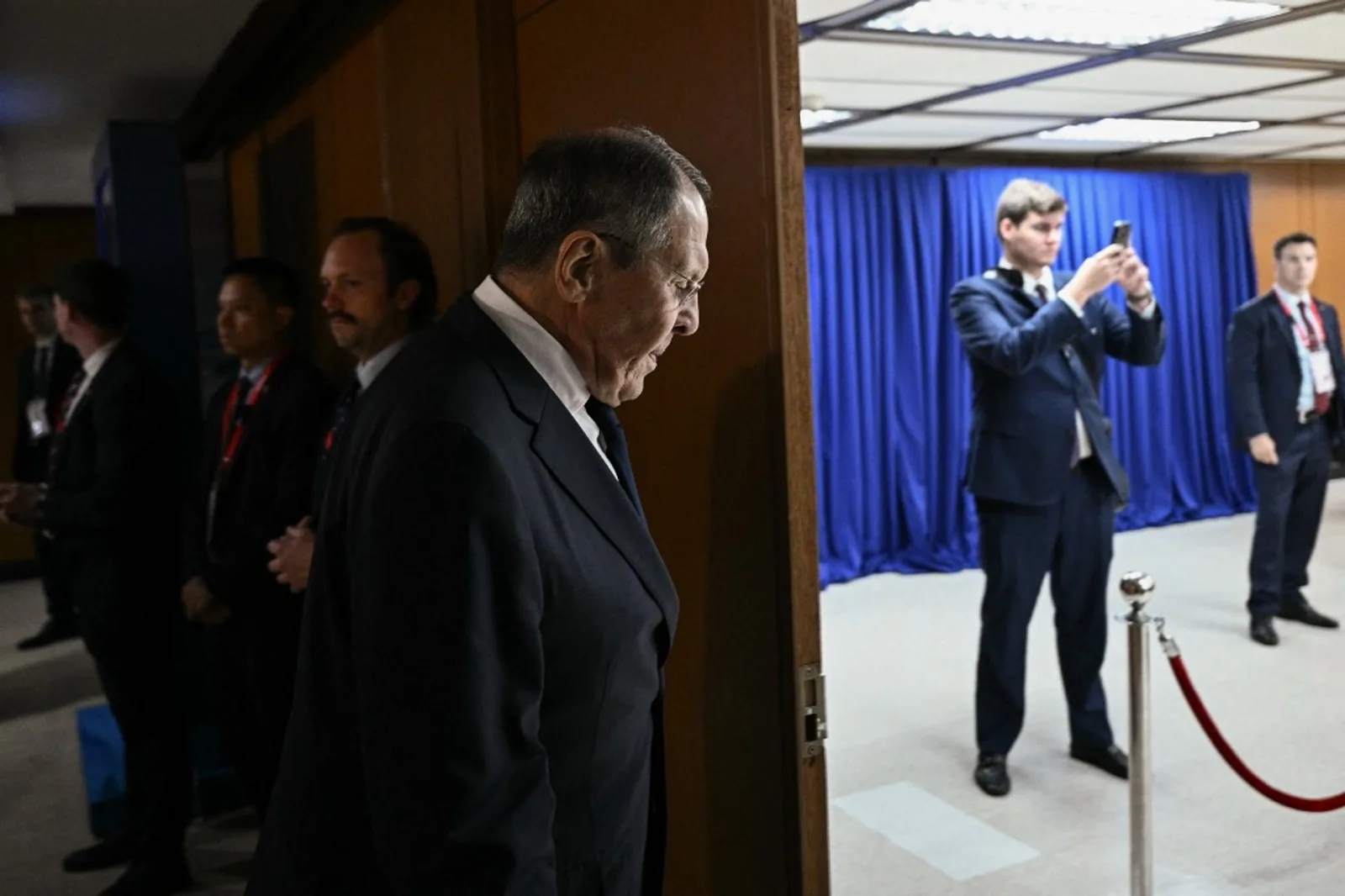
Russian Foreign Minister Sergey Lavrov and German Foreign Minister Annalena Baerbock met briefly on September 26-27 at the UN headquarters in New York, their first face-to-face talks since the Ukraine conflict began in 2022. The 20-minute meeting ended with a handshake but no agreements. Lavrov said Germany requested the meeting and described it as yielding "nothing new." Baerbock urged Russia to abandon its "dangerous escalation course" against NATO. The meeting occurred amid heightened tensions following a suspected Russian-linked drone incident near Leipzig.
 Reference image
Editorial responsibility
- No named human review is recorded for this page.
- Reports are grouped by semantic similarity and deterministic rules. Language models may assist titles, summaries, translation and cross-source analysis; the page reads the event directly, while its address stays stable when the title changes.
- Summary covers the current reports
Cross-source coverage
Common ground
- The meeting between Baerbock and Lavrov was not a diplomatic breakthrough but a tense, performative encounter.
- Russia's invasion of Ukraine is a clear violation of international law and has shattered post-Cold War security in Europe.
- Germany's economic model, built on cheap Russian energy and exports, is under severe structural strain.
- The war has no clear military solution—neither side can fully achieve its objectives on the battlefield.
- Diplomatic channels must remain open even with adversaries, but this meeting produced no concrete progress.
Points of contention
- Whether Russia's invasion is primarily a moral crime or a geopolitical move in a multipolar power struggle.
- If NATO expansion caused the war or was a defensive reaction to Russian aggression.
- Whether Germany's economic pain justifies seeking compromise with Russia or must be endured to uphold principles.
- If the 'rules-based order' is a principled system worth defending or a selectively applied Western tool.
- Whether the war ends when Russia stops fighting or requires both sides to accept unacceptable compromises.
Blind spots
- All sides downplay the human cost of the war—civilian deaths, displacement, and trauma—in favor of strategic arguments.
- The debate ignores the agency and voice of Ukraine itself, treating it as a pawn in great power politics.
- No one addresses how climate change and energy transition affect long-term European-Russian relations beyond the current crisis.
- The role of China and the Global South as potential mediators or spoilers is barely mentioned.
- The psychological and political impact of the war on ordinary Russians and Europeans is overlooked.
WorldAttention’s read
This meeting was a necessary but insufficient step—a stage for accountability, not a path to peace. All sides agree Russia's invasion broke international law and that Germany's old Russia policy is dead. But they clash on whether the West's moral stance or Russia's security fears are the core driver, and whether economic pain justifies compromise. The war has no military solution, yet neither side offers a realistic off-ramp. The real blind spot is that Ukraine's own voice and the human toll are lost in debates about NATO, multipolarity, and economic collapse. Until both sides accept they cannot win outright, these meetings will remain diplomatic theater—necessary to keep talking, but far from enough to end the suffering.
Reporting timeline
Russian and German Foreign Ministers Hold First Brief Tense Meeting Since Ukraine Conflict
Russian Foreign Minister Sergei Lavrov and German Foreign Minister Annalena Baerbock held a brief meeting on September 26 at the United Nations headquarters in New York, their first face-to-face encounter since the Ukraine crisis escalated in 2022. The meeting lasted just over 20 minutes and ended with a handshake. Lavrov stated that Germany requested the meeting, but described it as 'nothing new,' accusing Baerbock of merely repeating Germany's official position and implying that Russia should make concessions in Ukraine. German media reported that Baerbock described the atmosphere as tense, with deep disagreements on Ukraine and no agreements reached on key issues. The meeting occurred amid heightened tensions, following Germany's accusation in early September that Russia was involved in a drone incident near Leipzig in August, which led Germany to close Russia's consulate in Bonn. Russia denied involvement, blamed Ukraine, and retaliated by ordering the closure of Germany's consulate in St. Petersburg.
Read sourceRussian and German Foreign Ministers Hold First Meeting Since Ukraine Conflict
Russian Foreign Minister Sergey Lavrov and German Foreign Minister Annalena Baerbock held a brief meeting on September 26 at the United Nations headquarters in New York. This marks the first face-to-face encounter between the two countries' top diplomats since the outbreak of the Russia-Ukraine conflict in February 2022. The meeting, reported by China's Xinhua News Agency via the financial news outlet CLS, took place on the sidelines of the UN General Assembly. No details about the content or duration of the conversation were provided in the brief report. The encounter is significant as it represents a rare direct diplomatic contact between a major NATO member and Russia amid ongoing hostilities in Ukraine.
Read sourceGerman and Russian Foreign Ministers Hold First Talks Since 2022; Lavrov Says 'No New Progress'
German Foreign Minister Annalena Baerbock and Russian Foreign Minister Sergey Lavrov held their first face-to-face meeting since the start of the Ukraine war on Saturday, September 27, on the sidelines of the UN General Assembly. The meeting comes amid heightened EU-Russia tensions. A German delegation official stated that Baerbock urged Russia to abandon its 'dangerous escalation course' against Germany, Europe, and NATO. Relations have recently deteriorated following an alleged Russian-linked drone attack attempt at Leipzig Airport last month and subsequent retaliatory measures. The official added that Baerbock is open to improving relations but stressed that this requires Russia to show genuine willingness to end the conflict in Ukraine. In a subsequent press conference, Lavrov described the dialogue as yielding 'no new progress.'
Read sourceShow 2 older updatesHide older updates
German and Russian Foreign Ministers Hold First Talks Since 2022; Lavrov Says 'No New Progress'
German Foreign Minister Annalena Baerbock and Russian Foreign Minister Sergei Lavrov held a face-to-face meeting on Saturday during the United Nations General Assembly, marking the first such talks between the two countries since the outbreak of the Russia-Ukraine conflict in 2022. According to a German delegation official, Baerbock urged Russia to abandon its 'dangerous escalation course' against Germany, Europe, and the NATO alliance. The meeting comes amid heightened tensions following an alleged drone attack attempt at Leipzig Airport last month, which Germany attributed to Russia, and subsequent retaliatory measures. The German official stated that Baerbock is open to improving relations but stressed that this requires the Russian leadership to demonstrate a genuine willingness to end the war in Ukraine. In a subsequent press conference, Russian Foreign Minister Lavrov described the dialogue as having 'no new progress.'
Read sourceGerman and Russian foreign ministers meet for first time in over four years at UN
German Foreign Minister Annalena Baerbock and Russian Foreign Minister Sergey Lavrov met on the sidelines of the United Nations General Assembly in New York, marking their first face-to-face talks in over four years. The meeting comes amid heightened tensions following Russia's full-scale invasion of Ukraine in 2022. According to reports, Baerbock used the opportunity to reiterate Germany's condemnation of Russia's aggression, stating that Russia's aggression towards NATO is 'on a new level.' The talks were described as rare and brief, with no indication of a breakthrough in diplomatic relations. The meeting was confirmed by multiple news outlets including the Financial Times, Reuters, and DW, which noted the significance of the first direct contact between the two nations' top diplomats since the start of the war.
Read source