Fed's Barkin: Last week's rate hike will help restore price stability, further moves uncertain
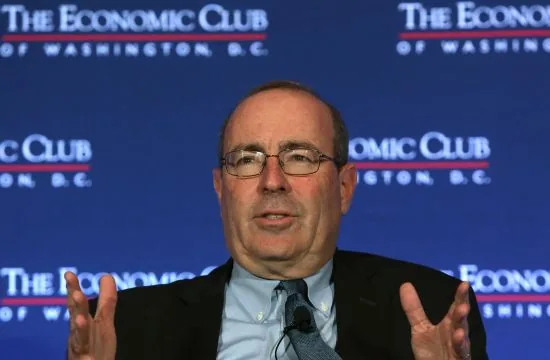
Richmond Federal Reserve President Thomas Barkin stated that last week's interest rate increase will help restore price stability, driven by inflation risks outweighing maximum employment risks. He noted it remains unclear whether further rate hikes are needed, citing stable consumer spending and strong defense and manufacturing sectors. Barkin cautioned that most PCE price index components have risen over 3%, indicating broad inflation pressures.
 Reference image
Editorial responsibility
- No named human review is recorded for this page.
- Reports are grouped by semantic similarity and deterministic rules. Language models may assist titles, summaries, translation and cross-source analysis; the page reads the event directly, while its address stays stable when the title changes.
- Summary covers the current reports
Cross-source coverage
Common ground
- The Russia reserve freeze was a major trust violation that changed how countries view dollar reserves.
- US fiscal dominance, with Congress running trillion-dollar deficits, is a deeper source of instability than Fed communication.
- Barkin's waffling reflects genuine uncertainty about the economy, not a clear policy direction.
- Fed policy creates real volatility for the Global South, which bears costs it didn't cause.
Points of contention
- Whether de-dollarization is a real trend or just a political talking point without a functional alternative.
- Whether the dollar's dominance is based on technical strengths like liquidity and rule of law, or on political and military power.
- Whether the Global South is building viable alternatives or just hedging with small-scale tools like CIPS and swap lines.
- Whether a multipolar system can avoid replacing one hegemon with another, or if it truly offers more options.
Blind spots
- Both sides overlook how domestic US politics—especially fiscal policy—drive Fed uncertainty more than global pressures.
- The debate assumes the Global South is unified, but countries like India, Mexico, and Saudi Arabia have different interests and dependencies.
- Neither side fully addresses whether a yuan-based system would offer better protections or just a different set of risks.
- The timeline question is ignored: de-dollarization may be a long-term trend, but short-term liquidity needs still dominate trade.
WorldAttention’s read
This debate shows that Barkin's rate hike waffling is a symptom of deeper problems: US fiscal dominance strains the Fed's independence, and the Russia reserve freeze shattered trust in the dollar system. While the Global South is building alternatives like CIPS and yuan oil contracts, these are still small-scale hedges, not replacements for the dollar's unmatched liquidity and legal framework. The real blind spot is that both sides focus on global shifts while ignoring how US domestic politics—especially trillion-dollar deficits—are the true source of instability. The dollar won't collapse tomorrow, but the trajectory toward a more multipolar system is real, driven by sovereignty concerns as much as economics.
Reporting timeline
Fed's Barkin Says Last Week's Interest Rate Hike Will Help Address Inflation
Richmond Federal Reserve President Thomas Barkin stated that the interest rate increase implemented last week will help address the inflation problem. The comment, reported by tradealpha, reflects the central bank's ongoing efforts to curb rising prices through monetary policy tightening. Barkin's remarks come amid continued debate over the effectiveness and pace of rate hikes in controlling inflation without harming economic growth. The statement attributes a clear causal link between the rate action and its intended anti-inflation effect, though it does not provide additional details on the magnitude of the hike or specific economic data supporting the view.
Read sourceFed's Barkin: Rate hike last week due to inflation risk outweighing maximum employment risk
Richmond Federal Reserve President Thomas Barkin stated that the U.S. central bank raised interest rates last week because the risk of inflation now exceeds the risk to maximum employment. This comment provides insight into the Fed's decision-making process, emphasizing that controlling inflation has become the primary concern over supporting the labor market. The statement reflects the Fed's ongoing balancing act between price stability and its dual mandate of maximum employment.
Read sourceFed's Barkin Says Last Week's Rate Hike Will Help Restore Price Stability, Will Watch for More
Richmond Federal Reserve President Thomas Barkin stated that the Federal Reserve's interest rate hike last week 'will help' restore price stability. He added that policymakers 'will watch' to determine whether additional rate increases are necessary. The comments, reported by tradealpha, reflect the Fed's ongoing effort to combat inflation through monetary tightening, while leaving the door open for further action based on incoming economic data. Barkin's remarks underscore the data-dependent approach of the central bank as it balances the goal of price stability with potential risks to economic growth.
Read sourceShow 3 older updatesHide older updates
Fed's Barkin Says It Is Not Yet Clear Whether Further Rate Hikes Are Needed
Richmond Federal Reserve President Thomas Barkin stated on September 23 that it remains unclear whether additional interest rate increases will be necessary. Speaking to reporters, Barkin noted that beyond data centers and artificial intelligence, other sectors are showing growth momentum. Consumer spending remains stable, and both defense and manufacturing are performing strongly. He cautioned that while it is tempting to blame high inflation on a few categories affected by energy costs or tariffs, most components of the Personal Consumption Expenditures (PCE) price index have risen by more than 3%. Barkin's comments reflect the Fed's ongoing uncertainty about the inflation outlook and the appropriate path for monetary policy, as the central bank balances price stability with economic growth.
Read sourceFed's Barkin Says Last Week's Rate Hike Will Help Restore Price Stability, Will Watch for More
Richmond Federal Reserve President Thomas Barkin stated that the central bank's interest rate increase last week 'will help' restore price stability. He added that policymakers 'will watch' to see if further rate hikes are necessary. The comments, reported by financial news outlet Jin10, reflect the Fed's ongoing effort to combat inflation through monetary tightening. Barkin's remarks underscore a data-dependent approach, leaving the door open for additional rate increases depending on economic conditions. The statement provides insight into the Fed's current stance as it balances inflation control with economic growth concerns.
Fed's Barkin: Rate hike justified as inflation risk outweighs employment risk
Richmond Federal Reserve President Thomas Barkin stated that the U.S. central bank's decision to raise interest rates last week was driven by the assessment that inflation risks currently exceed risks to maximum employment. The comment provides insight into the Fed's policy rationale, emphasizing the priority of combating inflation over protecting the labor market. Barkin's remarks reflect the ongoing debate within the Federal Reserve about balancing price stability with employment goals amid a tightening monetary cycle.