PBOC sets yuan midpoint at 6.7459 per dollar, strongest since February 2023
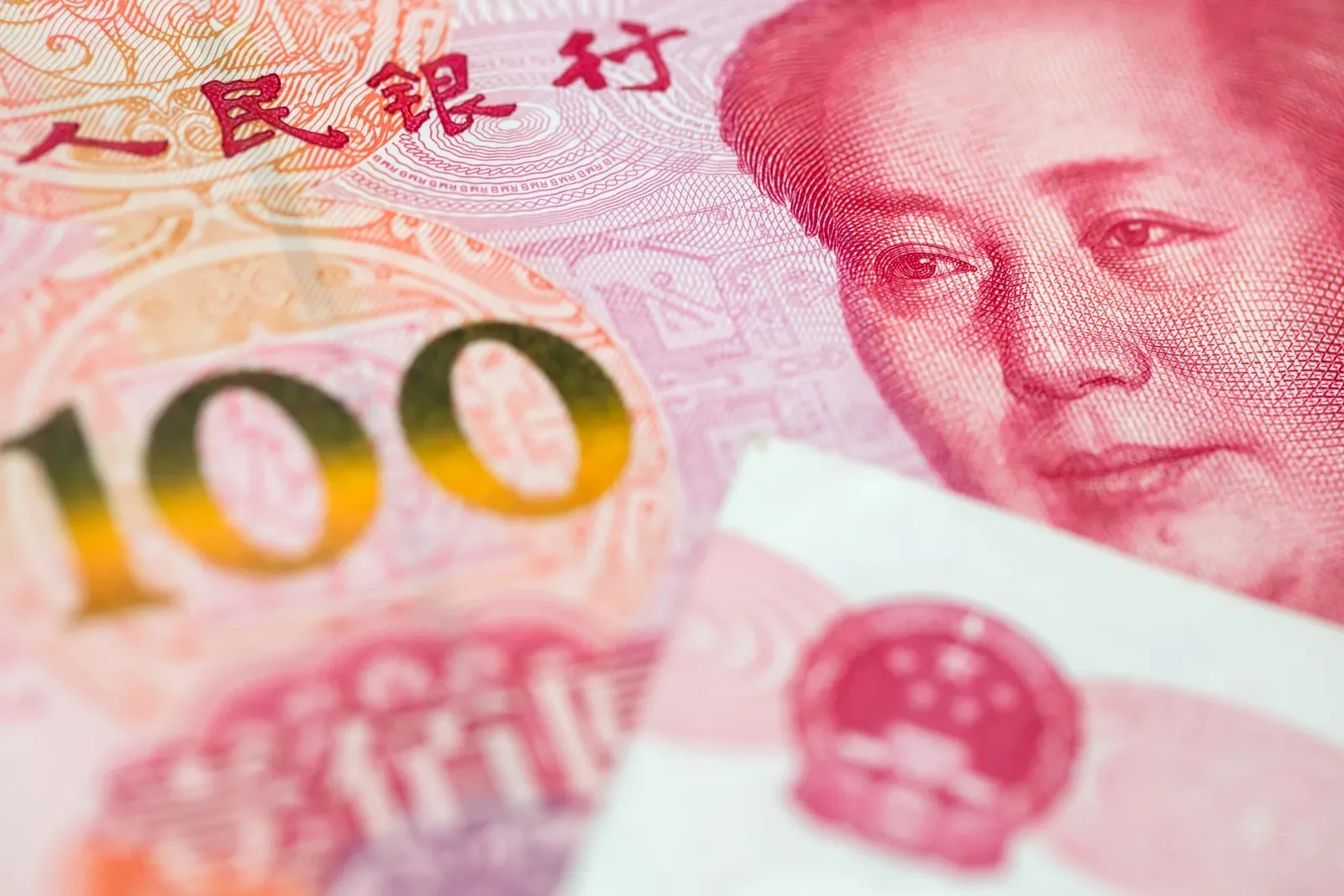
On September 22, 2026, the People's Bank of China set the yuan's daily central parity rate at 6.7459 per US dollar, an increase of 28 pips from the previous fix of 6.7487. This marks the strongest official midpoint since February 3, 2023. The yuan also strengthened against the euro, British pound, Japanese yen, and other major currencies, while weakening against the Swiss franc and Russian ruble. The rates serve as reference for China's onshore foreign exchange market.
 Illustration
Editorial responsibility
- No named human review is recorded for this page.
- Reports are grouped by semantic similarity and deterministic rules. Language models may assist titles, summaries, translation and cross-source analysis; the page reads the event directly, while its address stays stable when the title changes.
- Summary covers the current reports
Cross-source coverage
Common ground
- The yuan's stability against the dollar is a real anchor, and over 60 countries using the yuan in trade settlement is a meaningful trend toward a multipolar world.
- The multipolar shift is happening, and China's managed float is part of that transition.
- The dollar system has flaws, including weaponized sanctions and debt traps that impose costs on the Global South.
Points of contention
- Eastern Agent sees the 1,371-pip drop against the ruble as a natural reaction to Western sanctions, while Neutral Agent sees it as a deliberate policy choice with winners and losers.
- Eastern Agent argues China's currency policy is defensive and not weaponized, while Neutral Agent insists selective non-intervention is still a strategic decision that transfers volatility to Chinese firms.
- Eastern Agent views the yuan's stability against the dollar as purely virtuous, while Neutral Agent says it can be rigid and masks volatility in other bilateral rates.
Blind spots
- Both sides overlook the domestic cost to Chinese consumers and importers of Russian energy, who face higher prices due to yuan-ruble volatility.
- The debate focuses on exchange rates but ignores how Chinese households and manufacturers are directly affected by these policy trade-offs.
- Neither side fully addresses whether the yuan's growing role in trade settlement actually reduces global financial instability or just shifts risks to new areas.
WorldAttention’s read
The debate shows that China's currency management is a mix of sovereign right and strategic choice. The 28-pip move against the dollar is a modest signal of stability, but the 1,371-pip swing against the ruble reveals deeper geopolitical and economic trade-offs. Both sides agree the multipolar shift is real and the dollar system has flaws, but they disagree on whether China's actions are reactive or calculated. The blind spot is the real cost to Chinese households and businesses, who bear the burden of this transition. Ultimately, the yuan's rise is not costless or purely virtuous—it's a messy, contested process where every central bank, including China's, makes choices that create winners and losers.
Reporting timeline
China Foreign Exchange Trade System Publishes September 22 Yuan Midpoint Rates Against Major Currencies
On September 22, the China Foreign Exchange Trade System, authorized by the People's Bank of China, published the official midpoint rates for the Chinese yuan (renminbi) against 23 major currencies. The rates, as reported by Xinhua News Agency, include 100 USD at 674.59 yuan, 100 EUR at 770.59 yuan, 100 JPY at 4.2794 yuan, 100 HKD at 85.974 yuan, 100 GBP at 898.63 yuan, 100 AUD at 478.5 yuan, and 100 CAD at 478.71 yuan. The data also provides yuan equivalents for other currencies such as the Swiss franc, Singapore dollar, New Zealand dollar, and various emerging market and regional currencies including the Russian ruble, South African rand, South Korean won, Turkish lira, Mexican peso, and Thai baht. This daily fixing serves as a reference rate for foreign exchange transactions in China's onshore market.
Read sourceChina Sets Yuan Midpoint at 6.7459 per Dollar on September 22, 2026
On September 22, 2026, the People's Bank of China, through the China Foreign Exchange Trade System, announced the daily central parity rate of the renminbi against major currencies. The USD/CNY midpoint was set at 6.7459, with the euro at 7.7059 yuan, 100 yen at 4.2794 yuan, and the British pound at 8.9863 yuan. The announcement also included rates for the Australian dollar, New Zealand dollar, Singapore dollar, Swiss franc, and Canadian dollar. Additionally, the central bank published the yuan's exchange rate against the Macanese pataca, Malaysian ringgit, Russian ruble, South African rand, South Korean won, UAE dirham, Saudi riyal, Hungarian forint, Polish zloty, Danish krone, Swedish krona, Norwegian krone, Turkish lira, Mexican peso, and Thai baht. This daily fix serves as a reference rate for interbank foreign exchange trading and reflects the official guidance for the currency's value.
Read sourceChina's Yuan Strengthens Against US Dollar as Central Bank Sets Midpoint at 6.7459
On September 22, 2026, the People's Bank of China set the yuan's daily midpoint against the US dollar at 6.7459, an increase of 28 basis points from the previous session, according to the China Foreign Exchange Trade System. The official central parity rate, released by the People's Bank of China, serves as a reference for the onshore yuan's daily trading band. The article also provides the midpoint rates for the yuan against a basket of other major currencies, including the euro at 7.7059, the British pound at 8.9863, the Japanese yen at 4.2794 per 100 yen, and the Hong Kong dollar at 0.85974. Additionally, cross rates for the yuan against currencies such as the Australian dollar, New Zealand dollar, Singapore dollar, Swiss franc, Canadian dollar, and several emerging market currencies are listed. The data reflects the central bank's management of the yuan's exchange rate within a controlled floating system.
Show 5 older updatesHide older updates
Yuan Strengthens to 6.7459 per Dollar, Highest Since February 2023
The People's Bank of China (PBOC) set the yuan central parity rate at 6.7459 per dollar on the reported date, marking an increase of 28 points from the previous fix. This level represents the strongest official midpoint for the Chinese currency since February 3, 2023, indicating a continued appreciation trend. The move reflects the PBOC's management of the exchange rate amid global currency market dynamics and China's economic conditions. The data, sourced from TradeAlpha via RTRS, provides a snapshot of the yuan's valuation against the US dollar as determined by the central bank's daily fixing mechanism.
Read sourceYuan Midpoint Rate Set at 6.7459 per Dollar, Up 28 Pips
On September 22, the People's Bank of China set the yuan's daily midpoint reference rate at 6.7459 per US dollar, representing an increase of 28 pips from the previous fixing. The midpoint rate is the central parity rate around which the yuan is allowed to trade in a band against the dollar. This adjustment reflects the central bank's management of the currency's value amid ongoing foreign exchange market conditions.
Read sourceChina's Central Parity Rate Fixing for September 22, 2026: Yuan Strengthens
On September 22, 2026, the People's Bank of China (PBOC) set the daily central parity rate for the yuan against a basket of major currencies. The USD/CNY midpoint was fixed at 6.7459, representing a 28-pip downward adjustment, indicating a strengthening of the yuan against the US dollar. The yuan also appreciated against the euro (down 133 pips to 7.7059), the British pound (down 181 pips to 8.9863), the Australian dollar (down 41 pips to 4.7850), the Canadian dollar (down 152 pips to 4.7871), the Japanese yen (down 104 pips to 4.2794 per 100 yen), the New Zealand dollar (down 83 pips to 3.8376), and the Singapore dollar (down 33 pips to 5.2687). The yuan weakened against the Swiss franc, with the CHF/CNY rate rising 116 pips to 8.1925. The yuan also depreciated significantly against the Russian ruble, with the CNY/RUB rate falling 1,371 pips to 12.4576. The Hong Kong dollar also weakened against the yuan. These fixings serve as the reference rate for the interbank foreign exchange market and reflect the PBOC's managed float policy.
Read sourceChina Yuan Midpoint Raised 28 Pips Against US Dollar on September 22
On September 22, the People's Bank of China set the yuan central parity rate 28 basis points higher against the U.S. dollar, at 6.7459, compared with the previous trading day's fix of 6.7487. The adjustment reflects a slight strengthening of the yuan's official guidance rate, as reported by stockstar_securities_news citing People's Financial News. No further commentary or forecast is provided in the brief item.
Read sourceChina Yuan Central Parity Rate Set at 6.7459 per Dollar, Up 28 Pips
The People's Bank of China set the yuan central parity rate at 6.7459 per U.S. dollar on the trading day, representing an increase of 28 pips from the previous session. The central parity rate, also known as the midpoint, is calculated by the China Foreign Exchange Trade System before the opening of the interbank foreign exchange market each day. The calculation involves polling all market makers in the interbank market, removing the highest and lowest quotes, and then taking a weighted average of the remaining quotes. This rate serves as the most important reference indicator for the spot interbank foreign exchange trading market and the listed exchange rates at bank counters. The adjustment reflects the central bank's management of the yuan's exchange rate within a controlled band, influencing expectations for the currency's daily trading range.
Read source