PBOC Q3 2026 meeting vows moderately loose policy, strengthens counter-cyclical adjustment
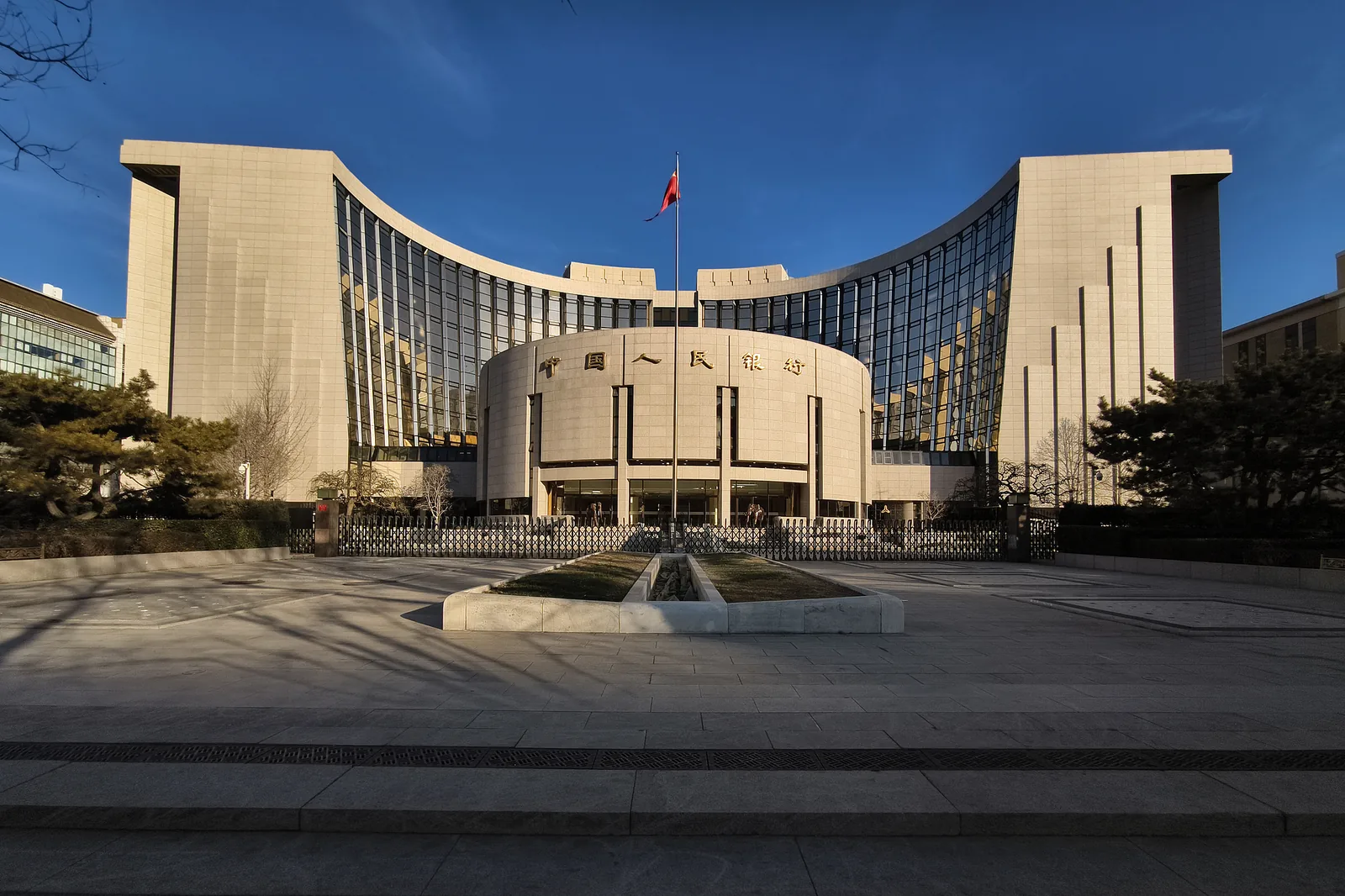
The People's Bank of China (PBOC) Monetary Policy Committee held its third-quarter 2026 regular meeting on September 19, pledging to maintain a moderately loose monetary policy and strengthen counter-cyclical adjustment. The committee assessed a complex external environment with weak global growth and domestic challenges including weak demand relative to supply. It emphasized coordinating monetary and fiscal policies, maintaining ample liquidity, and supporting domestic demand, tech innovation, SMEs, and infrastructure.
 Reference image
Editorial responsibility
- No named human review is recorded for this page.
- Reports are grouped by semantic similarity and deterministic rules. Language models may assist titles, summaries, translation and cross-source analysis; the page reads the event directly, while its address stays stable when the title changes.
- Summary covers the current reports
Cross-source coverage
Reporting timeline
China's central bank vows to maintain moderately loose monetary policy, boost counter-cyclical adjustment
The People's Bank of China (PBOC) Monetary Policy Committee held its third-quarter 2026 regular meeting, stating that macro policies have been more proactive and effective this year. The committee assessed that the external environment is increasingly complex, with weak global growth, frequent geopolitical conflicts and trade frictions, and divergence among major economies. Domestically, the economy is running steadily with structural improvements but faces challenges including weak demand relative to supply, structural divergence, and external shocks. The committee decided to continue a moderately loose monetary policy, strengthen counter-cyclical adjustment, and better utilize both aggregate and structural functions of monetary tools. It emphasized coordination between monetary and fiscal policies to promote stable growth and reasonable price recovery. Specific measures include maintaining ample liquidity, aligning money supply and social financing growth with economic and price targets, reducing financing costs, monitoring long-term bond yields, and stabilizing the renminbi exchange rate. The committee also called for large banks to play a leading role in serving the real economy, small and medium banks to focus on their main business, and enhanced financial support for domestic demand, tech innovation, SMEs, and infrastructure construction.
Read sourceChina's central bank vows适度宽松 monetary policy,加大逆周期调节 in Q3 2026 meeting
The People's Bank of China (PBOC) held its Q3 2026 monetary policy committee meeting, pledging to maintain a moderately loose monetary policy and strengthen counter-cyclical adjustments. The meeting assessed that the external environment is increasingly complex, with weak global growth, frequent geopolitical conflicts and trade frictions, and uncertainty over major economies' inflation and monetary policy. Domestically, the economy is running steadily with structural improvements but faces challenges including weak demand relative to supply, structural divergence, and external shocks. The PBOC will continue implementing适度宽松 monetary policy,加大逆周期调节力度, and better utilize both aggregate and structural functions of monetary tools. It will coordinate monetary and fiscal policies to promote stable growth and reasonable price recovery. Specific measures include maintaining ample liquidity, aligning money supply and social financing growth with economic and price targets, reforming the monetary policy operational framework, lowering financing costs, monitoring long-term bond yields from a macro-prudential perspective, and stabilizing exchange rate expectations. The PBOC also called on large banks to play a leading role in serving the real economy,中小银行 to focus on their core business, and to enhance financial support for domestic demand, tech innovation, SMEs, and infrastructure construction.
Read sourceChina's central bank monetary policy committee meeting stresses counter-cyclical adjustment, supports six networks
The People's Bank of China (PBOC) Monetary Policy Committee held its third-quarter 2026 regular meeting (the 114th in total). The meeting decided to continue implementing a moderately loose monetary policy. Unlike the previous quarter's emphasis on strengthening both counter-cyclical and cross-cyclical adjustment, this meeting focused solely on 'strengthening counter-cyclical adjustment' to better leverage the aggregate and structural functions of monetary policy tools and enhance coordination with fiscal policy to promote stable economic growth and reasonable price recovery. The meeting assessed that macroeconomic policies have been more proactive and effective this year, with monetary policy maintaining moderate easing. It noted that loan prime rate reform effects continue to be released, social financing costs are at historically low levels, and the renminbi exchange rate remains basically stable. For the next phase, the committee recommended integrating incremental and existing policies, enhancing policy foresight, flexibility, and targeting, and maintaining ample liquidity. It emphasized expanding domestic demand, optimizing supply, and accelerating the transition between old and new growth drivers. Notably, the meeting expanded financial support priorities to include the 'six networks' construction alongside domestic demand, tech innovation, and small and micro enterprises. On the foreign exchange market, it added a warning against 'herd behavior' and self-reinforcing irrational expectations. The meeting also reiterated maintaining financial market stability and advancing high-level two-way financial opening.
Read sourceShow 4 older updatesHide older updates
China's Central Bank Vows to Support Private Economy, Maintain Financial Stability
On September 24, People's Financial News reported that the People's Bank of China (PBOC) Monetary Policy Committee held its third quarter 2026 regular meeting (the 114th in total) on September 19. The meeting stated that it will guide large banks to play a leading role in serving the real economy as the main force, and push small and medium-sized banks to focus on their main business and enhance their capital strength. The committee pledged to use various structural monetary policy tools, continuously improve tool design and management, and solidly implement the 'five major articles' of financial work. It will strengthen financial support for key areas including expanding domestic demand, technological innovation, small and micro enterprises, and the construction of the 'six networks.' The meeting specifically emphasized continuing to provide financial services to support the growth and expansion of the private economy, maintaining stable operation of financial markets, and effectively promoting high-level two-way financial opening while improving economic and financial management capabilities and risk prevention capabilities under open conditions.
China's Central Bank Vows to Continue Moderate Easing, Strengthen Counter-Cyclical Adjustment
The Monetary Policy Committee of the People's Bank of China (PBOC) held its third-quarter 2026 regular meeting on September 19. The meeting assessed that the external environment has become more complex and volatile, with weak global growth, frequent geopolitical conflicts and trade frictions, and divergent economic performance among major economies. Domestically, the economy is operating steadily with improving structure and new growth drivers, but faces challenges including weak demand relative to supply, structural imbalances, and external shocks. The committee decided to continue implementing a moderately loose monetary policy and increase counter-cyclical adjustment. It emphasized better utilizing both the aggregate and structural functions of monetary policy tools and strengthening coordination with fiscal policy to promote stable economic growth and a reasonable recovery in prices. The meeting outlined plans to enhance the integrated effect of new and existing policies, improve policy foresight and flexibility, maintain ample liquidity, and ensure that the growth of social financing and money supply matches economic growth and price targets. It also called for reforming the monetary policy operational framework, lowering comprehensive social financing costs, monitoring long-term bond yields from a macro-prudential perspective, and maintaining basic stability of the renminbi exchange rate at a reasonable and balanced level.
Read sourceChina's Central Bank Vows to Boost Domestic Demand, Optimize Supply, Drive Economic Transition
On September 24, Jin10 reported that the People's Bank of China (PBOC) Monetary Policy Committee held its third-quarter 2026 regular meeting (the 114th in total) on September 19. The meeting emphasized following the guidance of Xi Jinping Thought on Socialism with Chinese Characteristics for a New Era and fully implementing the spirit of the Fourth Plenary Session of the 20th Central Committee of the Communist Party of China, the Central Economic Work Conference, and the National People's Congress and Chinese People's Political Consultative Conference sessions. According to the statement, the committee stressed the need to coordinate the relationship between aggregate supply and aggregate demand, intensify efforts to expand domestic demand, optimize supply, accelerate the transition from old to new growth drivers, enhance the endogenous driving force of the economy, further strengthen the domestic economic cycle, and improve the dual domestic-international circulation. The goal is to promote sustained, high-quality economic development.
Read sourceChina's Central Bank Pledges More Financial Support for Domestic Demand, Tech, and SMEs
The People's Bank of China (PBOC) Monetary Policy Committee held its third-quarter 2026 regular meeting on September 19. According to a statement released on September 24 via financial data provider Jin10, the committee directed that large banks should play a leading role in serving the real economy, while small and medium-sized banks should focus on their core business and strengthen their capital base. The meeting emphasized using various structural monetary policy tools and improving their design and management to effectively implement the 'five major articles' of finance. Key areas for increased financial support include expanding domestic demand, technological innovation, small and medium-sized enterprises (SMEs), and the construction of the 'six networks' (likely referring to infrastructure networks). The committee also pledged to continue supporting the development and growth of the private economy, maintain stable financial market operations, and promote high-level two-way financial opening while enhancing risk management capabilities under open economic conditions.
Read source