PBOC Governor Pan Gongsheng: Credit policy to curb industry 'involution' in 15th Five-Year Plan
People's Bank of China Governor Pan Gongsheng stated in a signed article that during the 15th Five-Year Plan period (2026-2030), China will optimize credit structure to curb "involution-style" competition in certain industries. The policy shifts credit allocation from aggregate expansion to structural quality improvement, directing funds toward technology innovation, green development, and high-end manufacturing while restricting financing for redundant, high-debt projects. Experts emphasize avoiding blanket loan cuts that could harm innovative firms.
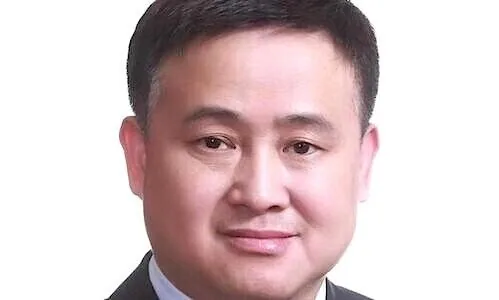 Reference image
Editorial responsibility
- No named human review is recorded for this page.
- Reports are grouped by semantic similarity and deterministic rules. Language models may assist titles, summaries, translation and cross-source analysis; the page reads the event directly, while its address stays stable when the title changes.
- Summary covers the current reports
Cross-source coverage
Reporting timeline
China's Financial Sector to Play Key Role in Curbing Industry 'Involution' with Targeted Credit
This analysis from Shanghai Securities News, republished on Tencent Stock, examines how China's financial sector is expected to support industrial restructuring and combat 'involution-style' competition (neijuan) during the 15th Five-Year Plan period (2026-2030). PBOC Governor Pan Gongsheng has stated in recent articles and speeches that financial institutions should be guided to scientifically assess risks, implement differentiated policies, and suppress 'involutionary' competition in certain industries. Experts interviewed, including Zeng Gang of Tianfu Liyan Financial Research Institute and Ming Ming of CITIC Securities, explain that credit allocation logic is shifting from total expansion to structural quality improvement. They argue that financing should be restricted for projects involving redundant construction, high-debt expansion, and prolonged below-cost sales without technological iteration, while supporting enterprises with core technologies and market demand. The article emphasizes the need to clearly distinguish between healthy competition and 'involution', and to avoid blanket credit cuts that could harm innovative firms. It also notes that the financial sector itself must address its own 'involution' in competition and capital idling to achieve a virtuous cycle between finance and the real economy.
Read sourceChina's Financial Sector to Curb 'Involution' Competition via Targeted Credit Policies
According to a Shanghai Securities News report citing People's Bank of China (PBOC) Governor Pan Gongsheng and multiple analysts, China's financial sector is set to play a key role in curbing 'involution-style' (neijuan) competition in industries during the 15th Five-Year Plan period. Pan stated in a signed article that credit allocation will be optimized to suppress 'involution' in certain sectors, shifting from volume-driven expansion to quality-focused, risk-priced lending. Experts including Zeng Gang of Tianfu Lixin Financial Research Institute and Ming Ming of CITIC Securities explained that banks will differentiate between low-efficiency, repetitive projects and high-tech, innovative enterprises. The policy involves 'supporting some while controlling others' (you fu you kong), using mechanisms like dynamic credit lists tied to capacity monitoring. The article also notes that the financial sector itself will undergo 'anti-involution' reforms to stop rate wars and maturity mismatches, aiming for a virtuous cycle between finance and the real economy.
Read sourceChina's Credit Structure to Optimize in 15th Five-Year Plan, PBOC Governor Says
According to a report from tradealpha, China's credit structure is expected to further optimize during the 15th Five-Year Plan period (2026-2030) to better support economic restructuring and transformation. People's Bank of China (PBOC) Governor Pan Gongsheng stated in a recent signed article that the central bank will strengthen coordination with industrial policies, guide financial institutions to scientifically assess risks, implement differentiated measures with both support and control, and suppress 'involution-style' competition in some industries. Industry experts interpret this as a fundamental shift in the logic of financial resource allocation: credit allocation will gradually move away from the old model of fueling extensive capacity expansion, toward precisely serving industrial supply optimization, enterprise technological iteration, and the orderly elimination of outdated production capacity.
Read sourceShow 2 older updatesHide older updates
China's Finance Sector to Play Key Role in Curbing 'Involution' Competition
According to a Shanghai Securities News analysis, China's financial sector is expected to become a crucial lever in curbing 'involution-style' (neijuan) competition during the '15th Five-Year Plan' period. The article cites People's Bank of China (PBOC) Governor Pan Gongsheng, who stated in a recent signed article that credit allocation should be 'classified, with support and control' to suppress 'involution' in certain industries. Experts interviewed, including Zeng Gang of Tianfu Lijiang Financial Research Institute and Ming Ming of CITIC Securities, explain that this marks a shift from total credit expansion to structural quality improvement. They argue that financial resources will be directed away from low-efficiency, duplicative capacity expansion and toward technological innovation, green development, and high-end manufacturing. The article also highlights the need to avoid 'one-size-fits-all' loan cuts that could harm innovative firms, and calls for a dual governance approach to address 'involution' in both industry and the financial sector itself, aiming for a virtuous cycle between finance and the real economy.
Read sourceChina's Financial Sector to Support Anti-Overcapacity Drive with Targeted Credit Policies
This article from Tonghuashun Finance analyzes China's financial policy direction for the 15th Five-Year Plan period, focusing on using credit allocation to combat 'involution-style' competition in industries. People's Bank of China Governor Pan Gongsheng has stated that financial institutions should scientifically assess risks and implement differentiated credit policies to suppress overcapacity and support technological upgrades. Experts including Zeng Gang of Tianfu Lixin Financial Research Institute and Ming Ming of CITIC Securities explain that credit allocation will shift from total volume expansion to structural quality improvement, prioritizing advanced manufacturing, green sectors, and high-tech industries. The article emphasizes the need to distinguish between healthy competition and 'involution,' with banks using multi-dimensional risk models to avoid blanket loan cuts that could harm innovative firms. It also notes that the financial sector itself must address its own 'involution' in lending practices to create a virtuous cycle between finance and the real economy.