NASA's Perseverance rover sets off-world driving record with 45.22 kilometers on Mars
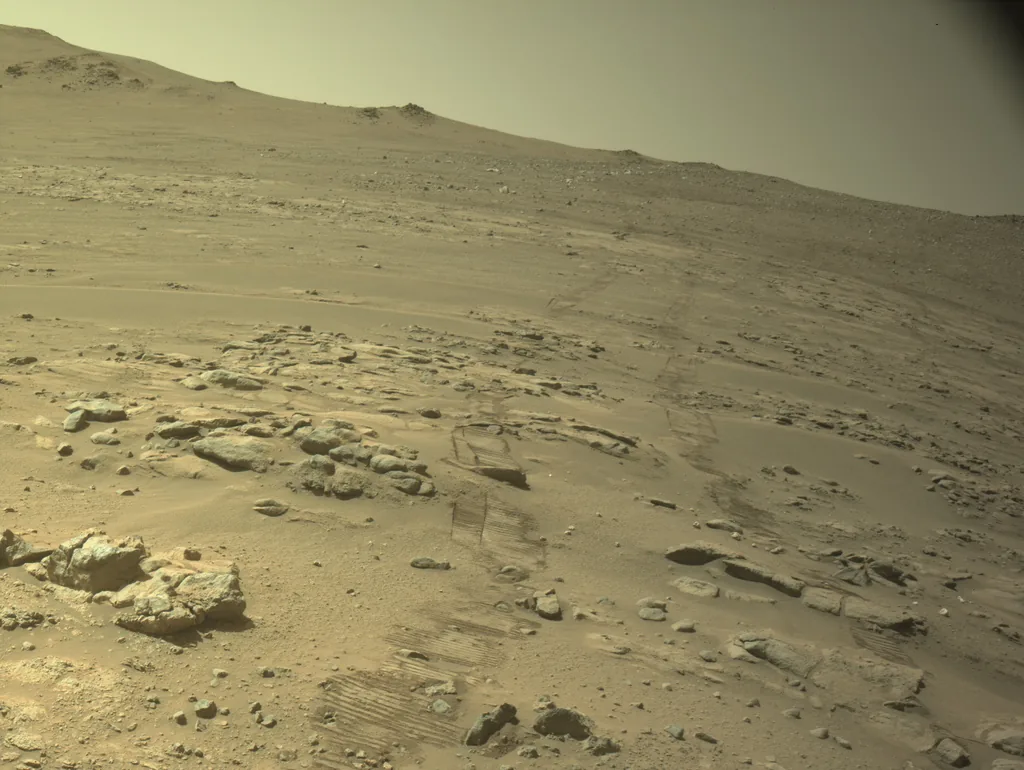
NASA's Perseverance rover has set a new record for the longest distance driven by a human-made vehicle on another planet, reaching 45.22 kilometers since landing on Mars in 2021 and surpassing the 45.16 kilometers logged by the Opportunity rover between 2004 and 2018. NASA had planned only about 20 kilometers of driving. The roughly $2.5 billion rover is expected to continue exploring until at least the end of 2028.
 Reference image
Editorial responsibility
- No named human review is recorded for this page.
- Reports are grouped by semantic similarity and deterministic rules. Language models may assist titles, summaries, translation and cross-source analysis; the page reads the event directly, while its address stays stable when the title changes.
- Summary covers the current reports
Cross-source coverage
Common ground
- The 'longest distance driven on another planet' headline is mostly a press release and not the most important story.
- The real story is why Perseverance covered the same distance much faster than Opportunity, which points to better engineering and planning.
- The Mars Sample Return mission is in serious trouble because its design became too expensive and complicated.
- The most important question is whether the samples come back at all, not just who gets them first.
- Both sides agree that overselling the science or the record hurts the credibility of the whole effort.
Points of contention
- One side says the sample return problem is mainly a fixable engineering and management failure, not a lack of money or will.
- The other side says the problem runs deeper: the system has lost the ability to execute big, ambitious projects without gold-plating them.
- They disagree on how much it matters if China returns a Mars sample first, with one side calling it a real loss of scientific leadership and the other saying it is not a catastrophe.
- They disagree on whether 'we've lost the will' is a testable claim or just a vague diagnosis that cannot be proven wrong.
- They disagree on whether a smaller, cheaper sample return is realistic or whether the physics sets a hard floor that cannot be wished away.
Blind spots
- Neither side seriously explored what a genuinely smaller, cheaper sample return mission would actually look like in detail.
- Both sides focused on the United States and China but ignored whether other countries or private groups could help return the samples.
- Nobody discussed whether the samples could be returned in stages or with international partners to share the cost and risk.
- The debate did not address how public communication about possible biosignatures should be handled to avoid both hype and cynicism.
- Neither side examined whether the current rover mission could be redesigned to cache samples more efficiently for a future pickup.
WorldAttention’s read
The record-breaking drive is a real but modest milestone that has been oversold. The deeper issue is that the Mars Sample Return mission has become too expensive and complex, and the two sides disagree on whether that is mainly a fixable engineering problem or a sign of a deeper failure of will and institutions. They agree that the worst outcome is no sample return at all, and that two independent returns would be better science than one. The debate leaves open the practical question of what a smaller, cheaper mission would actually cost and whether anyone is willing to fund it.
Reporting timeline
NASA's Perseverance rover sets off-Earth driving distance record on Mars
NASA's Perseverance rover has set a new record for the longest distance driven by a human-made vehicle on another planet, the US space agency announced. Since landing on Mars in 2021, Perseverance has traveled 45.22 kilometers, surpassing the previous record of 45.16 kilometers set by the Opportunity rover between 2004 and 2018. NASA said the mission had originally planned only about 20 kilometers of driving, but the rover exceeded all expectations. Perseverance is expected to continue exploring the red planet with its six wheels until at least the end of 2028. The roughly $2.5 billion rover took eight years to develop and build. In 2024, Perseverance found a rock sample in the Jezero Crater, a dried-up riverbed, that may contain traces of past microbial life, though NASA officials cautioned that further data and studies are needed to confirm this.
Read sourceNASA's Perseverance Rover Sets Off-World Driving Record on Mars
NASA's Perseverance rover has set a new record for the total distance driven on another world, surpassing 28 miles on Mars. The achievement was reported by multiple outlets including The New York Times, Reuters, CBS News, and NASA's Jet Propulsion Laboratory. The rover's cumulative driving distance now exceeds that of any previous off-planet vehicle, marking a significant milestone in Mars exploration.
NASA's Perseverance Mars rover breaks interplanetary driving record
NASA's Perseverance Mars rover has set a new record for driving distance on another world, according to multiple news reports. The rover has now traveled 28 miles and counting, surpassing previous off-world driving records. Coverage from Space, The New York Times, NBC Los Angeles, NASA Science, and CBS News highlights the achievement, with NASA Science providing a comparison of off-world rover driving distances. The reports indicate that Perseverance is far from done, suggesting further exploration and distance milestones ahead.
Read sourceShow 3 older updatesHide older updates
NASA's Perseverance Mars Rover Sets Off-World Driving Distance Record
NASA's Perseverance rover has set a new record for the total distance driven on the surface of another world, according to reports from CBS News, The New York Times, NASA's Jet Propulsion Laboratory, Reuters, and Space. The New York Times headline cites "28 Miles and Counting," indicating the rover has now driven roughly 28 miles (about 45 kilometers) on Mars, surpassing the previous off-planet driving record. NASA JPL and other outlets frame the milestone as an off-world record for total distance driven by a rover. Space notes the achievement is "far from done," suggesting Perseverance will continue adding to its distance total as its mission proceeds. The record reflects cumulative driving across the rover's operations on Mars rather than a single-day or single-drive achievement.
Read sourceNASA's Perseverance Rover Sets Off-World Driving Record on Mars
NASA's Perseverance rover has broken the record for off-planet driving, according to multiple reports. Reuters, The New York Times, NASA's Jet Propulsion Laboratory, Interesting Engineering, and The Patriot KEIB AM 1150 all reported that the rover set a new Mars distance record. The New York Times headline noted "28 Miles and Counting," while Interesting Engineering specified the record at 28.10 miles. NASA JPL described it as an "Off-World Record for Total Distance Driven." The reports highlight the rover's cumulative driving distance on Mars, surpassing previous records for off-planet driving. No further details on the previous record holder or the exact date of the achievement were provided in the aggregated headlines.
Read sourceNASA's Perseverance rover breaks longest off-world driving record
NASA's Perseverance rover has officially broken the record for the longest distance ever driven on another planet, surpassing the record previously held by the Opportunity rover since 2018. The announcement was reported as a breaking news item. No further details on the exact distance driven or the timing of the record were provided in the source item.