Meta strikes deal to keep Zuckerberg in California amid billionaire tax threat
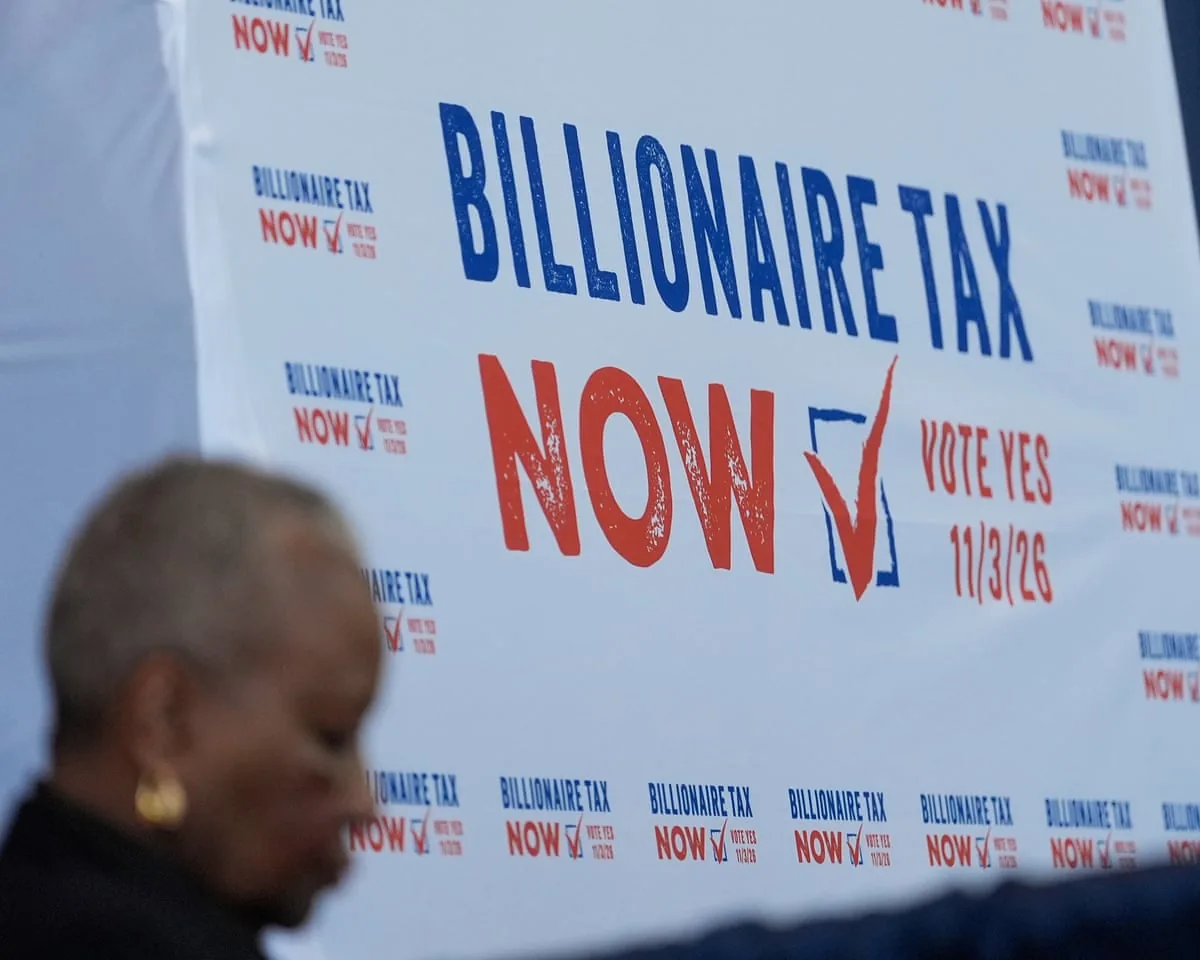
Meta has reached an agreement with CEO Mark Zuckerberg to keep him in California for eight years, or wherever the company is headquartered, after he weighed leaving the state over a proposed one-time 5% tax on billionaires. The deal includes a new Class C non-voting share class that lets Zuckerberg sell stock for liquidity without losing voting control. California voters will decide on the tax measure on 3 November; it would affect residents with net worth above $1bn.
 Illustration
Editorial responsibility
- No named human review is recorded for this page.
- Reports are grouped by semantic similarity and deterministic rules. Language models may assist titles, summaries, translation and cross-source analysis; the page reads the event directly, while its address stays stable when the title changes.
- Summary covers the current reports
Cross-source coverage
Common ground
- The real story is not about California's tax but about Mark Zuckerberg gaining a way to sell stock while keeping control of Meta.
- The eight-year residency requirement is unusual and likely tied to the AI build-out timeline, not just a tax dodge.
- Existing shareholders will bear the cost of the new non-voting share class through dilution, which is a measurable harm.
- The most important precedent is that a CEO's physical location became a negotiable corporate asset, with a state effectively bidding to keep him.
Points of contention
- Whether the new share class is mainly a hedge against a possible tax or a deliberate dodge of democratic will.
- Whether the timing before the Proposition 40 vote proves intent, or is just a coincidence given Meta's long history of considering dual-class structures.
- Whether the deference shown to Zuckerberg (special committee, bespoke deal) is separate from the mechanism (the share class) or is the same thing.
Blind spots
- No one has seen board minutes or internal memos that would show whether the tax threat directly caused the timing of the share class.
- The discussion did not explore how other shareholders or regulators might respond to the dilution and control entrenchment.
- The role of the special committee and whether it genuinely negotiated at arm's length was not examined in detail.
WorldAttention’s read
The roundtable agreed that the durable story is not the California tax but a new corporate structure that lets Zuckerberg sell stock without losing control, with an eight-year residency clause that likely serves the AI build-out. They disagreed on whether this is a deliberate dodge of democracy or just a hedge, and on whether the timing proves intent. The clearest measurable harm is shareholder dilution, and the most important precedent is that a CEO's location became a bargaining chip. The honest state of evidence is that intent cannot be proven, but the timing and the eight-year clock are checkable facts that point to the AI cycle, not California, as the real target.
Reporting timeline
Meta strikes deal to keep Zuckerberg in California amid billionaire tax threat
Meta has reached an agreement with Mark Zuckerberg to prevent the Facebook co-founder from leaving California after he threatened to relocate over a proposed one-time 5% tax on residents with a net worth above $1bn. The deal allows Zuckerberg to sell Meta shares without losing control of the company if he needs to pay a large tax bill. The tax measure has not yet passed and Californians will vote on it on 3 November. Zuckerberg, whose fortune Forbes estimates at $226bn, told Meta's board he intended to remain with the firm for the foreseeable future but was evaluating moving his primary residence outside California. A special committee at Meta said it was critically important to keep Zuckerberg in a leadership role and in California to manage the company during a period of intense competition in AI.
Read sourceMeta strikes deal with Zuckerberg to shield him from California wealth tax
Meta has reached an agreement with CEO Mark Zuckerberg that would protect him from a proposed California billionaire wealth tax, according to multiple reports. Zuckerberg had reportedly weighed leaving California over the tax proposal before the company's board cut him a deal. The arrangement also includes provisions under which Meta investors would receive free shares if Zuckerberg hits what are described as 'extraordinary' targets. The deal comes as California considers a wealth tax aimed at billionaires, prompting concerns about wealthy residents relocating. The reports, from outlets including The Guardian, WSJ, Business Insider, Fox Business, and Quartz, indicate the agreement is designed to keep Zuckerberg in California while addressing his exposure to the proposed tax.
Read sourceMeta Stock Deal Keeps Zuckerberg in California Amid Wealth Tax Threat
Meta has struck a stock deal designed to keep CEO Mark Zuckerberg in California, according to reports from Forbes, Fortune, The Wall Street Journal, Reuters and The New York Times. The arrangement follows Zuckerberg's concerns over a proposed California wealth tax, which reportedly led him to weigh leaving the state. Meta's board approved a new class of stock as part of the deal, according to Fortune and the Journal. The reports describe the move as a response to the billionaire tax threat and as a way to shield Zuckerberg from the proposed levy. The exact terms of the stock structure and the status of the California wealth tax proposal were not detailed in the aggregated headlines.
Read sourceShow 3 older updatesHide older updates
Meta Creates Non-Voting Share Class to Fund AI Build-Out
Meta is creating a new class of non-voting shares to raise outside equity for its AI build-out, according to the Financial Times. The structure would let investors receive economic exposure without voting rights, allowing Mark Zuckerberg to sell stock while retaining control of the company. In return, Zuckerberg has committed to live in California, or wherever Meta is headquartered, for eight years after telling directors he might leave. The reported threat behind the commitment was Proposition 40, a one-time 5% tax on California billionaires that goes to voters on November 3.
Read sourceMeta strikes deal to keep Zuckerberg in California after wealth tax concerns
Meta has struck a deal aimed at keeping CEO Mark Zuckerberg in California following concerns over a proposed state wealth tax, according to Reuters. The New York Times reported that Zuckerberg pushed Meta to shield him from California's proposed wealth tax, while the Wall Street Journal said he discussed leaving the state over the tax. Fortune reported that Zuckerberg weighed leaving California over the wealth tax and that Meta responded with a new class of stock. SFGATE reported that Zuckerberg threatened to leave California over the billionaire tax. The reports collectively indicate that Meta's corporate structure, including a new share class, was used to address Zuckerberg's tax exposure concerns and retain him in the state.
Read sourceMeta Signs Eight-Year Residency Deal With Zuckerberg Amid California Wealth Tax Threat
Meta Platforms Inc. has signed an agreement with CEO Mark Zuckerberg to keep him residing in the company's headquarters jurisdiction for eight years, after he said he was considering leaving California if a proposed wealth tax passed. Meta disclosed Wednesday that Zuckerberg will remain a California resident, or a resident of any other jurisdiction where the company is headquartered, for eight years. The company said Zuckerberg considered leaving because the proposed wealth tax could create a multibillion-dollar tax bill and force him to sell voting shares. Meta also announced it will issue Class C shares, partly to prevent that outcome. Zuckerberg will receive non-voting shares he can sell for liquidity without diluting his voting control, in exchange for staying in California or wherever Meta is headquartered while serving as full-time leader. California voters will decide on the measure next month; it would affect people with net assets over $1 billion as of January 1, 2026.