Meta’s Muse AI agent sparks global chip stock rally, then cools on caution
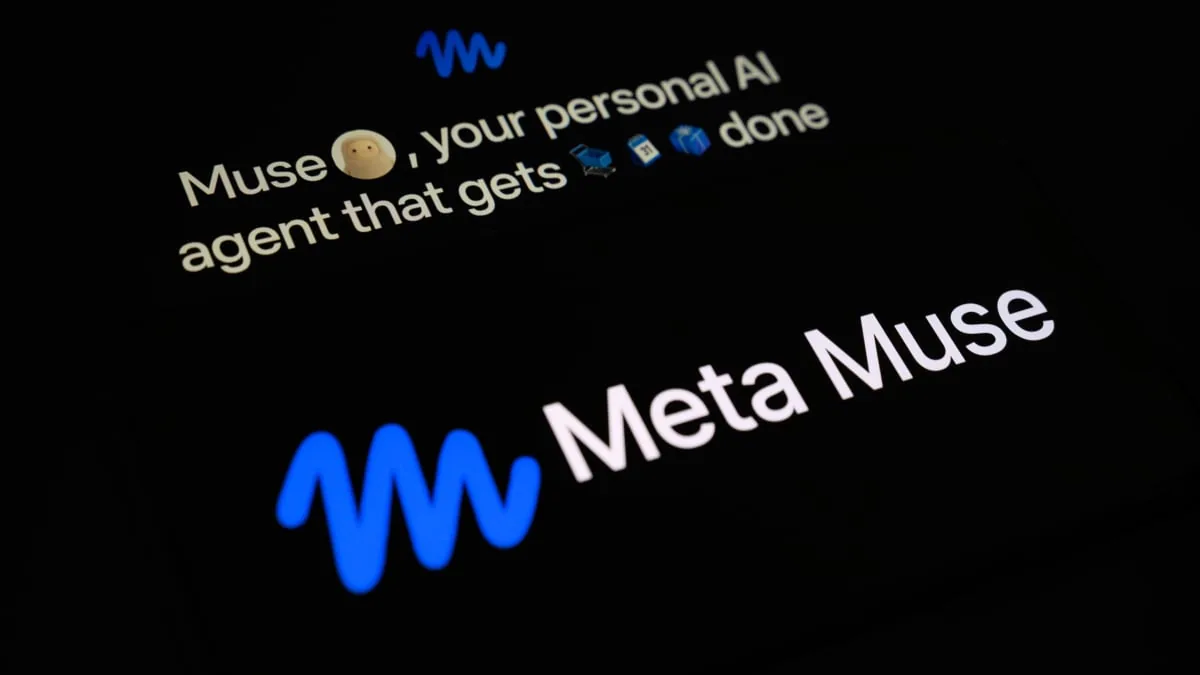
Meta’s new personal AI agent, Muse, topped Apple’s free app chart shortly after its September launch, driving a global rally in AI and semiconductor stocks. The Philadelphia Semiconductor Index surged 4.3% on September 22, and Meta shares rose 11%. South Korean chipmakers Samsung and SK Hynix gained about 3%, lifting the KOSPI. However, the rally partially reversed the next day as oil price concerns and market caution returned, with Samsung and SK Hynix giving back roughly 3.5% of gains.
 Reference image
Editorial responsibility
- No named human review is recorded for this page.
- Reports are grouped by semantic similarity and deterministic rules. Language models may assist titles, summaries, translation and cross-source analysis; the page reads the event directly, while its address stays stable when the title changes.
- Summary covers the current reports
Cross-source coverage
Common ground
- The AI rally is driven by real demand, with $200 billion in semiconductor capital expenditure and 15.2% year-over-year chip sales growth.
- Export controls and geopolitical power structures shape the market, benefiting some firms like Samsung while restricting others.
- Labor exploitation and environmental harm are real costs of the AI boom, including union suppression and resource extraction.
- No single viewpoint captures the full picture—market mechanics, geopolitical power, and human costs all matter.
Points of contention
- Whether the AI rally reflects genuine fundamentals or is a hype-driven bubble fueled by narrative control.
- Whether US export controls create a rigged system that victimizes or benefits Korean chipmakers like Samsung.
- Whether China's AI governance framework offers real accountability or is a tool for state control and surveillance.
- Whether the primary issue is geopolitical power dynamics, corporate exploitation, or market supply-demand mechanics.
Blind spots
- The debate largely ignores the role of oil prices and energy costs as a direct catalyst for chip manufacturer margins.
- The voices and experiences of frontline workers—like contract laborers in fabs and miners—are rarely centered in the analysis.
- The environmental impact of data centers, including water depletion and energy consumption, is mentioned but not deeply explored.
- The selective application of regulations in both Western and Chinese systems is acknowledged but not fully examined.
WorldAttention’s read
The AI boom is simultaneously real in its demand fundamentals, rigged by geopolitical power structures, and exploitative in its human and environmental costs. No single narrative—whether focused on market data, geopolitical control, or labor exploitation—tells the whole story. The rally continues because demand is strong, but it's built on systems that extract value from workers and resources while being shaped by export controls and corporate power. To truly understand this moment, we must hold all these truths together, even when they conflict.
Reporting timeline
South Korea Stocks Open Higher; Samsung, SK Hynix Rise on US Chip Rally
South Korea's KOSPI index opened 1.94% higher on September 23, reaching 7129.51 points, driven by gains in semiconductor heavyweights. Samsung Electronics and SK Hynix both rose nearly 3% in early trading. The rally followed a strong session for US semiconductor and memory stocks overnight, with SanDisk up over 6%, Micron Technology up 5%, and SK Hynix's US shares gaining over 3%. The Philadelphia Semiconductor Index climbed over 2% to a mid-July high. Separately, Sensor Tower reported that Meta's AI agent app, Meta Muse, surpassed ChatGPT in downloads within five days of launch, becoming the top free app on the US iOS platform with over 2.5 million total downloads. JPMorgan CEO Jamie Dimon commented that spending in the AI sector shows no sign of slowing, forecasting that investment in the entire hyperscale data center ecosystem could reach $1 trillion next year.
Read sourceSouth Korea Stocks Open Higher as Samsung, SK Hynix Surge on US Chip Rally
South Korea's KOSPI index opened 1.94% higher on September 23, reaching 7129.51 points, driven by gains in semiconductor heavyweights Samsung Electronics and SK Hynix, both rising nearly 3%. The rally followed a strong session on Wall Street where the US semiconductor and storage sector surged, with SanDisk up over 6%, Micron Technology gaining 5%, and SK Hynix rising over 3%. The Philadelphia Semiconductor Index climbed over 2%, hitting its highest close since mid-July. Separately, data from Sensor Tower showed that Meta's AI agent application Meta Muse surpassed ChatGPT in downloads within five days of launch, becoming the top free app on Apple's iOS platform in the US with over 2.5 million cumulative downloads. JPMorgan CEO Jamie Dimon commented that spending on AI shows no signs of slowing, and investment in the hyperscale data center ecosystem could reach $1 trillion next year. Japanese markets were closed for a holiday.
Read sourceSouth Korean Stocks Open Higher; Samsung, SK Hynix Rise Nearly 3%
South Korea's KOSPI index opened 1.94% higher on September 23, reaching 7,129.51 points, driven by gains in tech heavyweights. Samsung Electronics and SK Hynix both rose nearly 3%, tracking an overnight rally in the US semiconductor sector. The Philadelphia Semiconductor Index gained over 2%, closing at its highest level since mid-July, with memory chip makers leading the advance. Separately, data from Sensor Tower showed that Meta's AI agent app, Meta Muse, surpassed ChatGPT in downloads within five days of its US launch, becoming the top free app on Apple's iOS platform with over 2.5 million cumulative downloads. In a related development, JPMorgan Chase CEO Jamie Dimon stated that spending on AI shows no signs of slowing, and that investment across the hyperscale data center ecosystem could reach $1 trillion next year. Japanese markets were closed for a holiday.
Show 4 older updatesHide older updates
Meta-Driven AI Rally Cools as Market Caution Returns After Recent Volatility
The rally in artificial intelligence (AI) stocks is cooling as optimism over Meta Platforms Inc.'s personal AI agent gives way to caution, indicating investors remain hesitant to chase gains after recent market volatility. In Asian trading, South Korean chipmakers Samsung Electronics and SK Hynix gave up earlier gains, while chip stocks stalled in European and U.S. pre-market trading. The Philadelphia Semiconductor Index had risen 4.3% on Monday, and Meta closed up 11%, its biggest gain since April. Oil prices edged higher on expectations of potential supply disruptions in the Middle East, dampening risk appetite and highlighting the vulnerability of AI-related trades to broader macroeconomic risks. The earlier chip stock boost followed news that Meta's Muse AI agent had topped Apple's free app chart shortly after its launch this month. "Given yesterday's gains, a small pullback is logical, but in my view, the upward trend remains intact," said David Kruk, head of trading at La Financiere de l'Echiquier in Paris. As Brent crude briefly topped $101 per barrel, market attention shifted back to inflation risks from high energy costs. In Europe, UBS's semiconductor basket fluctuated between small gains and losses, while Nvidia fell less than 1% in U.S. pre-market trading. In Asia, Samsung and SK Hynix shares gave up about 3.5% of their gains, and South Korea's Kospi index closed only 0.2% higher.
Meta's Muse AI Agent Sparks Optimism, Reviving Artificial Intelligence Stock Rally
A surge in global artificial intelligence stocks, led by a 4.3% jump in the Philadelphia Semiconductor Index and an 11% rise in Meta Platforms Inc. shares, has been triggered by the early success of Meta's new personal AI agent, Muse. According to a report from Caixin-affiliated financial news outlet Cailianshe on September 22, Muse topped Apple's free application chart shortly after its launch earlier this month, providing fresh evidence of robust AI demand. This rally offers a respite for the AI sector, which had recently faced headwinds from valuation concerns and calls from tech leaders to slow AI development due to existential threats. The positive sentiment was further boosted by falling oil prices amid expectations of diplomatic progress on the Iran war front. South Korean chipmakers Samsung Electronics and SK Hynix saw their shares rise about 3%, lifting the benchmark Kospi index by nearly 2%.
Read sourceMeta's Personal AI Agent Sparks Optimism, Reviving AI Stock Rally
Global artificial intelligence stocks surged on September 22, driven by renewed optimism over chip demand following early success of Meta Platforms Inc.'s new personal AI agent, Muse. The AI sector had recently faced headwinds from calls to slow AI development and concerns over valuation and existential risks from advanced models. South Korea's Samsung Electronics and SK Hynix each rose about 3%, lifting the Kospi index nearly 2%. The Philadelphia Semiconductor Index jumped 4.3% overnight, its biggest single-day gain since August 4, while Meta shares soared 11%. The rally was triggered by Muse topping Apple's free app chart shortly after its early September launch. Lower oil prices, fueled by hopes for diplomatic progress on Iran tensions, further boosted risk appetite. Analysts view Muse's early popularity as evidence that AI demand remains strong, alleviating some recent sector concerns.
Read sourceMeta's Muse AI Agent Drives Chip Stock Rally; Oil Drop Boosts Risk Appetite
South Korean semiconductor stocks rose on Tuesday, tracking gains in US peers, driven by positive early signals from Meta's new AI agent, Muse. Samsung Electronics and SK Hynix shares each rose over 3%, lifting the KOSPI index by 2.3%. Overnight, the Philadelphia Semiconductor Index surged 4.3%, its biggest single-day gain since August 4, with Arm, Intel, AMD, and Qualcomm posting double-digit percentage increases. AMD became the fourth US chip company to reach a $1 trillion market capitalization. Meta's Muse, a personal AI agent launched earlier this month that can perform multi-step tasks across email, calendar, payments, and shopping, has become the top free app on Apple's iOS platform in the US, replacing ChatGPT. It garnered 730,000 downloads in its first five days. Separately, market risk appetite was further boosted by falling oil prices amid hopes for diplomatic progress in the Middle East, including reports that former President Trump is willing to meet with Iran's President and that Iran has conveyed conditions for restarting negotiations.
Read source