China launches 26 low-orbit internet satellites via Long March 8A from Hainan
On September 23 at 21:32 Beijing time, China launched the 26th group of low-orbit satellite internet satellites from the Hainan Commercial Space Launch Site using a Long March 8A carrier rocket. The satellites, developed by CAST, entered planned orbit successfully. This was the 669th Long March flight and the second full-system verification of the upgraded rocket, supporting China's satellite internet constellation.
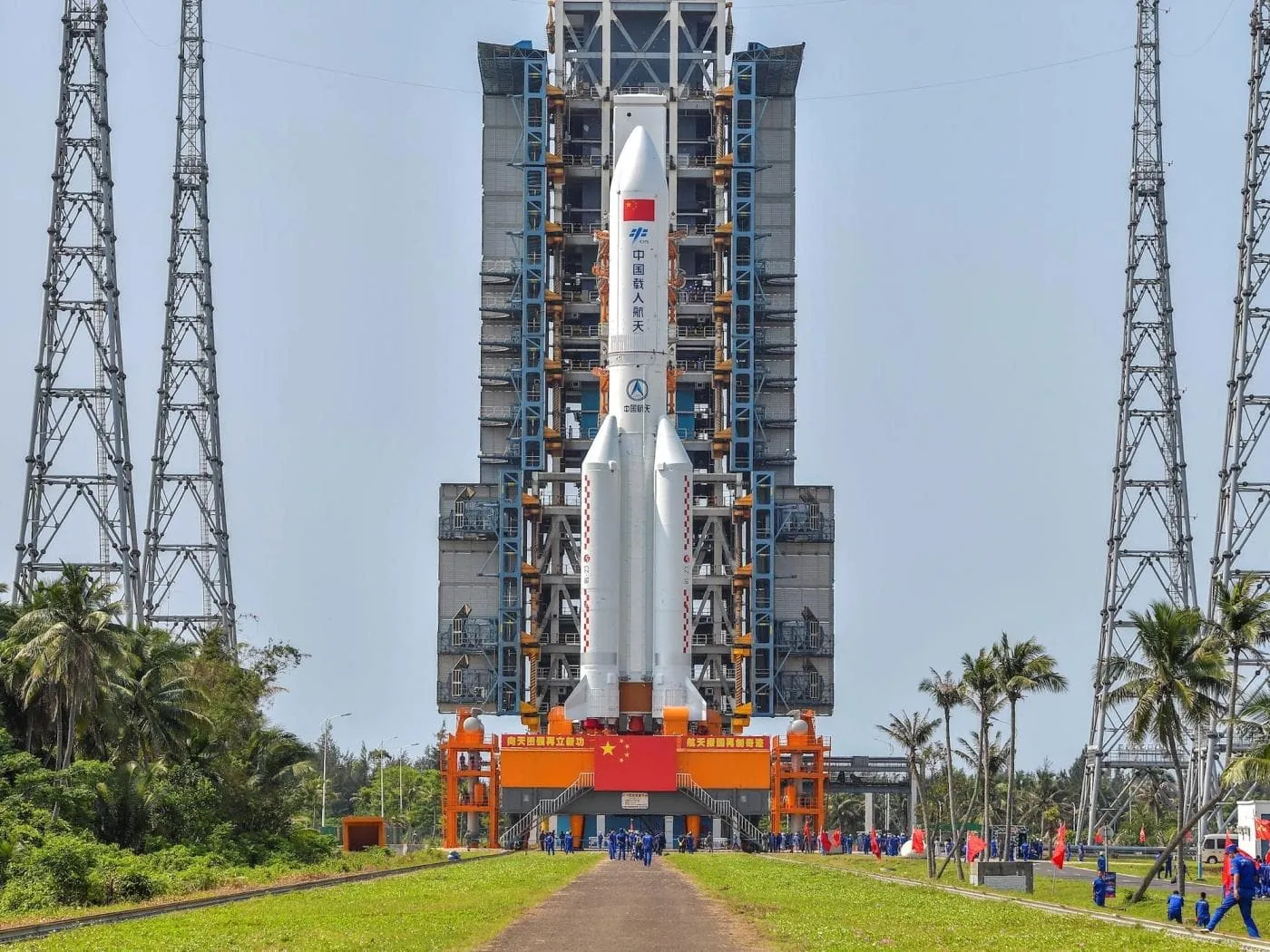 Reference image
Editorial responsibility
- No named human review is recorded for this page.
- Reports are grouped by semantic similarity and deterministic rules. Language models may assist titles, summaries, translation and cross-source analysis; the page reads the event directly, while its address stays stable when the title changes.
- Summary covers the current reports
Cross-source coverage
Reporting timeline
Long March 8A Rocket Successfully Launches 26 Low-Orbit Satellite Internet Satellites
On September 23 at 21:32 Beijing time, a Long March 8A (Changzheng-8A) carrier rocket lifted off from the Hainan Commercial Space Launch Site, successfully deploying the 26th group of low-orbit satellite internet satellites into their planned orbit. The satellites were developed by the China Academy of Space Technology (CAST), a subsidiary of China Aerospace Science and Technology Corporation (CASC). The Long March 8A, a two-and-a-half-stage liquid rocket developed by the China Academy of Launch Vehicle Technology (CALT), is described as a core launch vehicle for building China's satellite internet constellation. This mission marks the second full-system verification after a complete performance upgrade of the rocket, accumulating practical experience for future high-density launches. CASC stated that the rocket will perform multiple additional launches this year, contributing to China's low-orbit satellite internet construction and commercial aerospace development. This was the 669th flight of the Long March series.
Read sourceLong March 8A Rocket Successfully Launches 26th Group of Low-Orbit Internet Satellites
On September 23 at 21:32 Beijing time, a Long March 8A carrier rocket lifted off from the Hainan Commercial Space Launch Site, successfully deploying the 26th group of low-orbit satellite internet satellites into their planned orbit. The satellites were developed by the China Academy of Space Technology (CAST), a subsidiary of China Aerospace Science and Technology Corporation (CASC). The Long March 8A, a two-and-a-half-stage liquid-fueled rocket developed by the China Academy of Launch Vehicle Technology (CALT), is described as a core launch vehicle for building China's satellite internet constellation. This mission marks the second full-system verification of the rocket after a complete performance upgrade, gathering practical experience for future high-density launches. CASC stated that the rocket will conduct multiple additional launches this year to support the development of China's low-orbit satellite internet and the high-quality growth of the commercial space industry. This was the 669th flight of the Long March rocket series.
Read sourceChina Successfully Launches 26 Low-Orbit Satellite Internet Satellites from Hainan
On September 23, China successfully launched a batch of 26 low-orbit satellites for its satellite internet constellation. The launch took place at the Hainan Commercial Space Launch Site using a Long March 8A carrier rocket. The satellites entered their预定轨道 (predetermined orbit) as planned, and the mission was declared a complete success. This launch is part of China's ongoing efforts to build a domestic satellite internet network, aiming to provide global broadband coverage. The event underscores China's advancing capabilities in commercial space launch and satellite deployment.
Read sourceShow 3 older updatesHide older updates
China Launches 26 Low-Orbit Internet Satellites from Hainan Commercial Spaceport
China successfully launched 26 low-orbit satellites for a satellite internet constellation from the Hainan Commercial Space Launch Site on [date not specified in source]. The launch vehicle was the Long March 8A (Changzheng-8A) carrier rocket. The satellites entered their预定轨道 (predetermined orbit) as planned, and the mission was declared a complete success, according to state broadcaster CCTV. This launch is part of China's broader effort to build a domestic satellite internet network, competing with systems like Starlink. The specific satellite group is designated as 'Satellite Internet Low-Orbit Group 26'.
Read sourceChina Successfully Launches 26th Group of Low-Orbit Satellite Internet Satellites
On January 23 at 21:32 local time, China successfully launched the 26th group of low-orbit satellite internet satellites from the Hainan Commercial Space Launch Site. The satellites were carried by a Long March 8A carrier rocket and entered their预定轨道 (predetermined orbit) as planned, marking a complete success for the mission. The launch is part of China's ongoing efforts to build a low-orbit satellite internet constellation, which aims to provide global broadband connectivity. The Hainan Commercial Space Launch Site, China's first dedicated commercial spaceport, has been increasingly used for such missions to support the country's growing commercial space sector.
China Successfully Launches 26 Low-Orbit Satellite Internet Satellites from Hainan
On September 23, China successfully launched the 26th group of low-orbit satellites for its satellite internet constellation. The launch took place at the Hainan Commercial Space Launch Site using a Long March 8A carrier rocket. The satellites entered their预定轨道 (predetermined orbit) as planned, and the mission was declared a complete success. The report was sourced from CCTV and relayed by financial news outlet Jin10. This launch is part of China's broader effort to build a domestic satellite internet network, aiming to provide global broadband coverage. No further details on the satellites' specifications or the specific internet constellation project were provided in the brief report.