Kaplan: Bond market overpricing Fed rate hikes; one more move may suffice
Former Dallas Fed President Robert Kaplan stated that bond markets are overly aggressive in pricing future Federal Reserve rate hikes, with expectations exceeding the Fed's dot plot. Kaplan endorsed the September rate hike as correct and suggested a December hike may be reasonable, but advised against an October move. He noted inflation remains problematic near 3% annualized, but interest-rate-sensitive sectors like autos and housing are not overheating. Kaplan attributed market pricing partly to uncertainty over new Fed Chair Kevin Warsh and risks from the Iran war and oil prices, while long-term yield rises above 5% reflect worsening U.S. fiscal conditions.
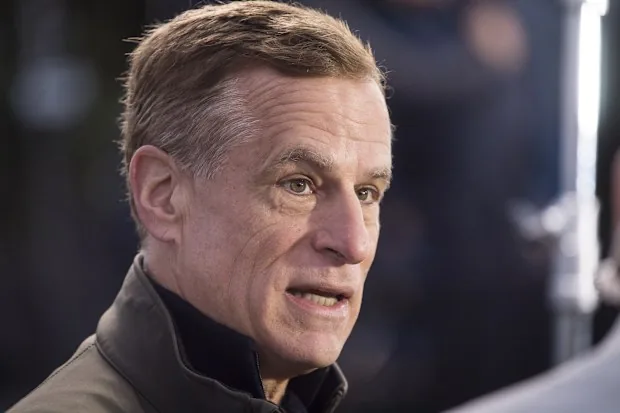 Reference image
Editorial responsibility
- No named human review is recorded for this page.
- Reports are grouped by semantic similarity and deterministic rules. Language models may assist titles, summaries, translation and cross-source analysis; the page reads the event directly, while its address stays stable when the title changes.
- Summary covers the current reports
Cross-source coverage
Common ground
- Both sides agree the US economy has a two-speed problem, with AI and defense booming while housing and autos struggle.
- Both acknowledge that structural inequality in the US is a real issue that monetary policy alone cannot fix.
- Both recognize that the bond market's signal—like the 10-year yield above 5%—reflects deeper fiscal and political problems, not just rate expectations.
Points of contention
- The neutral agent sees China's property crisis as a frozen, unresolved problem, while the eastern agent calls it a managed, controlled restructuring.
- The neutral agent argues that US market volatility is healthy price discovery, but the eastern agent views it as a vulnerability that hurts ordinary people.
- The eastern agent claims China's system delivers better results for its citizens, while the neutral agent says both systems are failing their non-elite populations.
Blind spots
- Neither side fully addresses how the two-speed economy affects everyday people who don't work in booming sectors like AI or state-owned enterprises.
- Both overlook the possibility that new Fed leadership under Chair Warsh could shift policy in unexpected ways, making current predictions unreliable.
- The debate ignores the global impact of US-China economic rivalry on other countries, focusing only on domestic outcomes.
WorldAttention’s read
This debate shows that both the US and China face deep structural problems that their current policies can't easily fix. The US has a transparent but messy system where markets and the Fed argue openly, yet inequality and political dysfunction persist. China has a more controlled system that can manage crises like the property crash without a full collapse, but it relies on suppressing data and dissent. Kaplan's 'one more hike' idea is a narrow technical fix for a much bigger issue—neither country has a credible plan for the two-speed economy where some sectors boom while most people struggle. The real question isn't which system is better, but whether either can deliver for ordinary citizens before the next crisis hits.
Reporting timeline
Former Fed Official Kaplan Says Market Pricing Overdone, One More Rate Hike May Be Enough
Former Dallas Fed President Robert Kaplan stated that market pricing for further Federal Reserve rate hikes has overshot the signals from the policy committee. In a Goldman Sachs podcast, Kaplan said the Fed was correct to raise rates in September, and another hike in December may be reasonable, but no action is needed in October. He argued that the most interest-rate-sensitive sectors of the economy are not overheating, and one more 25-basis-point hike would bring the federal funds rate to 4%-4.25%, near what he considers neutral. Kaplan attributed the market's aggressive pricing partly to uncertainty about how new Fed Chair Kevin Warsh will respond to economic changes, as well as potential inflationary pressure from the Iran war and sustained high oil prices. He also noted that the rise in long-term Treasury yields above 5% is more related to worsening U.S. fiscal conditions and a lack of a clear fiscal consolidation plan, rather than solely inflation expectations. Kaplan concluded that the actual policy path will depend on inflation, interest-rate-sensitive sectors, and fiscal developments.
Read sourceFormer Fed Official Kaplan Says Market Pricing Overdone, One More Rate Hike May Be Enough
Former Dallas Fed President Robert Kaplan argues that market pricing for further Federal Reserve rate hikes has overshot the signals from the current policy committee. In a Goldman Sachs podcast, Kaplan stated that while the Fed's September rate hike was correct and another in December may be reasonable, there is no need for action in October. He noted that inflation remains problematic, with annualized monthly data near 3%, but that interest-rate-sensitive sectors like autos and housing are not overheating. Kaplan estimates that one more 25-basis-point hike, bringing the federal funds rate to 4%-4.25%, would be near neutral and sufficient to make policy slightly restrictive. He attributes the market's aggressive pricing partly to uncertainty over new Fed Chair Kevin Warsh's policy reaction function and to risks from the Iran war and oil prices. Additionally, Kaplan points to worsening U.S. fiscal conditions and a lack of a clear fiscal consolidation plan as factors pushing long-term Treasury yields above 5%, independent of monetary policy expectations.
Read sourceFormer Dallas Fed President Says Market Pricing of Rate Hikes Is Too Aggressive
Robert Kaplan, former president of the Federal Reserve Bank of Dallas, stated that bond markets are being overly aggressive in pricing in future interest rate hikes from the Federal Reserve. In an interview published by Xinhua Finance on September 24, Kaplan said the Fed's September rate increase was the correct decision and that another hike in December could be reasonable, but he advised the central bank to pause in October. Kaplan noted that while the Fed's dot plot indicates one more rate increase this year, financial markets have already priced in more than that. He acknowledged strong growth in AI infrastructure and applications, as well as robust defense spending, but pointed to weakness in the automotive sector, housing-related businesses, and companies serving low- and middle-income consumers. He argued that sectors most sensitive to the federal funds rate are not currently overheating, suggesting the economy does not warrant the aggressive tightening expectations embedded in market pricing.
Read sourceShow 2 older updatesHide older updates
Former Dallas Fed President Says Market Expectations for Rate Hikes Are Too Aggressive
In an article published by Xinhua Finance on September 24, former Dallas Federal Reserve President Robert Kaplan stated that bond markets are being overly aggressive in pricing in future interest rate hikes by the Federal Reserve. Kaplan affirmed that the Fed's September rate increase was the correct decision and suggested that another hike in December could be reasonable, but he advised against a move in October. He noted that the Fed's dot plot indicates one more rate hike this year, but financial markets have already priced in more than that. Kaplan observed that while AI infrastructure and defense spending are booming, sectors such as automotive, housing, and those serving low- and middle-income consumers are weak or sluggish. He concluded that parts of the economy sensitive to the federal funds rate are not overheating.
Former Dallas Fed President Kaplan Says Market Pricing on Rate Hikes Is Too Aggressive
Former Dallas Federal Reserve President Robert Kaplan stated that bond markets are being overly aggressive in pricing in future interest rate hikes by the Federal Reserve. In an interview with Jin10, Kaplan endorsed the Fed's September rate increase as correct and suggested a potential further hike in December could be reasonable, but argued that the Fed should pause in October. He expressed concern over inflation, noting that annualized monthly data is approaching 3%. Kaplan pointed out that while the Fed's dot plot indicates one more rate hike this year, financial markets have priced in at least three additional hikes by June of next year. He observed that AI infrastructure and defense spending are booming, but sectors sensitive to federal funds rates, such as automotive, housing, and businesses serving low- and middle-income consumers, are weak or sluggish, indicating the economy is not overheating in those areas.