JPMorgan CEO Dimon: AI data center spending could hit $1 trillion, may fuel inflation
JPMorgan Chase CEO Jamie Dimon stated that spending on hyperscale data center ecosystems has more than doubled from about $300 billion last year to roughly $700 billion this year, and could reach $1 trillion next year. He said this surge is boosting economic growth by about 1% of GDP annually but may slightly exacerbate inflation. Dimon cautioned that it is too early to predict winners, drawing parallels to the internet bubble, and noted that AI could have a long-term deflationary effect.
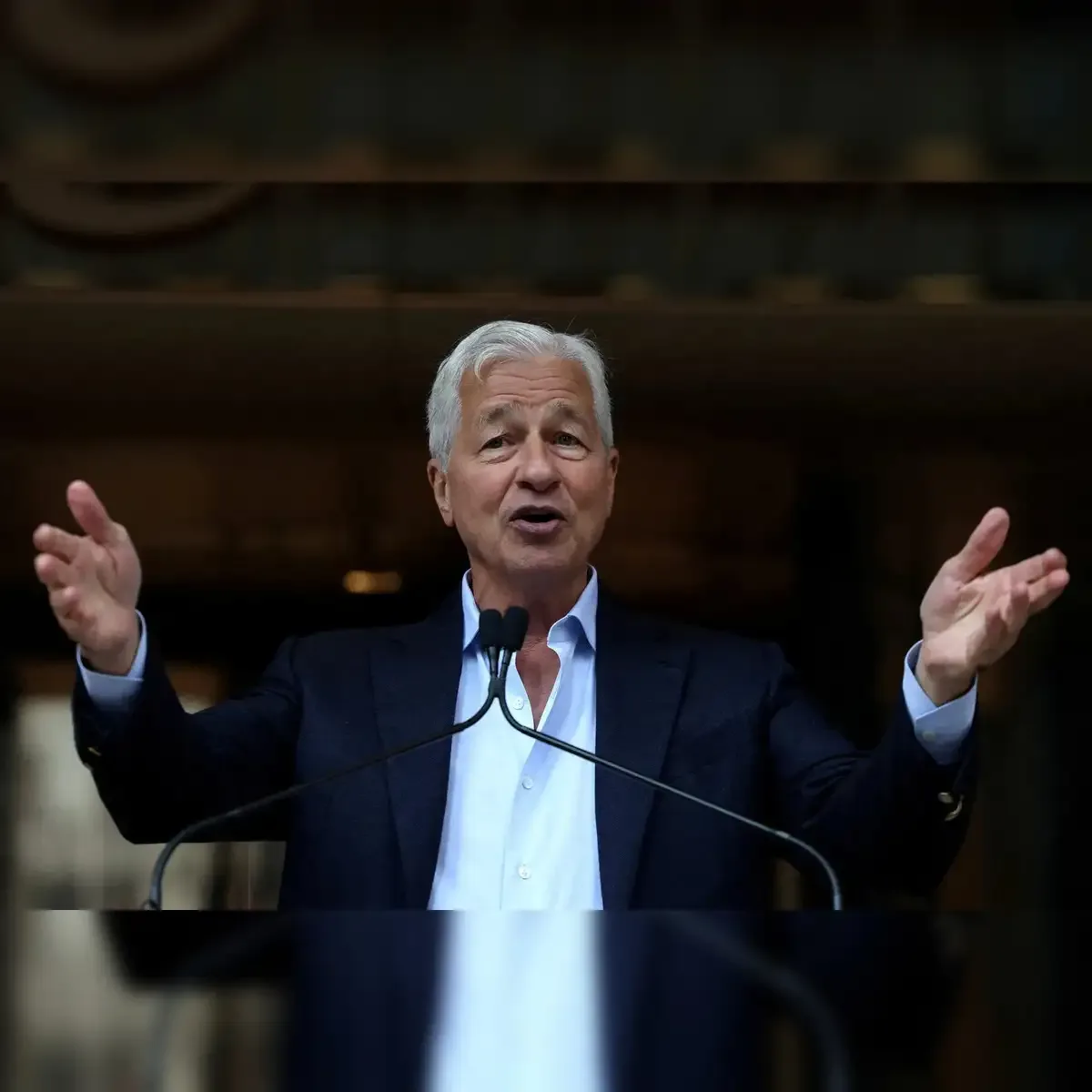 Reference image
Editorial responsibility
- No named human review is recorded for this page.
- Reports are grouped by semantic similarity and deterministic rules. Language models may assist titles, summaries, translation and cross-source analysis; the page reads the event directly, while its address stays stable when the title changes.
- Summary covers the current reports
Cross-source coverage
Common ground
- Both sides agree that the $1 trillion figure from Jamie Dimon is more of a political signal or narrative than a precise economic forecast.
- Both acknowledge that AI infrastructure investment involves massive, front-loaded capital spending with uncertain returns.
- Both recognize that China has structural advantages in energy infrastructure, like its ultra-high-voltage grid and centralized renewable buildout.
- Both agree that overinvestment in AI is a real risk for both the U.S. and China, though they disagree on how it will play out.
Points of contention
- The Eastern Agent argues China's state-directed investments are strategic and productive, while the Neutral Agent says they're driven by competitive fear and prone to hidden losses.
- The Eastern Agent claims China's system corrects imbalances through planning, while the Neutral Agent counters that this involves massive bailouts and socialized losses, not efficient correction.
- The Eastern Agent sees U.S. AI spending as speculative casino capitalism, while the Neutral Agent views both systems as making risky bets with different ways of socializing risk.
- The Neutral Agent argues China's GPU stockpiling and fragmented domestic chip efforts show panic, while the Eastern Agent frames it as a rational response to U.S. export controls.
Blind spots
- Both sides overlook the possibility that AI compute demand could grow at a moderate rate, making neither system's overbuilding catastrophic nor insufficient.
- The debate ignores the environmental and ecological costs of massive data center construction, such as water usage and carbon emissions.
- Neither side fully addresses how small and medium businesses in either country will adopt AI, which is key to turning compute into real productivity gains.
WorldAttention’s read
This debate shows that both the U.S. and China are making huge, uncertain bets on AI infrastructure, but they're doing it in very different ways. The U.S. approach is driven by financial markets and competitive fear, making it fragile and prone to speculative bubbles. China's approach is state-directed and tied to industrial policy, giving it advantages in energy and long-term planning, but it also hides risks like overcapacity and wasted resources. Neither system is clearly superior—America's losses hit shareholders, while China's hit taxpayers. The real question isn't the $1 trillion figure, but whether either country can turn all this computing power into real economic productivity before the debt comes due. On that, the evidence is still mixed for both.
Reporting timeline
JPMorgan CEO Dimon Says AI Infrastructure Spending Could Reach $1 Trillion by 2027
JPMorgan Chase CEO Jamie Dimon stated that AI infrastructure investment by hyperscale cloud providers and their ecosystems is accelerating, with spending estimated at $700 billion in 2025, up from about $300 billion in 2024, and potentially reaching $1 trillion by 2027. Dimon noted that this investment is boosting economic growth by roughly 1% of U.S. GDP annually but may also create short-term inflationary pressure. Major tech companies like Meta and Alphabet are significantly increasing their AI-related capital expenditures, with Meta planning to deploy 7 GW of computing power in 2026 and 14 GW by 2027, while Alphabet's AI capex has exceeded $200 billion this year. Dimon cautioned that not all AI investments will yield clear short-term returns, as some spending is necessary to maintain competitive positioning. He compared the current cycle to the internet bubble, noting that many early leaders may not survive. The Bank for International Settlements has warned that the rapid expansion of AI investment could pose financial stability risks. Markets remain optimistic, with AI stocks leading gains and the Nasdaq hitting a record close.
Read sourceJPMorgan CEO Dimon forecasts $1 trillion in AI data center spending next year, warns of inflation risk
JPMorgan Chase CEO Jamie Dimon stated that capital spending on artificial intelligence shows no signs of cooling, estimating that total investment in the hyperscale data center ecosystem could reach $1 trillion next year. Spending has already surged from about $300 billion last year to roughly $700 billion this year, more than doubling. Dimon said this expansion supports economic growth but may also add upward pressure on inflation, equating the spending to about 1% of annual GDP growth. He noted that hiring, construction of factories and power facilities, and procurement of equipment could slightly exacerbate inflation. However, Dimon suggested that AI might eventually have a deflationary effect, calling it an 'incredible technology' whose rapid expansion appears set to continue. He cautioned that it is too early to identify the ultimate winners of the AI boom, drawing parallels to the internet bubble era. Regarding investment returns, Dimon argued that not all AI investments can be measured by simple return calculations, as benefits like improved customer experience are hard to quantify. Beyond AI, he cited infrastructure, remilitarization, and government deficits as factors potentially pushing interest rates higher. Dimon remained cautious on inflation, hoping for easing but acknowledging it might not ease or could rise slightly, and urged the Federal Reserve to stick to its 2% target.
Read sourceJPMorgan CEO Dimon: AI data center spending could hit $1 trillion in 2025, may fuel inflation
Jamie Dimon, CEO of JPMorgan Chase, stated that spending on AI and hyperscale data center ecosystems is accelerating, with annual investment potentially reaching $1 trillion next year, up from an estimated $700 billion this year and $300 billion last year. In an interview, Dimon said this surge is boosting GDP growth by about 1% annually but may also slightly exacerbate inflation due to hiring, construction, and material purchases. However, he noted that AI could have a long-term deflationary effect, calling it an 'incredible technology' with expansion likely to continue. Dimon cautioned that predicting winners in the AI boom is premature, drawing parallels to the internet bubble where many prominent companies failed while lesser-known ones succeeded. He also said AI investment returns are not always measurable by simple calculations, as customer experience improvements are hard to quantify. Additionally, Dimon cited infrastructure spending, remilitarization, and government deficits as factors pushing up interest rates, and warned that markets may face a correction. He remained cautious on inflation, hoping for easing but acknowledging the possibility of a slight rise, and reiterated that the Federal Reserve should maintain its 2% inflation target.
Read sourceShow 3 older updatesHide older updates
JPMorgan CEO Dimon says AI data center spending could hit $1 trillion in 2025, may fuel inflation
Jamie Dimon, CEO of JPMorgan Chase, stated that spending on AI data center ecosystems is surging, potentially reaching $1 trillion next year, up from an estimated $700 billion this year and $300 billion last year. Dimon said this investment boom is boosting economic growth by about 1% of GDP annually but could also slightly exacerbate inflation due to hiring, construction, and equipment purchases. However, he noted that AI could have a long-term deflationary effect, calling it an 'incredible technology.' Dimon cautioned that predicting winners in the AI boom is premature, drawing parallels to the internet bubble. He also said AI investment returns are not always easily quantifiable, citing improved customer experience as a benefit. Beyond AI, Dimon pointed to infrastructure spending, re-militarization, and government deficits as factors pushing up interest rates, and warned that markets could see a correction. He remained cautious on inflation, saying it might not ease and could rise slightly, and affirmed the Federal Reserve should stick to its 2% target.
Read sourceJPMorgan CEO Dimon Says AI Capital Spending Boom Shows No Signs of Slowing
JPMorgan Chase CEO Jamie Dimon stated that the surge in AI capital expenditure shows little sign of abating, with total investment by hyperscaler cloud providers potentially reaching $1 trillion by 2027. Dimon noted that spending has already jumped from roughly $300 billion last year to about $700 billion this year, a more than doubling that is boosting economic growth by an estimated 1% of annual GDP. He warned that this spending could slightly exacerbate inflation as companies hire workers, build factories and power plants, and procure equipment. However, Dimon suggested that AI could have a deflationary effect in the long term. He cautioned that it is too early to pick winners from the AI boom, drawing a parallel to the dot-com bubble where many well-known companies failed while lesser-known ones emerged as major winners. Regarding returns on AI investment, Dimon argued that not all investments can be measured purely by return on investment, citing improved customer experience as a hard-to-quantify benefit. He also noted that large capital demands from infrastructure, remilitarization, and government deficits could be pushing up interest rates, and that a market correction is possible, though he was uncertain if AI would be the trigger. On inflation, Dimon expressed hope that price pressures would ease but acknowledged they might not cool or could even rise slightly, while affirming that the Federal Reserve should maintain its 2% inflation target.
JPMorgan's Dimon Says AI Data Center Spending Could Reach $1 Trillion, May Fuel Inflation
Jamie Dimon, CEO of JPMorgan Chase, stated that spending on the hyperscale data center ecosystem has more than doubled from about $300 billion last year to roughly $700 billion this year, and could reach $1 trillion next year. He said this surge is boosting economic growth but may also slightly exacerbate inflation, equating the spending to about 1% of annual GDP growth. Dimon noted that while AI could have a long-term deflationary effect, it is too early to predict winners, drawing parallels to the internet bubble. He added that AI investment returns are not always easily quantifiable, citing improved customer experience as a benefit. Dimon also warned that infrastructure spending, remilitarization, and government deficits could push interest rates higher, and that markets may see a correction. He remained cautious on inflation, suggesting it might not ease and could rise slightly, and urged the Federal Reserve to stick to its 2% inflation target.
Read source