Japan launches MMX mission to return first samples from Martian moon Phobos
Japan has launched the Martian Moons eXploration (MMX) mission, a JAXA-led spacecraft aimed at landing on Mars' moon Phobos, collecting about 10g of moon dust, and returning it to Earth in 2031, landing in the Woomera desert of South Australia. The craft is scheduled to arrive at Phobos in August 2027, deploy a small rover to scout a landing site, then use a robotic arm and samplers to gather material. Scientists hope the samples will resolve whether Phobos and Deimos formed from a giant impact on Mars or were captured asteroids.
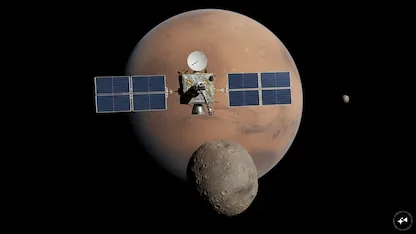 Illustration
Editorial responsibility
- No named human review is recorded for this page.
- Reports are grouped by semantic similarity and deterministic rules. Language models may assist titles, summaries, translation and cross-source analysis; the page reads the event directly, while its address stays stable when the title changes.
- Summary covers the current reports
Cross-source coverage
Common ground
- The launch date and status of the MMX mission are unverified and inconsistent across sources.
- Six news outlets recycled wire copy without primary sourcing or naming the spacecraft.
- The Phobos sample-return mission is scientifically interesting and worth covering.
- NASA's Mars Sample Return has been descoped or re-baselined due to cost issues, not formally killed.
- China's Tianwen-3 is a plan, not a confirmed launch, but it reveals intent to compete in sample return.
Points of contention
- Whether the unverified launch date is the main story or just a preliminary fact-check.
- Whether 'stranded' and 'killed' are fair descriptions of MSR's status or predictions dressed as facts.
- Whether a systemic wire-copy failure is a press-freedom story or just a copy-paste problem.
- Whether verification is the load-bearing wall of the argument or a disposable starting point.
Blind spots
- No one confirmed the actual launch date or status of MMX during the debate.
- The debate focused on U.S. and China but ignored other international partners like ESA.
- No one discussed the scientific details of how 10 grams of Phobos dust would settle the origin question.
- The role of commercial space companies in rescuing MSR was mentioned but not explored.
WorldAttention’s read
The roundtable agreed that the MMX coverage is sloppy and unverified, with no primary sourcing and a suspicious 2021 date. They disagreed on whether that fact-check is the whole story or just the start. The Western Agent argued the durable story is who remains in the sample-return business, while the Neutral Agent insisted verification is the foundation. Both sides made real concessions: 'stranded' and 'killed' were retired as predictions, and the wire-copy failure was acknowledged as systemic. The biggest blind spot is that no one actually confirmed the launch. The final takeaway: a mission this ambitious deserved better than recycled copy, and the real story may be the information ecosystem failure itself.
Reporting timeline
Japan Launches Mission to Bring Back Samples From Martian Moon Phobos
Japan has launched a spacecraft on a mission to the Martian moons, aiming to return soil samples from Phobos to Earth. According to reports from Ars Technica, BBC, AP News, The Economist, and The New York Times, the mission blasted off to explore the mysterious moons of Mars and collect a piece of Phobos. The effort is described as a bold sample-return endeavor that could shed light on the origins of Mars' moons. The Economist frames the mission around the broader mystery of Mars' moons, while other outlets emphasize the launch and the goal of bringing home a bit of a Martian moon. No specific launch date, spacecraft name, or mission timeline is provided in the aggregated headlines.
Read sourceJapan launches historic mission to collect rock samples from Mars's moon Phobos
Japan has launched a historic space mission to collect rock samples from Phobos, one of Mars's two tiny moons, according to multiple news outlets including The Guardian, CNN, NBC News, BBC, and The New York Times. The mission aims to bring soil and rock samples from Phobos back to Earth, which scientists hope will reveal the origins and secrets of Mars's mysterious moons. The Guardian described the launch as a 'once-in-a-lifetime chance.' CNN noted that Mars's two tiny moons 'shouldn't exist,' and the new mission has launched to reveal their secrets. NBC News called it a bold mission to bring home soil samples, while BBC reported that the mission blasted off for Mars to grab a piece of its moon. The New York Times said a Japanese spacecraft aims to bring back a bit of a Martian Moon. The mission represents a significant step in planetary science and sample-return exploration.
Read sourceJapan launches MMX sample-return mission to Mars' moon Phobos
Japan has launched the Martian Moons eXploration (MMX) mission, a historic robotic sample-return effort targeting Mars' moon Phobos. Multiple outlets, including Space, BBC, CBS News, The New York Times, and CNN, reported the launch. The mission aims to land on Phobos, collect surface material, and return samples to Earth. CNN noted that Mars' two tiny moons shouldn't exist and that the new mission has launched to reveal their secrets. The reports describe the mission as ambitious and historic, marking Japan's first sample-return attempt from a Martian moon. No attributed opinions or forecasts beyond the mission's stated objectives were provided in the aggregated headlines.
Read sourceShow 10 older updatesHide older updates
Japan's MMX spacecraft launches to bring back dust from Mars moon Phobos
A Japanese spacecraft has launched on the Mars Moons Exploration (MMX) mission, aiming to land on Mars' moon Phobos, collect about 10g of moon dust, and return it to Earth in 2031, landing in the Woomera desert of South Australia. The spacecraft is scheduled to arrive at Phobos in August 2027, where it will deploy a small rover to scout a landing site before the main craft touches down and uses a robotic arm and samplers to gather material. Led by the Japanese Space Agency, the mission hopes to resolve how Mars' moons formed, testing whether Phobos and Deimos resulted from a giant impact on Mars or were captured asteroids. Scientists including Prof Sara Russell of the Natural History Museum and Dr Chrysa Avdellidou of Leicester University say the sample could also contain implanted grains of Mars, offering pristine direct information about the Red Planet's composition and history.
Read sourceJapan launches MMX mission to Mars moon Phobos to return soil samples
Japan has launched a spacecraft on a mission to the mysterious moons of Mars, aiming to bring soil samples back to Earth. Multiple outlets, including AP News, BBC, The New York Times, Space, and Axios, report that the mission—identified as the MMX sample-return effort—blasted off toward Mars' moon Phobos. The reports describe the launch as historic and bold, focused on grabbing a piece of a Martian moon for return to Earth. No further details on timeline, spacecraft specifications, or mission outcomes are provided in the aggregated headlines.
Read sourceJapan to Launch Historic Sample-Return Mission to Mars Moon Phobos
Japan is launching a historic round-trip sample-return mission to Mars' moon Phobos, according to multiple news reports. The mission aims to collect material from Phobos and may also gather some Mars dust. CNN notes that Mars' two tiny moons shouldn't exist, and the new mission will reveal why they do. The New York Times reports that a Japanese spacecraft aims to bring back a bit of a Martian moon. Science News adds that Japan's sample return mission to Phobos may also collect some Mars dust. The launch is described as bold and historic, with live coverage available.
Read sourceJapan to launch sample-return mission to Mars moon Phobos
Japan is launching a sample-return mission to the Martian moon Phobos, with multiple outlets reporting the launch is set for today or Monday. The mission aims to bring back the first samples from a moon other than Earth's, and may also collect some Mars dust. Coverage highlights the scientific puzzle of Mars' two tiny moons, which 'shouldn't exist,' and the mission is expected to help reveal why they do. The New York Times describes a Japanese spacecraft aiming to bring back a bit of a Martian moon, while ABC News frames it as the first mission to bring home samples from a moon other than Earth's. The launch is being covered live by Space.
Read sourceJapan Leads MMX Mission to Make First Return Trip to Mars
Japan is leading a mission to make the first return trip to Mars, with its Martian Moons Exploration (MMX) spacecraft set to launch and bring back samples from a Martian moon. The mission, led by JAXA, aims to collect material from one of Mars's moons and return it to Earth, marking a significant milestone in planetary exploration. Multiple outlets, including the Financial Times, The New York Times, BBC, Mashable, and Space, are covering the launch and the science behind the bold MMX mission. The mission is described as the first attempt to return samples from a Martian moon, and live coverage of the launch is available.
Japan's MMX Mission Aims to Return First Samples from a Martian Moon
Japan is preparing to launch its Martian Moons Exploration (MMX) mission, which aims to make the first return trip to Mars and bring back samples from one of its moons. The mission, led by JAXA, is set to blast off and will attempt to collect material from a Martian moon, marking a significant step in planetary science. Multiple outlets, including The New York Times, Financial Times, BBC, Mashable, and Space, are covering the launch and the science behind the bold endeavor. The mission could provide unprecedented insights into the origins of Mars and its moons.
Read sourceJapan's MMX Mission to Return First Samples from Martian Moon Phobos
Japan is preparing to launch its Martian Moons Exploration (MMX) mission, a historic round-trip spacecraft endeavor to collect and return the first samples from a Martian moon, primarily Phobos. According to Space, AP News, and Japan Today, the mission aims to gather surface material that could shed light on the origins of Mars's moons and the early solar system. Mashable reports on how to watch the JAXA launch live. Hackaday highlights a novel 15-gram rover designed to hop across Phobos's surface as part of the mission. The MMX spacecraft will travel to Mars's moons, land or touch down to collect samples, and return them to Earth for detailed scientific analysis, marking a significant milestone in planetary exploration.
Read sourceJapan to Launch World-First Mission to Collect Samples from Martian Moon
Japan is preparing to launch a spacecraft on a historic round-trip mission to collect samples from a Martian moon, according to multiple news reports. The mission, known as MMX, aims to return samples from Phobos, one of Mars's two moons, marking a world-first attempt. Coverage highlights the scientific significance of the endeavor, including a tiny 15-gram rover designed for the Phobos surface. The AP, The Guardian, Japan Today, Space, and Hackaday all report on the planned launch and the mission's bold objectives. If successful, the samples could provide new insights into the origins of Mars and its moons.
Read sourceJapan to Launch World-First Mission to Collect Samples from Martian Moon
Japan is preparing to launch a world-first mission to collect samples from a Martian moon, with multiple outlets reporting the planned launch. The Guardian describes it as a world-first sample collection mission from a Martian moon, while NHK WORLD-JAPAN reports the launch is scheduled for Tuesday. New Scientist specifies the target as Phobos, Mars's largest moon. NASA Science notes that NASA will help unlock mysteries of Mars' moons in the upcoming mission, and AP News reports Japan will launch a spacecraft to obtain samples from a Martian moon. The mission represents a significant international space exploration effort involving Japanese and American cooperation.
Read sourceJapan to Launch MMX Mission to Martian Moon Phobos on Tuesday
Japan is set to launch its Martian Moons eXploration (MMX) mission on Tuesday, targeting Mars's largest moon, Phobos. According to NHK and the European Space Agency, the lander is scheduled to launch on 19 October. The mission aims to land on Phobos and collect soil samples for return to Earth, with the goal of unlocking mysteries about the origins of Mars's moons. NASA Science notes that NASA will help unlock mysteries of Mars's moons in the upcoming mission, while New Scientist and The Conversation report that Japan's MMX mission aims to swipe soil samples from Phobos. The mission represents a significant international collaborative effort in planetary science.