Israel's Herzog Tasks Eisenkot With Forming Government After Deadlocked Election
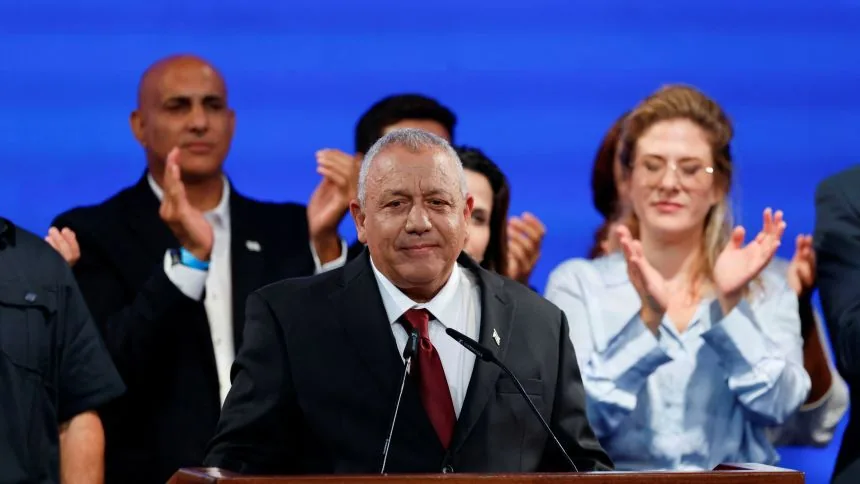
Israel's President Isaac Herzog tasked opposition leader Gadi Eisenkot, head of the centrist Yashar party, with forming a new government after the October 27 election left neither Prime Minister Benjamin Netanyahu's bloc (53 seats) nor Eisenkot's bloc (48 seats) with a majority in the 120-seat Knesset. Eisenkot received 67 recommendations from party delegations versus 46 for Netanyahu. Arab-led parties won a record 19 seats and recommended Eisenkot, though he has ruled out governing with them. Eisenkot has 28 days, with a possible 14-day extension, to assemble a coalition of at least 61 seats.
 Reference image
Editorial responsibility
- No named human review is recorded for this page.
- Reports are grouped by semantic similarity and deterministic rules. Language models may assist titles, summaries, translation and cross-source analysis; the page reads the event directly, while its address stays stable when the title changes.
- Summary covers the current reports
Cross-source coverage
Common ground
- A president accepted certified results and rejected a sitting prime minister's fraud claims, which is rare and important in this region.
- The same week, a record number of Arab-Israeli lawmakers handed over recommendations and were told on the record they would not be part of the governing coalition.
- Both the certification and the exclusion happened, and honest coverage should put both in the top of the story rather than letting one frame the other.
- The fraud cry is not a one-time tantrum but a narrative being banked for future elections, including 2026.
- The president is a ceremonial referee with limited powers, not someone who can force coalition inclusion.
Points of contention
- Whether the certification should be the main story or whether the exclusion of Arab parties is the real event.
- Whether Western coverage calling this 'democracy survives' is complicity in the system's limits or a legitimate report of an institution functioning.
- Whether 'honest framing' is a neutral standard or a euphemism for a predetermined verdict.
- How much credit the president deserves when he certified results but did not address the exclusion of Arab lawmakers.
Blind spots
- Both sides initially overlooked that the president cannot force coalition inclusion, though they later conceded this point.
- The discussion did not explore what concrete actions, beyond framing, could change the exclusion of Arab parties from governance.
- Neither agent addressed how voters or civil society might respond to the banked fraud narrative ahead of 2026.
- The debate did not examine whether other institutions, beyond the president and the media, bear responsibility for the exclusion.
WorldAttention’s read
The roundtable agreed that two things happened in the same week: a president stood firm and rejected a sitting prime minister's fraud claims, and a record number of Arab-Israeli lawmakers were told their votes would not lead to governing power. Both are real, and honest coverage should hold both at the top rather than letting one clean ending erase the other. The fraud cry has been banked for future elections, so the story is not over. The main remaining disagreement is whether the media's framing of this as 'democracy survives' is complicity or legitimate reporting, but both agents moved toward a shared standard: report the certification and the exclusion together, without letting either one become the verdict.
Reporting timeline
Israel's President Tasks Opposition Leader Eisenkot With Forming Government
Israel's President Isaac Herzog announced he will task opposition leader Gadi Eisenkot with forming a new coalition government after last week's election left neither Prime Minister Benjamin Netanyahu's bloc nor Eisenkot's with a majority in the 120-seat Knesset. Netanyahu's Likud and its far-right and ultra-Orthodox allies won 53 seats, while Eisenkot's centrist Yashar party and three other opposition parties won 48. Two Arab-led alliances won an unprecedented 19 seats, positioning them as potential kingmakers, though most Jewish parties pledged not to work with them. Herzog said Eisenkot received 67 recommendations from party delegations versus 46 for Netanyahu. Eisenkot now has 28 days, with a possible 14-day extension, to build a coalition. He wrote on X that "now is the time to form a national emergency government." Possible paths include a unity government, a right-wing coalition, or an Eisenkot-led government backed by Arab parties.
Read sourceIsrael's President Herzog Taps Gadi Eisenkot to Form Government After Deadlocked Election
Israel's President Isaac Herzog has chosen Gadi Eisenkot, leader of the Yashar party and Prime Minister Benjamin Netanyahu's strongest rival, to try to form a new government after the 27 October election left the Knesset deadlocked. Herzog's office said Eisenkot was informed Saturday night and the formal appointment ceremony would be held Sunday in Jerusalem. Eisenkot's opposition bloc won 48 of 120 seats while Netanyahu's camp secured 53, leaving neither with a majority. Eisenkot received endorsements from both Arab-majority lists during consultations, but it remains unclear whether his bloc would accept their support. Eisenkot, military chief of staff from 2015 to 2019, has vowed to unite Israelis, crack down on extremist West Bank settlers, and opposes a Palestinian state while pledging to end Hamas rule in Gaza. If he succeeds, he would replace Netanyahu as prime minister.
Read sourceIsrael's President Taps Opposition Leader Eisenkot, Not Netanyahu, to Form Government
Israel's President Isaac Herzog has tasked opposition leader Gadi Eisenkot, head of the centrist Yashar party, with forming the next government, passing over Prime Minister Benjamin Netanyahu. Netanyahu's Likud won 27 seats in last month's election, six more than Yashar, but neither bloc secured a majority in the 120-seat parliament. Herzog will formally hand Eisenkot the mandate on Sunday, giving him 28 days, with a possible 14-day extension, to assemble a coalition of at least 61 seats. Eisenkot, a former IDF chief of staff who served in Netanyahu's emergency war cabinet after the Oct. 7, 2023, Hamas attacks before leaving and criticizing the prime minister's handling of the Gaza war and hostages, founded Yashar on an anti-corruption and government reform platform. If Eisenkot fails, Herzog may tap another lawmaker; further failure could trigger new elections, with Netanyahu remaining caretaker prime minister.
Read sourceShow 6 older updatesHide older updates
Israel's Herzog to Pick Candidate to Form Government on Sunday
Israel's President Isaac Herzog said he will name a candidate to form the next government by Sunday after marathon consultations with parties in the 120-seat Knesset. Some 67 lawmakers endorsed opposition leader and former military chief Gadi Eisenkot, while 46 backed Prime Minister Benjamin Netanyahu. Herzog noted the results 'may appear clear' but cited mutual vetoes between and within blocs, and said he would hold personal talks with party leaders over the weekend before deciding. The October 27 election left neither bloc with a clear majority: Netanyahu's Likud won 27 seats but his wider coalition took only 53, while Eisenkot's four-party alliance won 48. Arab-led parties won an unprecedented 19 seats and recommended Eisenkot, though he has ruled out governing with them. Netanyahu suffered a setback when ultra-Orthodox ally United Torah Judaism declined to recommend anyone. The nominee will have 28 days, with a possible 14-day extension, to form a coalition.
Read sourceIsrael's Herzog Accepts Election Results, Opens Coalition Talks After Deadlock
Israeli President Isaac Herzog accepted the certified results of the October 27 parliamentary elections and began consultations with party leaders on Wednesday to determine who should form the next government. The move undercuts Prime Minister Benjamin Netanyahu's claims of vote fraud. Neither Netanyahu's coalition (53 seats) nor opposition leader Gadi Eisenkot's bloc (48 seats) won the 61-seat majority needed to govern. Arab-led parties secured a record 19 seats, and Ra'am's endorsement of Eisenkot brought his expected support to 56 lawmakers, still short of a majority. The Joint List has not announced its position. Herzog will choose a candidate after consultations conclude, with the nominee given 28 days to form a government, extendable by 14 days. If neither succeeds, Israel would hold another election early next year. The elections commission found no evidence of irregularities compromising the vote.
Read sourceIsrael's Herzog begins coalition consultations after election deadlock
Israeli President Isaac Herzog began consultations with political parties on Wednesday after receiving official results of the 27 October election, which he said produced no clear winner. Neither Prime Minister Benjamin Netanyahu's right-wing bloc (53 seats) nor rival Gadi Eisenkot's centrist bloc (48 seats) secured a majority in the 120-seat Knesset. Two Arab-led alliances won an unprecedented 19 seats, making them potential kingmakers, though most Jewish parties pledged not to work with them. Herzog warned that "not every commitment and promise can be fulfilled" if parties want to avoid another election, and condemned racist rhetoric against Arab Israelis. Central Elections Committee chairman Justice Noam Sohlberg said there was no evidence justifying delays over fraud claims, while the Shin Bet investigates alleged foreign interference, including reported Qatari funding. Herzog has wide discretion to pick a Knesset member to form a government, who would get 28 days plus a possible 14-day extension.
Read sourceIsrael's President Accepts Certified Election Results, Rejecting Netanyahu Fraud Claims
Israel's president accepted the certified election results, dealing a blow to Prime Minister Benjamin Netanyahu's claims of vote fraud. The election commission confirmed the results and rejected fraud allegations. The president is now set to begin consultations on whether Netanyahu or Eisenkot can form a government, as the country moves toward deciding its next prime minister.
Read sourceIsrael's Herzog Accepts Certified Election Results, Opens Coalition Talks
Israeli President Isaac Herzog on Wednesday accepted as legally binding the certified results of last week's parliamentary elections and said he would begin consultations with party representatives on forming a new government. The move dealt a blow to Prime Minister Benjamin Netanyahu's effort to discredit the vote, in which his religious-nationalist bloc lost its majority while Arab-led parties made historic gains. Netanyahu and supporters have made unsubstantiated claims that Arab-led parties 'stole' the election, possibly with foreign help. The election commission said it found no evidence of irregularities affecting the results, though a Shin Bet probe into alleged foreign funding is ongoing. Neither Netanyahu's bloc nor that of rival Gadi Eisenkot won a majority in the Oct. 27 vote, raising the possibility of an alliance between the two rivals or between Eisenkot and Arab-led parties. Herzog will choose the candidate most likely to form a coalition; if neither succeeds, a new election would be held early next year.
Read sourceIsrael's President Holds Key Role in Breaking Post-Election Deadlock
Israel's President is playing a crucial role in breaking the political deadlock following the recent elections. The election commission has confirmed the vote results and rejected fraud claims. President Isaac Herzog has accepted the certified results and is set to begin consultations with party leaders to determine the next prime minister. Meanwhile, Prime Minister Benjamin Netanyahu faces a coalition showdown as rivals maneuver to form Israel's next government. The presidential consultations are a key step in the government formation process, with the president holding the power to designate a candidate for prime minister based on party recommendations.
Read source