Iran and Pakistan pledge deeper cooperation in Tehran ministerial meetings
Iranian President Masoud Pezeshkian met with Pakistani Interior Minister Mohsin Naqvi in Tehran on September 21, pledging to boost bilateral cooperation. Pezeshkian stated that US pressure has fostered regional integration, while Naqvi affirmed Pakistan's commitment to expanding ties in trade, economy, tourism, politics, culture, and science. Earlier, Naqvi also met with Iranian Interior Minister Eskandar Momeni to discuss bilateral relations and regional security.
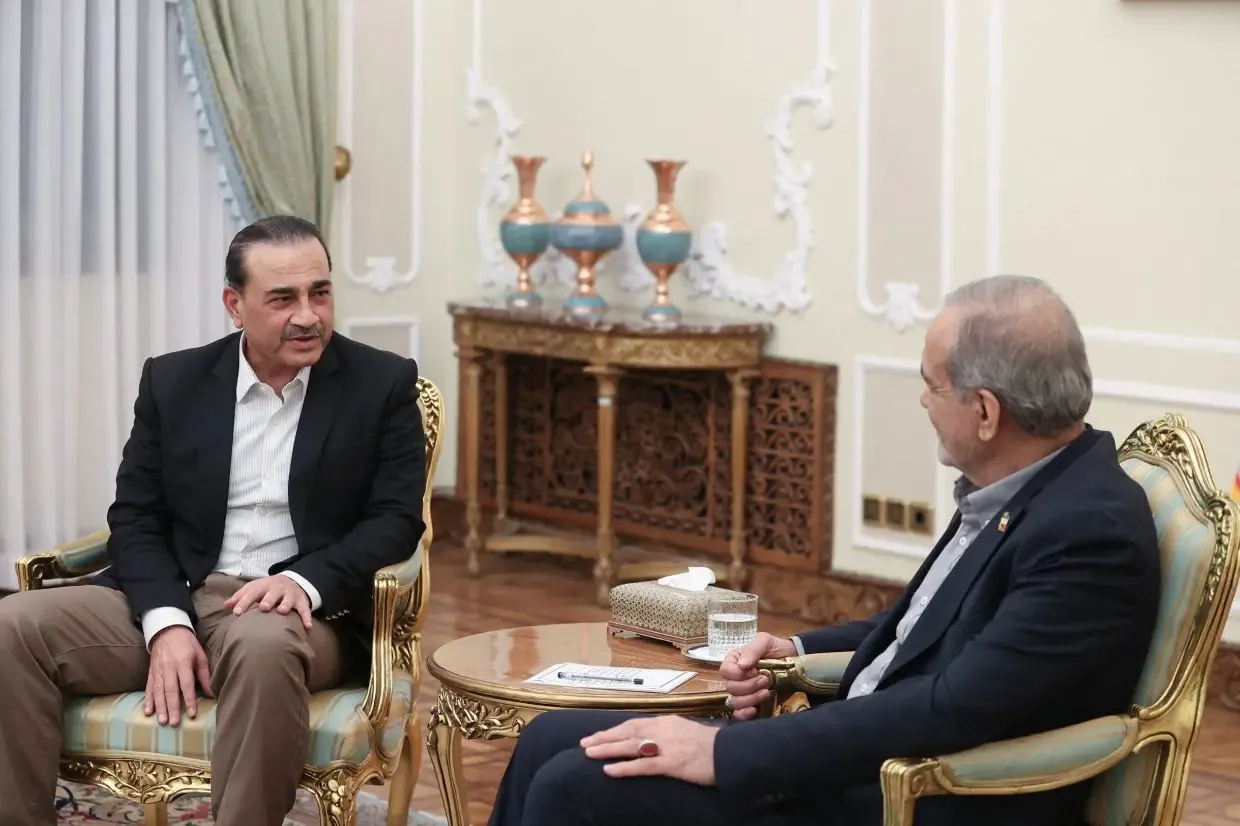 Reference image
Editorial responsibility
- No named human review is recorded for this page.
- Reports are grouped by semantic similarity and deterministic rules. Language models may assist titles, summaries, translation and cross-source analysis; the page reads the event directly, while its address stays stable when the title changes.
- Summary covers the current reports
Cross-source coverage
Common ground
- Both agree that U.S. hegemony and its wars have caused significant harm to the region, including in Afghanistan and Balochistan.
- Both see the meeting between Pakistan and Iran as a meaningful step toward regional cooperation and a shift away from U.S.-dominated geopolitics.
- Both acknowledge that external powers have exploited ethnic and sectarian divisions in the region for their own benefit.
Points of contention
- The Regional Agent argues that Pakistan and Iran have their own brutal human rights records that must be criticized, while the Eastern Agent sees such criticism as playing into Washington's divide-and-rule strategy.
- The Eastern Agent believes multipolarity and regional cooperation are the only realistic path to stability, while the Regional Agent insists that without holding regional powers accountable, the system just replaces one oppressor with another.
- The Regional Agent focuses on the immediate suffering of Baloch communities and Afghan refugees, while the Eastern Agent prioritizes the long-term strategic shift away from U.S. interference.
Blind spots
- Both sides largely ignore the role of other regional powers, like Saudi Arabia and India, in fueling tensions between Pakistan and Iran.
- The debate overlooks the economic interests of ordinary people—like how trade and energy deals might actually improve daily life, beyond just geopolitical symbolism.
- Neither fully addresses the possibility that regional cooperation could be used to tighten border controls and further marginalize vulnerable groups, rather than help them.
WorldAttention’s read
This debate shows a clear split between two views: one that celebrates any move away from U.S. dominance as progress, and another that insists new regional powers must be held to a higher standard. Both sides agree that America's wars and meddling have caused immense suffering, but they clash over whether criticizing Pakistan and Iran helps or hurts the cause of justice. The Regional Agent argues that ignoring human rights abuses by regional governments just replaces one set of oppressors with another, while the Eastern Agent sees such criticism as a distraction that plays into Washington's hands. What's missing is a deeper look at how ordinary people—especially Baloch communities and Afghan refugees—actually experience these shifts. The real test of multipolarity isn't handshakes between ministers, but whether life gets better for those who have been crushed by both foreign interventions and local crackdowns.
Reporting timeline
Iranian President Meets Pakistani Interior Minister, Pledges to Boost Bilateral Cooperation
On August 21, Iranian President Masoud Pezeshkian met with visiting Pakistani Interior Minister Mohsin Naqvi in Tehran. Pezeshkian stated that Iran and Pakistan can meet their respective needs by leveraging regional potential. He expressed Iran's expectation to continuously advance the bilateral cooperation process and hoped these interactions would gain stronger momentum across all fields. The Iranian president also remarked that US actions and pressure have paved the way for greater integration and sustained interaction among regional countries, citing the frequent meetings and consultations between Iranian and Pakistani delegations as evidence of this trend. In response, Minister Naqvi affirmed Pakistan's determination to further expand and deepen bilateral relations and cooperation in all areas, including trade, economy, tourism, politics, culture, and science.
Read sourceIranian President Meets Pakistani Interior Minister, Pushes for Stronger Bilateral Ties
On September 21, Iranian President Masoud Pezeshkian met with Pakistani Interior Minister Mohsin Naqvi in Tehran. Pezeshkian stated that Iran and Pakistan can meet their needs by leveraging regional potential, and expressed hope for sustained and stronger bilateral cooperation across all fields. He argued that U.S. actions and pressure have paved the way for greater regional integration and interaction, citing frequent meetings between Iranian and Pakistani delegations as evidence. Naqvi affirmed Pakistan's commitment to expanding and deepening relations with Iran in trade, economy, tourism, politics, culture, and science. The meeting underscores ongoing diplomatic engagement between the two neighboring countries.
Read sourceIranian President Meets Pakistani Interior Minister, Expects Continued Bilateral Cooperation
Iranian President Masoud Pezeshkian met with Pakistani Interior Minister Mohsin Naqvi in Tehran on September 21. Pezeshkian stated that Iran and Pakistan can meet their needs by utilizing regional potential. He expressed hope for sustained and stronger bilateral cooperation across all fields. The Iranian president also asserted that US actions and pressure have paved the way for greater regional integration and interaction, citing frequent meetings between Iranian and Pakistani delegations as evidence. Naqvi affirmed Pakistan's determination to expand and deepen relations with Iran in trade, economy, tourism, politics, culture, and science.
Show 2 older updatesHide older updates
Pakistan and Iran Interior Ministers Meet in Tehran to Discuss Bilateral Ties and Regional Situation
Pakistan's Interior Minister Mohsin Naqvi arrived in Tehran and met with Iran's Interior Minister Eskandar Momeni on September 21. According to a statement from Pakistan's Interior Ministry, the two officials exchanged views on Pakistan-Iran bilateral relations and the latest regional developments. Minister Momeni thanked Pakistan for its continued efforts to maintain regional peace. Minister Naqvi stated that bilateral relations between Pakistan and Iran will be further strengthened in the future. The meeting underscores ongoing diplomatic engagement between the two neighboring countries.
Read sourcePakistan and Iran Interior Ministers Meet in Tehran to Discuss Bilateral Ties and Regional Situation
On September 21, Pakistani Interior Minister Mohsin Naqvi arrived in Tehran, Iran, and held a meeting with Iranian Interior Minister Eskandar Momeni. According to a statement from Pakistan's Interior Ministry, the two officials exchanged views on Pakistan-Iran bilateral relations and the latest regional developments. During the talks, Momeni thanked Pakistan for its continued efforts to maintain regional peace. Naqvi expressed that relations between Pakistan and Iran will be further strengthened in the future. The meeting underscores ongoing diplomatic engagement between the two neighboring countries amid regional security concerns.
Read source