IFR: Global humanoid robot sales reached 7,000 in 2024, mostly for AI research
The International Federation of Robotics (IFR) reported that approximately 7,000 humanoid robots were sold globally in 2024 for industrial and professional service use, excluding consumer, military, and medical robots. Most units were deployed by research institutions and companies to generate data for improving AI models, not for productive work. Traditional industrial robots remain dominant with 542,000 installations in 2024. Bank of America forecasts 90,000 humanoid robot shipments in 2025 and 1.2 million by 2030.
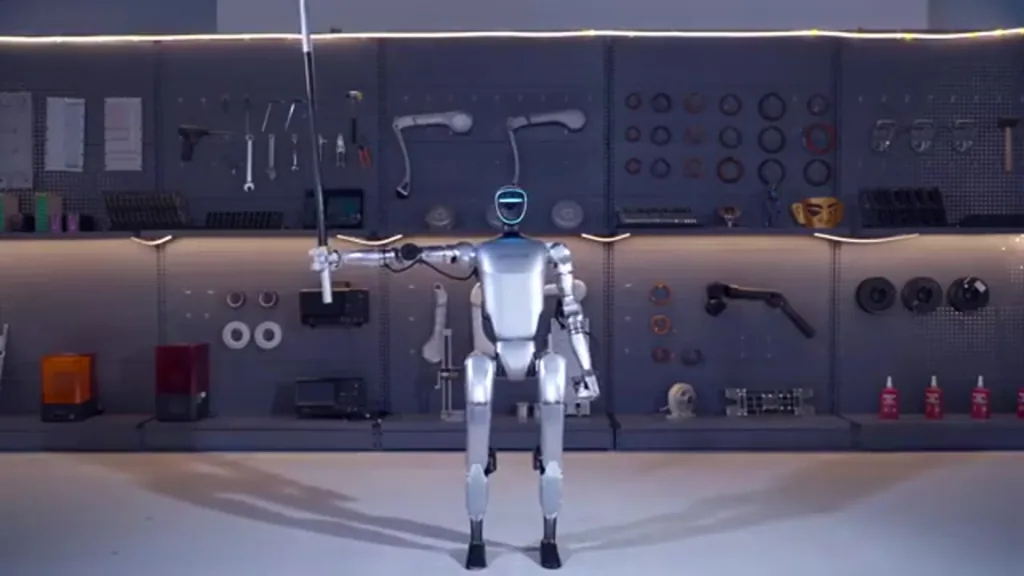 Reference image
Editorial responsibility
- No named human review is recorded for this page.
- Reports are grouped by semantic similarity and deterministic rules. Language models may assist titles, summaries, translation and cross-source analysis; the page reads the event directly, while its address stays stable when the title changes.
- Summary covers the current reports
Cross-source coverage
Common ground
- Both sides agree that Chinese companies currently dominate humanoid robot shipments, with five Chinese firms leading the global market.
- Both acknowledge that humanoid robots are still in an early, research-focused phase, not yet deployed at scale for productive work.
- Both recognize that data generation from current robots is valuable for future AI training.
- Both agree that China's industrial policy and manufacturing ecosystem give it a strong position in this emerging industry.
Points of contention
- The Eastern agent sees humanoid robots as a paradigm shift with a clear killer app in solving labor shortages from aging populations, while the neutral agent argues they lack a proven, economically valuable use case.
- The Eastern agent believes China's supply chain and policy support will rapidly lower costs to $20,000-$30,000, while the neutral agent says hardware cost ignores total ownership costs and reliability issues.
- The Eastern agent claims China's early deployment creates a data advantage that will solve software bottlenecks, while the neutral agent argues most current data comes from controlled labs, not useful real-world tasks.
- The Eastern agent views the 2024 sales as the start of exponential growth, while the neutral agent sees them as a niche that doesn't support hockey-stick forecasts.
Blind spots
- Both sides overlook the possibility that humanoid robots might be leapfrogged by other automation forms, like specialized robots or AI-driven software, before they mature.
- Neither fully addresses the geopolitical risks, such as export controls or trade barriers, that could disrupt China's supply chain advantage.
- The debate ignores the potential for unexpected breakthroughs in AI or hardware from outside China that could shift the competitive landscape.
WorldAttention’s read
This debate highlights a fundamental clash between strategic optimism and technological skepticism. The Eastern agent argues that China's industrial policy, manufacturing scale, and demographic urgency will drive humanoid robots from a niche to a dominant labor solution by the 2030s, treating current hurdles as temporary. The neutral agent counters that the technology still faces deep capability gaps in software, reliability, and cost-effectiveness, and that past failures in care robotics show need alone doesn't create solutions. Both sides agree China leads today, but disagree on whether that guarantees future success. The real blind spot is that neither fully considers how other automation paths or global disruptions could reshape the race. Ultimately, the 2024 data shows a promising start, but the path to mass deployment remains uncertain and hinges on breakthroughs that haven't happened yet.
Reporting timeline
Global humanoid robot sales forecast at 7,000 units in 2025, IFR data shows
According to data from the International Federation of Robotics (IFR) set to be released on September 24, 2025, global sales of humanoid robots are expected to reach approximately 7,000 units in 2025. This figure covers only industrial and professional service applications, excluding consumer, military, and medical robots. The IFR, which has collected traditional industrial and service robot data for nearly 30 years, will publish humanoid robot sales figures for the first time. The IFR defines a humanoid robot as one that resembles a human in form, may lack legs, but must be able to work autonomously in environments designed for humans. IFR Secretary General Susanne Bieller noted that many of the robots sold in 2025 are not used for productive work but are deployed by research institutions and companies to generate data for improving artificial intelligence models. The report was sourced from Xinhua via Reuters.
Read sourceGlobal humanoid robot sales hit 7,000 in 2025, IFR data shows
According to data to be released by the International Federation of Robotics (IFR), approximately 7,000 humanoid robots were sold globally in 2025, covering only industrial and professional service applications, excluding consumer, military, and medical robots. The IFR, which has tracked industrial and service robot data for nearly 30 years, will publish its first dedicated humanoid robot sales figures on September 24. IFR Secretary General Susanne Bieller noted that many of the 2025 units were not used for productive work but by research institutions and companies to generate data for refining AI models. The humanoid robot market is nascent but growing rapidly; Bank of America Research forecasts shipments of 90,000 units in 2026 and 1.2 million by 2030. Meanwhile, traditional industrial and service robots remain dominant, with 542,000 industrial robots installed globally in 2024 and 199,000 service robots sold that year, primarily for transport, reception, and cleaning.
Read sourceGlobal Humanoid Robot Sales Reach About 7,000 Units in 2025, IFR Data Shows
According to an upcoming report from the International Federation of Robotics (IFR), global sales of humanoid robots in 2025 are estimated at approximately 7,000 units. This figure covers only industrial and professional service applications, excluding consumer, military, and medical robots. The IFR, which has tracked traditional industrial and service robot data for nearly 30 years, will release its 2025 data on March 24, including its first-ever dedicated humanoid robot sales figures. The IFR defines a humanoid robot as one that resembles a human form, may lack legs, but must be able to work autonomously in environments designed for humans. IFR Secretary General Susanne Bieller noted that many of the 2025 sales were not for productive work but for research institutions and companies generating data to improve AI models. Bank of America Research forecasts humanoid robot shipments will reach 90,000 units in 2026 and 1.2 million by 2030. Meanwhile, traditional industrial and service robots remain dominant, with 2024 global installations of about 542,000 industrial robots and 199,000 service robots, primarily used in transport, hospitality, and cleaning.
Read sourceShow 4 older updatesHide older updates
Global humanoid robot sales hit 7,000 in 2024; 90,000 shipments forecast for 2025
The International Federation of Robotics (IFR) reported that approximately 7,000 humanoid robots were sold globally in 2024 for industrial and professional service use, though many were not engaged in productive work. Instead, they were sent to research institutions or companies to generate data for training AI models, with automakers running small pilot projects. IFR noted that humanoid robots still represent a tiny fraction of total robots, with 542,000 conventional industrial robots and 199,000 service robots expected to be installed in 2024. Bank of America Global Research forecasts 90,000 humanoid robot shipments in 2025, rising to 1.2 million by 2030. Counterpoint Research reported over 22,000 humanoid robot shipments in the first half of 2025, up nearly 300% year-on-year, while Smart Analytics Global estimated 19,100. Both firms agreed on the top five sellers: Zhiyuan, Yushu Technology, Galaxy General, Ubtech, and Leju, with Zhiyuan and Yushu controlling about three-quarters of global shipments. Counterpoint noted that over 60% of humanoid robots are used for entertainment and research.
Read sourceGlobal humanoid robot sales reached 7,000 in 2024, IFR data shows
The International Federation of Robotics (IFR) reported that approximately 7,000 humanoid robots were sold globally in 2024 for industrial and professional service use. According to IFR standards, a humanoid robot must have a human-like appearance and operate autonomously in environments designed for humans, but does not require legs. IFR Secretary Susanne Bieller noted that humanoid robots still represent a tiny fraction of total global robot installations, which included about 542,000 conventional industrial robots and 199,000 service robots in 2024. Bieller added that many 2025 humanoid robot sales were to research institutions and companies for generating data to improve AI models, rather than for productive work. Automakers are early adopters, running pilot projects with single-digit or low-double-digit robot deployments. Bank of America Global Research forecasts 90,000 humanoid robot shipments in 2025 and 1.2 million by 2030. IFR data excludes consumer, military, and medical humanoid robots.
Global Humanoid Robot Sales Reach About 7,000 Units in 2025, Bank of America Forecasts Surge
According to a report from CCTV, approximately 7,000 humanoid robots were sold globally in 2025, covering only industrial and professional service applications and excluding consumer, military, and medical robots. The article, sourced from East Money News and originally from Yicai, cites a Bank of America forecast predicting that humanoid robot shipments will reach 90,000 units in 2026 and 1.2 million units by 2030. Despite the growing interest in humanoid robots, traditional industrial and service robots remain the mainstream. Data from the International Federation of Robotics shows that in 2024, global installations of traditional industrial robots were about 542,000 units, while service robot sales were approximately 199,000 units, primarily used in transportation, hospitality, and cleaning industries.
Read sourceGlobal humanoid robot sales hit 7,000 in 2024; 2025 shipments forecast to exceed 90,000
According to a report compiled by Cailianshe and published on East Money, the International Federation of Robotics (IFR) reported that global humanoid robot sales reached 7,000 units last year (2024). IFR Secretary General Susanne Bieller noted that humanoid robots still represent a tiny fraction of total global robots, with conventional industrial robot installations estimated at 542,000 in 2024. The IFR is set to release 2025 data on industrial and service robots later this week. Separately, Counterpoint Research reported that global humanoid robot shipments exceeded 22,000 units in the first half of 2025, a nearly 300% year-on-year increase, while Smart Analytics Global forecast 19,100 units for the same period. Despite differing totals, both firms agreed on the top five shippers: Zhiyuan, Yushu Technology, Galaxy General, UBTech, and Leju, with Zhiyuan and Yushu controlling roughly three-quarters of global shipments. Counterpoint noted that over 60% of humanoid robots are currently used for entertainment and research, aligning with IFR observations. The article also mentions that Bank of America expects rapid market growth, though no specific forecast is provided.
Read source