Hong Kong stocks rally on AI optimism, Tencent and Alibaba product launches
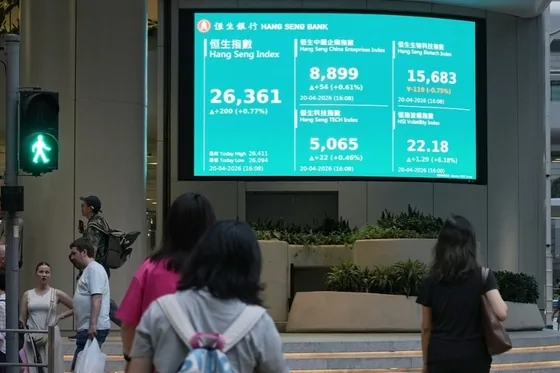
Hong Kong stock markets rallied on September 22, with the Hang Seng Tech Index poised for a fifth consecutive gain. The rally was driven by Chinese financial regulators' positive economic remarks at a foreign financial institution symposium and accelerating AI application trends. Tencent released its Hunyuan Image 3.5 preview model, while Alibaba's T-Head unveiled the Zhenwu V900 AI chip. Morgan Stanley forecast China's consumer AI monetizable revenue could reach 1.6 trillion yuan by 2040.
 Reference image
Editorial responsibility
- No named human review is recorded for this page.
- Reports are grouped by semantic similarity and deterministic rules. Language models may assist titles, summaries, translation and cross-source analysis; the page reads the event directly, while its address stays stable when the title changes.
- Summary covers the current reports
Cross-source coverage
Reporting timeline
Hong Kong Stocks Rally on AI Optimism and Policy Support, Morgan Stanley Sees $1.6 Trillion Potential
Hong Kong stock markets extended their rally on September 22, with the Hang Seng Tech Index poised for a fifth consecutive gain. Analysts cited two main catalysts: Chinese financial regulators expressed confidence in the economy's steady recovery at a foreign financial institution symposium, and accelerating AI application momentum. Morgan Stanley forecast in a September report that China's consumer-facing AI monetizable revenue could grow from approximately 540 billion yuan this year to 294 billion yuan by 2030, and reach about 1.6 trillion yuan by 2040 under a long-term baseline scenario. The investment bank noted that revenue would be heavily skewed toward merchant-side transaction commissions and advertising, with personal subscriptions playing a minor role. On the same day, Tencent released its Hunyuan Image 3.5 preview model, and Alibaba's T-Head unveiled the Zhenwu V900 AI chip at the Yunqi Conference, with Alibaba CEO Wu Yongming stating the company's M890 AI supernode can support 2-trillion-parameter model inference. Separately, China's State-owned Assets Supervision and Administration Commission issued a directive accelerating AI adoption in manufacturing by central enterprises.
Read sourceHong Kong Stocks Rally on AI Optimism and China Economic Support
Hong Kong stock markets strengthened on September 22, with the Hang Seng Tech Index extending gains to five consecutive sessions. Analysts cited two main catalysts: Chinese financial officials stated at a foreign financial institution symposium that the economy is running steadily and improving structurally, and AI application trends are accelerating. Morgan Stanley forecasted in a September report that China's consumer-side AI monetizable revenue could grow from about 54 billion yuan this year to 294 billion yuan by 2030, and approximately 1.6 trillion yuan by 2040 under a long-term baseline scenario. The bank noted China's advantage lies in super-app distribution, free entry points, mobile payments, and merchant fulfillment, embedding AI into shopping, food delivery, travel, and content recommendation. Tencent released its Hunyuan Image 3.5 preview model, and Alibaba's T-Head unveiled the Zhenwu V900 AI chip at the 2026 Yunqi Conference. The state-owned Assets Supervision and Administration Commission also urged central enterprises to accelerate AI application in manufacturing. Tencent and Alibaba were listed as core beneficiaries by Morgan Stanley, which cautioned that the 294 billion yuan forecast includes revenue migration from existing online sources and is not entirely incremental.
Read sourceHong Kong Stocks Rally on AI Optimism and Policy Support; Morgan Stanley Sees $1.6 Trillion AI Revenue by 2040
Hong Kong stock markets extended gains on September 22, with the Hang Seng Tech Index heading for a fifth consecutive positive close. Analysts attributed the rally to two factors: Chinese financial regulators' reassurances about the economy at a foreign financial institution symposium, and accelerating AI application trends. Tencent released its Hunyuan Image 3.5 preview model, while Alibaba's chip unit Pingtouge unveiled the Zhenwu V900 AI chip, claiming triple the computing power of its predecessor. Morgan Stanley forecast in a September report that China's consumer-side AI monetizable revenue could grow from about 54 billion yuan this year to 294 billion yuan by 2030, and to approximately 1.6 trillion yuan by 2040 under a long-term baseline scenario. The bank noted revenue would be heavily skewed toward merchant-side commissions and advertising, with personal subscriptions playing a minor role. It identified Tencent and Alibaba as core beneficiaries due to their super-app distribution and payment ecosystems. Separately, China's state-owned Assets Supervision and Administration Commission urged central enterprises to accelerate AI adoption in manufacturing.
Show 4 older updatesHide older updates
Hong Kong stocks rally on AI product launches and Morgan Stanley's $1.6 trillion forecast
Hong Kong stock markets extended their rally on September 22, with the Hang Seng Tech Index poised for a fifth consecutive gain. Analysts cited two main catalysts: positive remarks from Chinese financial regulators at a foreign financial institution symposium, and accelerating AI application trends. Tencent released its Hunyuan Image 3.5 preview model, a professional-grade text-to-image and image-to-image generator supporting up to 2K resolution. Alibaba's Pingtouge unveiled the Zhenwu V900 AI chip, claiming triple the computing power of its predecessor and supporting clusters of up to 500,000 cards. Morgan Stanley forecast that China's consumer AI monetizable revenue could grow from about 54 billion yuan in 2025 to 294 billion yuan by 2030, and potentially 1.6 trillion yuan by 2040 under a long-term baseline scenario. The bank noted revenue would be heavily skewed toward merchant-side commissions and advertising rather than individual subscriptions, with Tencent and Alibaba as core beneficiaries. Separately, China's state-owned Assets Supervision and Administration Commission urged central enterprises to accelerate AI adoption in manufacturing.
Read sourceHong Kong Stocks Rally on AI Optimism and Policy Support, Morgan Stanley Forecasts $1.6 Trillion Market
Hong Kong stock markets rallied on September 22, with the Hang Seng Tech Index poised for a fifth consecutive gain, driven by two key factors. First, Chinese financial regulators expressed confidence in the economy at a foreign financial institution symposium. Second, AI application momentum accelerated. Tencent released its Hunyuan Image 3.5 preview model, supporting text-to-image and image-to-image generation with up to 2K resolution. Alibaba's Pingtouge unveiled the Zhenwu V900 AI chip, claiming triple the computing power of its predecessor, and its M890 AI supernode can support 2 trillion parameter model inference. Morgan Stanley forecasts China's consumer AI monetizable revenue could grow from 54 billion yuan in 2025 to 294 billion yuan by 2030, and 1.6 trillion yuan by 2040 under a long-term baseline scenario. The bank noted revenue will be heavily skewed toward merchant-side commissions and advertising, with Tencent and Alibaba as core beneficiaries. Separately, China's state-owned assets regulator directed central enterprises to accelerate AI deployment in manufacturing.
Read sourceHong Kong Stocks Rally on Policy Support and AI Momentum; Tencent, Alibaba Surge
Hong Kong stock markets have shown sustained strength, with the Hang Seng Tech Index poised for a fifth consecutive gain. Analysts attribute the rally to two main factors: Chinese financial officials' reassurances about the economy's stable growth and accelerating AI application trends. On September 22, Tencent released its Hunyuan Image 3.5 preview model, while Alibaba's T-Head unveiled the Zhenwu V900 AI chip at the Yunqi Conference. Morgan Stanley forecasts China's consumer AI monetizable revenue could reach 1.6 trillion yuan by 2040, driven by super-app distribution and merchant-side monetization rather than consumer subscriptions. The report names Tencent and Alibaba as core beneficiaries, with AI embedded into shopping, food delivery, and content recommendation. Separately, China's state-owned Assets Supervision and Administration Commission has urged central enterprises to accelerate AI adoption in manufacturing.
Read sourceHong Kong Stocks Rally on Policy Support and AI Application Acceleration
Hong Kong stock markets have shown sustained strength, with the Hang Seng Tech Index rising nearly 2% on September 22, potentially marking a fifth consecutive gain. Analysts attribute the rally to two main factors: first, Chinese financial officials at a foreign financial institution symposium stated that the economy is running steadily and improving structurally; second, AI applications are accelerating. Morgan Stanley forecasts that China's consumer-side AI monetizable revenue could grow from about 54 billion yuan this year to 294 billion yuan by 2030, and potentially 1.6 trillion yuan by 2040 under a long-term baseline scenario. The bank notes that revenue will be heavily skewed toward merchant-side transaction commissions and advertising, with personal subscriptions playing a minor role. Key beneficiaries include Tencent and Alibaba, which made major product announcements on the same day. Tencent released its Hy Image3.5 preview model, while Alibaba's T-Head unveiled the Zhenwu V900 AI chip. The report also cautions that the 2030 forecast includes revenue migration from existing online sources, not entirely new income, and that commercialization will likely follow a 'user-free, merchant-pays' model given low subscription willingness.
Read source