Hong Kong projects 2028 labour shortage narrows to 130,000; clerical surplus of 25,000-30,000 from AI
On September 22, 2025, Hong Kong's Labour and Welfare Bureau released a mid-term manpower projection update, forecasting the city's overall labour shortage will narrow from about 180,000 to approximately 130,000 by 2028, aided by talent attraction and labour import measures. However, key sectors including innovation and technology, aviation, construction, urban operations, and healthcare remain strained. The report projects a surplus of 25,000 to 30,000 clerical support workers by 2028 as AI automates routine tasks, while skilled technicians and service/sales workers account for about 60% of the shortage. Without imported labour, the 2028 shortage would widen to 300,000.
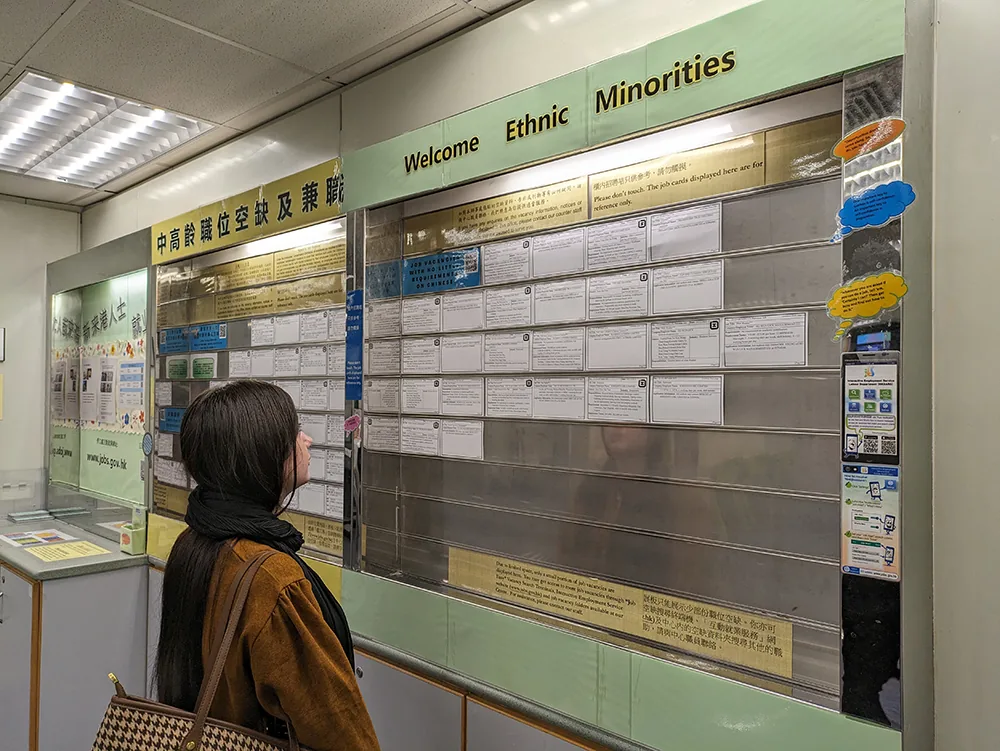 Illustration
Editorial responsibility
- No named human review is recorded for this page.
- Reports are grouped by semantic similarity and deterministic rules. Language models may assist titles, summaries, translation and cross-source analysis; the page reads the event directly, while its address stays stable when the title changes.
- Summary covers the current reports
Cross-source coverage
Common ground
- Both agree that Hong Kong faces a significant labor shortage, narrowing from 180,000 to 130,000 by 2028, and that AI will disrupt clerical jobs.
- Both acknowledge that 25,000 to 30,000 clerical workers may become surplus, and that middle-aged workers and fresh graduates face transition pressures.
- Both recognize that retraining and upskilling are necessary, and that the government has allocated HK$10 billion for this purpose.
Points of contention
- The Regional Agent sees the labor forecast as a technocratic exercise that prioritizes elite interests and treats workers as disposable, while the Eastern Agent views it as responsible, pragmatic governance that balances multiple priorities.
- The Regional Agent argues that imported labour depresses wages and undermines local workers, while the Eastern Agent insists it fills genuine high-skill gaps that locals can't fill and doesn't hurt wages.
- The Regional Agent claims the HK$10 billion retraining fund is a band-aid that leads to low-wage downgrades, while the Eastern Agent cites a 70% placement rate into decent jobs as evidence of effectiveness.
- The Regional Agent calls for alternative models like shorter work weeks, universal basic services, and taxing AI gains, while the Eastern Agent says these are unrealistic for Hong Kong's fiscal and geopolitical constraints.
Blind spots
- Both sides overlook the specific experiences of older women and workers without connections, who may face the hardest transitions.
- The debate lacks concrete data on how imported labour actually affects local wages in specific sectors like construction and hospitality.
- Neither side fully addresses how Hong Kong's retraining programs compare to successful international models like Germany's Kurzarbeit or Denmark's flexicurity in terms of outcomes.
WorldAttention’s read
This debate reveals a deep divide between two views of Hong Kong's labor future. The Regional Agent sees a system that sacrifices working people for elite profits, where retraining is a downgrade and imported labour undercuts locals. The Eastern Agent sees a pragmatic government managing demographic and technological shifts with targeted investments, where retraining works and imported talent fills real gaps. Both agree on the facts—a labor shortage, AI disruption, and a need for retraining—but disagree on whether the government's approach is just or merely stable. The blind spots include the specific struggles of vulnerable workers, the real wage effects of imported labour, and how Hong Kong's policies stack up against proven international models. Ultimately, the conclusion is that Hong Kong's path is neither a crisis nor a model—it's a managed transition that works for some but leaves others behind, and the real question is whether the city can do better without losing its edge.
Reporting timeline
Hong Kong official forecast: 2028 labor shortage narrows to 130,000, clerical surplus of 25,000-30,000
According to a Hong Kong SAR government press release, the Labour and Welfare Bureau released its latest 'Manpower Projection Mid-term Update' on September 22. The report indicates that due to talent attraction and labor import measures over the past three years, the territory's overall manpower shortage is projected to narrow from the previous estimate of about 180,000 to approximately 130,000 by 2028. However, key industries including innovation and technology, aviation, construction, urban operations, and healthcare remain under significant strain. The report forecasts a surplus of 25,000 to 30,000 clerical support workers by 2028 as AI automates routine administrative tasks. Labour and Welfare Secretary Sun Yuk-han stated that the government will continue to work with various sectors to develop targeted measures for AI-driven job restructuring, including strengthening retraining mechanisms and providing flexible skills conversion courses for middle-aged and older workers. The report also notes that without imported labor, the 2025 workforce would have been only 3.35 million instead of 3.47 million, and the 2028 shortage would have widened to 300,000.
Read sourceHong Kong Official Forecasts 2028 Labor Shortage of 130,000, with 25,000-30,000 Clerical Surplus
Hong Kong's Labor and Welfare Bureau released a mid-term manpower projection update on September 22, 2025, forecasting a total labor shortage of about 130,000 by 2028, narrowed from a previous estimate of 180,000 due to talent attraction and labor import measures over the past three years. However, key sectors including innovation technology, aviation, construction, urban operations, and healthcare remain under severe strain. The report highlights that AI adoption will reshape jobs, potentially boosting productivity by 20-30% in affected roles, while leading to a surplus of 25,000 to 30,000 clerical workers by 2028. Skilled technicians and service/sales personnel will account for about 60% of the shortage, as these roles are harder to automate. Labor Secretary Sun Yuk-han stated the government will strengthen retraining, support mid-career and young workers, and promote lifelong learning to help the workforce adapt to the AI era. Without imported labor, the 2028 workforce would drop to 3.21 million and the shortage would widen to 300,000.
Read sourceHong Kong Government Forecasts Labor Shortage to Narrow to 130,000 by 2028, 20-30% of Jobs to Be Restructured
On September 22, the Hong Kong SAR Government's Labour and Welfare Bureau released an updated manpower projection report, forecasting that the city's overall labor shortage will narrow from the previous estimate of about 180,000 to approximately 130,000 by 2028. The report attributes the improvement to talent attraction and labor import measures implemented over the past three years, as well as economic transformation and AI adoption slowing labor demand growth. However, key sectors such as innovation and technology, aviation, construction, urban operations, and healthcare remain tight. The shortage is concentrated among skilled technicians and service/sales personnel, who account for about 60% of the gap and are less replaceable by AI. Conversely, clerical support staff are expected to see a surplus of 25,000 to 30,000 by 2028 as AI automates routine administrative work. The report notes that AI could boost productivity in affected roles by 20-30%, and while large-scale layoffs are unlikely in the short term, 20-30% of jobs, mainly clerical, will face restructuring. Labour and Welfare Secretary Sun Yuk-han stated that talent and labor import policies have effectively stabilized the workforce, but demand remains tight in some industries. The government plans to strengthen retraining mechanisms, offer flexible skills conversion courses for middle-aged workers, and enhance employment support for young graduates.
Read sourceShow 2 older updatesHide older updates
Hong Kong Official Forecast: Labor Shortage to Narrow to 130,000 by 2028, Clerical Staff Surplus of 25,000-30,000
According to a Hong Kong SAR government press release, the Labour and Welfare Bureau released its latest 'Manpower Projection Mid-term Update' on September 22. The report indicates that due to talent attraction and labor import measures over the past three years, Hong Kong's overall manpower shortage is projected to narrow from the previous estimate of about 180,000 to approximately 130,000 by 2028. However, key industries such as innovation and technology, aviation, construction, urban operations, and healthcare remain under significant labor pressure. The report highlights that AI adoption is reshaping the labor market, boosting productivity by 20-30% in affected roles but leading to a surplus of 25,000 to 30,000 clerical support workers by 2028. Labour and Welfare Secretary Chris Sun said the government will continue to work with stakeholders on targeted measures, including retraining programs and support for young graduates, to help workers adapt to the AI era. The update also notes that without imported labor, the workforce would shrink to 3.35 million in 2025 and 3.21 million by 2028, widening the shortage to 300,000.
Read sourceHong Kong official forecast: 2028 labor shortage narrows to 130,000, clerical surplus of 25,000-30,000
According to a Hong Kong SAR government press release, the Labour and Welfare Bureau released its latest 'Manpower Projection Mid-term Update' on September 22. The report indicates that due to talent attraction and labor import measures over the past three years, the overall labor shortage is projected to narrow from about 180,000 to about 130,000 by 2028. However, key sectors such as innovation and technology, aviation, construction, urban operations, and healthcare remain tight. The report highlights that AI adoption is expected to boost productivity in related roles by 20-30%, but will also lead to the restructuring of 20-30% of clerical positions, resulting in a surplus of 25,000 to 30,000 clerical workers by 2028. Secretary for Labour and Welfare Chris Sun said the government will continue to work with all sectors to develop targeted measures, including strengthening retraining mechanisms and supporting lifelong learning, to help workers adapt to the AI era. The update was conducted in 2025 to keep pace with rapid AI adoption and economic changes.