Hong Kong gold stocks plunge as Fed officials signal further rate hikes
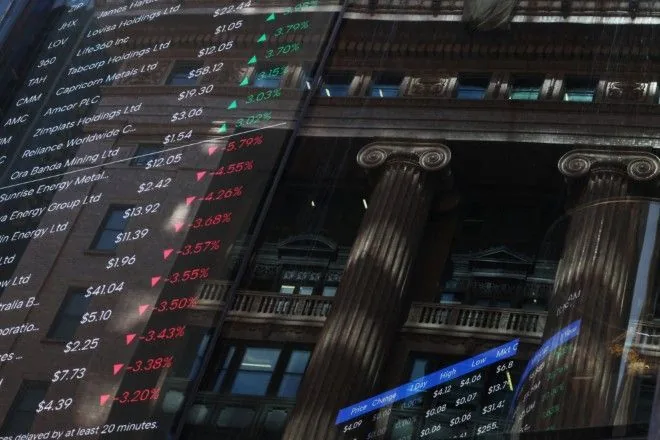
Hong Kong-listed gold stocks fell sharply on October 21-22, 2024, after multiple Federal Reserve officials, including Neel Kashkari and Alberto Musalem, signaled that inflation remains too high and further rate hikes may be needed. Zijin Gold International, Lingbao Gold, Shandong Gold, and China Gold International all declined. The stronger U.S. dollar and unwinding geopolitical risk premiums added pressure. Goldman Sachs revised its forecast to expect a 25-basis-point hike in October.
 Illustration
Editorial responsibility
- No named human review is recorded for this page.
- Reports are grouped by semantic similarity and deterministic rules. Language models may assist titles, summaries, translation and cross-source analysis; the page reads the event directly, while its address stays stable when the title changes.
- Summary covers the current reports
Cross-source coverage
Common ground
- The dollar-centric global financial system creates instability for developing nations, and breaking its monopoly is necessary.
- Gold holds cultural, historical, and survival value for many communities, not just as a financial asset.
- The multipolar transition is real and inevitable, offering a chance for more balanced global power.
- Human pain from Fed-driven gold price swings in places like Cairo and Karachi is undeniable.
Points of contention
- Whether Chinese engagement in Africa and Asia is fundamentally different from Western colonialism or just a new form of exploitation.
- Whether China's infrastructure projects are genuine development partnerships or extraction corridors that serve Chinese interests.
- Whether debt-trap diplomacy exists in Chinese lending or if it's a myth compared to Western IMF-style conditions.
- Whether the multipolar transition alone is enough, or if genuine sovereignty requires local control over resources and processing.
Blind spots
- Both sides focus on big-power competition but overlook the desire of smaller nations for genuine agency, not just a choice between two hegemons.
- The debate ignores how local communities in the Global South are often left out of negotiations between governments and foreign investors.
- Neither side fully addresses the need for new global institutions that give developing countries real bargaining power, not just a shift in who holds the leverage.
WorldAttention’s read
The roundtable revealed a shared recognition that the dollar-dominated system harms developing nations and that gold's role goes beyond finance. However, deep disagreement remains on whether China's rise offers a genuine path to sovereignty or just a new form of control. The regional agent argues that both American and Chinese models extract resources without empowering local communities, while the eastern agent insists China's respect for sovereignty and infrastructure investment is a clear improvement over Western imperialism. Both sides agree the multipolar transition is necessary, but the blind spot is that smaller nations want a world where they can set their own terms—not just swap one dominant power for another. The conclusion is that breaking the dollar monopoly is a start, but real freedom requires building institutions where the Global South has genuine leverage, local processing, and control over their own resources.
Reporting timeline
Hong Kong Gold Stocks Fall as Fed Rate Hike Bets, Strong Dollar Weigh on Gold
Hong Kong-listed gold stocks declined broadly, with Zijin Gold International and Lingbao Gold falling 4.4%, followed by Zhaojin Mining and Shandong Gold down 2.6%, and others. The selloff was driven by a sharp shift in monetary policy expectations after the Federal Reserve's first rate hike since July 2023. Multiple Fed officials, including Minneapolis Fed President Neel Kashkari and Chicago Fed President Austan Goolsbee, reinforced hawkish rhetoric, stating that inflation remains too high across all sectors and that persistent supply shocks cannot be ignored. Markets now price an 88% probability of another rate hike in December. The stronger dollar, which rose above the 100 index level to near 100.43, its highest in over two months, made gold more expensive for overseas buyers. Spot gold fell 0.78% on Monday to $4,343.49 per ounce, briefly dipping below $4,325. Additionally, the geopolitical risk premium that had supported gold prices rapidly eroded as Saudi Arabia partially restored crude exports and expectations for U.S.-Iran diplomatic progress increased.
Read sourceGold Stocks Fall Again as Another Fed Official Signals Possible Rate Hike
Gold stocks in Hong Kong fell sharply on Tuesday, with Zijin Gold International dropping 4.26% to HK$148.20, Lingbao Gold falling 4.22% to HK$22.24, and Shandong Gold declining 1.96% to HK$21.96. The decline follows hawkish comments from St. Louis Fed President Alberto Musalem, who said Monday that strong demand and commodity price shocks spreading beyond oil may require the Fed to raise interest rates further to curb inflation. He emphasized the need for the Fed to act quickly rather than wait. According to a note from CITIC Futures, after the September rate hike, gold lacks a single new macro narrative in the short term, and market attention on Fed independence has declined. Falling oil prices have also weakened energy inflation trades. The note added that gold's sensitivity to real interest rates, the US dollar, and Fed officials' comments may increase again.
Read sourceHong Kong Gold Stocks Fall as Fed Official Signals Possible Further Rate Hikes
Gold stocks in Hong Kong fell sharply on Tuesday, with Zijin Gold International dropping 4.26% and Lingbao Gold falling 4.22%, amid renewed hawkish signals from a U.S. Federal Reserve official. St. Louis Fed President Alberto Musalem stated on Monday that due to strong demand and commodity price shocks spreading beyond oil, the Fed may need to raise interest rates further to curb inflation, adding that the central bank should act quickly. The decline follows a period of reduced market focus on Fed independence and lower oil prices, which had weakened energy inflation trades. According to CITIC Futures, gold's sensitivity to U.S. real yields, the dollar, and Fed commentary may now increase, as the market lacks a new single macro narrative after the September rate hike.
Show 2 older updatesHide older updates
Hong Kong Gold Stocks Fall as Fed's Kashkari Warns Inflation Still Too High
Gold stocks listed in Hong Kong fell sharply on October 21, 2024, with China Gold International down 7.10%, Lingbao Gold down 5.29%, Shandong Gold down 3.48%, and Zijin Gold International down 2.70%. The decline follows hawkish comments from Minneapolis Federal Reserve President Neel Kashkari, who stated on October 20 that inflation remains too high across all sectors of the U.S. economy, not just energy prices. Goldman Sachs subsequently revised its rate path forecast, now expecting a 25-basis-point rate hike at the Fed's October policy meeting. Guolian Futures analysts predict precious metals will maintain a volatile consolidation pattern in the near term, driven by uncertainties including oil price fluctuations, high U.S. Treasury yields, and the U.S. midterm elections, with the core logic revolving around December Fed policy expectations, bond yields, and oil-driven inflation expectations.
Read sourceHong Kong Gold Stocks Fall as Fed's Kashkari Warns Inflation Still Too High
Gold stocks listed in Hong Kong fell sharply on October 21, 2024, with China Gold International dropping 7.10%, Lingbao Gold falling 5.29%, Shandong Gold declining 3.48%, and Zijin Gold International losing 2.70%. The sell-off followed hawkish comments from Minneapolis Federal Reserve President Neel Kashkari, who said on October 20 that inflation remains too high across all sectors of the U.S. economy, not just energy. Kashkari's remarks came after the Fed's 'hawkish rate hike' last Wednesday. Goldman Sachs subsequently revised its rate path forecast, now expecting another 25-basis-point rate hike in October. Guolian Futures commented that the core logic for precious metals will revolve around December Fed policy expectations, U.S. Treasury yields, and oil-driven inflation expectations, constrained by U.S. inflation and employment data, fiscal conditions, and geopolitical developments. In the short term, oil price volatility, high bond yields, and U.S. midterm elections are expected to keep precious metals in a volatile pattern under the 'high interest rates plus geopolitical uncertainty' backdrop.