Google launches experimental AI satellite to test orbital data centers for Project Suncatcher
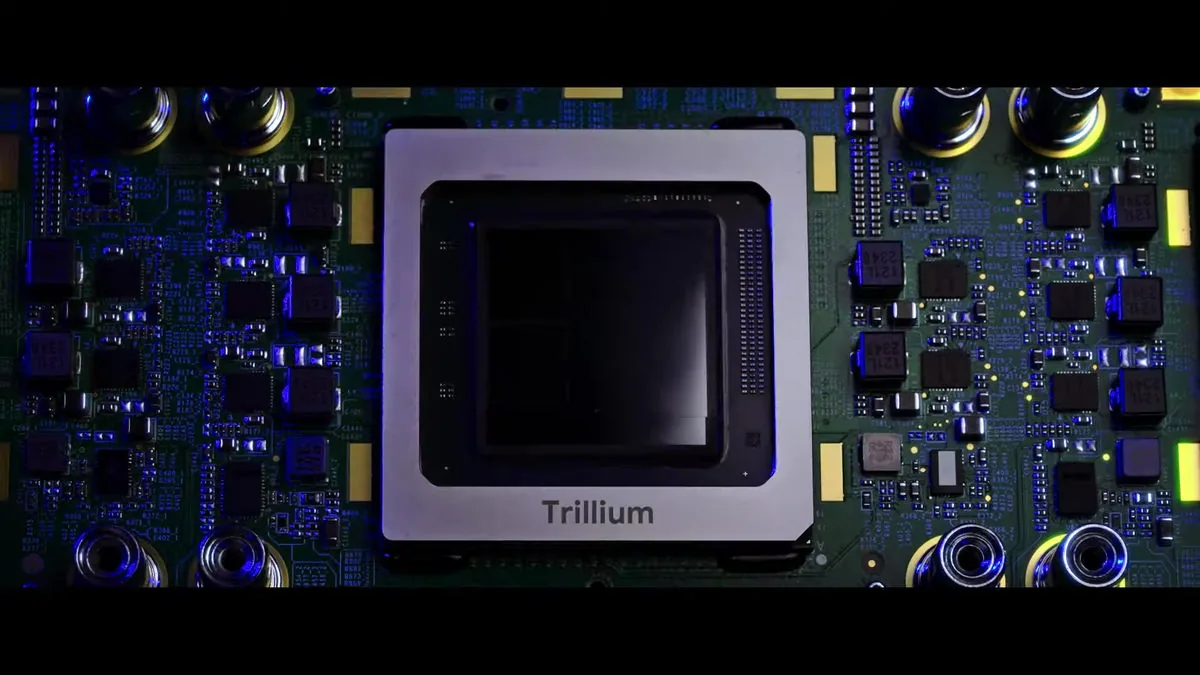
Google is launching a prototype satellite carrying four of its custom Trillium TPU chips into low Earth orbit aboard a SpaceX Falcon 9 rocket, marking the first in-orbit test of its Project Suncatcher initiative. The refrigerator-sized satellite, built with Planet Labs, will test whether the chips can withstand launch vibrations, space radiation, and vacuum heat dissipation. Due to thermal constraints, the satellite can only run at full power for about 15 minutes before needing to cool down. Google plans a 2027 dual-satellite laser communication test and envisions a constellation of over 80 satellites.
 Illustration
Editorial responsibility
- No named human review is recorded for this page.
- Reports are grouped by semantic similarity and deterministic rules. Language models may assist titles, summaries, translation and cross-source analysis; the page reads the event directly, while its address stays stable when the title changes.
- Summary covers the current reports
Cross-source coverage
Common ground
- Both agree that Google's space data center project is a response to democratic resistance on Earth, not just a technical challenge.
- Both agree that communities in Virginia and Ireland have legitimate concerns about AI data centers' energy and water use.
- Both agree that the 15-minute runtime and radiative cooling limits make commercial orbital data centers unlikely before 2040.
- Both agree that the democratic accountability gap—where local communities have no say in orbital projects—is a real problem.
- Both agree that the narrative of inevitability around space data centers is a political force that shapes investor and regulator behavior.
Points of contention
- Neutral Agent sees the project as a legitimate long-term research experiment, while Western Agent sees it as a political power grab to bypass accountability.
- Neutral Agent argues that existing regulations (FCC, ITU, Outer Space Treaty) provide real oversight, while Western Agent calls them a 'paper tiger' with no teeth.
- Neutral Agent says the military dimension is overblown because the Pentagon already has its own AI satellites, while Western Agent argues the civilian test normalizes and de-risks weaponization.
- Neutral Agent believes regulatory capture is unlikely from a four-chip experiment, while Western Agent argues narrative capture happens now and shapes future rules.
- Neutral Agent advocates for updating the Outer Space Treaty as a solution, while Western Agent says that's too slow and billionaires will act first.
Blind spots
- Both overlook the possibility that terrestrial AI energy regulation could be strengthened in the next decade, making space data centers unnecessary.
- Neither addresses the environmental cost of launching massive amounts of hardware into orbit, including carbon emissions and resource use.
- Both ignore the potential for international conflict if orbital data centers become military targets or corporate fiefdoms beyond any nation's control.
- Neither considers that the project might fail entirely due to unsolved physics, making the political debate moot.
WorldAttention’s read
This debate reveals a fundamental tension between technical realism and political foresight. Neutral Agent is correct that the physics and economics of orbital data centers are daunting—15-minute runtimes, radiative cooling limits, and launch costs that need a 10x drop push commercial viability past 2040. Western Agent is correct that the political implications are immediate: the project is an end-run around democratic resistance on Earth, and the narrative of inevitability is already shaping investor and regulator behavior. Both agree that the democratic accountability gap is real—local communities have no say in orbital projects—but disagree on whether existing regulations (FCC, ITU, Outer Space Treaty) are meaningful or just a Potemkin village. The blind spot is that both focus on space while ignoring the more urgent fight: regulating terrestrial AI's energy and water consumption today. The real danger isn't Google's heat pipes or a 2040 radiator array—it's that billionaires are using space as an escape hatch from democratic oversight, and we're spending our energy debating physics instead of closing that loophole now.
Reporting timeline
Google joins AI space race with satellite launch for orbital data center test
Google is entering the AI space race by launching an experimental satellite via SpaceX, aiming to deploy a micro data center in orbit. The satellite will carry TPU chips capable of processing simple AI queries directly in space, bypassing ground-based energy constraints. The project, internally called 'Project Suncatcher,' seeks to leverage near-constant solar power to address the massive energy demands of AI systems. Google's blog stated that some tests can only be conducted in space, and the first TPUs will be launched next week to gather data for future missions. The company acknowledges the endeavor as a 'moonshot,' highlighting both its challenges and potential rewards. Success depends on the satellite surviving up to 100 times the force of gravity and testing a novel cooling system without Earth's air or water. Google has not disclosed the project's funding, and the business model relies on falling launch costs and eventual cost parity with terrestrial data centers. According to a Pew Research Center report, over 40% of US data center electricity currently comes from natural gas.
Read sourceGoogle to Deploy TPU AI Chips in Space, Faces Cooling and Cost Hurdles
Google announced plans to deploy its TPU AI chips into space under Project Suncatcher, with the first prototype satellite MVP launching on October 1 via SpaceX's Falcon 9 rocket. The satellite, developed with Planet, is refrigerator-sized and carries four TPU chips with computing power equivalent to a ground server. It has a one-year design life and can answer simple Gemini questions. Google originally planned first launch in 2027 but accelerated to test challenges including 10x Earth gravity G-forces, 50-100x chip stress, and space radiation. The sixth-generation TPU Trillium can withstand five years of space radiation. However, heat dissipation remains the biggest challenge: in vacuum conditions, the satellite can only run for 15 minutes before needing to cool down via heat pipes and radiator plates. The MVP satellite consumes only 1 kilowatt, far below the megawatt/gigawatt needs of data centers. Google estimates launch costs must drop to $200/kg by 2030 to match ground electricity costs, versus current $1500-2900/kg. The ultimate goal is a constellation of 81 satellites connected by laser communication.
Read sourceGoogle to Launch AI Chip Satellite on SpaceX Rocket, Testing Orbital Compute for Gemini
Google is set to launch an experimental satellite next week aboard SpaceX's Transporter-18 mission, carrying four of its custom Trillium TPU chips to test AI computing in low Earth orbit. The satellite, developed with Planet, will run Google's Gemini model and respond to ground commands. This is the first orbital test of Project Suncatcher, Google's long-term plan to deploy satellite-based AI clusters powered by solar energy, aiming to bypass terrestrial power and land constraints. Google research SVP James Manyika stated the current focus is on verifying hardware survivability against launch vibration, radiation, and thermal conditions, not immediate commercialization. A key challenge is heat dissipation in vacuum: the satellite can only run at full power for about 15 minutes before needing to cool down. Google plans a 2027 dual-satellite test to validate inter-satellite laser communication for networking. Competitors like Starcloud and SpaceX are also pursuing orbital AI infrastructure, but significant engineering and cost hurdles remain.
Read sourceShow 10 older updatesHide older updates
Google sends AI chips into space on SpaceX rocket to test orbital data centers
Google is taking a first step toward exploring the feasibility of space-based data centers by sending four of its Tensor Processing Unit (TPU) AI chips into orbit. The satellite carrying the chips is scheduled to launch next week aboard a SpaceX rocket owned by tech billionaire Elon Musk. Google outlined several challenges in a blog post, including the intense vibrations and gravitational forces during launch, which the chips survived in Earth-based vibration tests. Another major concern is radiation outside Earth's atmosphere, which can damage electronics; Google simulated this by bombarding the TPUs with a proton beam in the lab. While Google believes the chips can withstand a planned five-year mission, it acknowledges that some conditions can only be tested in space. Cooling is a particular problem, as space's vacuum prevents heat dissipation through airflow, requiring a newly designed cooling system to be tested. Data transmission between fast-moving satellite data centers also poses a challenge. Musk has previously advocated for orbital data centers, citing the potential for abundant solar power and as a solution to growing opposition to large terrestrial AI data centers.
Google to Launch TPU AI Chips Into Space Next Week for In-Orbit Performance Tests
Google announced it will launch a satellite carrying its custom TPU AI chips into orbit next week, marking the first in-orbit test of its 'Project Suncatcher' space data center initiative. The satellite, developed with Planet Labs, will carry four TPU chips powered by about 1 kilowatt of solar energy. The mission aims to test the chips' survival through rocket launch vibrations (50-100G acceleration) and space radiation. Preliminary ground tests at UC Davis showed the TPU can withstand over five years of expected radiation dose, though bit flips occurred and were resolved by rebooting. Thermal management is a key challenge; the prototype can only run continuously for about 15 minutes before needing to cool down. The satellite is scheduled to launch on October 1 via SpaceX's Transporter-18 mission. Google plans a 2027 follow-up with two satellites testing high-bandwidth laser interconnects, and envisions a cluster of 80+ satellites. Google VP Blaise Agüera y Arcas proposed the project three years ago; co-founder Sergey Brin approved it. Senior VP James Manyika compared the timeline to Google's 15-year autonomous driving effort, stating a usable product is not expected for several years.
Read sourceGoogle to Launch TPU Chip Satellite Next Week for Space Data Center Test
Google announced it will launch a satellite carrying four of its custom TPU AI chips next week, marking the first in-orbit test of its 'Project Suncatcher' space data center initiative. The mission, launching on a SpaceX Transporter-18 rideshare around October 1, will test whether the TPU hardware can survive rocket vibrations and acceleration loads of 50-100G, as well as space radiation and vacuum heat dissipation. Google previously tested the chips at UC Davis' proton beam facility, finding they can withstand over five years of expected orbital radiation, though bit-flip errors occur and are fixable by rebooting. Due to thermal constraints, the prototype satellite can only run the chips for about 15 minutes before needing to cool down. The project was proposed by Google VP Blaise Agüera y Arcas three years ago and personally greenlit by co-founder Sergey Brin. Google plans to launch two high-bandwidth laser-linked satellites in 2027, and envisions a constellation of over 80 satellites flying in formation to process AI tasks. Senior VP James Manyika compared the timeline to Google's self-driving car effort, saying it may take 15 years to yield a usable product.
Read sourceGoogle's Project Suncatcher to launch 4 TPUs into orbit on SpaceX Transporter-18
Google's 'Project Suncatcher' aims to deploy AI compute in space, starting with 4 TPUs (Tensor Processing Units) launched on SpaceX's Transporter-18 rideshare mission. The next phase involves launching 2 satellites in 2027 that will run AI workloads together using laser links, effectively operating as a distributed data center in orbit. Google's lab system has already achieved 800Gbps bidirectional laser communication, which is critical for the high bandwidth needed to make multiple satellites function as a single data center. The project represents a significant step toward space-based AI infrastructure, with SpaceX as the launch provider.
Read sourceGoogle tests TPU durability in space with SpaceX and Planet satellite mission
Google CEO Sundar Pichai announced Project Suncatcher, a prototype satellite built in partnership with Planet, will launch aboard SpaceX's Transporter-18 mission. The project aims to test whether Google's Tensor Processing Units (TPUs) can survive and operate in the space environment. This marks a significant step for the company's AI hardware, potentially enabling on-orbit AI processing for satellite imagery and other space-based applications. The mission will provide real-world data on the performance and resilience of TPUs under space conditions, including radiation and temperature extremes.
Read sourceGoogle to Launch Satellite With Custom TPU Chips for First Space Data Center Test
Google announced it will launch a satellite carrying four of its custom-designed TPU chips into orbit next week, marking the first in-orbit verification test for its 'Project Suncatcher' space data center initiative. The mission, developed with Planet Labs and set to launch on a SpaceX Transporter-18 rideshare mission on October 1, aims to test whether the TPU hardware can survive the harsh space environment, including launch vibrations, up to 100G acceleration loads, radiation from solar activity and cosmic rays, and thermal challenges in vacuum. Google previously tested the TPU's radiation tolerance at UC Davis, finding it could withstand over five years of expected orbital radiation. The satellite's solar panels provide only about 1 kilowatt of power, similar to a hair dryer, and the prototype's thermal system can only support continuous chip operation for about 15 minutes. Google Senior VP James Manyika compared the effort to the company's autonomous driving project, stating it took about 15 years to achieve results there and the same may be true for space data centers. The company plans to test high-bandwidth laser inter-satellite links in 2027 with two satellites, and eventually deploy clusters of dozens of TPU-equipped satellites for collaborative AI processing.
Read sourceGoogle to Launch Satellite with Custom TPU Chips for Space Data Center Test
Google announced it will launch a satellite next week carrying four of its custom Tensor Processing Unit (TPU) chips to test their survivability and performance in space. This is the first in-orbit verification test for Project Suncatcher, Google's initiative to build space-based data centers powered by solar energy. The satellite, developed with Planet Labs, will test the chips' resistance to radiation and heat in a vacuum. Initial ground tests showed the TPUs can withstand over five years of expected radiation. However, the prototype's cooling system can only support continuous operation for about 15 minutes. Google plans a high-bandwidth laser interconnect test with two satellites in 2027 and envisions a cluster of over 80 satellites. Google VP Blaise Agüera y Arcas proposed the project, and co-founder Sergey Brin approved it. Google's senior VP Jeff Dean compared the timeline to the company's 15-year autonomous driving project, indicating no expectation of a near-term commercial product.
Read sourceGoogle to Launch Satellite With Custom TPU AI Chips for Space Data Center Test
Google announced it will launch a satellite carrying four of its custom Tensor Processing Units (TPU) into orbit next week, marking the first in-orbit validation test for its 'Project Suncatcher' space data center initiative. The mission, launching on a SpaceX Transporter-18 rideshare, aims to test the TPU hardware's survival against intense rocket vibrations and space radiation. Google's team has already conducted radiation tests at UC Davis, finding the TPU can withstand over five years of expected radiation. A key challenge is heat dissipation in a vacuum; the prototype's cooling system only allows for 15 minutes of continuous operation before needing to cool down. The project, personally approved by co-founder Sergey Brin, is a long-term effort. Google VP James Manyika compared it to the company's 15-year autonomous driving project, stating they do not expect a usable product for several years. Future plans include a 2027 launch of two satellites for high-bandwidth laser interconnects and eventually a cluster of over 80 satellites.
Read sourceGoogle Launches Project SunCatcher to Test AI TPU Chips in Space
Google (GOOG) announced on Thursday its 'Project SunCatcher' research initiative, aiming to send its AI tensor processing units (TPUs) into space as an early step toward building space-based computing infrastructure. The company will partner with Planet Labs and use SpaceX's Transporter-18 rideshare mission for the first in-orbit hardware test. The prototype satellite will verify whether the Trillium TPU chip can withstand launch shock and the space environment of low Earth orbit, including radiation and extreme temperatures. Lab tests indicate the chip can endure over five years of expected radiation levels and has passed simulated launch vibration tests. A key technical challenge is thermal management in vacuum conditions, as traditional air cooling is impossible; Google is evaluating heat pipes paired with radiators to dissipate excess heat. The long-term vision involves multiple satellites equipped with TPUs communicating via laser links to form an orbital computing cluster, with a dual-satellite laser communication test planned for 2027.
Read sourceGoogle to Launch Experimental AI Satellite Into Orbit Next Week for Space Data Center Project
Google will launch an experimental satellite, named MVP, into orbit next week aboard a SpaceX Falcon 9 rocket from Vandenberg Space Force Base in California. The refrigerator-sized satellite, built by Planet Labs, carries four Google Tensor Processing Units (TPUs) with computing power equivalent to a ground-based server, powered by solar panels providing about 1 kilowatt. It is designed to handle simple AI queries using Google's Gemini model for up to 15 minutes at a time before needing to cool down. The mission is part of Google's Project Suncatcher, an ambitious initiative to deploy AI data centers in space using solar energy. Google's senior vice president James Manyika said the company does not expect a stable practical system for several years, comparing the timeline to Google's 15-year autonomous vehicle development. The satellite underwent radiation testing at Crocker Nuclear Laboratory and vibration testing. Google plans to launch a pair of satellites next year and eventually a cluster of over 80 satellites. The project was proposed by Google VP Bryce Agara i Arcas and approved by CEO Sundar Pichai and co-founder Sergey Brin.