**Geely launches 2.2 MW AI smart charging system with ultra-short blade battery, plans 22,000 stations by 2027**
On September 23, Geely Auto Group launched its next-generation AI-powered charging technology, "Geely Smart Charge," featuring a peak single-gun power of 2.2 MW. The system, powered by the StarRui PowerMind energy AI model, enables the Lynk & Co 10 to charge from 10% to 70% in 4 minutes 30 seconds. Geely also unveiled its Shield Golden Brick ultra-short blade LFP battery with a 12C charge rate. The company plans to build over 22,000 charging stations and 100,000 charging guns by the end of 2027, aiming for nationwide county-level coverage in China.
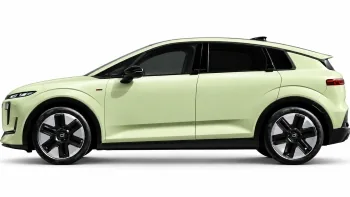 Reference image
Editorial responsibility
- No named human review is recorded for this page.
- Reports are grouped by semantic similarity and deterministic rules. Language models may assist titles, summaries, translation and cross-source analysis; the page reads the event directly, while its address stays stable when the title changes.
- Summary covers the current reports
Cross-source coverage
Common ground
- Geely's AI integration and system-level thinking for charging stations is a genuine engineering achievement.
- The 2.2 MW peak power figure is not practical for today's passenger cars but makes more sense for future heavy trucks and logistics fleets.
- Grid capacity at the local distribution level is a real bottleneck that AI alone cannot solve.
- The labor question—who builds and maintains these chargers in rural areas or abroad—is an underexplored operational risk.
- The debate shows a double standard where Western subsidies are called 'market-enabling' while Chinese ones are labeled 'industrial policy.'
Points of contention
- Whether Geely's 22,000 station target is a realistic plan or an overhyped headline.
- If the economics work: one side says it's a sustainable model with cross-subsidization, the other says it's a subsidy-dependent system with long payback periods.
- Whether China's grid can handle the load: some argue state planning solves it, others point to real curtailment data and distribution limits.
- If Geely's model serves the Global South or just creates new dependencies—opinions split on whether local ownership stakes make it liberating or extractive.
- Whether the West is 'five years behind' or already deploying similar tech at scale.
Blind spots
- The debate largely ignored the 2 billion people without reliable electricity, focusing only on regions with existing grids.
- No one quantified the cost and feasibility of training local technicians in the Global South to maintain these advanced systems.
- The risk of political priorities shifting away from charging infrastructure subsidies was raised but not deeply explored.
- The environmental and social impact of manufacturing and recycling 22,000 high-power chargers was not discussed.
WorldAttention’s read
Geely's charging technology is a strong engineering step forward, especially its AI integration and potential to balance the grid. But the 2.2 MW headline is overhyped for today's cars, and the 22,000 station plan faces real hurdles like local grid limits, high costs, and a lack of trained workers. The debate showed that while China's state-backed approach can build fast, it's not a guaranteed game-changer until the network actually works at scale and proves its economics. The biggest missed conversation is whether this tech will ever truly serve the Global South—or just swap one form of dependency for another.
Reporting timeline
Geely unveils ultra-short blade battery, 2.2 MW charging, and AI energy system
On September 23, Geely Auto Group held a smart charging technology conference, where CEO Gan Jiayue, Senior Vice President Lin Jie, and Chief Engineering Scientist Ren Xiangfei detailed the company's battery strategy, new ultra-short blade batteries, and a 2.2-megawatt charging system. Geely's battery strategy follows a dual-track model of self-development and open cooperation with suppliers like CATL. The new Shen Dun Jin Zhuan ultra-short blade battery series, in 395mm and 370mm lengths, features full-chain liquid cooling and AI temperature control via the Xingrui PowerMind model, which predicts battery temperature changes 30 seconds in advance. The 2.2 MW charger, with a single-gun peak power of 2250 kW, targets future high-voltage vehicles. Geely plans a '3 km smart charging circle' for urban areas, with over 60,000 charging guns eventually deployed. The company aims to integrate its charging network across brands and open it to the industry. Executives emphasized that the transformation is a systematic effort combining batteries, charging infrastructure, vehicles, and AI, with cost control and operational efficiency as key challenges.
Read sourceGeely Unveils AI-Powered Charging Tech, Plans Over 22,000 Stations by 2027
On September 23, Geely Auto Group launched 'Geely Smart Charge', a new AI-powered charging technology developed with its proprietary 'Star-Rui PowerMind' energy model, claiming a peak single-gun charging power of 2.2 MW, surpassing BYD's previous record of 1.5 MW. The system is paired with a new 'Shield Golden Brick' ultra-short blade LFP battery, achieving a 12C charge rate. In tests, the battery in the Lynk & Co 10 charged from 10% to 70% in 4 minutes 30 seconds and from 10% to 97% in 8 minutes 40 seconds at room temperature, slightly faster than BYD's flash charging. Geely CEO Gan Jiayue emphasized safety as paramount, stating 'there can be no fast-charging technology without safety.' The company introduced an AI temperature control system and a five-terminal liquid cooling solution to manage heat. Geely plans to build over 22,000 charging stations (including 15,000 Smart Charge stations) with over 100,000 charging guns by the end of 2027, aiming for nationwide county-level coverage. The company also stated its intention to open its charging network to the entire industry.
Read sourceGeely Unveils AI Smart Charging Tech with 2.2 MW Peak Power, Plans 22,000 Stations by 2027
On September 23, Geely Auto Group launched its global next-generation AI smart charging technology and announced a comprehensive charging network plan. The smart charger achieves a peak power of 2.2 MW per gun, with AI-powered fast, smart, and automatic charging solutions. In tests, the Lynk & Co 10 charged from 10% to 70% in 4 minutes 30 seconds, reaching a peak of 1093 kW. Geely plans to build over 22,000 charging stations and 100,000 charging guns by the end of 2027, including 15,000 smart charging stations and 50,000 smart guns, aiming for county-level coverage ('county-county pass'). The company is integrating its 800V and 900V high-voltage platforms across its vehicle lineup, including models priced as low as 100,000 yuan. Geely's strategy extends beyond speed to building a holistic energy ecosystem, including vehicle, battery, and grid coordination. The company is also opening its charging network to all EV owners via its Haohan Energy platform, leveraging AI and energy management models to optimize operations. The article positions this as a competitive differentiator as pure electric vehicles dominate China's auto market, with the top ten best-selling models in August all being EVs.
Read sourceShow 2 older updatesHide older updates
Geely Launches 2.2 MW AI Charging Tech, Shifts from Car Maker to Energy Platform
On September 23, Geely Auto Group released its new 'Geely Smart Charge' AI-powered charging technology, achieving a peak single-gun power of 2.2 megawatts. The system, featuring AI rapid, smart, and automatic charging, enables the Lynk & Co 10 to charge from 10% to 70% in 4 minutes 30 seconds at room temperature, claiming the fastest production-car charging speed globally. The article argues this is not merely a speed upgrade but a strategic shift: Geely is integrating charging from a supporting service into a core competitive pillar under its 'One Geely' consolidation strategy. Key innovations include the Xingrui PowerMind energy AI model for predictive thermal management, battery life extension via pulse repair, and full-chain liquid cooling. Geely plans 22,000 charging stations by 2027 and 150,000 stations long-term, aiming to build a 'car + energy' integrated platform. The analysis positions this as a change in competition rules, from hardware specs to AI-driven ecosystem efficiency, and warns that smaller automakers without proprietary charging networks may face growing user experience gaps.
Read sourceGeely Launches AI-Powered Charging System, Shifts Focus from Power to Intelligence
On September 23, Geely Auto Group released its next-generation AI-powered charging technology, 'Geely Smart Charge,' featuring a peak single-gun charging power of 2250 kW, an industry-first AI rapid charge, AI smart charge, and AI auto-charge, alongside the world's highest mass-production charging rate 12C LFP ultra-short blade battery. The analysis by 'Yiqiao Dingyin' argues that the key shift is not the power figure itself but Geely's redefinition of the competition from raw power to an integrated system and 'brain.' The system includes the StarRui PowerMind, the industry's first full-domain energy large model, integrating AI into charging for predictive temperature control, millisecond-level power scheduling, and battery health management. Geely aims to build over 22,000 charging stations and 100,000 charging guns by end of 2027, creating a distributed energy storage network. The analysis concludes that the charging competition has entered the AI era, where the winner will be defined by system completeness and intelligence, not just peak power numbers.
Read source