Galaxy Securities: Fed rate hikes won’t alter AI’s long-term productivity logic
Galaxy Securities research reports argue that Federal Reserve interest rate hikes will not change the fundamental long-term logic of the AI technology revolution enhancing productivity. While AI infrastructure construction temporarily increases demand for chips and electricity, AI is expected to boost total factor productivity and create structural deflationary effects. The reports state that global AI capital expenditure trends remain positive, and valuation adjustments from rate hikes provide a reasonable starting point for companies with genuine earnings support.
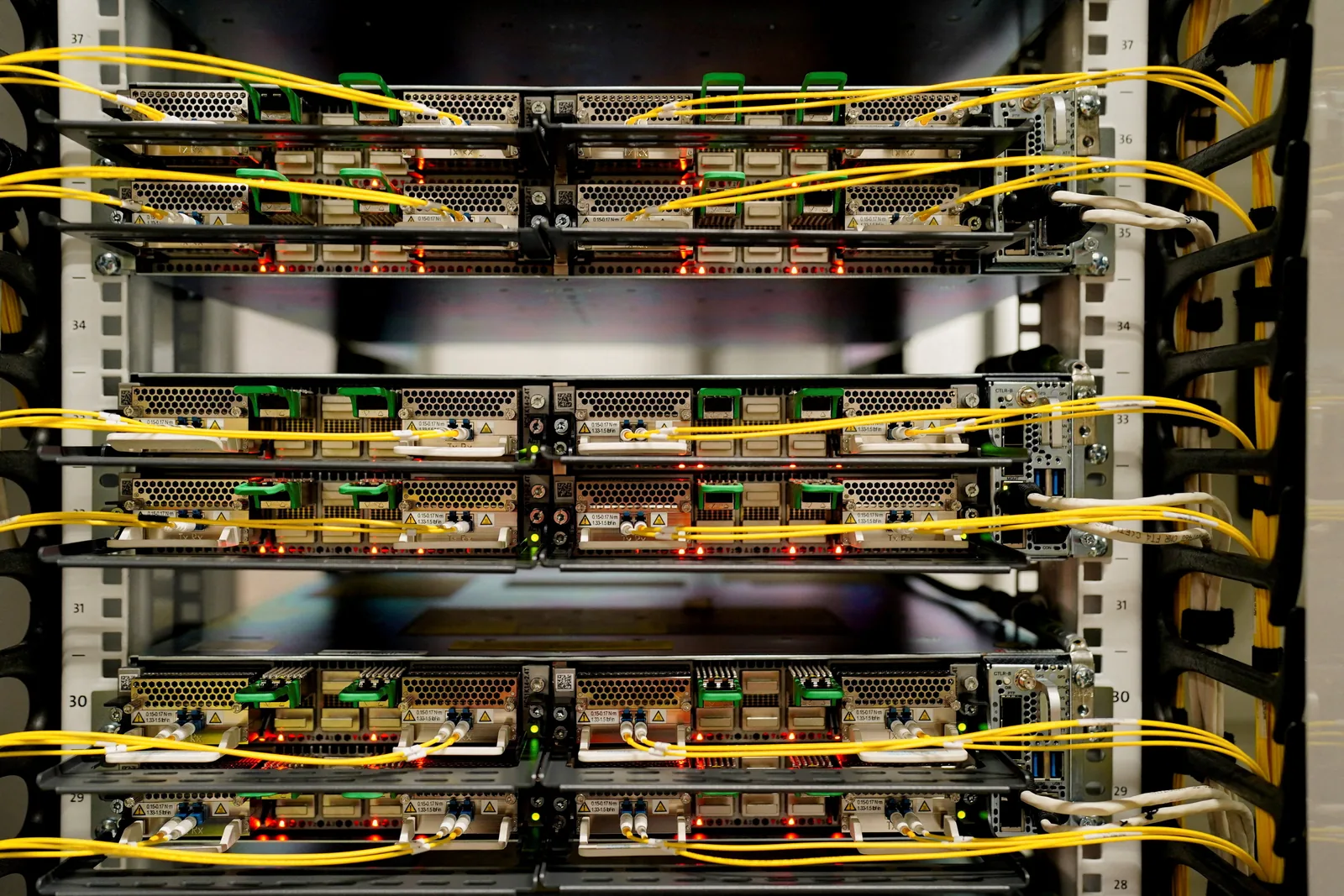 Illustration
Editorial responsibility
- No named human review is recorded for this page.
- Reports are grouped by semantic similarity and deterministic rules. Language models may assist titles, summaries, translation and cross-source analysis; the page reads the event directly, while its address stays stable when the title changes.
- Summary covers the current reports
Cross-source coverage
Common ground
- The AI revolution is a real structural transformation, not just a speculative bubble.
- The US uses both monetary policy and export controls to manage AI development, suggesting neither tool alone is sufficient.
- China's state-backed patient capital provides a genuine advantage for long-term AI infrastructure investment.
- The internet bubble analogy is overused and doesn't fully capture AI's foundational role in industry.
Points of contention
- Whether the Fed's rate hikes can significantly slow AI progress or are just a short-term friction.
- Whether China's chip gap (e.g., SMIC's 7nm vs. TSMC's 3nm) is a critical constraint or a manageable workaround.
- Whether AI infrastructure buildout is net inflationary or deflationary over a 3-5 year horizon.
- Whether China's AI ecosystem is truly independent of Western financial conditions and supply chains.
Blind spots
- Both sides underweight the physical constraints of energy and water for data centers, which are not solvable by capital or policy alone.
- The debate focuses on US-China dynamics but ignores how other regions (e.g., Europe, Southeast Asia) might shape AI development.
- Neither side adequately addresses the risk of uneven AI adoption—where some sectors or regions benefit quickly while others lag, creating economic imbalances.
WorldAttention’s read
The debate reveals a fundamental clash between two worldviews: one sees AI as an unstoppable structural force that transcends short-term monetary policy, while the other emphasizes the real-world constraints of timing, capital costs, and physical resources. Both sides agree AI is transformative, but they disagree on whether current challenges—like chip gaps, energy demands, and ROI timelines—are fatal flaws or solvable problems. The key blind spot is that neither fully accounts for the physical limits of energy and water, nor the uneven pace of AI adoption across different sectors and regions. Ultimately, the Fed's rate hikes won't stop AI, but they will determine which firms and countries can afford to wait for the payoff—and that gap between upfront costs and delayed returns is the real test.
Reporting timeline
Galaxy Securities: Fed Rate Hikes Won't Alter AI's Long-Term Growth Logic
A September 21 research report from Galaxy Securities argues that the Federal Reserve's interest rate hikes will not fundamentally change the long-term logic of the AI technology revolution in boosting productivity. While AI infrastructure construction may temporarily increase demand for chips and electricity, the report states that over the long term, AI will create a structural deflationary effect by improving total factor productivity and expanding supply capacity, thereby offsetting inflationary pressures. Global AI capital expenditure trends remain positive, and demand for computing power will continue to expand. The report notes that several Fed officials believe AI will raise the neutral interest rate level, meaning that even if nominal rates remain high, actual policy rates may be relatively low, allowing AI industry growth resilience to sustain development in a high-rate environment. Therefore, the report concludes that the AI industry's fundamental logic remains solid in the medium to long term, and valuation adjustments caused by rate hikes may provide a more reasonable valuation starting point for companies with real earnings support.
Read sourceChina Galaxy Securities: Fed Rate Hike Reshapes AI Valuation, Long-Term Logic Remains Intact
China Galaxy Securities published a research report analyzing the impact of the Federal Reserve's unanimous 25-basis-point rate hike on September 16, 2026, which raised the federal funds rate target range to 3.75%-4.00%. The brokerage argues that the rate hike's long-term effect on the AI industry primarily involves a restructuring of valuation systems and improved resource allocation efficiency. Higher interest rates raise the discount rate, reducing the present value of future cash flows and shifting market focus from paying a premium for technological potential to demanding concrete commercialization timelines and verifiable revenue and profits. The report states that high rates act as a screening mechanism, accelerating structural differentiation: leading companies with real revenue, pricing power, and strong cash flows can maintain expansion, while smaller firms lacking technological barriers and relying on external financing face elimination pressure. This is seen as a natural maturation process, not a sign of industry decline. Crucially, the report asserts that the Fed's rate hike will not change the fundamental logic of AI as a productivity-enhancing technological revolution. AI's ability to boost total factor productivity and expand supply is expected to create a structural deflationary effect that offsets inflationary pressures. The report concludes that the long-term growth trend in global AI capital expenditure remains intact, and the valuation adjustment caused by rate hikes provides a more reasonable starting point for companies with genuine performance support. Risks cited include slower-than-expected AI development, application deployment delays, and geopolitical impacts on the industry.
Read sourceGalaxy Securities: Fed Rate Hikes Won't Alter AI's Long-Term Productivity Logic
A research report by Galaxy Securities argues that the Federal Reserve's interest rate hikes will not change the fundamental long-term logic that the AI technology revolution enhances productivity. While AI infrastructure construction may temporarily increase demand for resources like chips and electricity, the report states that AI will ultimately boost total factor productivity and expand supply capacity, creating a structural deflationary effect that offsets inflationary pressures. The report notes that the long-term growth trend of global AI capital expenditure remains intact, and demand for computing power will continue to expand. It cites several Fed officials who believe AI will push up the neutral interest rate level, implying that even if nominal rates stay high, real policy rates may be relatively low, and the AI industry's resilience can sustain its development in a high-interest-rate environment. Therefore, the report concludes that the medium-to-long-term logic of the AI industry remains solid, and valuation adjustments caused by rate hikes provide a more reasonable starting point for companies with genuine earnings support.
Show 2 older updatesHide older updates
Galaxy Securities: Fed Rate Hikes Do Not Alter AI's Long-Term Growth Logic
A research report by Galaxy Securities, published on September 21, argues that Federal Reserve rate hikes will not change the fundamental logic that the AI technological revolution enhances productivity. While AI infrastructure construction has temporarily increased demand for resources like chips and electricity, the report states that in the long run, AI will generate structural deflationary effects by boosting total factor productivity and expanding supply capacity, thereby offsetting inflationary pressures. The long-term growth trend of global AI capital expenditure remains intact, with computing power demand continuing to expand. Several Fed officials believe AI will push up the neutral interest rate level, implying that even if nominal rates remain high, real policy rates may be relatively low. The report concludes that the AI industry's resilience is sufficient to support its sustained development in a high-interest-rate environment, and valuation adjustments triggered by rate hikes provide companies with genuine earnings support a more reasonable valuation starting point.
Read sourceGalaxy Securities: Fed Rate Hikes Won't Alter AI Revolution's Long-Term Productivity Logic
A research report by Galaxy Securities, as covered by East Money, argues that the Federal Reserve's interest rate hikes will not change the fundamental logic that the AI technology revolution enhances productivity. The report acknowledges that AI infrastructure construction has short-term driven up costs for chips and electricity, but maintains that the long-term outlook for AI remains intact. The analysis suggests that monetary policy adjustments do not alter the underlying structural trend of AI-driven productivity gains.
Read source