Fed Officials Warn Persistent Inflation May Require Further Rate Hikes
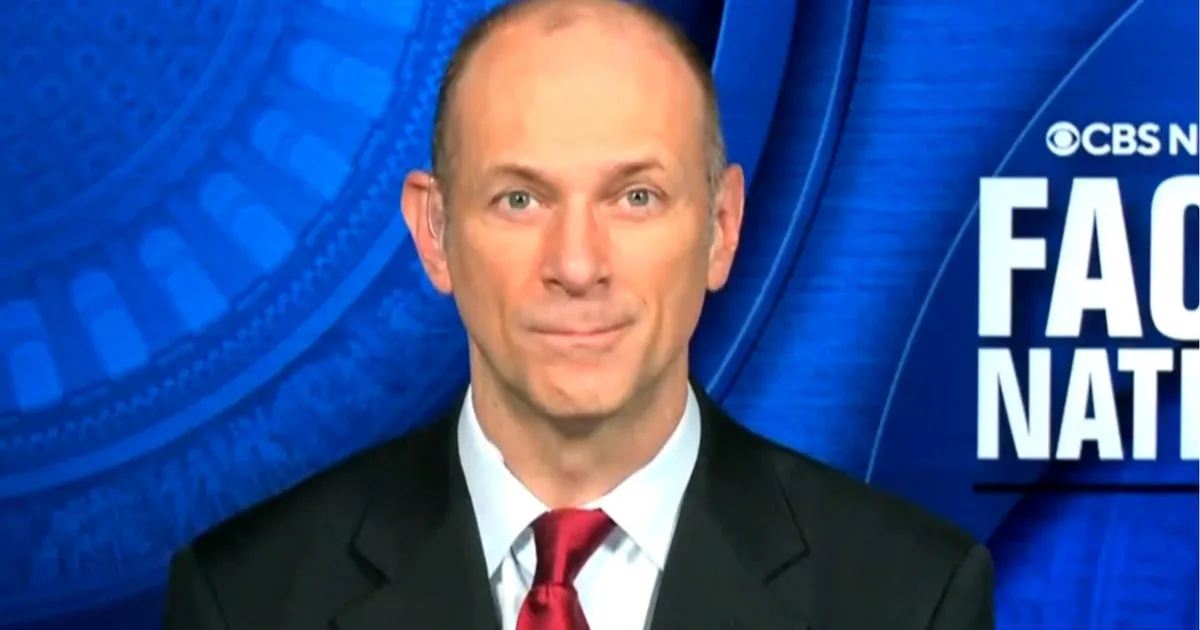
Three Federal Reserve officials—Richmond’s Tom Barkin, St. Louis’ Alberto Musalem, and Chicago’s Austan Goolsbee—have warned that U.S. inflation remains persistently above target, citing energy prices, tariffs, strong demand, and supply shocks. Barkin noted inflation is over one percentage point above target. Musalem said the current 3.75%-4.00% policy rate remains accommodative and that early, gradual tightening is preferable. Goolsbee warned that if demand overheats, further rate hikes are “the only way out.” The Fed raised rates for the first time in over three years last week.
 Reference image
Editorial responsibility
- No named human review is recorded for this page.
- Reports are grouped by semantic similarity and deterministic rules. Language models may assist titles, summaries, translation and cross-source analysis; the page reads the event directly, while its address stays stable when the title changes.
- Summary covers the current reports
Cross-source coverage
Common ground
- The Fed's rate hikes disproportionately hurt the working class and Global South through higher borrowing costs and capital flight.
- The AI capex boom is a real, structurally inflationary force that tightens labor markets and consumes resources.
- The dollar's strengthening from Fed hikes mechanically crushes commodity-importing nations, regardless of intent.
- A bailout would likely go to US regional banks, not to countries like Egypt, if credit markets break.
Points of contention
- Whether the Fed's actions are deliberate malice or collateral damage from incompetence.
- Whether rate hikes are the 'least bad' option or a false choice that ignores alternatives like price controls.
- Whether the AI investment surge is genuine innovation or a speculative bubble driven by monopoly capital.
- Whether the Fed's models misread inflation due to incompetence or ideological blindness.
Blind spots
- Both sides overlook how the Fed's institutional inertia could cause unpredictable blowback, like breaking credit markets and then bailing out banks, which tightens dollar liquidity further.
- The debate assumes the current political system is fixed, ignoring that the 'only tools in the box' are a political choice, not a natural law.
- Neither fully addresses how the global financial architecture—including the IMF and World Bank—ensures the Global South pays for the North's crises.
WorldAttention’s read
The roundtable revealed a deep divide between those who see the Fed's rate hikes as a necessary, if blunt, tool to fight inflation and those who view them as a structural mechanism that systematically extracts value from the Global South to protect Western capital. Both sides agree the working class and emerging economies bear the brunt, and that AI investment is a real, inflationary force. The key blind spot is that the Fed's institutional inertia—neither pure malice nor simple incompetence—could produce a cascade of errors that breaks credit markets, triggers a bailout for US banks, and crushes the Global South even more, all with no one accountable. The real question, left unanswered, is why the global financial system is designed so one central bank's decisions determine whether millions eat or starve.
Reporting timeline
Fed Officials Signal Further Rate Hikes as Inflation Risks Persist, Warn of AI Investment Impact
Multiple Federal Reserve officials have issued hawkish signals, warning that persistent inflation risks may require further interest rate hikes. Richmond Fed President Tom Barkin stated that recent oil price increases and tariffs were key factors in the Fed's first rate hike in over three years, and did not rule out additional tightening. St. Louis Fed President Alberto Musalem emphasized that the Fed should act early rather than delay, noting that strong demand and commodity price shocks, including from AI investment, are complicating inflation control. Chicago Fed President Austan Goolsbee warned that if demand overheats, further rate hikes are the 'only way out.' The article also covers accelerating AI infrastructure spending, with JPMorgan CEO Jamie Dimon estimating 2025 spending by hyperscale cloud providers at $700 billion, potentially rising to $1 trillion by 2027. AI-related trading remains volatile, with semiconductor stocks seeing gains but later retreating. Morgan Stanley strategist Michael Wilson warned of potential S&P 500 downside to 7,100 points if financial conditions tighten further, but expects a rebound to 8,000 by year-end on strong earnings.
Read sourceFed Officials Signal Urgency for Further Rate Hikes as Inflation Risks Persist
Multiple Federal Reserve officials have issued hawkish warnings that inflation remains a persistent risk, potentially requiring further interest rate increases. Richmond Fed President Tom Barkin cited rising oil prices and tariffs as key factors in the Fed's first rate hike in over three years, and did not rule out additional moves. St. Louis Fed President Alberto Musalem stated that the Fed should act early rather than delay, noting that strong demand and commodity price shocks, including from AI investment-driven copper demand, are keeping core inflation about 1 percentage point above target. Chicago Fed President Austan Goolsbee warned that if demand overheats, further rate hikes are the 'only way out.' The article also covers surging AI infrastructure spending, with JPMorgan CEO Jamie Dimon estimating $700 billion in 2025 from hyperscale cloud firms, up from $300 billion in 2024, potentially reaching $1 trillion by 2027. SoftBank launched an $11 billion bond for OpenAI investment with strong demand. Morgan Stanley strategist Michael Wilson warned the S&P 500 could fall 7% to 7,100 if financial conditions tighten further, but expects a rebound to 8,000 by year-end on strong earnings.
Read sourceFed Officials Warn Inflation Risks Persist, Signal Possible Further Rate Hikes
Three Federal Reserve officials—Richmond Fed President Tom Barkin, St. Louis Fed President Alberto Musalem, and Chicago Fed President Austan Goolsbee—have publicly signaled that the U.S. central bank may need to raise interest rates further to combat persistent inflation. Barkin cited recent oil price increases and tariffs as key factors in the Fed's first rate hike in over three years, and did not rule out additional moves. Musalem stated that the current 3.75%-4.00% policy rate remains accommodative and that early, gradual tightening is preferable to abrupt action later. Goolsbee warned that if demand overheats, further rate hikes are 'the only way out.' Meanwhile, AI infrastructure investment continues to surge, with JPMorgan CEO Jamie Dimon estimating 2025 spending by hyperscale cloud firms at $700 billion, double the prior year. The article also notes that global bond yields remain high, pressuring gold, while AI-related stocks have seen recent gains. Morgan Stanley strategist Michael Wilson warned the S&P 500 could fall 7% to 7,100 if financial conditions tighten further, but expects a year-end rebound to 8,000.
Show 2 older updatesHide older updates
Fed Officials Warn Inflation Risks Persist, Signal Possible Further Rate Hikes
Three Federal Reserve officials—Richmond Fed President Tom Barkin, St. Louis Fed President Alberto Musalem, and Chicago Fed President Austan Goolsbee—have issued hawkish statements warning that U.S. inflation remains a persistent risk. Barkin cited rising oil prices and tariffs as upward pressures, noting inflation is over one percentage point above target. Musalem, an FOMC hawk, said the Fed may need to raise rates further due to strong demand and commodity price shocks, arguing that acting early is better than delaying. Goolsbee warned that if demand overheats, further rate hikes are 'the only way out.' The Fed recently raised rates for the first time in over three years. Meanwhile, AI-related capital expenditure continues to surge, with major tech firms' 2024 spending expected to reach $730 billion, and SoftGroup launched a $11 billion bond for OpenAI investment. Global bond yields remain high, causing volatility in gold markets, while AI stocks have rebounded.
Read sourceFed Officials Warn Inflation Risks Persist, Signal Possible Further Rate Hikes
Three Federal Reserve officials—Richmond Fed President Tom Barkin, St. Louis Fed President Alberto Musalem, and Chicago Fed President Austan Goolsbee—have publicly warned that U.S. inflation remains elevated and faces persistent risks from energy prices, tariffs, strong demand, and supply shocks. Barkin stated that inflation is more than 1 percentage point above target and that 'temporary' shocks are neither short-lived nor one-off. Musalem, an FOMC hawk, said the current 3.75%-4.00% policy rate is still accommodative and that early, gradual tightening is preferable to abrupt later action. Goolsbee warned that if demand 'overheats,' further rate hikes are 'the only way out.' The Fed raised rates for the first time in over three years last week. Separately, European Central Bank Chief Economist Philip Lane said energy prices will keep eurozone inflation higher for longer. The article also notes that AI infrastructure investment is accelerating, with JPMorgan CEO Jamie Dimon estimating $700 billion in spending this year, rising to $1 trillion by 2027, adding about 1% to U.S. GDP annually and potentially fueling inflation. SoftBank launched a $11 billion bond for OpenAI investment. Morgan Stanley strategist Michael Wilson warned the S&P 500 could fall 7% to 7,100 if financial conditions tighten or energy prices spike, but sees a year-end rebound to 8,000.
Read source