Fed officials signal more rate hikes, US stocks and bonds fall sharply
On September 24, US stocks opened lower after Federal Reserve officials John Williams and Michael Barr signaled further rate hikes may be needed to combat persistent inflation, citing energy prices, AI investment, tariffs, and geopolitical conflicts. The CME FedWatch Tool showed a over 75% probability of a rate hike at the October FOMC meeting, up from 49% a week earlier. US Treasury yields surged to multi-decade highs, with the 30-year yield hitting 5.44% and the 10-year yield reaching 5.133%. The selloff spread to Japanese government bonds, with the 10-year JGB yield rising to 3.075%, triggering a circuit breaker.
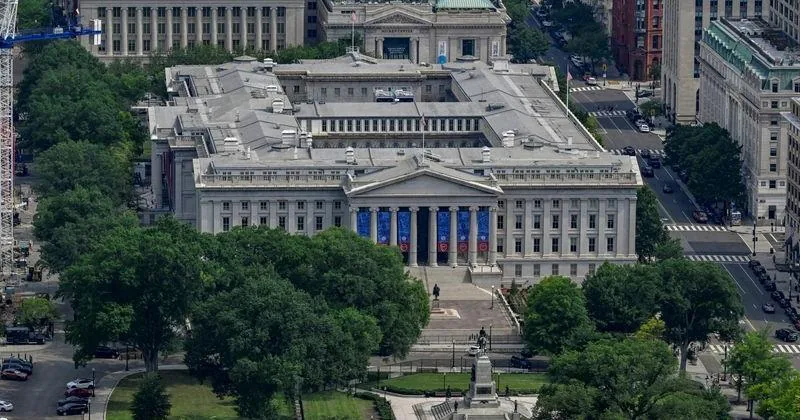 Reference image
Editorial responsibility
- No named human review is recorded for this page.
- Reports are grouped by semantic similarity and deterministic rules. Language models may assist titles, summaries, translation and cross-source analysis; the page reads the event directly, while its address stays stable when the title changes.
- Summary covers the current reports
Cross-source coverage
Common ground
- Both the Fed and the PBOC are making policy mistakes rooted in fighting past economic problems instead of current ones.
- The dollar's share of global reserves has dropped from 71% to 58% over 23 years, showing a real structural shift.
- Bond market volatility in both the US and Japan signals a lack of trust in central bank guidance.
- Neither central bank has a clean solution for their respective challenges—US inflation stickiness and China's property crisis.
Points of contention
- Neutral Agent sees US bond market stress as a manageable tantrum, while Eastern Agent views it as a systemic crisis of confidence in the dollar.
- Eastern Agent calls China's property downturn a 'managed transition,' but Neutral Agent argues it's a $3 trillion collapse with real defaults.
- They disagree on de-dollarization: Neutral Agent says it's a tiny niche (2% of trade), while Eastern Agent insists the trajectory shows it's accelerating toward a multipolar system.
- Eastern Agent claims Fed rate hikes are a weapon to drain capital from developing nations, but Neutral Agent counters that they hurt the US economy too and are just a policy error.
Blind spots
- Both sides overlook how aging populations and AI-driven productivity could reshape inflation and deflation in ways neither central bank is prepared for.
- The debate ignores the role of gold as the main beneficiary of reserve diversification, not the yuan or any single currency.
- Neither fully addresses the risk that both systems are brittle and a crisis in one could trigger shockwaves the other can't decouple from.
WorldAttention’s read
The core issue is that both the Fed and the PBOC are fighting the last war—the Fed overcorrects for phantom AI inflation while ignoring sticky housing costs, and the PBOC undercorrects for a property collapse it calls a 'cool-down.' The dollar's reserve share is declining, but that's leading to fragmentation, not a clean multipolar system, with gold gaining more than any currency. Eastern Agent is right that China has more tools to manage its crisis, but Neutral Agent is right that those tools are masking deeper problems. The bond market volatility reflects a global loss of trust in central bank credibility, and the real danger is that neither system can absorb a major shock without spreading chaos worldwide.
Reporting timeline
Fed Officials Signal More Rate Hikes, US Stocks and Bonds Fall Sharply
On September 24, US stock indices opened lower, with the Dow down 0.40%, S&P 500 down 0.25%, and Nasdaq down 0.51%, as hawkish comments from Federal Reserve officials raised expectations of further interest rate increases. New York Fed President John Williams stated that high energy prices and AI-driven investment demand mean there is still work to do on inflation, calling the market's expectation of another rate hike by year-end a 'reasonable way to think.' Fed Governor Michael Barr also said further policy adjustments may be needed to ensure inflation returns to the 2% target, citing tariffs, Middle East conflict, the Russia-Ukraine war, and AI investment as persistent price pressures. The CME FedWatch Tool showed a 75% probability of a rate hike at the October FOMC meeting, up from 49% a week earlier. In bond markets, the 30-year US Treasury yield hit 5.44%, a 19-year high, while the 10-year yield rose to 5.133%, the highest since 2007. Japanese government bond yields also surged, with the 10-year yield reaching 3.075%, a 28-year high, triggering a dynamic circuit breaker on the Osaka Exchange.
Read sourceFed Officials Signal Possible Rate Hike, Triggering Stock and Bond Market Selloff
On September 24, U.S. stock markets opened lower, with the Dow Jones down 0.40%, S&P 500 down 0.25%, and Nasdaq down 0.51%, following hawkish comments from Federal Reserve officials that raised expectations of further interest rate hikes. New York Fed President John Williams stated that high energy prices and AI-driven investment demand mean there is still work to do on inflation, calling the market's expectation of another rate hike by year-end a 'reasonable way to think.' Fed Governor Michael Barr also said further policy adjustments may be needed to ensure inflation returns to the 2% target, citing tariffs, Middle East conflict, the Russia-Ukraine war, and AI investment demand as persistent price pressures. The CME FedWatch Tool showed a over 75% probability of a rate hike at the October FOMC meeting, up from about 49% a week earlier. In bond markets, the 30-year U.S. Treasury yield hit 5.44%, a 19-year high, while the 10-year yield rose to 5.133%, a 16-year high. The selloff also spread to Japanese government bonds, with the 10-year yield reaching 3.075%, a 28-year high, triggering a dynamic circuit breaker in Osaka Exchange's long-term bond futures market.
Read sourceFed Officials Signal More Rate Hikes as AI Investment Fuels Inflation Concerns
On September 24, U.S. stock markets opened lower as Federal Reserve officials intensified hawkish rhetoric, raising expectations of further interest rate hikes. New York Fed President John Williams stated that high energy prices and AI-driven investment demand mean 'there is still a lot of work to do' on inflation, calling the market's expectation of another rate hike by year-end 'a reasonable way to think.' Fed Governor Michael Barr separately said that 'further policy adjustments may be needed' to ensure inflation returns to the 2% target, citing shocks from tariffs, Middle East conflict, the Russia-Ukraine war, and AI investment demand. According to the CME FedWatch Tool, the probability of a rate hike at the October FOMC meeting rose above 75%, up from about 49% a week earlier. U.S. Treasury yields surged, with the 30-year yield hitting 5.44% (a 2004 high) and the 10-year yield reaching 5.133% (a 2007 high). The selloff also spread to Japan, where the 10-year JGB yield rose to 3.075%, a 1996 high, triggering a circuit breaker in bond futures trading.
Read sourceShow 2 older updatesHide older updates
US Stocks Fall as Fed Officials Signal Possible Further Rate Hikes
On September 24, US stock indices opened lower, with the Dow down 0.40%, S&P 500 down 0.25%, and Nasdaq down 0.51%, following hawkish comments from Federal Reserve officials that raised expectations of further interest rate hikes. New York Fed President John Williams said market expectations of another rate hike by year-end are a 'reasonable way to think,' citing persistent inflation risks from high energy prices and AI-driven investment demand. Fed Governor Michael Barr also stated that further policy adjustments may be needed to bring inflation down to the 2% target. The CME FedWatch Tool now shows a over 75% probability of a rate hike at the October FOMC meeting, up from about 49% a week earlier. US Treasury yields surged, with the 30-year yield hitting 5.44%, a 19-year high, and the 10-year yield reaching 5.133%, a 16-year high. The sell-off spread to Japanese bonds, with the 10-year JGB yield rising to 3.075%, its highest since 1996, triggering a circuit breaker in bond futures trading.
Read sourceFed Officials Signal More Rate Hikes as AI Investment Drives Inflation Risks
On September 24, US stocks opened lower across the board, with the Dow down 0.40%, S&P 500 down 0.25%, and Nasdaq down 0.51%, as Federal Reserve officials raised expectations for further interest rate hikes. New York Fed President John Williams said there is still work to do on inflation, citing high energy prices and AI-driven demand, and called market expectations for another rate hike by year-end a reasonable way to think. Fed Governor Michael Barr also said further policy adjustments may be needed to bring inflation down to the 2% target, citing tariffs, Middle East conflict, the Russia-Ukraine war, and an AI investment boom as persistent shocks. The CME FedWatch Tool shows a over 75% probability of a rate hike at the October FOMC meeting, up from 49% a week ago. US Treasury yields surged, with the 30-year yield hitting 5.44%, a 19-year high, and the 10-year yield reaching 5.133%, a 16-year high. The selloff spread to Japan, where the 10-year JGB yield rose to 3.075%, a 27-year high, triggering a dynamic circuit breaker on long-term bond futures.
Read source