EU urges member states to redirect Hormuz ships to Red Sea as Houthi threat grows
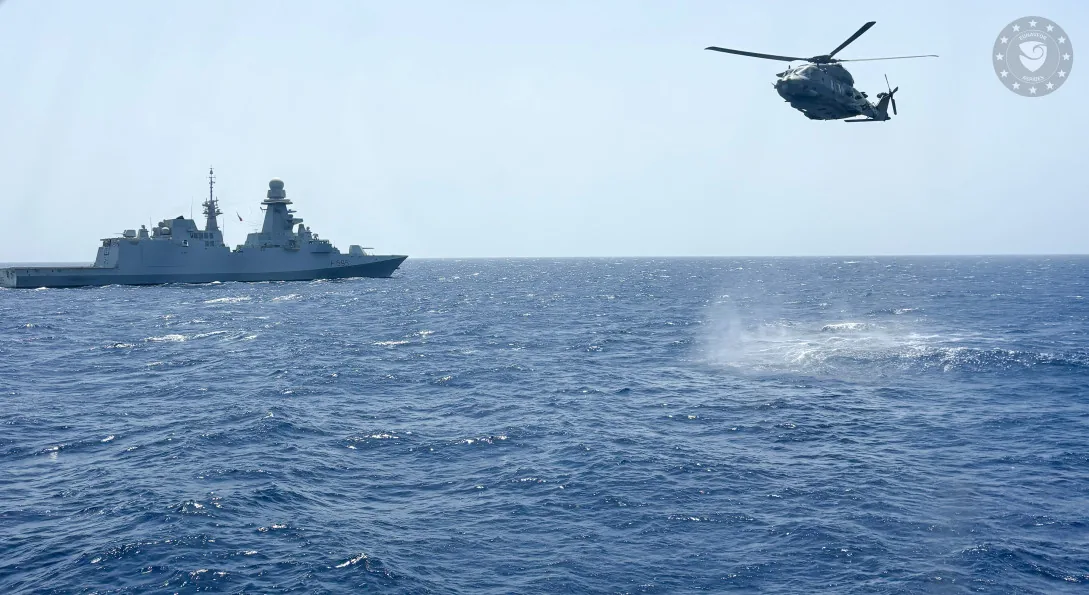
EU foreign policy chief Kaja Kallas is urging member states to redirect naval vessels originally pledged for a stalled Strait of Hormuz mission to the Red Sea, where the EU's Aspides escort operation faces strain from Houthi attacks. Kallas warned the situation has worsened, requiring more than 10 warships. EU defense ministers are scheduled to meet to discuss enhancing Aspides capabilities, though member states have so far refused to reinforce the mission.
 Illustration
Editorial responsibility
- No named human review is recorded for this page.
- Reports are grouped by semantic similarity and deterministic rules. Language models may assist titles, summaries, translation and cross-source analysis; the page reads the event directly, while its address stays stable when the title changes.
- Summary covers the current reports
Cross-source coverage
Common ground
- Both sides agree the EU's Operation Aspides is under-resourced and strategically confused, with Kallas's request for ships from a stalled mission proving the point.
- Both acknowledge the Houthis have explicitly linked their attacks to the Gaza conflict, and European arms sales to Israel are part of the equation.
- Both recognize that the EU's response has been reactive and insufficient, lacking a clear strategy beyond adding more warships.
Points of contention
- Neutral Agent argues the Houthis' attacks are indiscriminate, hitting over 60 vessels with no Israeli link, while Regional Agent claims they are targeted political actions with only occasional mistakes.
- Regional Agent insists the Red Sea crisis cannot be separated from Gaza and Yemen's destruction, while Neutral Agent says the Houthis have attacked shipping since 2016, long before the current conflict.
- Neutral Agent sees the Houthis as an Iranian proxy using Gaza as cover for broader destabilization, while Regional Agent views them as a legitimate resistance movement responding to Western-backed aggression.
Blind spots
- Both sides overlook the need for a dual-track approach that combines credible naval deterrence with a diplomatic off-ramp addressing Gaza, Yemen, and Houthi grievances.
- Neutral Agent underweights the EU's complicity in the Saudi-led war on Yemen, which created the conditions for Houthi aggression.
- Regional Agent downplays the real collateral damage from Houthi attacks, like the Rubymar sinking threatening Yemeni fisheries, and the fact that a Gaza ceasefire alone wouldn't stop all attacks.
WorldAttention’s read
The EU's Aspides mission is failing because it tries to solve a political problem with a military solution, while the Houthis' attacks are both a response to Gaza and a long-standing tactic for leverage. Neither more frigates nor a press release about Gaza will work alone. The only viable path is a dual-track approach: credible naval deterrence to protect shipping, combined with a diplomatic process that ties Red Sea security to a Gaza ceasefire, an end to the Yemen blockade, and treating the Houthis as a political movement with real grievances. Until both sides admit the crisis is about both regional injustice and Houthi opportunism, they'll keep talking past each other.
Reporting timeline
EU's Kallas: Two Countries May Send Ships to Strengthen Red Sea Mission
EU foreign policy chief Kaja Kallas stated that two countries are considering deploying naval vessels to reinforce the European Union's maritime mission in the Red Sea. The statement, reported by financial news outlet Jin10, indicates a potential expansion of EU naval presence in the region, though Kallas did not name the countries or provide a timeline. The Red Sea mission is part of EU efforts to secure shipping lanes amid regional tensions.
Read sourceEU's Kallas Urges Member States to Divert Hormuz Support Ships to Red Sea for Houthi Threat
On September 28, EU foreign policy chief Kaja Kallas urged member states to redirect naval vessels originally pledged for a stalled voluntary coalition in the Strait of Hormuz to the Red Sea, where the EU's Aspides escort mission is under strain. Speaking ahead of a Monday meeting of EU defense ministers, Kallas stated that demand for escort services is more urgent than ever and that many requests have been received, but sufficient naval forces are lacking. The call follows recent Houthi advances in Yemen and attacks on Saudi Arabian energy infrastructure, raising fears of further fuel supply disruptions. However, EU countries have so far refused to reinforce the Aspides operation. Kallas noted that resources already committed but not yet deployed for the Hormuz mission could be used to support Red Sea operations.
Read sourceEU's Kallas Urges Member States to Divert Hormuz Ships to Red Sea for Houthi Threat
EU foreign policy chief Kaja Kallas is urging member states to redirect naval vessels originally pledged for a stalled voluntary coalition in the Strait of Hormuz to the Red Sea, where Houthi attacks are escalating. Speaking before a Monday meeting of EU defense ministers, Kallas stated that demand for escort missions is urgent and that the bloc needs more naval power to fulfill them. The Houthis have recently advanced in Yemen and struck Saudi energy infrastructure, raising new fears of fuel supply disruptions. However, EU countries have so far refused to reinforce the existing 'Aspides' shield mission in the Red Sea. Kallas suggested that nations could use resources already committed but not yet deployed for the Hormuz operation to support the Red Sea effort instead.
Show 3 older updatesHide older updates
European Defense Ministers to Discuss Upgrading Red Sea Aspides Fleet Capabilities
According to a report by Saudi media outlet Alhadath, citing a European diplomat, European Union defense ministers are scheduled to meet on Monday to discuss enhancing the operational capabilities of the 'Aspides' naval fleet in the Red Sea. The diplomat stated that the current moment is opportune for upgrading the fleet's capacity. The Aspides mission is a European naval operation aimed at protecting commercial shipping in the Red Sea region, which has faced increased threats from Houthi attacks. The meeting signals a potential escalation of the EU's military commitment to maritime security in the area.
EU Foreign Policy Chief Warns Red Sea Situation Worsening, Naval Mission Needs More Warships
EU foreign policy chief Kaja Kallas warned on Monday that the security situation in the Red Sea has become more severe, and the EU's naval mission, Operation Aspides, will require more than 10 warships to operate effectively. Speaking on the sidelines of the UN General Assembly, Kallas stated that the mission initially needed at least 10 ships, but now the situation is even more serious. EU diplomats confirmed that Kallas has sent a letter to member states urging them to provide additional naval and air assets to the region. The statement underscores growing concerns over maritime security in the Red Sea, a critical global shipping route, amid ongoing regional tensions.
Read sourceEU Foreign Policy Chief Kallas Says Red Sea Naval Operation Needs More Assets
EU foreign policy chief Kaja Kallas stated that the European Union's naval operation in the Red Sea requires additional naval and air assets. The statement, reported by financial news outlet Jin10, highlights the EU's ongoing efforts to secure maritime security in the strategically important waterway, which has been disrupted by Houthi attacks on commercial shipping. Kallas's call for more resources indicates that current capabilities may be insufficient to fully protect vessels and deter threats in the region. The EU launched its naval mission, Aspides, in February 2024 to escort commercial ships and defend against attacks. The request for more assets suggests a need to scale up the operation's capacity to meet operational demands.