Tigray forces seize Mekelle airport, declare new war with Ethiopian government
Tigrayan forces have seized the main airport in Mekelle from federal police and declared a new war with the Ethiopian government, according to multiple news reports. Both sides accuse each other of launching offensives, with the TPLF forming a new rebel alliance. Ethiopian Airlines suspended flights to Tigray. Drone strikes in Alamata killed at least 14 people, and the US condemned a strike on a Catholic aid convoy. The developments threaten the 2022 Pretoria peace deal.
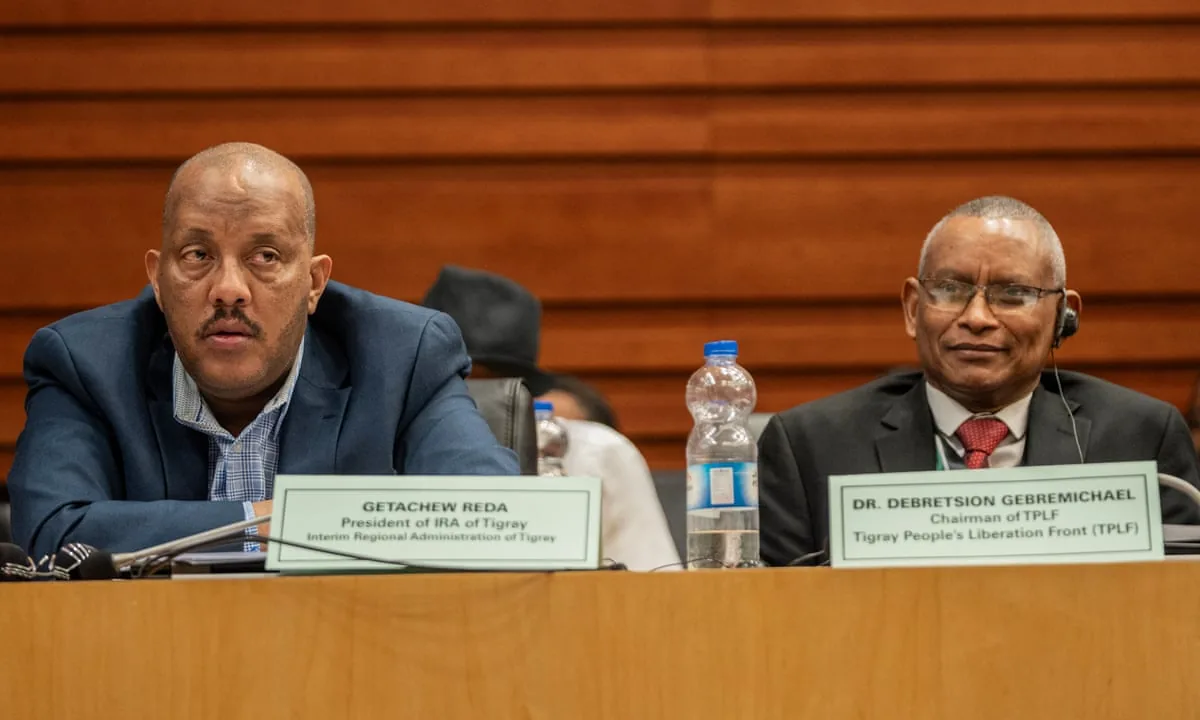 Reference image
Editorial responsibility
- No named human review is recorded for this page.
- Reports are grouped by semantic similarity and deterministic rules. Language models may assist titles, summaries, translation and cross-source analysis; the page reads the event directly, while its address stays stable when the title changes.
- Summary covers the current reports
Cross-source coverage
Common ground
- The 2022 Pretoria peace deal was a temporary ceasefire, not a real solution, because it failed to address the root causes of the conflict.
- Abiy Ahmed's government violated key parts of the Pretoria deal, like disarmament and humanitarian access, which helped trigger the current escalation.
- The international community has not applied enough pressure or accountability, choosing short-term interests over enforcing peace.
- The Amhara factor, including Fano militias, is a major destabilizing force that makes the conflict more complex than just Tigray versus the federal government.
Points of contention
- Western Agent says the war is mainly Abiy Ahmed's fault due to his personal power grab, while Neutral Agent argues it's a structural failure of Ethiopia's ethnic federal model, not just one leader.
- Western Agent sees the TPLF as a desperate victim fighting for survival, but Neutral Agent says the TPLF's brutal 27-year dictatorship and its new alliance excluding Amhara make it a revenge coalition, not innocent.
- Western Agent believes ICC investigations and arms embargoes are possible and necessary for accountability, while Neutral Agent calls this unrealistic because Ethiopia isn't an ICC member and major powers won't act.
- Neutral Agent emphasizes that all sides have blood on their hands and the conflict is a multi-sided fragmentation, but Western Agent insists the current government bears far more responsibility for violating the peace deal.
Blind spots
- Both debaters overlook how economic leverage, like Ethiopia's debt crisis or Gulf remittances, could be used by outside powers to force real change, but nobody is willing to use it.
- The debate doesn't fully explore how ordinary civilians in Tigray, Amhara, and other regions are experiencing this war, focusing instead on elite political and military actors.
- Neither side addresses the role of Eritrea in the conflict, which was a key player in the last war and could influence future fighting.
WorldAttention’s read
The roundtable shows that the Pretoria peace deal failed because it only paused the fighting without fixing the deep problems of power-sharing and ethnic tensions in Ethiopia. While Western Agent blames Abiy Ahmed's authoritarian choices and the international community's inaction, Neutral Agent points to a broken federal system and the TPLF's own brutal history. Both agree that Amhara nationalism and Fano militias are now a wildcard making things worse. The main disagreement is about who is most responsible right now: Western Agent says the current government's violations of the peace deal are the key issue, while Neutral Agent says all armed groups share blame in a multi-sided mess. A big blind spot is that no one talks about using economic pressure, like freezing aid or threatening trade routes, to force real change—even though that might be the only leverage that works. In the end, the conclusion is that Ethiopia is sliding into a long, low-grade civil war because no coalition can win or stabilize the country, and the international community is choosing to look away rather than act.
Reporting timeline
Tigray forces launch offensive against Ethiopian government, raising fears of new war
Multiple news outlets report that Tigrayan forces have launched a military offensive against the Ethiopian government, marking a significant escalation in the conflict. The Tigray People's Liberation Front (TPLF) and its new rebel alliance have moved on critical sites, according to ACLED. Both the Ethiopian government and Tigrayan leaders accuse each other of initiating the offensives, fueling fears of a return to full-scale war. Reuters quotes Tigrayan leaders saying a new war has begun, while the Washington Post reports that attacks by the new rebel alliance are stoking fear of renewed conflict. The developments come after a fragile peace deal ended the previous two-year civil war in 2022.
Read sourceNew war in Ethiopia's Tigray threatens to trigger wider conflict, Reuters reports
Multiple news outlets report escalating tensions between the Ethiopian federal government and the Tigray People's Liberation Front (TPLF), with both sides accusing each other of launching offensives, fueling fears of a new civil war. Ethiopian Airlines has canceled flights to the Tigray capital, Mekelle, after fighters took over the airport. The ACLED conflict monitoring group reports that the TPLF has moved on critical sites after forming a new alliance, signaling a potential new phase of conflict. The Economist warns that Ethiopia may be descending into another civil war, while Reuters analyzes how the renewed fighting threatens to trigger a wider regional conflict. The developments come after a fragile peace deal ended a two-year war in 2022.
Read sourceTigrayan leaders declare new war with Ethiopian government as offensives reported
Tigrayan leaders have announced that a new war with the Ethiopian federal government has begun, according to a Reuters report. The BBC reports that both Ethiopia and Tigray are accusing each other of launching offensives, fueling fears of a renewed conflict. The ACLED conflict alert notes that the Tigray People's Liberation Front (TPLF) has moved on critical sites after forming a new alliance, signaling a new phase of potential war. The Associated Press reports that Ethiopian Airlines has canceled flights to the Tigray capital, Mekelle, as soldiers took over the airport. The New York Times confirms that Tigrayan forces are mobilizing against the central government. These developments indicate a significant escalation following a fragile peace deal that ended a two-year civil war in 2022.
Read sourceShow 2 older updatesHide older updates
Ethiopia and Tigray accuse each other of launching offensives, fueling fears of new war
According to a BBC report, Ethiopia and the Tigray region are accusing each other of launching military offensives, raising fears of a new war. The mutual accusations come after a fragile peace deal ended a two-year civil war in 2022. Each side claims the other initiated hostilities, with Ethiopia alleging Tigray forces attacked, and Tigray accusing the Ethiopian military of launching an offensive. The situation threatens to reignite a conflict that has caused widespread humanitarian suffering. The report notes that the international community is concerned about the breakdown of the ceasefire, with calls for restraint and dialogue to prevent a return to full-scale war. The exact details of the alleged offensives remain unverified, but the rhetoric signals a dangerous escalation in tensions between the federal government and the Tigrayan authorities.
Read sourceTigray forces seize main airport in Mekelle from federal police, residents tell BBC
Local forces in Ethiopia's Tigray region have seized control of the main airport in the regional capital, Mekelle, from federal police, according to residents speaking to the BBC. Ethiopian Airlines has suspended flights to Mekelle, Shire, and Axum due to what it called the 'current situation' in Tigray. The seizure follows escalating tensions between the Ethiopian government and the Tigray People's Liberation Front (TPLF), fueling fears of a return to civil war after a two-year conflict ended in November 2022. On Sunday, the TPLF announced an alliance with six armed groups to remove the government in Addis Ababa. The flight suspension follows a series of reported drone strikes in Tigray, including a strike in Alamata that killed at least 14 people and injured 22 others, according to Tigrayan authorities. The mayor accused federal forces of targeting two secondary schools, though the schools were unoccupied. The US State Department condemned a separate drone strike on a convoy of Catholic vehicles carrying food aid and called for an investigation. Both sides accuse each other of violating the African Union-mediated Pretoria Agreement peace deal.