ENN achieves first commercial hydrogen-boron fusion on Xuanlong-50U device
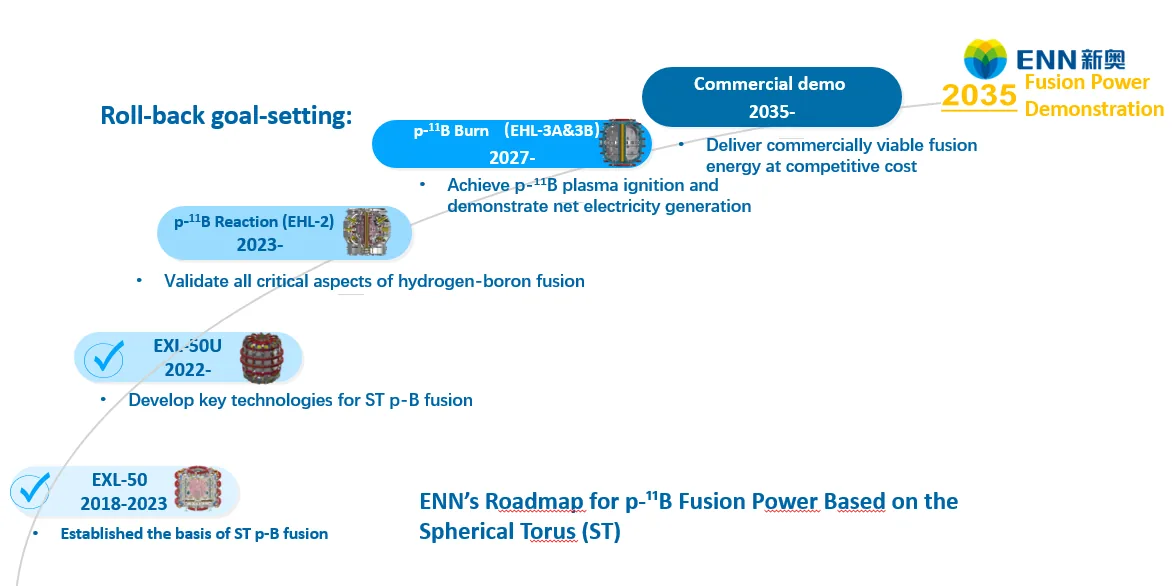
Chinese private energy company ENN announced its Xuanlong-50U spherical tokamak achieved a hydrogen-boron fusion reaction in late September 2026, marking the first time a global commercial fusion company has done so on its own device. The team used high-energy neutral beam injection and radiofrequency waves to achieve a reaction rate exceeding 10^8 per second. An international panel of over ten fusion experts confirmed the measurements. ENN outlined a three-step commercialization roadmap: Step 1 (completed ahead of schedule), Step 2 (light first fusion lamp by 2030), and Step 3 (steady-state power generation by 2035).
 Reference image
Editorial responsibility
- No named human review is recorded for this page.
- Reports are grouped by semantic similarity and deterministic rules. Language models may assist titles, summaries, translation and cross-source analysis; the page reads the event directly, while its address stays stable when the title changes.
- Summary covers the current reports
Cross-source coverage
Reporting timeline
China's ENN Achieves First Commercial Hydrogen-Boron Fusion by Private Firm
Chinese private energy company ENN (新奥) has announced a major breakthrough in hydrogen-boron (p-B11) fusion commercialization, using its 'Xuanlong-50U' (玄龙-50U) magnetic confinement device. This marks the first time a global commercial fusion company has achieved hydrogen-boron fusion on its own device, and the first time a Chinese magnetic confinement fusion device has used advanced fuels (hydrogen-boron, deuterium-helium-3) for clean, neutron-free fusion. Hydrogen-boron fusion offers advantages such as no neutron radiation, abundant and cheap fuel, and low cost, producing only helium (alpha particles). However, it requires higher reaction temperatures and triple product conditions than deuterium-tritium fusion. ENN's team used a synergy of high-energy neutral beam injection and radiofrequency waves to significantly increase the non-thermal equilibrium fast proton share at the first resonance peak of the hydrogen-boron reaction, achieving a fusion reaction rate greater than 10^8 per second. This indicates ENN's hydrogen-boron fusion has entered the burning plasma experimental stage, representing a major breakthrough in China's multi-path fusion energy development, as reported by Science and Technology Daily.
China's ENN Achieves First Commercial Hydrogen-Boron Fusion Breakthrough with Xuanlong-50U Device
In late September 2026, Chinese private energy company ENN announced a major breakthrough in hydrogen-boron (p-B11) fusion commercialization. Its 'Xuanlong-50U' spherical tokamak achieved a hydrogen-boron fusion reaction, marking the first time a global commercial fusion company has done so on its own device, and the first clean, neutron-free fusion reaction using advanced fuel in a Chinese magnetic confinement device. Hydrogen-boron fusion offers advantages of no neutrons, abundant fuel, and low cost, but requires higher temperatures and triple-product conditions than deuterium-tritium fusion. ENN's team used high-energy neutral beam injection combined with radiofrequency waves to boost the non-thermal fast proton fraction at the first resonance peak, achieving a reaction rate greater than 10^8 per second. An international panel of over ten fusion experts from multiple countries confirmed the effective, repeatable measurement of alpha particles and proton spectra, calling it a milestone for spherical tokamak hydrogen-boron fusion research. ENN is pursuing a three-step commercialization strategy: Step 1 (achieved ahead of schedule by end-2026) is the hydrogen-boron reaction; Step 2 aims to light the first hydrogen-boron fusion lamp by 2030 using the next-generation 'Helong-2' device (construction started, completion expected by end-2027); Step 3 targets steady-state, high-power power generation by 2035, entering the demonstration reactor phase.
Read sourceChina's ENN Fusion Achieves First Hydrogen-Boron Fusion Reaction on 'Xuanlong-50U' Device
ENN Fusion announced on September 28 that its 'Xuanlong-50U' device achieved a hydrogen-boron fusion reaction in late September. The company claims this is the first time a global commercial fusion company has achieved such a reaction on its own device, and the first time a Chinese magnetic confinement fusion device has achieved a clean, neutron-free fusion reaction using advanced fuel (hydrogen-boron, deuterium-helium-3). Hydrogen-boron fusion offers commercial advantages such as being neutron-free, with abundant and low-cost fuel, but requires higher reaction temperatures and conditions than deuterium-tritium fusion. The ENN team used a combination of high-energy neutral beam injection and radiofrequency waves to increase the share of non-thermal equilibrium fast protons at the first resonance peak, achieving a reaction rate greater than 10^8 per second. This milestone moves ENN's hydrogen-boron fusion into the burning plasma experimental phase. ENN is pursuing a three-step commercialization strategy: step one (achieving hydrogen-boron fusion by end of 2026) has been achieved early; step two (lighting the first hydrogen-boron fusion lamp by 2030) will be supported by the next-generation spherical torus device 'Helong-2', now under construction and expected to be completed by end of 2027; step three (steady-state, high-power power generation by 2035) aims to enter the demonstration reactor phase.
Read sourceShow 4 older updatesHide older updates
Global Fusion Company Achieves First Hydrogen-Boron Fusion on Its Own Device
ENN, a Chinese commercial fusion company, announced a major breakthrough: its 'Xuanlong-50U' spherical tokamak device achieved hydrogen-boron (p-B11) fusion, marking the first time a global commercial fusion company has done so on its own device. It is also the first magnetically confined fusion device in China to achieve clean, neutron-free fusion using advanced fuels (hydrogen-boron and deuterium-helium-3). Hydrogen-boron fusion offers advantages such as no neutrons, abundant fuel, and low cost, but requires much higher temperatures and triple product conditions than deuterium-tritium fusion. The ENN team used high-energy neutral beam injection and radiofrequency waves to increase the non-thermal fast proton share at the first resonance peak, achieving a fusion reaction rate greater than 10^8 per second. An international panel of over ten fusion experts confirmed the effective and repeatable measurement of proton energy spectra and alpha particles, calling it a milestone for spherical tokamak hydrogen-boron fusion. ENN outlined a three-step commercialization roadmap: step one (achieving hydrogen-boron fusion, already completed ahead of the 2026 target), step two (lighting the first hydrogen-boron fusion lamp by 2030, with the next-generation device 'Helong-2' under construction and expected by 2027), and step three (steady-state, high-power power generation by 2035, entering the demonstration reactor phase).
China's ENN Group Achieves Hydrogen-Boron Fusion Breakthrough on 'Xuanlong-50U' Device
According to a report from People's Financial Information on September 28, ENN Group announced a major breakthrough in hydrogen-boron fusion commercialization in late September. The 'Xuanlong-50U' device successfully achieved a hydrogen-boron fusion reaction, marking the first time a global commercial fusion company has accomplished this on its own device. It is also the first time a Chinese magnetic confinement fusion device has achieved a clean, neutron-free fusion reaction using advanced fuels (hydrogen-boron, deuterium-helium-3). The ENN fusion team used a combination of high-energy neutral beam injection and radiofrequency waves to significantly increase the share of non-thermal equilibrium fast protons at the first resonance peak of the hydrogen-boron reaction, achieving a hydrogen-boron fusion reaction rate greater than 10^8 per second.
Read sourceNew Energy's Hydrogen-Boron Fusion Breakthrough: Xuanlong-50U Achieves First Commercial Reaction
According to a report from the New Energy Group, in late September, the company achieved a major breakthrough in hydrogen-boron fusion commercialization. Its 'Xuanlong-50U' device successfully realized a hydrogen-boron fusion reaction. This marks the first time a global commercial fusion company has achieved a hydrogen-boron fusion reaction on its own device, and also the first time a Chinese magnetic confinement fusion device has achieved a clean, neutron-free fusion reaction using advanced fuels (hydrogen-boron, deuterium-helium-3). The New Energy fusion team, through the synergy of high-energy neutral beam injection and radio frequency waves, significantly increased the non-thermal equilibrium fast proton share at the first resonance peak of the hydrogen-boron reaction, achieving a hydrogen-boron fusion reaction rate greater than 10^8 per second.
Read sourceENN's hydrogen-boron fusion commercialization achieves major breakthrough with Xuanlong-50U device
According to a report from ENN Group, in late September, the company achieved a major breakthrough in hydrogen-boron fusion commercialization: its 'Xuanlong-50U' device successfully realized a hydrogen-boron fusion reaction. This marks the first time a global commercial fusion company has achieved a hydrogen-boron fusion reaction on its own device, and also the first time a Chinese magnetic confinement fusion device has achieved a clean, neutron-free fusion reaction using advanced fuels (hydrogen-boron, deuterium-helium-3). The ENN fusion team, through the synergy of high-energy neutral beam injection and radio frequency waves, significantly increased the non-thermal equilibrium fast proton share at the first resonance peak of the hydrogen-boron reaction, achieving a hydrogen-boron fusion reaction rate greater than 10^8 per second. (Source: People's Financial News)
Read source