Dell executives sell $31.7 million in stock amid AI market concerns and recession fears
Four senior Dell Technologies executives, including CFO David Kennedy and General Counsel Richard Rothberg, sold approximately $31.7 million in company stock in September 2024, according to SEC filings. The sales occurred despite a 17% stock rally driven by Dell's AI server revenue doubling year-over-year. The event has amplified market concerns about Oracle's financial fragility from AI debt, a US business cycle indicator entering recession territory, and rising Treasury yields pushing mortgage rates to 7.45%.
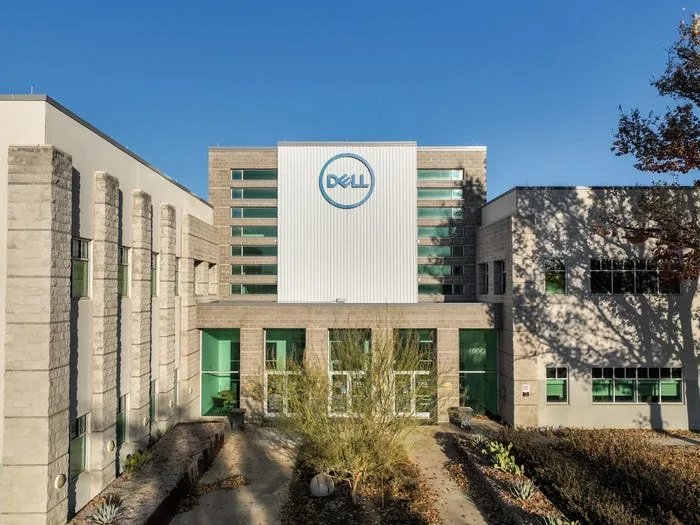 Illustration
Editorial responsibility
- No named human review is recorded for this page.
- Reports are grouped by semantic similarity and deterministic rules. Language models may assist titles, summaries, translation and cross-source analysis; the page reads the event directly, while its address stays stable when the title changes.
- Summary covers the current reports
Cross-source coverage
Common ground
- The $31.7 million insider stock sale at Dell is statistically insignificant for a company worth over $300 billion.
- Dell's $95 billion backlog and doubling AI server revenue show real, structural demand for AI infrastructure.
- Rising U.S. Treasury yields and mortgage rates are a genuine headwind for growth stocks, including Dell.
- The AI server market is splitting along geopolitical lines, with different customer groups responding to different interest rate signals.
- Neither panic nor euphoria is justified—the truth lies in the middle, with both real demand and real macro risks.
Points of contention
- One side sees Western media framing as a systematic bias that manufactures panic, while the other sees it as normal market noise with both positive and negative headlines.
- One side argues that multipolarity insulates non-U.S. buyers from Fed rate hikes, while the other insists Dell's revenue is still mostly dollar-dependent and U.S.-focused.
- One side views Oracle's $60 billion debt as a warning sign for the whole AI sector, while the other sees it as a normal company-specific bet during a tech transition.
Blind spots
- Neither side deeply examined Dell's customer financing terms or whether they are extending credit to risky AI startups.
- Neither side analyzed Dell's order cancellation rates or inventory cycle risks, which could reveal if the backlog is solid or fragile.
- Both sides overlooked how the shift in customer mix—from U.S. hyperscalers to non-dollar buyers—might change Dell's revenue stability over time.
WorldAttention’s read
The Dell insider selling story is overblown—$31.7 million in sales at a $300 billion company is noise, not a signal. The real picture is more balanced: AI server demand is structurally strong, as shown by Dell's growing backlog and revenue, but rising U.S. interest rates are a real headwind for many of its dollar-denominated customers. The market is fragmenting along geopolitical lines, with non-U.S. buyers like sovereign wealth funds and state-backed firms accelerating their AI investments independently of Fed policy. Both sides agree that extremes—panic or euphoria—are dangerous, and the key to watch is how Dell's customer mix shifts over time, not executive stock sales or media headlines.
Reporting timeline
Dell executives sell $31.7 million in stock amid AI market fears and three key concerns
Dell Technologies shares fell 2.51% after a wave of insider stock sales by senior executives, including the CFO and general counsel, who collectively sold approximately $31.7 million in company stock this month. The sales follow a 17% rally in Dell's stock since September, driven by its AI server business, which doubled revenue year-over-year. The article highlights three major market concerns: first, the severity and contagion risk of Oracle's financial vulnerability, as it carries heavy debt from AI infrastructure investments; second, whether the US business cycle indicator falling into recession territory signals genuine economic weakness, though Oxford Economics notes strong productivity and consumer spending may mitigate this; third, the impact of surging US Treasury yields and mortgage rates (30-year fixed at 7.45%) on equity markets. The report also notes similar insider selling by Nvidia executives and Amazon founder Jeff Bezos, framing these as potential warning signs for the AI sector.
Read sourceDell executives cash out millions amid AI bubble fears and market concerns
A wave of insider selling at Dell Technologies has reignited fears of an AI bubble burst. According to SEC filings, four senior Dell executives, including the CFO and legal chief, sold approximately $31.7 million in company stock in September 2024. The sales come despite Dell's strong AI server revenue, which doubled year-over-year, and a surge in backlog orders from $51.3 billion to $95 billion. The article also highlights three broader market worries: Oracle's financial fragility and potential contagion to AI peers, a US business cycle indicator entering recession territory (though Oxford Economics questions its predictive power), and rising US Treasury yields pushing 30-year mortgage rates to 7.45%. The report notes that other tech leaders, including Nvidia's Jensen Huang and Amazon's Jeff Bezos, have also recently sold shares, adding to the cautious sentiment.
Read sourceDell executives sell $31.7 million in stock amid AI boom; market faces three worries
Dell Technologies is facing a wave of insider stock selling, with four senior executives selling approximately $31.7 million in company shares this month, according to SEC filings. The sales include CFO David Kennedy's $13.5 million sale and HR chief Jennifer Saavedra's $13.1 million sale. Despite the sell-off, Dell's stock has risen over 17% since September, driven by strong AI server revenue that doubled year-over-year and a backlog growing from $51.3 billion to $95 billion. The article also outlines three market concerns: first, the severity of Oracle's financial vulnerability, as analyst Jackson Aadel warns its cash position is weakest among large data center operators; second, Oxford Economics notes the US business cycle indicator has entered recession territory, though it questions whether this signals an actual downturn given strong productivity and consumer spending; third, rising US Treasury yields and mortgage rates (30-year fixed at 7.45%) may pressure equities. The piece notes similar insider selling by Nvidia executives and Amazon founder Jeff Bezos.
Read sourceShow 2 older updatesHide older updates
Dell executives sell over $31 million in stock amid AI market concerns
Dell Technologies executives, including CFO David Kennedy and legal chief Richard Rothberg, sold over $15 million in company stock on September 17, according to SEC filings. Combined with earlier September sales by HR and marketing directors, total insider selling this month exceeds $31.7 million. The sales come as Dell's stock has risen over 17% since early September, outperforming the Nasdaq, amid the company's transformation from a PC maker to an AI-focused firm. The article, citing KeyBanc analyst Jackson Adel, also raises three market concerns: Oracle's financial vulnerability due to heavy AI-related debt and potential contagion to other AI firms; a US business cycle indicator entering recession territory, though Oxford Economics questions whether this truly signals a downturn given strong productivity and consumer spending; and rising US mortgage rates reaching 7.45% alongside surging Treasury yields, which could pressure equities. The report notes that Nvidia CEO Jensen Huang and four other executives previously sold over $4 billion in Nvidia and Amazon stock, with an initial $350 million tranche executed on August 3.
Dell executives sell over $31 million in stock amid AI market concerns
Dell Technologies executives, including CFO David Kennedy and legal chief Richard Rothberg, sold over $15 million in company stock on September 17, according to SEC filings. Combined with earlier September sales by HR and marketing directors, total insider disposals this month exceed $31.7 million. The sales come as Dell shares have risen over 17% since early September, outperforming the Nasdaq. The article, citing KeyBanc analyst Jackson Adel, warns that Oracle's heavy debt from AI infrastructure commitments may pose contagion risks to the broader AI sector. Oxford Economics notes the US business cycle indicator has entered recession territory due to rising energy costs and slowing immigration, though it questions whether this truly signals a downturn. Meanwhile, US 30-year fixed mortgage rates have climbed to 7.45%, and long-term Treasury yields continue to rise, adding pressure on equity markets. The report attributes these concerns to three factors: Oracle's financial fragility, potential US economic slowdown, and rising interest rates affecting stock valuations.