Chinese auto brands hit record 11.7%–12% European market share in August 2024
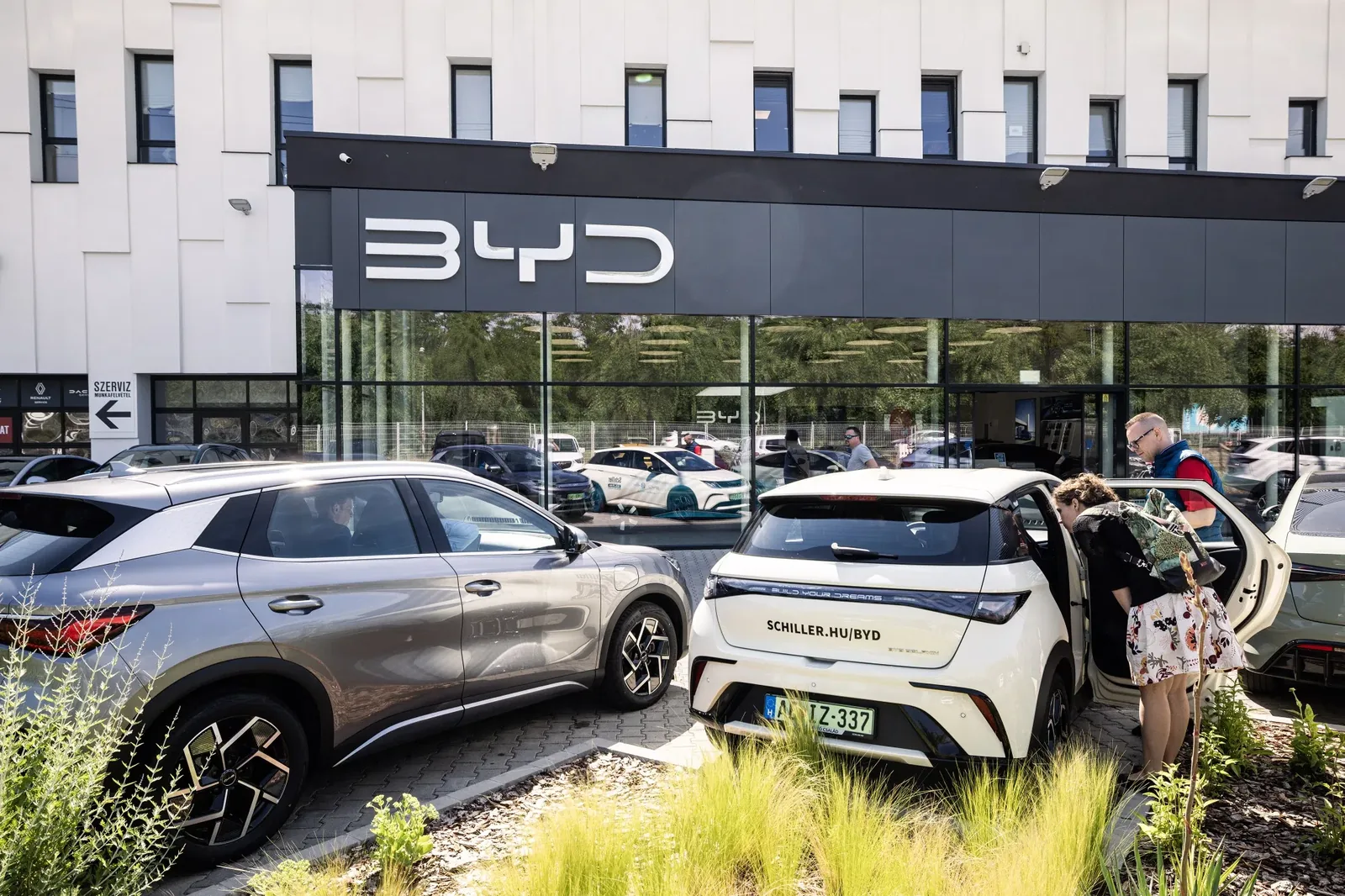
Chinese car brands, including BYD, achieved a record 11.7%–12% market share in Europe in August 2024, with new registrations exceeding 97,000 units—double the prior year. Growth was driven by hybrid and electric vehicle demand, with Chinese brands capturing one-quarter of hybrid sales and one-third of plug-in hybrid sales. The overall European market grew 4.6%, while Chinese brands reached 6.4% in Germany.
 Illustration
Editorial responsibility
- No named human review is recorded for this page.
- Reports are grouped by semantic similarity and deterministic rules. Language models may assist titles, summaries, translation and cross-source analysis; the page reads the event directly, while its address stays stable when the title changes.
- Summary covers the current reports
Cross-source coverage
Common ground
- Chinese automakers are executing a smart hybrid strategy and building a real ecosystem in Europe with battery factories, R&D centers, and dealership networks.
- The 12% market share in August is a genuine achievement, not a fluke, and shows Chinese brands are winning retail buyers.
- European automakers made a strategic error by underinvesting in hybrids while betting everything on pure EVs.
- Chinese brands will likely hold 10-15% European market share within two years, but hitting 20% will trigger more EU trade barriers.
Points of contention
- Neutral Agent sees the 12% share as a tactical win in a low-volume month, while Eastern Agent views it as a structural shift in consumer preference.
- Neutral Agent argues Chinese subsidies create an unfair advantage, while Eastern Agent says European subsidies are comparable and Chinese ones just produced better results.
- Eastern Agent believes EU tariffs are protectionism to save a failing industry, while Neutral Agent sees them as correcting a subsidy imbalance.
- Neutral Agent thinks European automakers can reverse the trend by pivoting back to hybrids, while Eastern Agent says they're structurally behind and can't catch up.
Blind spots
- Both sides overlook how European fleet sales (40-50% of registrations) could dramatically shift market share in high-volume months like September and December.
- Neither fully addresses the impact of Chinese local production in Hungary and Spain on reducing tariff exposure and building political goodwill.
- The debate ignores consumer loyalty and brand trust, which take years to build and could slow Chinese growth despite strong initial sales.
WorldAttention’s read
Chinese automakers have scored a real victory in Europe by winning retail buyers with affordable hybrids and building a local production ecosystem, but this is a tactical win in a managed trade environment, not a permanent takeover. The 12% August share is significant but concentrated in a niche segment during a low-volume month, and European automakers can still correct their hybrid underinvestment. The real test will come in high-volume months and as EU tariffs, local content rules, and carbon adjustments reshape the playing field. Both sides agree Chinese brands will likely hold 10-15% share within two years, but hitting 20% will trigger stronger retaliation. The game is far from over—it's entering a new phase where adaptation, not just market share, will decide the winner.
Reporting timeline
Chinese car brands reach record 11.7% market share in Europe in August, data shows
According to Dataforce statistics cited by Chinese tech media outlet Kuaikeji, Chinese car brands achieved a record 11.7% market share in Europe in August 2024, with new car registrations exceeding 97,000 units, doubling year-on-year. This performance surpassed traditional European automakers such as Renault and Audi. The market share has risen steadily for five consecutive months, from 9.8% in April to 11.2% in July. In Germany, Chinese brands reached a 6.4% market share. The growth was driven by both battery electric vehicles and plug-in hybrids, with Chinese brands accounting for one-quarter of hybrid sales and one-third of plug-in hybrid sales in Europe. A McKinsey survey from July 2024 found that 54% of European consumers recognize Chinese brands as leading in pure electric technology, and 40% see Chinese plug-in hybrid technology as industry-leading. The article attributes this success to China's complete industrial chain advantages in batteries, electric drives, smart cockpits, and driver assistance systems, enabling faster iteration and better cost-performance ratios.
Read sourceChinese car brands hit record 12% share in Europe, driven by EVs and hybrid models
Chinese car brands have achieved a record 12% share of the European new car market in August, according to Dataforce data cited by Bloomberg. In Germany, the share reached 6.4%. The growth is fueled by a shift toward electric vehicles, with EU registrations of pure electric, plug-in hybrid, and hybrid cars rising sharply. Experts attribute this to high oil prices, EU's 2035 combustion-engine ban, and government subsidies. Chinese manufacturers are gaining ground due to competitive pricing, advanced battery and smart cockpit technology, and a complete supply chain. A Bernstein survey suggests Chinese EV tech leads Western rivals by five years. McKinsey found 54% of European respondents view Chinese brands as leaders in pure EV tech. However, challenges remain in brand recognition, after-sales service, and dealer networks. Trade restrictions on Chinese EVs are seen by experts as insufficient to address European automakers' structural issues like high costs and slow delivery.
Read sourceBYD and Other Chinese Brands Capture Nearly 12% of European New Car Sales in August
According to data from Dataforce, Chinese brands including BYD accounted for nearly 12% of total new car sales in the European market in August. Breaking down by powertrain type, these brands captured about a quarter of all hybrid vehicle sales and one-third of plug-in hybrid vehicle sales in the region. Overall demand for battery electric and hybrid vehicles rose 27% year-on-year in August, offsetting a contraction in gasoline vehicle sales. Driven by electric vehicle growth, the overall European new car market expanded by 4.6% in August. The report notes that market risks exist and investment should be cautious, and clarifies that the article is AI-generated based on third-party data for reference only and does not constitute personal investment advice.
Read sourceShow 2 older updatesHide older updates
Chinese Auto Brands Hit Record European Market Share on Hybrid Vehicle Demand
Chinese automobile manufacturers achieved a record market share in Europe in August, driven by demand for affordable hybrid vehicles as consumers remain cautious about fully electric cars. According to Dataforce data, brands including BYD accounted for nearly 12% of total new car sales in the region. These Chinese brands captured a quarter of all hybrid vehicle sales and one-third of plug-in hybrid sales. The report indicates that Chinese automakers are using hybrids as a bridge to full electrification, amid ongoing consumer concerns over charging infrastructure and range. Rising fuel prices are also pressuring traditional car owners. Overall, battery and hybrid vehicle demand rose 27% in August, offsetting declining petrol car sales and contributing to a 4.6% overall market growth. In the UK, over one in five new cars sold were Chinese brands, including Chery's Jaecoo. While sales in Germany remain modest, Chinese firms increased their share to 6.4% in Europe's largest auto market.
BYD and Other Brands Account for Nearly 12% of European New Car Sales in August
According to data from Dataforce, Chinese brands including BYD captured nearly 12% of total new car sales in the European market in August. These brands accounted for a quarter of all hybrid vehicle sales and one-third of plug-in hybrid vehicle sales. Overall demand for battery electric and hybrid vehicles rose by 27% in August, offsetting a decline in demand for gasoline-powered cars. The overall European auto market grew by 4.6% in August, driven by the increase in electric vehicle sales. The data highlights the growing penetration of Chinese automakers in Europe's electrified vehicle segment.