China’s village bank count drops below 1,000 for first time since 2007
The number of village bank legal entities in China has fallen below 1,000 for the first time since 2007, reaching 986 as of September 2026, according to the National Financial Regulatory Administration. This marks a decline from a peak of 1,651 at the end of 2021. Major state-owned banks including Agricultural Bank of China and Bank of Communications have largely completed the integration of their village bank subsidiaries. The consolidation is driven by regulatory efforts to address governance weaknesses and risk exposure, with conversion into parent bank branches being the dominant restructuring model.
 Reference image
Editorial responsibility
- No named human review is recorded for this page.
- Reports are grouped by semantic similarity and deterministic rules. Language models may assist titles, summaries, translation and cross-source analysis; the page reads the event directly, while its address stays stable when the title changes.
- Summary covers the current reports
Cross-source coverage
Common ground
- The old village bank model had serious problems, including weak governance, high non-performing loan ratios, and the 2022 Henan crisis that hurt depositors.
- Consolidation of village banks into larger state-owned institutions improves depositor safety and regulatory oversight.
- The shift from many small banks to fewer, stronger branches is a major structural change in rural China's financial system.
- Digital infrastructure and unified lending platforms are becoming central to how rural credit is delivered.
Points of contention
- Eastern Agent sees consolidation as a successful, proactive reform that protects depositors and modernizes rural finance, while Regional Agent views it as a power grab that destroys local decision-making.
- Neutral Agent argues the efficiency gains from consolidation are not reaching farmers, as interest rate spreads have widened, but Eastern Agent says those margins fund necessary digital infrastructure.
- Regional Agent claims the poorest rural borrowers are being excluded by algorithms, but Eastern Agent counters that the old system also failed them through crony lending and high informal interest rates.
- Neutral Agent points out that rural loan growth has slowed during consolidation, while Eastern Agent insists it has accelerated in pilot programs.
Blind spots
- None of the participants fully address the fate of the 200+ village banks being liquidated, not absorbed, leaving some communities with no banking access at all.
- The debate overlooks how demographic decline—rural China losing 120 million residents in a decade—makes the old village bank model obsolete regardless of policy choices.
- There is little discussion of whether the cost savings from consolidation are being used to lower interest rates for borrowers or just boost bank profits.
WorldAttention’s read
This debate shows that China's village bank consolidation is a necessary fix for a broken system, but it's not a simple win. The old model had real problems—weak governance, high failure rates, and the Henan crisis—so merging these banks into larger state-owned institutions makes depositors safer and oversight cleaner. However, the benefits aren't reaching everyone equally. Interest rate spreads have widened, meaning farmers aren't seeing cheaper credit, and the shift to digital lending excludes the poorest 30% of rural borrowers who have no formal credit history. The real test isn't how many banks disappear, but whether the new system serves the most vulnerable—like grandmothers raising grandchildren in remote villages. Right now, the data suggests they're being left behind, and that's a policy choice, not just a technical glitch. Both the romantic view of local autonomy and the triumphalist view of modernization miss this human cost.
Reporting timeline
China's village bank reforms accelerate as count falls below 1,000, experts see dual-track future
China's village bank reform is accelerating, with the number of such institutions falling below 1,000 to 986 as of September 23, 2025, according to financial license data from the National Financial Regulatory Administration. Major state-owned banks, including Agricultural Bank of China and Bank of Communications, have largely completed the consolidation of their village bank subsidiaries in the first half of 2025. The reform is driven by risk mitigation and the need to improve efficiency in the face of interest rate liberalization and fintech competition. Experts interviewed by China Business Journal, including Lu Minfeng of the Yangtze River Delta Science and Technology Industry Financial Research Alliance and Wu Zewei of Sushang Bank, forecast that the consolidation trend will continue but shift from rapid reduction to steady quality improvement. They predict two parallel models will emerge: converting village banks into parent bank branches, suitable for high-risk areas, and retaining independent legal entity status for larger, well-performing village bank groups like Bank of China's BOC Fullerton Community Bank. The article notes that balancing risk control with local agricultural and small-business lending remains a key challenge, with experts advocating for differentiated management, technology empowerment, and flexible regulatory targets to avoid service gaps in county-level markets.
China's village banks fall below 1,000; consolidation shifts from rapid reduction to quality improvement
As of September 23, 2025, the number of village and township banks in China has fallen to 986, dropping below 1,000 for the first time, according to National Financial Regulatory Administration data. The article reports that 183 such banks exited in 2025, following 310 in 2024. Major state-owned banks including Agricultural Bank of China and Bank of Communications have largely completed the integration of their village bank subsidiaries. Experts interviewed by China Business News forecast that the consolidation trend will continue but shift from rapid reduction to steady quality improvement. Two parallel models are expected to emerge: conversion of village banks into branches of parent banks (suitable for high-risk areas), and retention of independent legal entity status for larger, well-performing village bank groups like Bank of China's BOC Fullerton Community Bank. The article notes that balancing risk control with local financial services remains a key challenge, and that large financial institutions' increasing digital capabilities may further pressure smaller players. The consolidation is driven by regulatory policy to mitigate risks in small financial institutions, market pressures from interest rate liberalization, and fintech development.
Read sourceChina's Village Banks Fall Below 1,000 as Consolidation Shifts from Speed to Quality
The number of village banks in China has fallen below 1,000 to 986 as of September 23, 2025, according to the National Financial Regulatory Administration. This year, 183 village banks have exited, following 310 in 2025. Major state-owned banks like Agricultural Bank of China and Bank of Communications have largely completed the integration of their village bank subsidiaries. Experts interviewed by China Business News, including Lu Minfeng of the Yangtze River Delta Science and Technology Industry Financial Research Alliance and Wu Zewei of Suning Bank, forecast that the consolidation trend will continue but shift from rapid reduction to steady quality improvement. Two parallel models are expected to emerge: converting village banks into branches of parent banks (suitable for high-risk areas) and retaining independent village bank groups (for stable, economically active regions). The article notes that as large financial institutions enhance their digital capabilities, the survival space for smaller institutions like village bank groups may face pressure. Key challenges include ensuring service continuity, managing non-performing assets, and maintaining the original mission of supporting rural and small-scale borrowers.
Read sourceShow 14 older updatesHide older updates
China's village banks fall below 1,000; consolidation to shift from speed to quality
As of September 23, 2025, the number of village banks in China has fallen to 986, dropping below 1,000 for the first time, according to data from the National Financial Regulatory Administration. The article, citing experts and bank officials, reports that 183 village banks exited in 2025 and 310 in 2024. Major state-owned banks like Agricultural Bank of China and Bank of Communications have largely completed the consolidation of their village bank subsidiaries. The article outlines two parallel future models: converting high-risk village banks into branches of parent banks (the dominant current approach), and retaining independent legal entity status for well-performing banks, potentially forming regional groups like Bank of China's Zhongyin Fudeng. Experts interviewed, including Lu Minfeng and Wu Zewei, predict the consolidation trend will continue but shift from rapid reduction to stable quality improvement. Key challenges identified include ensuring smooth transitions, maintaining local financial services, and balancing risk control with support for agriculture and small businesses. The article emphasizes that a one-size-fits-all approach will be avoided, with strategies tailored to regional economic conditions and risk profiles.
Read sourceChina's village bank reforms accelerate as state-owned banks complete integration
China's village bank reform is accelerating, with the number of such institutions falling below 1,000 to 986 as of September 23, according to the National Financial Regulatory Administration. In 2025, 310 village banks exited, and 183 have exited so far this year. Major state-owned banks, including Agricultural Bank of China and Bank of Communications, have largely completed the consolidation of their village bank subsidiaries, while Bank of China's BOC Fullerton remains the largest village bank group with 134 institutions. Analysts and experts cited in the article, including Lu Minfeng of the Yangtze River Delta Science and Technology Industry Financial Research Alliance and Wu Zewei of Sushang Bank, forecast that the consolidation trend will continue but shift from rapid reduction to steady quality improvement. Two parallel models are expected to emerge: converting village banks into parent bank branches (suitable for high-risk areas) and retaining independent village bank groups (for economically active regions). Key challenges include ensuring service continuity, managing risk, and maintaining rural financial inclusion. The article notes that as large financial institutions expand their digital capabilities, the survival space for smaller village banks may shrink further.
China's village bank reforms accelerate as major state-owned banks complete integration
China's village bank sector is undergoing rapid consolidation, with the number of such institutions falling below 1,000 to 986 as of September 23, 2025, according to the National Financial Regulatory Administration. A total of 183 village banks exited in 2025, following 310 in 2024. Major state-owned banks including Agricultural Bank of China, Bank of Communications, and Industrial and Commercial Bank of China have largely completed the integration of their village bank subsidiaries, with Bank of China's BOC Fullerton remaining the largest village bank group with 134 institutions. Analysts and banking officials cited in the article expect the consolidation trend to continue but shift from rapid reduction to stable quality improvement. Two parallel models are emerging: converting village banks into branches of parent banks (the dominant approach), and retaining independent legal entity status for larger, well-performing village bank groups. Experts caution that balancing risk control with local rural financial services is critical, and that large financial institutions' increasing digital capabilities may further pressure smaller village banks. The article notes that regulatory policy will not adopt a one-size-fits-all approach but will tailor strategies based on regional economic conditions and risk profiles.
China's village bank reforms accelerate as major state-owned banks complete integration
China's village bank sector is undergoing rapid consolidation, with the number of such institutions falling below 1,000 to 986 as of September 23, 2025, according to the National Financial Regulatory Administration. The article, citing the China Business News, reports that 183 village banks exited in 2025 and 310 in 2024. Major state-owned banks including Agricultural Bank of China, Bank of Communications, and Industrial and Commercial Bank of China have largely completed the integration of their village bank subsidiaries. The consolidation is driven by regulatory efforts to mitigate risks in small financial institutions, with several models emerging: converting village banks into parent bank branches ('village-to-branch'), merging village banks ('village-to-village'), or converting them into sub-branches ('village-to-sub-branch'). Experts interviewed, including Lu Minfeng of the Yangtze River Delta Science and Technology Industry Financial Research Alliance and Wu Zewei of Sushang Bank, forecast that the consolidation trend will continue but shift from rapid reduction to steady quality improvement. They note that two parallel models will coexist: large-scale village bank groups (like Bank of China's BOC Fullerton) and parent bank branches, tailored to different regional economic conditions. Key challenges identified include maintaining financial service continuity in rural areas, protecting depositor rights, and balancing risk control with localized agricultural and small-business lending. The article emphasizes that regulators will avoid a one-size-fits-all approach, instead implementing differentiated strategies based on regional economic levels and risk profiles.
Read sourceChina's village bank reforms accelerate as major state-owned banks complete integration
China's village bank reform is accelerating, with the number of such institutions falling below 1,000 to 986 as of September 23, 2025, according to the National Financial Regulatory Administration. 183 village banks exited in 2025, following 310 in 2024. Major state-owned banks including Agricultural Bank of China, Bank of Communications, and Industrial and Commercial Bank of China have largely completed the integration of their village bank subsidiaries, with Bank of China's BOC Fullerton remaining the largest village bank group with 134 institutions. Experts interviewed by China Business News, including Lu Minfeng of the Yangtze River Delta Science and Technology Industry Financial Research Alliance and Wu Zewei of Suzhou Bank, forecast that the consolidation trend will continue but shift from rapid reduction to steady quality improvement. Two parallel models are expected to coexist: conversion to parent bank branches for higher-risk areas, and preservation of scaled village bank groups for economically active regions. Key challenges include maintaining local financial service continuity, managing risk disposal, and balancing compliance with rural lending needs. The industry will not adopt a one-size-fits-all approach but will tailor strategies based on regional economic conditions and risk profiles.
Read sourceVillage bank count drops below 1,000 for first time since 2007 as consolidation accelerates
The number of village bank legal entities in China has fallen below 1,000 for the first time since 2007, marking a significant milestone in the regulatory push to reduce and improve small and medium-sized financial institutions. According to data from the National Financial Regulatory Administration, the count dropped to 986 as of late September 2026. The pace of consolidation has accelerated sharply, with at least 23 village banks exiting in September alone, following a record 310 closures in 2025. Major state-owned and joint-stock banks, including Industrial and Commercial Bank of China, Agricultural Bank of China, and China Merchants Bank, have led the integration, primarily converting village banks into their own branches ("cun gai zhi"). Analysts at TF Securities note that while "quantity reduction" has made clear progress, "quality improvement" remains ongoing, with the focus expected to shift from institutional consolidation to capital replenishment, risk clearance, and operational enhancement. In April 2026, the financial regulator proposed raising the minimum shareholding ratio for village bank sponsors from 15% to 51% to strengthen accountability.
Read sourceChina's Village Bank Reform Accelerates: 160 Exit, Big Banks Exit, Local Banks Enter
China's village bank reform is accelerating, with 160 institutions having exited through mergers, restructuring, or dissolution as of September 8, reducing the total from over 1,600 to 1,010, according to the National Financial Regulatory Administration (NFRA). The main exit paths are conversion into branches of the parent bank, mergers among village banks, and equity transfers. Major state-owned banks like Agricultural Bank of China and Bank of Communications have fully exited, while joint-stock banks like Shanghai Pudong Development Bank and China Minsheng Bank are actively acquiring and converting their village bank subsidiaries. A notable trend is the entry of local small and medium banks, such as Shanxi Yaodu Rural Commercial Bank absorbing three village banks and Qishang Bank establishing 10 branches after an acquisition. Academics Zhang Rao and Zhang Yang from Nanjing and Shanghai universities respectively note that converting village banks into branches can resolve internal governance issues and improve risk management by consolidating bad loans under the parent bank's balance sheet. The reform aims to shift from 'increasing quantity' to 'improving quality,' but challenges remain, including whether parent banks are willing to absorb poorly performing institutions and ensuring service continuity in rural areas. The article emphasizes that the core measure of success is maintaining or improving financial services for agriculture and small businesses, not merely reducing the number of legal entities.
Read sourceChina's village banks fall below 1,000 as consolidation accelerates, down from 1,651 peak
The number of village banks in China has fallen below 1,000 for the first time, dropping to 986 as of September 2026, according to data from the National Financial Regulatory Administration. This marks a reduction of over 600 institutions from the historical peak of 1,651 at the end of 2021. The consolidation has accelerated sharply since 2022, following the Henan village bank deposit crisis that exposed governance weaknesses and eroded depositor trust. In 2025 alone, 310 village banks exited the market. The trend has continued into 2026, with 183 banks receiving approval to exit by September 22. Major state-owned banks including Agricultural Bank of China, Bank of Communications, and Industrial and Commercial Bank of China have largely completed the conversion of their village bank subsidiaries into branches. Zeng Gang, president of the Tianfu Liyan Financial Research Institute, argues that the reform aims not to close banks but to transform weak independent legal entities into stronger branches or integrate them into regional banking systems, potentially improving rural financial services if branch networks and local decision-making are preserved.
Read sourceChina's village bank consolidation accelerates, with national count falling below 1,000
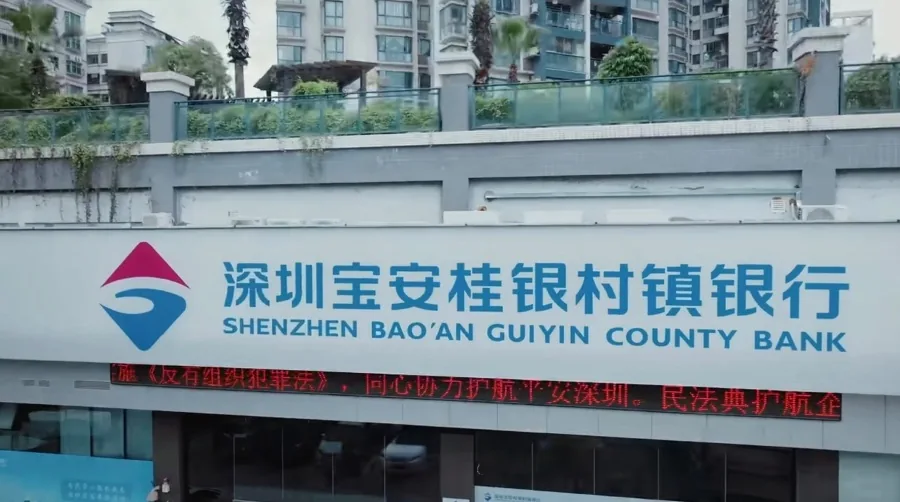
According to a report by Shenzhen Business Daily, China's village banks are undergoing a rapid consolidation driven by top-down policy directives. Data from the National Financial Regulatory Administration shows that as of September 21, 2026, only 7 village bank legal entities remain in Shenzhen, down from 10. Nationwide, 183 village banks have exited in 2026 alone, following 310 in 2025. The peak number of village banks was 1,651 at the end of 2021. The consolidation is guided by a 2025 Central Economic Work Conference directive to reduce quantity and improve quality among small and medium financial institutions. A proposed regulation would raise the minimum shareholding of the main initiating bank from 15% to 51%. Major banks like Agricultural Bank of China and Bank of Communications have already exited all their village bank holdings. In Shenzhen, three integration cases have been completed, including the absorption of Baoan Guiyin Village Bank by Futian Shentong Village Bank. The remaining seven Shenzhen village banks are still undergoing reform preparations, with some facing asset sales or restructuring.
Read sourceChina's village bank count falls below 1,000 for first time since 2007 as consolidation accelerates
The number of village bank legal entities in China has fallen below 1,000 for the first time since 2007, reaching 986 as of mid-September 2026, according to financial license data from the National Financial Regulatory Administration. This marks a significant acceleration in the 'quantity reduction' phase of the government's campaign to downsize and improve the quality of small and medium-sized financial institutions. In 2025, approximately 310 village banks exited the market, with the pace quickening in 2026 as major state-owned and joint-stock banks intensified consolidation. Notable recent events include the dissolution or merger of five Minsheng Bank-affiliated village banks within days, and the absorption of Shanghai's first village bank by Shanghai Rural Commercial Bank. Industry observers cited in the report believe that while 'quantity reduction' has made clear progress, 'quality improvement' remains ongoing, with future reform focus shifting from reducing the number of institutions to capital replenishment, clearing legacy risks, and improving operational capabilities. The primary exit method is 'village-to-branch' conversion, where the parent bank absorbs the village bank and converts it into a branch. In April 2026, the financial regulator proposed raising the minimum shareholding ratio for village bank sponsors from 15% to 51% to strengthen accountability.
Read sourceChina's village banks fall below 1,000, down over 600 from 2021 peak
The number of village banks in China has fallen below 1,000 for the first time, dropping to 986 as of September 2026, according to data from the National Financial Regulatory Administration. This marks a reduction of over 600 institutions from the historical peak of 1,651 at the end of 2021. The decline is driven by a structural reform push following the 2022 Henan village bank withdrawal crisis, which exposed governance weaknesses and eroded depositor trust. In 2025, 310 village banks exited the market, and in 2026, 183 have already received approval to exit by September. Major state-owned banks like Agricultural Bank of China, Bank of Communications, and Industrial and Commercial Bank of China have largely completed the absorption of their village bank subsidiaries. Zeng Gang, president of Tianfu Liyan Financial Research Institute, argues that the reform is not about closing banks but converting weak independent legal entities into stronger branches or integrating them into regional banking systems to improve county-level financial supply. He warns that service gaps could emerge if branch closures or credit authority centralization occur, and emphasizes the need to maintain rural service networks and localized decision-making.
Read sourceChina's Village Banks Fall Below 1,000 as Consolidation Accelerates, Down from 1,651 Peak
The number of village banks in China has fallen below 1,000 for the first time, dropping to 986 as of September 2026, according to data from the National Financial Regulatory Administration. This marks a sharp decline from the historical peak of 1,651 at the end of 2021, with over 600 banks exiting the market in less than five years. The consolidation has accelerated dramatically since 2025, when 310 banks exited, and continues in 2026 with 183 banks receiving approval to exit by September. Major state-owned banks like Agricultural Bank of China, Bank of Communications, and Industrial and Commercial Bank of China have largely completed their village bank exits. The restructuring is driven by regulatory efforts to address governance weaknesses and risk exposure, particularly following the 2022 Henan village bank deposit crisis. Zeng Gang, president of the Tianfu Liyan Financial Research Institute, argues that the reform aims not to close banks but to convert weak independent entities into stronger branches of larger banks, potentially improving rural financial services if networks and local decision-making are preserved.
Read sourceChina's village banks fall below 1,000, down over 600 in five years
The number of village banks in China has fallen below 1,000 for the first time, dropping to 986 as of September 2026, according to data from the National Financial Regulatory Administration. This marks a decline of over 600 institutions from the historical peak of 1,651 at the end of 2021. The rapid consolidation follows the 2022 Henan village bank deposit crisis, which exposed governance weaknesses and eroded depositor trust. In 2025, 310 village banks exited the market, and in 2026, 183 have already received approval to exit by September 22. Major state-owned banks like Agricultural Bank of China, Bank of Communications, and ICBC have largely completed the conversion of their village bank subsidiaries into branches. Expert Zeng Gang from Tianfu Liyan Financial Research Institute argues that the reform aims not to close banks but to transform weak independent legal entities into stronger branches or integrate them into regional banking systems, thereby improving rural financial supply. He warns that service gaps could emerge if branch closures or credit authority centralization occurs.
Read sourceChina's village banks accelerate restructuring with mergers and dissolutions
China's village and township banks are undergoing accelerated reform and restructuring, as evidenced by recent regulatory approvals and bank actions. Hunan financial regulators approved the dissolution of Hengnan Pufa Village Bank, with its assets and liabilities assumed by parent Shanghai Pudong Development Bank. Major banks' 2026 semi-annual reports show completed divestitures of their village bank subsidiaries. The restructuring follows pathways such as 'village bank converted to branch' and 'village bank merging with village bank.' In July, Shunde Rural Commercial Bank absorbed Shenzhen Longhua Xinhua Village Bank and converted it into a branch. Experts interviewed, including Nanjing Agricultural University's Zhang Rao and Shanghai University's Zhang Yang, note that these reforms address internal governance issues, weak capital buffers, and risk management deficiencies in village banks. The reforms are guided by central government policy documents and financial regulator notices emphasizing support for agriculture and rural enterprises. Analysts caution that merged institutions must maintain their focus on serving rural and small-business clients to avoid a 'heavy merger, light service' outcome.
Read source