China’s village banks fall below 1,000 for first time, down from 1,651 peak
The number of village banks in China has fallen below 1,000 for the first time, dropping to 986 as of September 2026, according to the National Financial Regulatory Administration. This marks a decline of over 600 institutions from the peak of 1,651 at the end of 2021. The consolidation accelerated after the 2022 Henan deposit crisis exposed governance weaknesses. In 2025, 310 banks exited; 183 received approval to exit by September 2026. Major state-owned banks have largely converted their village bank subsidiaries into branches. Experts say the reform aims to transform weak independent entities into stronger branches, though service gaps remain a risk.
 Reference image
Editorial responsibility
- No named human review is recorded for this page.
- Reports are grouped by semantic similarity and deterministic rules. Language models may assist titles, summaries, translation and cross-source analysis; the page reads the event directly, while its address stays stable when the title changes.
- Summary awaiting refresh
Summary awaiting refresh
Cross-source coverage
Reporting timeline
China's Village Bank Reform Accelerates: 160 Exit, Big Banks Exit, Local Banks Enter
China's village bank reform is accelerating, with 160 institutions having exited through mergers, restructuring, or dissolution as of September 8, reducing the total from over 1,600 to 1,010, according to the National Financial Regulatory Administration (NFRA). The main exit paths are conversion into branches of the parent bank, mergers among village banks, and equity transfers. Major state-owned banks like Agricultural Bank of China and Bank of Communications have fully exited, while joint-stock banks like Shanghai Pudong Development Bank and China Minsheng Bank are actively acquiring and converting their village bank subsidiaries. A notable trend is the entry of local small and medium banks, such as Shanxi Yaodu Rural Commercial Bank absorbing three village banks and Qishang Bank establishing 10 branches after an acquisition. Academics Zhang Rao and Zhang Yang from Nanjing and Shanghai universities respectively note that converting village banks into branches can resolve internal governance issues and improve risk management by consolidating bad loans under the parent bank's balance sheet. The reform aims to shift from 'increasing quantity' to 'improving quality,' but challenges remain, including whether parent banks are willing to absorb poorly performing institutions and ensuring service continuity in rural areas. The article emphasizes that the core measure of success is maintaining or improving financial services for agriculture and small businesses, not merely reducing the number of legal entities.
Read sourceChina's village banks fall below 1,000 as consolidation accelerates, down from 1,651 peak
The number of village banks in China has fallen below 1,000 for the first time, dropping to 986 as of September 2026, according to data from the National Financial Regulatory Administration. This marks a reduction of over 600 institutions from the historical peak of 1,651 at the end of 2021. The consolidation has accelerated sharply since 2022, following the Henan village bank deposit crisis that exposed governance weaknesses and eroded depositor trust. In 2025 alone, 310 village banks exited the market. The trend has continued into 2026, with 183 banks receiving approval to exit by September 22. Major state-owned banks including Agricultural Bank of China, Bank of Communications, and Industrial and Commercial Bank of China have largely completed the conversion of their village bank subsidiaries into branches. Zeng Gang, president of the Tianfu Liyan Financial Research Institute, argues that the reform aims not to close banks but to transform weak independent legal entities into stronger branches or integrate them into regional banking systems, potentially improving rural financial services if branch networks and local decision-making are preserved.
Read sourceChina's village bank consolidation accelerates, with national count falling below 1,000
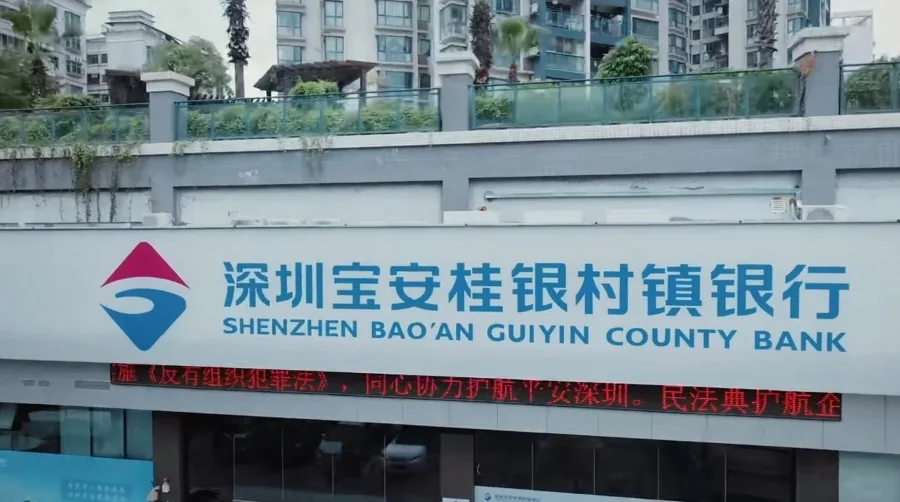
According to a report by Shenzhen Business Daily, China's village banks are undergoing a rapid consolidation driven by top-down policy directives. Data from the National Financial Regulatory Administration shows that as of September 21, 2026, only 7 village bank legal entities remain in Shenzhen, down from 10. Nationwide, 183 village banks have exited in 2026 alone, following 310 in 2025. The peak number of village banks was 1,651 at the end of 2021. The consolidation is guided by a 2025 Central Economic Work Conference directive to reduce quantity and improve quality among small and medium financial institutions. A proposed regulation would raise the minimum shareholding of the main initiating bank from 15% to 51%. Major banks like Agricultural Bank of China and Bank of Communications have already exited all their village bank holdings. In Shenzhen, three integration cases have been completed, including the absorption of Baoan Guiyin Village Bank by Futian Shentong Village Bank. The remaining seven Shenzhen village banks are still undergoing reform preparations, with some facing asset sales or restructuring.
Read sourceShow 4 older updatesHide older updates
China's village banks fall below 1,000, down over 600 from 2021 peak
The number of village banks in China has fallen below 1,000 for the first time, dropping to 986 as of September 2026, according to data from the National Financial Regulatory Administration. This marks a reduction of over 600 institutions from the historical peak of 1,651 at the end of 2021. The decline is driven by a structural reform push following the 2022 Henan village bank withdrawal crisis, which exposed governance weaknesses and eroded depositor trust. In 2025, 310 village banks exited the market, and in 2026, 183 have already received approval to exit by September. Major state-owned banks like Agricultural Bank of China, Bank of Communications, and Industrial and Commercial Bank of China have largely completed the absorption of their village bank subsidiaries. Zeng Gang, president of Tianfu Liyan Financial Research Institute, argues that the reform is not about closing banks but converting weak independent legal entities into stronger branches or integrating them into regional banking systems to improve county-level financial supply. He warns that service gaps could emerge if branch closures or credit authority centralization occur, and emphasizes the need to maintain rural service networks and localized decision-making.
Read sourceChina's Village Banks Fall Below 1,000 as Consolidation Accelerates, Down from 1,651 Peak
The number of village banks in China has fallen below 1,000 for the first time, dropping to 986 as of September 2026, according to data from the National Financial Regulatory Administration. This marks a sharp decline from the historical peak of 1,651 at the end of 2021, with over 600 banks exiting the market in less than five years. The consolidation has accelerated dramatically since 2025, when 310 banks exited, and continues in 2026 with 183 banks receiving approval to exit by September. Major state-owned banks like Agricultural Bank of China, Bank of Communications, and Industrial and Commercial Bank of China have largely completed their village bank exits. The restructuring is driven by regulatory efforts to address governance weaknesses and risk exposure, particularly following the 2022 Henan village bank deposit crisis. Zeng Gang, president of the Tianfu Liyan Financial Research Institute, argues that the reform aims not to close banks but to convert weak independent entities into stronger branches of larger banks, potentially improving rural financial services if networks and local decision-making are preserved.
Read sourceChina's village banks fall below 1,000, down over 600 in five years
The number of village banks in China has fallen below 1,000 for the first time, dropping to 986 as of September 2026, according to data from the National Financial Regulatory Administration. This marks a decline of over 600 institutions from the historical peak of 1,651 at the end of 2021. The rapid consolidation follows the 2022 Henan village bank deposit crisis, which exposed governance weaknesses and eroded depositor trust. In 2025, 310 village banks exited the market, and in 2026, 183 have already received approval to exit by September 22. Major state-owned banks like Agricultural Bank of China, Bank of Communications, and ICBC have largely completed the conversion of their village bank subsidiaries into branches. Expert Zeng Gang from Tianfu Liyan Financial Research Institute argues that the reform aims not to close banks but to transform weak independent legal entities into stronger branches or integrate them into regional banking systems, thereby improving rural financial supply. He warns that service gaps could emerge if branch closures or credit authority centralization occurs.
Read sourceChina's village banks accelerate restructuring with mergers and dissolutions
China's village and township banks are undergoing accelerated reform and restructuring, as evidenced by recent regulatory approvals and bank actions. Hunan financial regulators approved the dissolution of Hengnan Pufa Village Bank, with its assets and liabilities assumed by parent Shanghai Pudong Development Bank. Major banks' 2026 semi-annual reports show completed divestitures of their village bank subsidiaries. The restructuring follows pathways such as 'village bank converted to branch' and 'village bank merging with village bank.' In July, Shunde Rural Commercial Bank absorbed Shenzhen Longhua Xinhua Village Bank and converted it into a branch. Experts interviewed, including Nanjing Agricultural University's Zhang Rao and Shanghai University's Zhang Yang, note that these reforms address internal governance issues, weak capital buffers, and risk management deficiencies in village banks. The reforms are guided by central government policy documents and financial regulator notices emphasizing support for agriculture and rural enterprises. Analysts caution that merged institutions must maintain their focus on serving rural and small-business clients to avoid a 'heavy merger, light service' outcome.
Read source