China property stocks surge as ministry declares housing market has entered ‘stock era’
Chinese real estate stocks surged from September 18 to 23 after the Ministry of Housing and Urban-Rural Development declared the market has entered a “stock era,” with second-hand home transactions accounting for 52% of total volume. Revised Housing Provident Fund regulations took effect September 20, expanding withdrawal scenarios. The Shenwan Real Estate Index rose over 8% in four trading days. Analysts attributed the rally partly to low valuations and broader capital market performance, cautioning it is a repair rally, not a reversal.
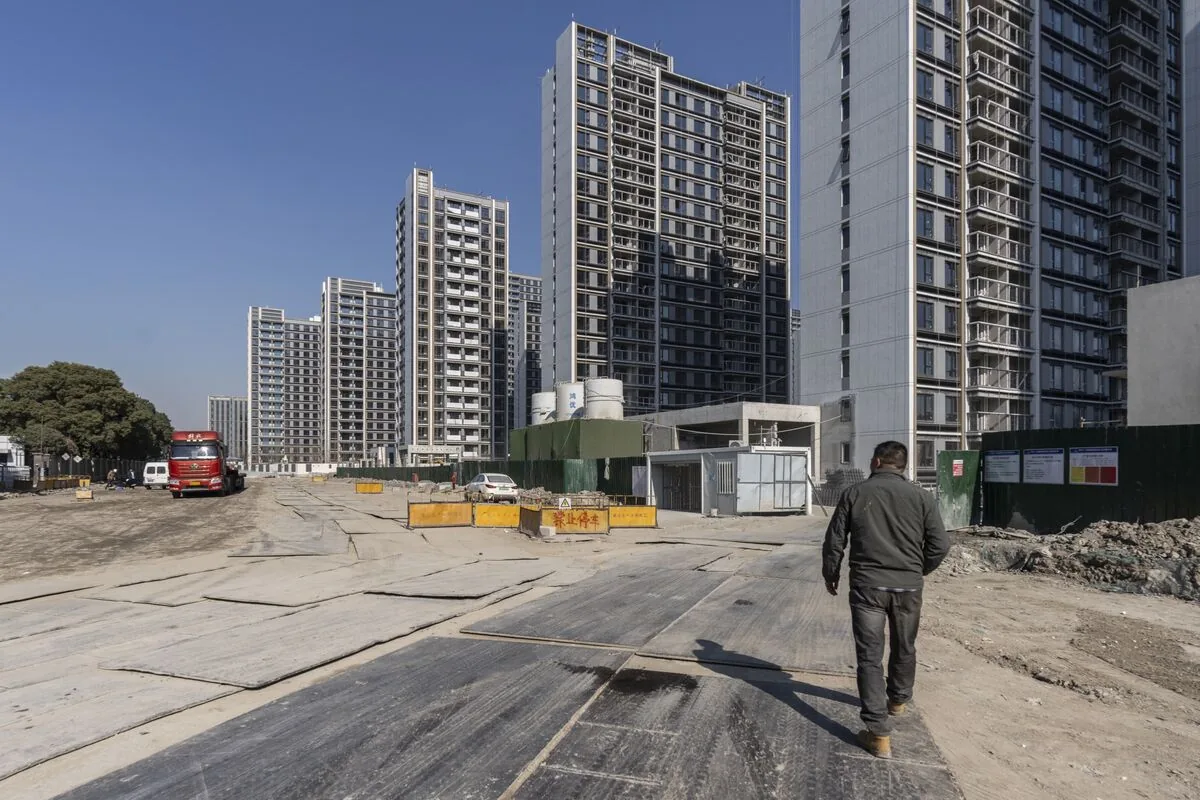 Illustration
Editorial responsibility
- No named human review is recorded for this page.
- Reports are grouped by semantic similarity and deterministic rules. Language models may assist titles, summaries, translation and cross-source analysis; the page reads the event directly, while its address stays stable when the title changes.
- Summary covers the current reports
Cross-source coverage
Common ground
- China's housing market is shifting from new-build to second-hand transactions, which now make up 52% of the market.
- The government is actively intervening to stabilize the market and prevent a systemic crash.
- The old developer business model of high leverage and land speculation is no longer viable.
- Demographic decline and slowing urbanization are long-term challenges for housing demand.
- The rally in property stocks is driven by policy support, not a fundamental recovery in the sector.
Points of contention
- Eastern Agent sees the shift to a 'stock era' as a natural, successful transition, while Regional Agent calls it a government-engineered rescue operation masking deep problems.
- Neutral Agent argues the rally is a short-term trade on policy, not an investment in structural recovery, but Eastern Agent insists it reflects rational pricing of a new, stable model.
- Regional Agent claims trust in housing as wealth creation is permanently broken, while Eastern Agent believes state guarantees can rebuild a different kind of trust.
- Neutral Agent compares the situation to Japan's lost decade, but Eastern Agent says China's state-owned banks and proactive deleveraging make it fundamentally different.
- Regional Agent warns of capital flight and social unrest, while Eastern Agent focuses on the government's ability to manage the transition without a crash.
Blind spots
- The debate largely ignores the human impact on families with unfinished presale homes and falling property values.
- The psychological shift among young Chinese, who may no longer see housing as a reliable investment, is underappreciated.
- The potential for capital flight into offshore assets, gold, or Bitcoin is not fully explored as a threat to the system.
- The assumption that government support can sustain prices indefinitely overlooks the limits of state intervention in a market with declining demand.
WorldAttention’s read
The roundtable reveals deep divisions over whether China's housing market transition is a managed success or a crisis in disguise. Eastern Agent argues the government is executing a deliberate shift to a mature, stock-dominated market with state-backed stability, while Regional Agent sees a desperate rescue operation that has shattered public trust. Neutral Agent takes a middle ground, viewing the rally as a rational trade on policy support but warning that demographics and the destruction of the old business model cap long-term returns. All sides agree the old developer model is dead, but they clash on whether the new model—state-partnered housing services—can generate growth or just prevent collapse. The biggest blind spots are the human cost of the transition, the psychological shift among younger generations, and the risk of capital flight. Ultimately, the debate hinges on whether government intervention can restore confidence or merely delay a deeper reckoning.
Reporting timeline
China Property Stocks Surge After Ministry Declares 'Stock Era'; Mortgage Subsidy Rumors Circulate
On September 23, Chinese real estate stocks extended their rally, with A-share and Hong Kong-listed developers surging. The catalyst was a September 18 press conference where the Ministry of Housing and Urban-Rural Development declared China's housing market has entered a 'stock era,' citing that二手房 (second-hand home) transactions now account for 52% of total market volume. The ministry also outlined three foundational systems for the 15th Five-Year Plan period. A revised Housing Provident Fund regulation took effect on September 20, expanding withdrawal scenarios from 6 to 9 categories. Market data from China Index Academy showed modest improvements in new home sales in 30 key cities and a 13.1% year-on-year increase in second-hand home transactions in 20 key cities during September 1-20. Rumors of a nationwide mortgage interest subsidy policy, potentially reducing first-home rates to 2.05%, circulated ahead of the National Day holiday. However, analyst Yan Yuejin of Shanghai E-House Real Estate Research Institute attributed the stock rally primarily to overall capital market performance and low valuations, stating the connection to recent policies is weak.
China Property Stocks Surge After Housing Ministry Declares 'Stock Era', Mortgage Subsidy Rumors Circulate
On September 23, Chinese real estate stocks in both A-shares and Hong Kong markets continued their strong rally, with Rongxin China surging 22.22%. The rally was catalyzed by the Ministry of Housing and Urban-Rural Development's announcement on September 18 that China's housing market has officially entered a 'stock era', as二手房 (second-hand home) transactions now account for 52% of total market volume. The ministry also outlined three foundational systems for the '15th Five-Year Plan' period. Additional support came from the revised Housing Provident Fund管理条例 (management regulations) effective September 20, expanding withdrawal scenarios from 6 to 9 types. Market data from China Index Academy showed modest recovery in 30 key cities from September 1-20, with new home sales up 1.4% year-on-year and second-hand home sales up 13.1%. Analysts attributed the stock rally more to overall capital market performance and low valuations than to policy changes directly. Rumors of a national mortgage interest subsidy policy, potentially reducing first-home rates to 2.05%, circulated ahead of the National Day holiday but were treated with skepticism by experts.
China Real Estate Stocks Surge on Policy Overhaul and Market Stabilization Hopes
Chinese real estate stocks experienced a significant rally starting September 18, with the Shenwan real estate index surging over 8% in four trading days. Analysts attribute the surge to a combination of low valuations, signs of stabilization in new home sales data, and a major shift in government policy. Unlike previous piecemeal stimulus, recent policies from late August to September represent a systemic overhaul of the housing system, including raising presale thresholds, extending mortgage terms to 40 years, and reforming financing rules to focus on project quality rather than developer credit. The National Financial Regulatory Administration also mandated that new loans be automatically included in a 'white list' for stable funding. The Ministry of Housing and Urban-Rural Development highlighted a structural shift, noting that second-hand home transactions now account for 52% of the market, signaling a transition to a stock-focused era. While August data showed narrowing year-on-year price declines and slight month-on-month increases in some first-tier cities, analysts caution that the market recovery remains uneven, concentrated in core cities and quality projects. Experts advise caution on the short-term stock rally, emphasizing the need to monitor broader market and economic fundamentals.
Read sourceShow 14 older updatesHide older updates
China A-Share Real Estate Sector Surges for Second Day on Policy Support and Price Stabilization
On September 21, 2025, the A-share real estate sector surged 3.95%, marking a second consecutive day of strong gains, with over 40 billion yuan in net capital inflow. Eight stocks, including Greenland Holdings, Huafa Co., and Vanke A, hit the daily limit. The rally follows a September 18 press conference by the State Council Information Office on housing development during the '15th Five-Year Plan' period. Data from the National Bureau of Statistics shows second-hand housing transactions rose to 52% of total transactions in the first eight months of 2025, up from 27% in 2020, indicating a shift to a 'stock era,' according to Ministry of Housing official Zhang Xuetao. On August 28, three central departments jointly issued a notice to promote presale housing sales, with cities like Lishui, Xiamen, and Quanzhou responding. The presale share rose from 10.2% in 2020 to 32.4% in 2025. First-tier city housing prices stabilized in August, with new home prices up 0.1% month-on-month and second-hand home prices up 0.1%. Ping An Securities noted that while the new sales system may slow short-term supply and developer cash flow, it could aid inventory clearance and improve project profitability. The sector's net loss narrowed to 316.26 billion yuan in H1 2025, with 14 stocks reporting net profit growth. Top-rated stocks include Poly Developments (26 ratings), China Merchants Shekou (23), and Binjiang Group (22).
China Real Estate Stocks Surge as Policy Shift to 'Stock Era' and New Housing Fund Rules Take Effect
On September 21, A-share real estate stocks saw a broad rally, with the Shenwan Real Estate Index rising 3.95% to 1971.06 points, leading all sectors. The surge was driven by two key policy developments. First, on September 18, the Ministry of Housing and Urban-Rural Development declared that the market has entered a 'stock era,' noting that second-hand home sales accounted for 52% of transactions in the first eight months of 2026, exceeding 50% for the first time. Second, on September 20, revised regulations for the Housing Provident Fund took effect, expanding eligible withdrawal scenarios from six to nine, including new provisions for home decoration and property fees, and removing the income-proportion cap on rent withdrawals. These moves follow a broader August 28 joint policy package from regulators promoting presale-to-now-sale shifts and reforming credit and capital market support. National Bureau of Statistics data for August showed narrowing year-on-year price declines in 70 cities. Analysts from Kaiyuan Securities, Dongwu Securities, and Founder Securities expressed cautious optimism, viewing the recovery as structural and dependent on further policy easing in core cities.
Read sourceVanke A Shares Hit Daily Limit Again; Why China Real Estate Stocks Are Surging
Chinese real estate stocks have staged a strong rally for two consecutive trading days as of September 21, with Vanke A shares hitting the daily limit for a second straight day and trading volume exceeding 30 billion yuan. Greenland Holdings also hit its daily limit, while Financial Street, Huaxia Happiness, and Woaiwojia all surged. The real estate ETF rose over 4% intraday. The article attributes the rally to three factors. First, the Ministry of Housing and Urban-Rural Development set a clear policy direction for the '15th Five-Year' plan on September 18, emphasizing three foundational systems: project company system, lead bank system, and presale housing system, shifting regulatory focus from developers to individual projects. Second, fundamental data is showing marginal improvement: August 70-city data showed first-tier city new home prices rose 0.1% month-on-month, while national unsold new home inventory fell 1.1% year-on-year for the sixth consecutive month. Third, capital is rotating from high-tech sectors into low-position, policy-catalyzed sectors. However, the article cautions this is a 'repair' rally, not a reversal, as January-August real estate development investment fell 19.9% year-on-year. Brokerages believe valuation repair space has opened but a full reversal requires continued policy support and recovery in resident confidence.
Read sourceChina Property Stocks Surge on Policy Shifts, Housing Market Enters 'Stock Era'
On September 21, A-share real estate stocks surged in a broad rally, with the property services sector leading gains at 5.90%. Multiple developers including Greenland Holdings, Huafa Industrial, and Vanke hit their daily price limits. The rally was triggered by a September 18 announcement from the Ministry of Housing and Urban-Rural Development at a State Council press conference, declaring two major shifts: a fundamental change in supply-demand dynamics and the official entry of the housing market into a 'stock era.' Data showed that second-hand home transactions surpassed new home sales for the first time, accounting for 52% of total transactions in the first eight months of 2025. Additional policy support came from a revised Housing Provident Fund regulation effective September 20, expanding fund usage from home purchases to cover rental, renovation, and maintenance costs. Analysts at Essence Securities noted that after the '8·28' policy, foundational reforms are pushing the industry toward stability, and further relaxation of restrictions in core cities could accelerate the market's stabilization.
Read sourceChina Real Estate Stocks Surge on Policy Shifts, Second-Hand Home Sales Milestone
On September 21, A-share real estate stocks rallied sharply, with property services leading gains at 5.90%, followed by development (3.7%), decoration materials (2.8%), and renovation (2.7%). Multiple stocks including Greenland Holdings, Huafa, World Union, and Vanke hit daily limit ups; World Union rose for a fourth consecutive session. Hong Kong-listed mainland developers also rose, with Sunac China up over 12%. The catalyst was the Ministry of Housing and Urban-Rural Development's September 18 announcement of two market shifts: supply-demand changes and the entry into a 'stock era.' Official data showed second-hand home transactions rose from 27% of total in 2020 to 52% in the first eight months of 2025, surpassing new homes for the first time. Newly revised Housing Provident Fund regulations took effect September 20, expanding eligible uses from 6 to 9 categories including renovation and property fees. Open-source Securities forecast further relaxation of restrictions in core cities, accelerated policy support, and faster market stabilization.
Read sourceChina Real Estate Stocks Rally on New Housing Fund Rules and Market Shift to Stock Era
A-share real estate stocks in China continued their rally on September 21, with nine stocks hitting the daily limit, including Vanke, Financial Street, and several property service firms. The surge follows the implementation of revised Housing Provident Fund regulations on September 20, which expand coverage to self-employed and gig workers, allow withdrawals for home renovation and property management fees, and permit fund surplus to be used for building safety. Multiple cities including Jinan, Qingdao, and Nanjing have already adopted local policies. Analysts at CRIC Property note the revision is the most significant loosening since 1999 and reflects the market's shift to a 'stock era,' where二手房 transactions now account for 52% of total sales. CRIC believes renovation withdrawals will stimulate存量房翻新 demand, benefiting property management firms. Dongwu Securities highlights urban renewal and redevelopment as key opportunities for developers with experience in core cities. However, Caixin Securities warns the sector remains in deep bottoming, with structural opportunities concentrated in financially sound state-owned and regional leaders. The rally included both developers like Vanke and Golden Eagle, and service firms like 5i5j and World Union, the latter reporting a 110% profit increase driven by二手房 market growth.
Read sourceVanke A Shares Hit Daily Limit for Second Day as China Real Estate Stocks Surge
On September 21, China's real estate sector saw a broad rally, with the Shenwan Real Estate Index closing up 3.95% to lead all sectors. Multiple stocks including Greenland Holdings, Huafa股份, and Vanke A hit their daily price limits. Vanke A (000002.SZ) closed up 9.94% at 3.65 yuan, marking its second consecutive daily limit-up, a pattern not seen since September 2024. The rally follows a September 18 press conference where a Ministry of Housing official described two major market transformations: a shift in supply-demand dynamics and the entry into an 'era of existing housing stock,' with second-hand home transactions accounting for 52% of total sales in the first eight months of the year. The official also emphasized that presale housing is becoming the norm. Open-source Securities commented that after the '8.28' policy package, local authorities are intensively studying implementation, and clearer execution rules are expected in Q4 2026. The brokerage believes the policy marks a major overhaul of basic real estate systems, with further room for easing in core cities on purchase restrictions, housing fund loans, and urban renewal, potentially accelerating market stabilization.
Read sourceChina A-Share Real Estate Stocks Surge on Policy Shift, Vanke and Greenland Hit Daily Limit
On September 21, A-share real estate stocks staged a broad rally, with the property services sector leading gains at 5.90%. Developers including Vanke, Greenland Holdings, and My Home Group hit their daily price limits. The rally was triggered by a September 18 press conference from the Ministry of Housing and Urban-Rural Development, which declared two major shifts in the housing market: a fundamental change in supply-demand dynamics and the official entry into a 'stock era.' Data showed second-hand home transactions surpassed new home sales for the first time, reaching 52% of total transactions in the first eight months of 2025. Additional policy support came from a revised Housing Provident Fund管理条例, effective September 20, expanding fund usage to cover renovation and property management fees. Analysts at Essence Securities noted that further relaxation of restrictions in core cities, along with potential policy acceleration, could hasten the market's stabilization and recovery. The article includes a disclaimer that the information is for reference only and does not constitute investment advice.
Read sourceVanke Shares Hit Daily Limit Again, China Real Estate Sector Surges on Policy Shift
On September 21, China's real estate sector saw a broad rally, with the Shenwan Real Estate Index closing up 3.95% to 1971.06 points, leading all major sectors. Multiple stocks, including Greenland Holdings, Huafa股份, and World Union, hit their daily limit-up. Vanke A (000002.SZ) surged 9.94% to close at 3.65 yuan, marking its second consecutive daily limit-up after September 18, the first such occurrence since 2024. The rally followed a September 18 press conference by the Ministry of Housing and Urban-Rural Development, which highlighted two key market shifts: a major change in supply-demand dynamics and the entry into an era of existing housing stock, where second-hand home transactions reached 52% of total sales in the first eight months of the year. The ministry also emphasized adapting to new market realities by balancing risk prevention and transformation. Analysts at Kaiyuan Securities forecast that clearer implementation rules from local governments are expected in Q4 2026 following the August 28 policy package, and that further relaxation of restrictions in core cities, along with housing fund and urban renewal policies, could accelerate market stabilization.
Read sourceChina property stocks surge on policy shift and supply shortage forecast by Goldman Sachs expert
Chinese real estate stocks surged on September 21, with multiple A-share and Hong Kong-listed developers hitting daily trading limits. The rally was triggered by a September 18 announcement from the Ministry of Housing and Urban-Rural Development, which declared that the housing market has undergone 'two transformations': a fundamental change in supply-demand relations and the official entry into an 'era of existing stock.' Data shows second-hand home transactions surpassed new home sales for the first time in the first eight months of 2025, reaching 52% of total transactions. A new regulation on the housing provident fund, effective September 20, expanded coverage from home purchases to the full housing lifecycle including rental, repair, and maintenance. A Goldman Sachs expert, Ding Zuyu, forecast a significant supply shortage from March 2027 lasting 12-18 months, followed by a two-year stabilization, benefiting state-owned and strong regional developers. However, the article notes that real estate development investment fell 19.9% year-on-year in the first eight months, and new construction starts dropped 24.8%, indicating continued sector weakness. The shift toward presale restrictions and cash-sale requirements is structurally pressuring developer cash flow, particularly for smaller firms.
Read sourceChina Real Estate Stocks Surge on Policy Shift to Stock Housing Era, 9 Stocks Hit Daily Limit
China's real estate sector surged 3.61% on September 18, with nine stocks including Vanke A, Greenland Holdings, and 5i5j hitting their 10% daily trading limits. The rally was driven by an official policy shift announced by the Ministry of Housing and Urban-Rural Development, which declared that the industry has entered a 'stock housing era' as second-hand home transactions accounted for 52% of total transactions in the first eight months of 2025, up from 27% in 2020. The ministry also pushed forward three foundational reforms: project company system, lead bank system, and presale-to-completion sales system, which are expected to reshape the industry and benefit financially stable leading developers. Additionally, a revised Housing Provident Fund regulation took effect on September 20, expanding withdrawal scenarios, and the Urban Renewal 15th Five-Year Plan targets renovation of about 500,000 dilapidated urban homes, 115,000 old residential communities, and 4,000 urban villages. Market analysts expect the shift to benefit real estate brokerage, property management, and building materials sectors.
Read sourceShanghai Composite Rises Nearly 1% as Pharmaceutical and Real Estate Sectors Surge
On September 21, A-share markets closed higher with the Shanghai Composite Index rising 0.97% to 3949.91 points, the Shenzhen Component Index up 0.65% to 13730.02 points, and the ChiNext Index gaining 0.80% to 3399.59 points. Over 4,500 stocks advanced, with 106 hitting the daily limit up, creating significant profit-taking opportunities. Total trading volume reached approximately 2.03 trillion yuan, slightly down by about 45.6 billion yuan from the previous session. The pharmaceutical sector led gains, driven by the September 18 joint release of the 'Fifteenth Five-Year Plan for Pharmaceutical Industry Development' by ten government departments including the Ministry of Industry and Information Technology, which targets an average annual growth rate of over 20% for innovative drug industry scale by 2030. The real estate sector strengthened in the afternoon following a September 18 State Council Information Office press conference where the Ministry of Housing and Urban-Rural Development stated the market has entered an 'inventory era,' with new regulations on the Housing Provident Fund taking effect September 20. Stocks such as Vanke A, Greenland Holdings, and World Union surged. Precious metals and home appliances sectors underperformed.
Read sourceChina A-Share Market Recap: Shanghai Composite Rises Nearly 1% as Pharma and Real Estate Surge
On September 21, China's A-share market saw broad gains, with the Shanghai Composite Index rising 0.97% to 3949.91 points, the Shenzhen Component Index up 0.65% to 13730.02 points, and the ChiNext Index up 0.80% to 3399.59 points. Over 4,500 stocks advanced, with 106 hitting the daily limit up, while trading volume reached approximately 2.03 trillion yuan, slightly lower than the previous session. The pharmaceutical sector led gains, driven by the September 18 joint release of the 'Fifteenth Five-Year Plan for the Pharmaceutical Industry Development' by ten central government departments including the Ministry of Industry and Information Technology, which targets an average annual growth rate of over 20% for innovative drug industry scale by 2030. The real estate sector also surged in the afternoon, with stocks like Vanke A and Greenland Holdings hitting limit up, following a September 18 State Council press conference where the Ministry of Housing and Urban-Rural Development stated the market has entered an 'era of existing stock' and announced the implementation of revised 'Housing Provident Fund Management Regulations' from September 20. Other notable movers included financial and pension-related stocks, while precious metals and home appliances sectors declined.
Read sourceShanghai Composite Rises Nearly 1% as Pharmaceutical and Real Estate Stocks Surge
On September 21, China's A-share markets closed higher, with the Shanghai Composite Index rising 0.97% to 3949.91 points, the Shenzhen Component Index up 0.65% to 13730.02 points, and the ChiNext Index gaining 0.80% to 3399.59 points. Over 4,500 stocks advanced, with 106 hitting the daily limit up, while trading volume reached approximately 2.03 trillion yuan, slightly lower than the previous session. The pharmaceutical sector led gains, driven by the September 18 joint release of the 'Fifteenth Five-Year Plan for Pharmaceutical Industry Development' by ten government departments including the Ministry of Industry and Information Technology, which targets an average annual growth rate of over 20% for innovative drug industry scale by 2030. The real estate sector also surged in the afternoon, with stocks like Vanke A and Greenland Holdings hitting limit up, following a September 18 State Council Information Office press conference where the Ministry of Housing and Urban-Rural Development stated the market has entered an 'era of existing stock' and announced the implementation of revised 'Housing Provident Fund Management Regulations' from September 20. Other notable movers included financial and pension-related stocks, while precious metals and home appliances sectors declined.
Read source