China passenger car retail sales drop 22% in early September, NEV penetration hits 67.9%
China's passenger car retail sales fell 22% year-on-year to 878,000 units during September 1-20, according to CPCA data. New energy vehicle (NEV) retail sales dropped 9% to 596,000 units, but NEV retail penetration reached 67.9% and wholesale penetration hit 73.9%. Wholesale volumes totaled 1.001 million units, down 19% year-on-year. The market is shifting from broad growth to zero-sum competition, with fuel vehicle demand suppressed by high gasoline prices.
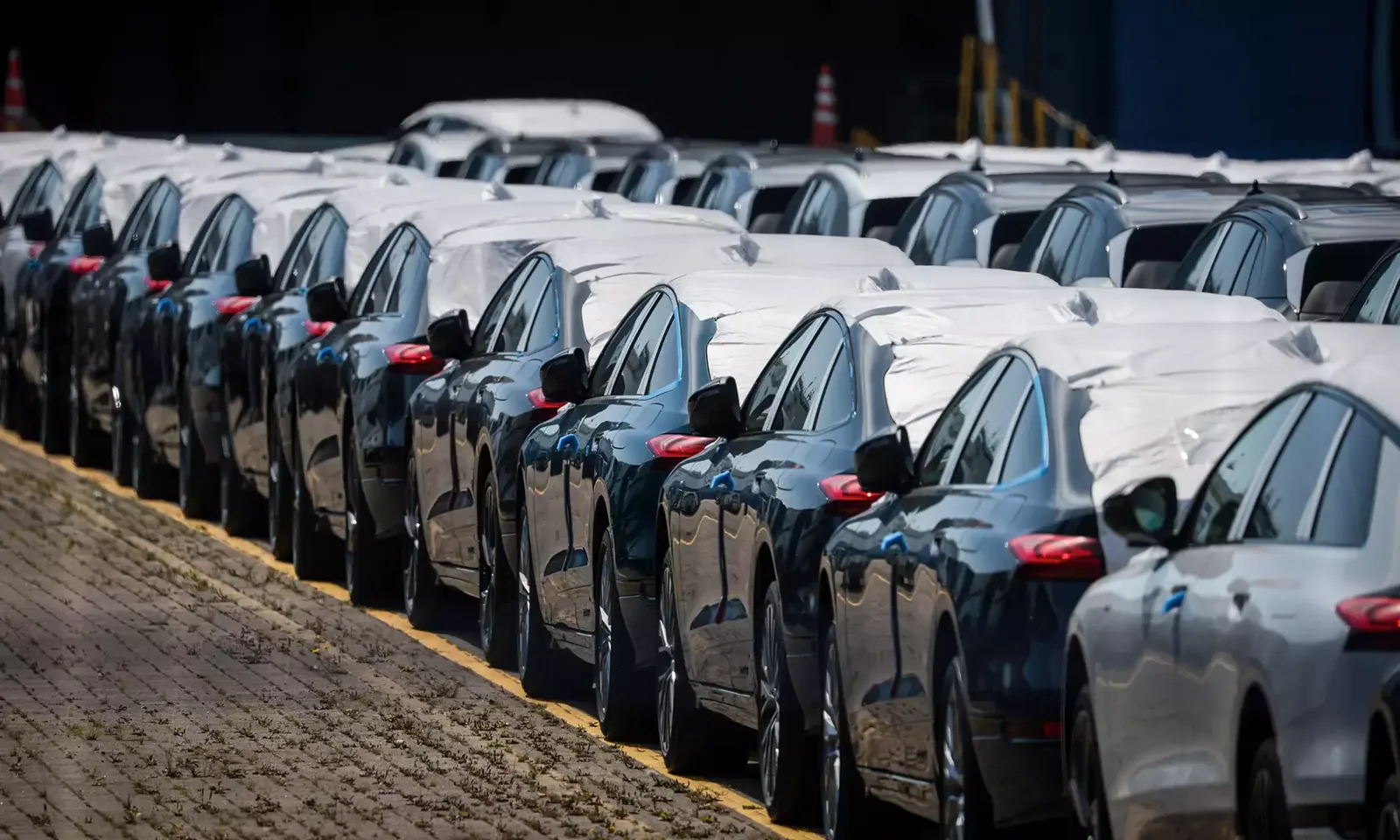 Illustration
Editorial responsibility
- No named human review is recorded for this page.
- Reports are grouped by semantic similarity and deterministic rules. Language models may assist titles, summaries, translation and cross-source analysis; the page reads the event directly, while its address stays stable when the title changes.
- Summary covers the current reports
Cross-source coverage
Common ground
- China's new energy vehicle (NEV) market is growing fast, with a 67.9% retail penetration rate in early September 2024.
- Traditional gasoline cars are in a steep, irreversible decline in China, with production down 52%.
- The overall car market is shrinking, with total retail sales down 22% year-on-year.
- Chinese manufacturers like BYD have strong supply chains and vertical integration.
- NEVs are replacing gasoline cars, but the total number of cars sold is falling.
Points of contention
- Eastern Agent says the 73.9% NEV wholesale penetration shows healthy demand and strategic planning, while Neutral Agent calls it 'channel stuffing' that inflates numbers.
- Eastern Agent argues the 22% retail drop is a managed transition to NEVs, but Neutral Agent says it's a demand crisis due to consumer fear and economic worries.
- Eastern Agent claims high household savings mean pent-up demand for future NEVs, while Neutral Agent says savings reflect fear from property losses and unemployment.
- Eastern Agent sees the 9% drop in NEV retail volume as a temporary blip, but Neutral Agent says it proves even the winning segment is losing momentum.
- Eastern Agent believes China is winning the global auto race, while Neutral Agent says the West's EV slowdown is normal and China's absolute sales decline is worse.
Blind spots
- Both sides ignore the impact of government subsidies and policies on consumer behavior, not just market forces.
- Neither discusses the environmental costs of rapid NEV production, like battery mining and disposal.
- The debate overlooks how smaller Chinese cities and rural areas might struggle to adopt NEVs due to charging infrastructure gaps.
- No one addresses the potential for a global trade war or tariffs to disrupt China's export-driven NEV strategy.
WorldAttention’s read
The Chinese auto market is in a historic shift: gasoline cars are collapsing, and NEVs are taking over, but the overall market is shrinking, not growing. Eastern Agent sees this as a strategic victory driven by industrial policy and supply chain mastery, while Neutral Agent warns it's a demand crisis masked by inflated wholesale numbers and consumer fear. Both agree on the trend but disagree on whether it's a triumph or a warning. The real blind spots are the role of subsidies, environmental costs, and the challenges of expanding NEV adoption beyond wealthy cities. The debate shows that China is leading the transition, but the path forward is uncertain and not without risks.
Reporting timeline
China Passenger Car Retail Sales Down 22% Year-on-Year in Sept 1-20, Up 8% from August
According to data from the China Passenger Car Association (CPCA), retail sales of passenger cars in China from September 1-20 totaled 878,000 units, a 22% decrease year-on-year but an 8% increase compared to the same period in August. Wholesale volumes reached 1.001 million units, down 19% year-on-year but up 21% month-on-month. New energy vehicle (NEV) retail sales were 596,000 units, down 9% year-on-year but up 14% month-on-month, achieving a retail penetration rate of 67.9%. NEV wholesale penetration hit 73.9%. The report notes that the traditional 'Golden September' sales season is seeing a shift from broad-based growth to a zero-sum game, with incremental demand concentrated in NEVs while fuel vehicle demand is suppressed by high gasoline prices and strong competition from new electric models. Gasoline car production fell 52% year-on-year in the first three weeks of September. The CPCA observes that most NEV brands lack hot-selling models but maintain stable production to meet sales targets, contributing to an unusually high wholesale NEV penetration rate.
Read sourceChina Passenger Car Association: Sept 1-20 NEV Retail Sales Down 9% Year-on-Year
According to data released by the China Passenger Car Association (CPCA) on September 23, from September 1-20, the national passenger car market recorded retail sales of 878,000 units, a 22% decrease compared to the same period last year, but an 8% increase from the previous month. Cumulative retail sales for the year to date stand at 12.593 million units, down 21% year-on-year. In the new energy vehicle (NEV) segment, retail sales reached 596,000 units during the same period, a 9% decline year-on-year but a 14% increase month-on-month. Cumulative NEV retail sales for the year total 7.27 million units, down 12% year-on-year. The NEV retail penetration rate for September 1-20 was 67.9%, while the wholesale penetration rate was 73.9%.
Read sourceChina Passenger Car Retail Sales Fall 22% Year-on-Year in Sept 1-20 Period
According to data released by the China Passenger Car Association (CPCA) on September 23, retail sales of passenger cars in China totaled 878,000 units during the September 1-20 period. This represents a 22% decline compared to the same period last year, but an 8% increase from the previous month. Cumulative retail sales for the year to date stand at 12.593 million units, down 21% year-on-year. Wholesale volumes for the same period reached 1.001 million units, a 19% decrease year-on-year but a 21% increase month-on-month. Year-to-date wholesale volumes total 18.184 million units, down 6% from the previous year. The data reflects ongoing weakness in China's auto market demand compared to 2023 levels, though sequential improvement from August suggests some stabilization.
Read sourceShow 4 older updatesHide older updates
China Passenger Car Retail Sales Fall 22% Year-on-Year in Sept 1-20
According to data released on September 23 by the China Passenger Car Association (CPCA), retail sales of passenger cars in China totaled 878,000 units during the first 20 days of September. This represents a 22% decline compared to the same period last year, though it is 8% higher than the previous month. Cumulative retail sales for the year to date stand at 12.593 million units, down 21% year-on-year. Wholesale volumes reached 1.001 million units in the period, down 19% year-on-year but up 21% month-on-month. In the new energy vehicle (NEV) segment, retail sales were 596,000 units, a 9% year-on-year decrease but a 14% increase from August. NEV wholesale volumes totaled 740,000 units, up 8% year-on-year and 25% month-on-month. The NEV retail penetration rate reached 67.9% for the period, while the wholesale penetration rate hit 73.9%.
China Passenger Car Retail Sales Down 22% Year-on-Year in Sept 1-20, Up 8% Month-on-Month
According to data from the China Passenger Car Association (CPCA), from September 1-20, China's passenger car retail sales reached 878,000 units, a 22% decrease year-on-year but an 8% increase from the previous month. Cumulative retail sales for the year stand at 12.593 million units, down 21% year-on-year. Wholesale sales for the same period were 1.001 million units, down 19% year-on-year but up 21% month-on-month. New energy vehicle (NEV) retail sales hit 596,000 units, down 9% year-on-year but up 14% month-on-month, with a retail penetration rate of 67.9%. NEV wholesale sales were 740,000 units, up 8% year-on-year and 25% month-on-month, with a wholesale penetration rate of 73.9%. The report notes that the traditional 'Golden September' sales season is seeing a shift from broad-based growth to a zero-sum game, with incremental demand concentrated in new energy vehicles while fuel vehicle demand is suppressed by high gasoline prices. Gasoline cumulative price increases have exceeded 830 yuan per ton since late July. The article also highlights that dealer operational pressure continues to increase despite low inventory, and that September's NEV wholesale penetration rate is unusually high due to manufacturers pushing for sales targets.
Read sourceChina Passenger Car Retail Sales Reach 878,000 Units in Sept 1-20, CPCA Data Shows
According to data released on September 23 by the China Passenger Car Association (CPCA), from September 1 to 20, China's passenger car market recorded retail sales of 878,000 units. Wholesale volumes for the period totaled 1.001 million units, a 19% decline year-on-year but a 21% increase from the previous month. Cumulative wholesale for the year to date reached 18.184 million units, down 6% year-on-year. In the new energy vehicle (NEV) segment, wholesale volumes for September 1-20 were 740,000 units, up 8% year-on-year and 25% month-on-month, with year-to-date wholesale reaching 10.518 million units, a 9% increase. The NEV retail penetration rate for the period was 67.9%, while the NEV wholesale penetration rate stood at 73.9%. The data was sourced from the CPCA and originally reported by Jiemian News.
Read sourceChina Passenger Car Association: Sept 1-20 NEV Retail Penetration Reaches 67.9%
According to data released by the China Passenger Car Association (CPCA) for the period of September 1-20, the retail penetration rate of new energy vehicles (NEVs) in China's passenger car market reached 67.9%. Additionally, the wholesale penetration rate for NEVs from passenger car manufacturers during the same period stood at 73.9%. The data, sourced from the Cailian Press and reported by East Money, provides a snapshot of the rapid adoption of new energy vehicles in the Chinese auto market during the first two-thirds of September.
Read source