China’s Natural Resources Ministry Urges Shift from Land Finance to Spatiotemporal Economy
On September 22, China’s Vice Minister of Natural Resources, Zhuang Shaoqin, announced at a State Council press conference that the ministry is shifting local development drivers from the traditional “land finance” model to a “spatiotemporal economy.” The ministry is introducing new planning policies and standards to support urban renewal, rural revitalization, and industrial development, aiming to expand value through safe, coordinated, intensive, distinctive, and shared development. Vice Minister Zhang Wentong added that land use will transition from one-time transfers to long-term asset operations, combining current income with long-term operational income.
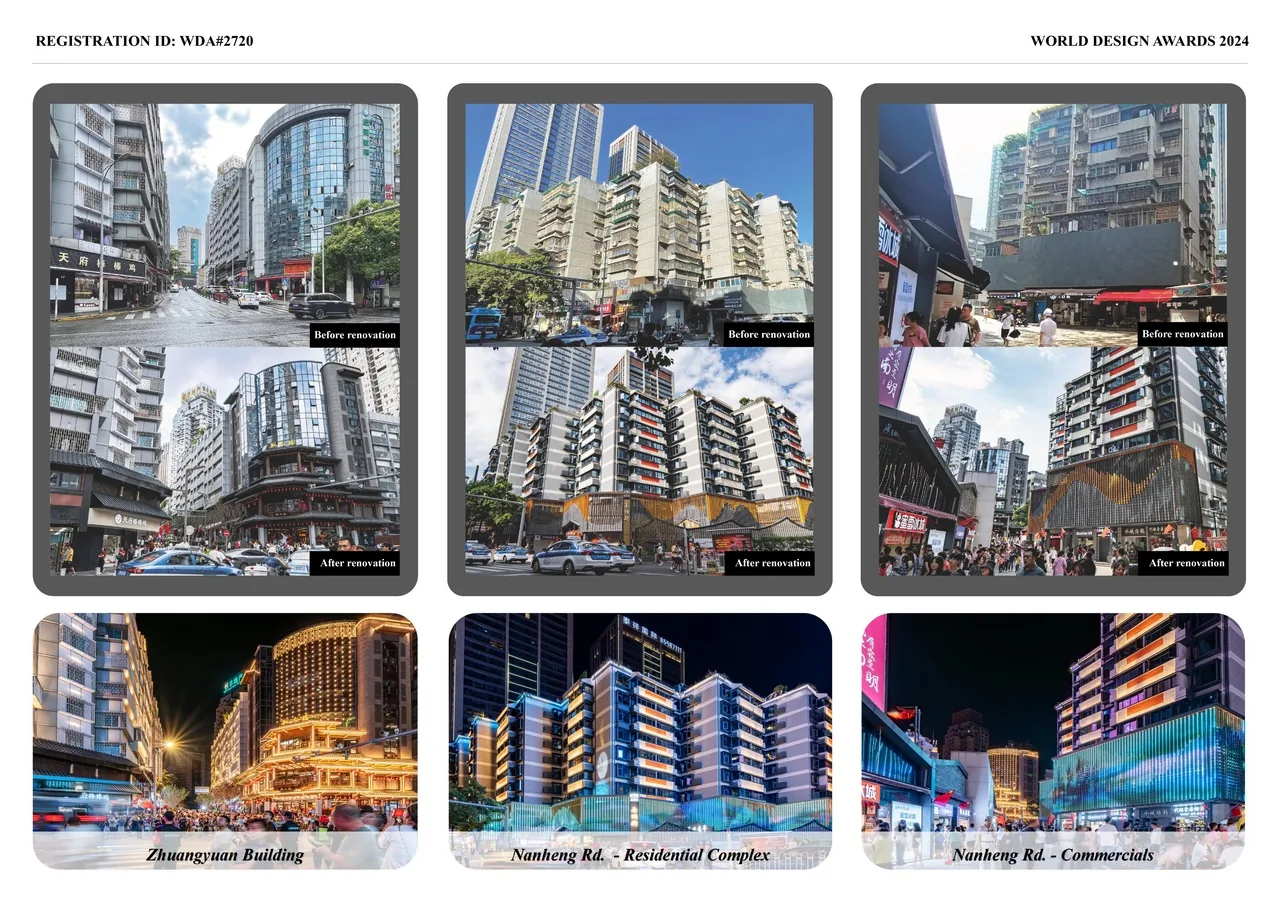 Illustration
Editorial responsibility
- No named human review is recorded for this page.
- Reports are grouped by semantic similarity and deterministic rules. Language models may assist titles, summaries, translation and cross-source analysis; the page reads the event directly, while its address stays stable when the title changes.
- Summary covers the current reports
Cross-source coverage
Reporting timeline
China's Natural Resources Ministry Urges Shift from Land Finance to Spatiotemporal Economy
In a press conference on September 22, 2025, China's Vice Minister of Natural Resources, Zhuang Shaoqin, announced that as urban and rural development enters a stock-based phase, territorial spatial planning must create new growth space from existing stock. He stated that the development driver should shift from the traditional 'land finance' model to a high-quality 'spatiotemporal economy.' Zhuang emphasized that during the '15th Five-Year Plan' period, new construction land supply is sufficient, but the key is to allocate and use spatial resources effectively. The ministry will accelerate the release of an optimized main functional zone implementation plan, leverage the spatial overlay effects of major strategies, and strengthen the guiding role of territorial spatial planning over special plans. Vice Minister Zhang Wentong added that land use will transition from one-time transfers to long-term asset operations, with resource value realization shifting from current income to current income plus long-term operational income. The government aims to combine an effective market with a capable government, coordinate spatial planning with land policies, and build a richer policy system to revitalize existing stock, injecting new momentum into urban renewal.
Read sourceChina's Natural Resources Ministry Urges Shift from Land Finance to Spatiotemporal Economy
In a press conference on September 22, 2026, China's Ministry of Natural Resources outlined a strategic shift away from 'land finance' (relying on land sales for revenue) toward a 'spatiotemporal economy' as the country enters a phase of stock-based urban development. Vice Minister Zhuang Shaoqin stated that the ministry is reforming spatial planning to promote intensive, green, and high-quality development. New policies and standards are being introduced to support urban renewal, rural revitalization, and industrial development by leveraging local resources, revitalizing existing assets, and optimizing functional structures. Vice Minister Zhang Wentong emphasized the critical synergy between planning and land policies. Key measures include: planning coordination to optimize land use and increase compatibility; land policy reforms to reduce acquisition costs through flexible payment schedules and transitional use policies; and improved resource allocation through tiered property rights and combined supply mechanisms. The goal is to transform development momentum from selling land to managing existing resources, generating both current and expected operational income.
Read sourceChina's Natural Resources Ministry to Shift Development from Land Finance to Spatiotemporal Economy
On September 22, China's State Council Information Office held a press conference on the '15th Five-Year Plan' period, where Natural Resources Ministry officials outlined a major policy shift. Vice Minister Zhuang Shaoqin announced that the ministry is introducing new planning policies and standards to support urban renewal, rural revitalization, and industrial development. These policies aim to create more dynamic innovative industrial communities, business communities, and high-quality community living circles, transitioning the development driver from the traditional 'land finance' model to a 'spatiotemporal economy.' Vice Minister Zhang Wentong elaborated on measures to revitalize存量 (existing stock) land, including planning coordination, land policy optimization to reduce acquisition costs, and improved resource allocation through market mechanisms. The officials emphasized that China's urban and rural development has entered a stage dominated by存量 (existing stock), requiring institutional innovation to shift from incremental expansion to quality improvement. Key measures include strengthening spatial coordination, establishing annual implementation review mechanisms, and accelerating legislation for the territorial space planning law.
Read sourceShow 5 older updatesHide older updates
China's Natural Resources Ministry Shifts Land Reserve Policy to Combine Current and Future Returns
In a September 22 press conference, China's Vice Minister of Natural Resources Zhang Wentong outlined a strategic shift in land resource management for the 15th Five-Year Plan period. The ministry is moving from large-scale expansion to stock land revitalization, from resource transfer to resource operation, and from pursuing immediate land transfer income to combining current realization with long-term operational value. Zhang emphasized the synergy between planning and land policies, using Shougang Park in Beijing as an example of successful urban renewal through planning optimization and mixed-use development. Key measures include: planning coordination with enhanced land-use compatibility, optimized land policies to reduce upfront costs (including flexible payment schedules and transition policies), and improved resource allocation through tiered rights and combined supply mechanisms. The land reserve system will shift to a demand-based model ("以需定储、以需定供"), pursuing a combination of current revenue and expected operational income. The approach aims to create a virtuous cycle of planning optimization for value appreciation, policy cost control, and configuration combination for operational promotion, ultimately supporting urban renewal while maintaining public interest and socialist public ownership.
Read sourceChina's Natural Resources Ministry Urges Shift from Land Finance to Spatiotemporal Economy
On September 22, China's Vice Minister of Natural Resources, Zhuang Shaoqin, announced at a State Council Information Office press conference that the ministry is introducing a series of new planning policies and standards to support urban renewal, rural revitalization, and industrial development. These policies aim to expand value space through dimensions such as safe, coordinated, intensive, distinctive, and shared development. The ministry encourages local governments to tap into characteristic resources, revitalize存量 assets, and optimize functional structures to create more vibrant innovative industrial communities, business communities, and high-quality community living circles. The ultimate goal is to shift the driving force of local development from the traditional 'land finance' model to a 'spatiotemporal economy' model, representing a significant strategic adjustment in China's approach to economic growth and land use.
China's Natural Resources Ministry Urges Shift from Land Finance to Spatial Economy
On September 22, at a State Council Information Office press conference, Zhuang Shaoqin, Vice Minister of China's Ministry of Natural Resources, announced that the ministry is integrating the 'multiple-plan-into-one' reform with planning and resource asset management reforms. It will issue a series of new policies and standards to support urban renewal, rural revitalization, and industrial development. The policies aim to expand value space from dimensions including safe, coordinated, intensive, distinctive, and shared development. The ministry is guiding local governments to tap into distinctive resources, revitalize existing assets, and optimize functional structures to create more vibrant innovative industrial communities, business communities, and high-quality community living circles. The stated goal is to shift the driving force of local development from the traditional 'land finance' model to a 'spatial economy' model.
Read sourceChina's Natural Resources Ministry Urges Shift from Land Finance to Spatiotemporal Economy
On September 22, at a State Council Information Office press conference, China's Vice Minister of Natural Resources, Zhuang Shaoqin, announced that the ministry is integrating reforms to the 'multiple-plan integration' system with strengthened planning and resource asset management. The goal is to introduce new planning policies and standards supporting urban renewal, rural revitalization, and industrial development. These policies aim to expand value space through dimensions such as safe, coordinated, intensive, distinctive, and shared development. The ministry encourages local governments to tap into unique resources, revitalize existing assets, and optimize functional structures to create innovative industrial and business communities and high-quality community living circles. This initiative is designed to shift the driving force of local development from the traditional 'land finance' model to a 'spatiotemporal economy'.
Read sourceChina's Natural Resources Ministry Urges Shift from Land Finance to Spatiotemporal Economy
On September 22, China's Vice Minister of Natural Resources, Zhuang Shaoqin, announced at a State Council Information Office press conference that the ministry is promoting a shift in local development drivers from 'land finance' to a 'spatiotemporal economy.' This initiative is part of deepening the 'multiple-plan integration' reform, particularly by strengthening the integration of planning and resource asset management reforms. The ministry is introducing new planning policies and standards to support urban renewal, rural revitalization, and industrial development. These policies aim to expand value space from dimensions including safe, coordinated, intensive, distinctive, and shared development. The goal is to guide local governments in exploiting unique resources, revitalizing existing assets, and optimizing functional structures to create more vibrant, innovative industrial and business communities, as well as high-quality community living circles.
Read source