China Carbon Market Expansion Accelerates; Financial Support for Green Asset Revaluation
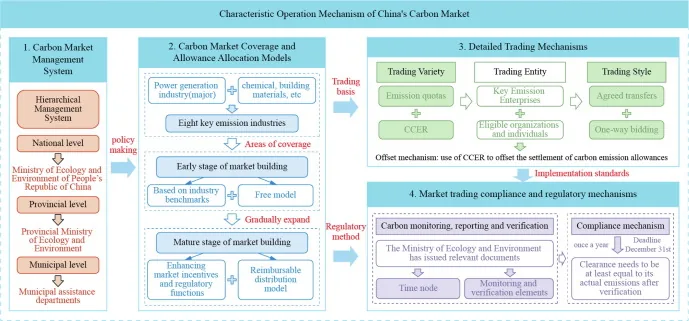
China’s national carbon market reached record trading volumes in 2025, with 2.35 billion tonnes of allowances traded, up 24.36% year-on-year. The market expanded to cover power, steel, cement, and aluminum sectors, encompassing 3,680 entities by 2026. The 2026 National Carbon Market Development Report outlines plans to include petrochemicals, chemicals, paper, and aviation by 2027. Carbon prices rose to 97.90 yuan/tonne by August 2026. The People’s Bank of China and Ministry of Ecology and Environment are promoting carbon pledge and repurchase systems to boost financial support.
 Reference image
Editorial responsibility
- No named human review is recorded for this page.
- Reports are grouped by semantic similarity and deterministic rules. Language models may assist titles, summaries, translation and cross-source analysis; the page reads the event directly, while its address stays stable when the title changes.
- Summary covers the current reports
Cross-source coverage
Reporting timeline
China Carbon Market Report Released; Financial Support Role Expected to Grow
The 2026 National Carbon Market Development Report, released at the 2026 China Carbon Market Conference, details significant progress in China's carbon trading systems. In 2025, the national carbon emissions trading market saw record volumes, with 2.35 billion tonnes of allowances traded (up 24.36% year-on-year) and a total value of 146.30 billion yuan. The market expanded to cover power, steel, cement, and aluminum sectors, encompassing 3,378 entities. The voluntary emission reduction market also grew, with 884.41 million tonnes of certified reductions traded. Carbon prices rose steadily, reaching 97.90 yuan/tonne by August 2026. The report outlines plans to further expand coverage to petrochemicals, chemicals, paper, and aviation by 2027, and to establish a comprehensive carbon pricing mechanism by 2030. The People's Bank of China indicated ongoing research into financial support mechanisms for the carbon market, including carbon pledges and repurchase agreements. The report's authors from Shanghai Securities believe that as carbon allowance ownership becomes clearer and regulations strengthen, financial support for the carbon market will continue to increase, improving asset quality for emission-reducing enterprises and enriching green financial assets.
Read sourceChina Carbon Market Expansion Accelerates; Financial Support for Green Asset Revaluation Grows
Data shows that in 2025, China's national carbon market quota trading volume reached 2.35 billion tons, a year-on-year increase of 24.36%, setting a historical record. In the first eight months of 2026, trading volume and turnover increased by 46.53% and 67.64% respectively year-on-year. The quota closing price rose to 97.90 yuan per ton, up 31.18% from the end of 2025. The number of key emitting entities reached 3,680 in 2026, covering over 65% of national carbon emissions. A recent institutional research report indicates that the 'National Carbon Market Development Report (2026)' has included petrochemical, chemical, paper, and civil aviation industries in preparatory work, with expectations that by 2027, the market will cover most major industrial emission sectors. The report argues that the carbon market is moving from price discovery to asset pricing, and the clarification of carbon quota ownership and the advancement of paid allocation will improve the asset quality of emission-reducing enterprises and reduce transition risks. The report also notes that financial support for carbon market construction will continue to be significant. The People's Bank of China and the Ministry of Ecology and Environment are promoting the implementation of carbon pledge and carbon repurchase systems, with banks and securities firms potentially entering the market as non-compliance entities. The accelerated development of green financial products is expected to bring incremental business and valuation restructuring opportunities for related listed companies.
China Carbon Market Expansion Accelerates as Financial Support Boosts Green Asset Revaluation
Data shows China's national carbon market quota volume reached 2.35 billion tons in 2025, up 24.36% year-on-year, a record high. In the first eight months of 2026, volume and turnover increased by 46.53% and 67.64% respectively. The quota closing price rose to 97.90 yuan per ton, up 31.18% from end-2025. Coverage expanded to 3,680 key emitting entities in 2026, covering over 65% of national carbon emissions. A recent institutional research report citing the 'National Carbon Market Development Report (2026)' indicates that sectors including petrochemicals, chemicals, papermaking, and civil aviation are being prepared for inclusion, with the market expected to cover major industrial emitting sectors by 2027. The report argues the carbon market is transitioning from price discovery to asset pricing, and that clearer carbon quota ownership and the advancement of paid allocation will improve asset quality for emission-reducing enterprises and lower transition risks. The report also notes that financial support for carbon market construction will continue to strengthen, with the central bank and the Ministry of Ecology and Environment promoting carbon pledge and carbon repurchase systems, potentially allowing non-compliance entities like banks and securities firms to enter the market. Accelerated development of green financial products is expected to bring incremental business and valuation restructuring opportunities for listed companies.
Show 2 older updatesHide older updates
China Carbon Market Expansion Accelerates as Financial Support Boosts Green Asset Revaluation
Data shows China's national carbon market quota volume reached 235 million tons in 2025, up 24.36% year-on-year, a record high. In the first eight months of 2026, volume and value rose 46.53% and 67.64% respectively. The quota closing price hit 97.90 yuan/ton, up 31.18% from end-2025. Coverage expanded to 3,680 key emitting entities, covering over 65% of national carbon emissions. A recent institutional research report citing the 'National Carbon Market Development Report (2026)' indicates that sectors including petrochemicals, chemicals, papermaking, and civil aviation are being prepared for inclusion, with coverage expected to cover major industrial emitting sectors by 2027. The report argues the carbon market is transitioning from price discovery to asset pricing, with clearer carbon quota ownership and the push for paid allocation expected to improve asset quality for emission-reducing enterprises and lower transition risks. Financial support for the carbon market is set to increase, with the People's Bank of China and the Ministry of Ecology and Environment promoting carbon pledge and carbon repurchase systems, potentially allowing banks and securities firms to enter the market as non-compliance entities. Accelerated development of green financial products is expected to bring incremental business and valuation restructuring opportunities for listed companies.
China Carbon Market Expansion Accelerates; Financial Support for Green Asset Revaluation
Data shows China's national carbon market quota volume reached 2.35 billion tons in 2025, up 24.36% year-on-year, a record high. In the first eight months of 2026, volume and value increased by 46.53% and 67.64% respectively. The quota closing price rose to 97.90 yuan per ton, up 31.18% from end-2025. Coverage has expanded to 3,680 key emitting entities, covering over 65% of national carbon emissions. A recent institutional research report citing the 'National Carbon Market Development Report (2026)' indicates that industries including petrochemicals, chemicals, papermaking, and civil aviation are being prepared for inclusion, with coverage expected to cover major industrial emitting sectors by 2027. The report argues the carbon market is moving from price discovery to asset pricing, and that clarified quota ownership and the advancement of paid allocation will improve asset quality for emission-reducing enterprises and lower transition risks. The report also notes that financial support for carbon market construction will continue to grow, with the People's Bank of China and the Ministry of Ecology and Environment promoting carbon pledge and carbon repurchase systems, potentially allowing non-compliance entities like banks and securities firms to enter the market. Accelerated development of green financial products is expected to bring incremental business and valuation restructuring opportunities for listed companies.