AI-driven job displacement threatens tax bases, raising fiscal risks in Germany, US, Japan
A China Merchants Securities research report published September 24, 2026, warns that AI is weakening labor tax bases through job displacement and wage polarization, citing over 100,000 US layoff announcements citing AI from January to August 2026. Germany, the US, and Japan face the highest overall tax risk exposure across four metrics. The report recommends optimizing existing tax rules over introducing a "robot tax," but does not rule out new taxes in fiscally strained countries.
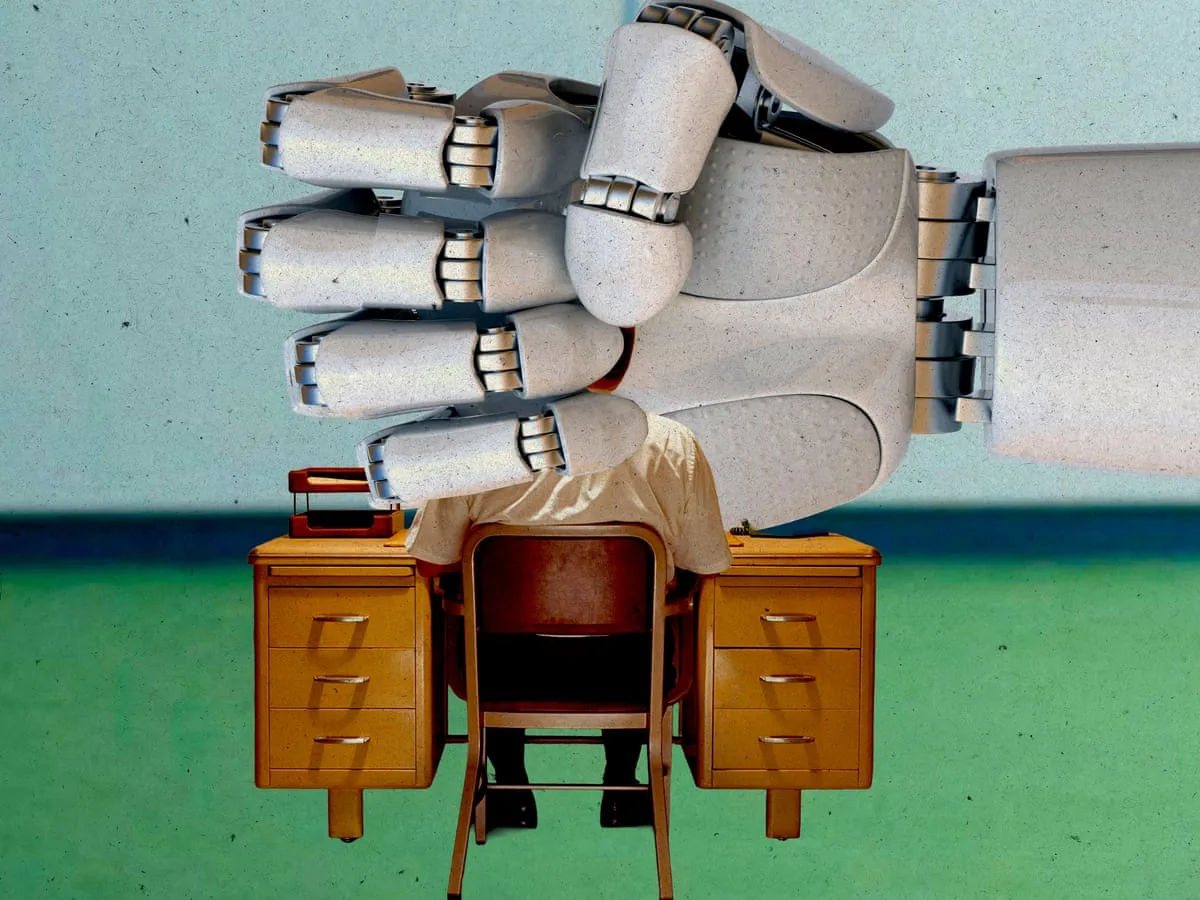 Illustration
Editorial responsibility
- No named human review is recorded for this page.
- Reports are grouped by semantic similarity and deterministic rules. Language models may assist titles, summaries, translation and cross-source analysis; the page reads the event directly, while its address stays stable when the title changes.
- Summary covers the current reports
Cross-source coverage
Common ground
- AI is disrupting tax systems built on labor income, especially in countries like Germany, the US, and Japan.
- Emerging economies face smaller immediate fiscal impacts from AI due to less dependency on labor taxation.
- The Global South has more economic and technological options today than 20 years ago, thanks to new institutions like the AIIB and BRICS bank.
- Neither the Western nor the Chinese model fully addresses democratic control over AI for working people.
Points of contention
- Whether Chinese investment in the Global South is a form of neocolonial extraction or a sovereignty-respecting alternative to Western capital.
- Whether emerging economies have resilient tax systems or just different fragilities like regressive taxes and informal labor.
- Whether the multipolar world gives real power to working people or just shifts control between elites.
- Whether democratic ownership of AI is a practical goal or a luxury belief for developing nations facing urgent needs.
Blind spots
- Both sides overlook the lack of democratic input from local communities and workers in AI deployment decisions.
- The debate ignores how AI might bypass entire sectors in the Global South, like customer service and data entry, without creating new opportunities.
- Neither side fully addresses the human cost of youth unemployment in countries like Egypt and Pakistan, beyond fiscal projections.
- The discussion assumes technology transfer is always beneficial, without questioning who controls data, patents, and profits.
WorldAttention’s read
The roundtable revealed a deep split between those who see Chinese-led multipolarity as a genuine improvement over Western dominance and those who view it as a new form of extraction. Both sides agree that AI is upending old tax systems and that the Global South has more options than before, but they clash over whether those options truly empower working people. The blind spots are clear: neither model prioritizes democratic control from below, and both ignore the immediate survival needs of communities whose jobs and data are being automated. The real challenge is not choosing between Western and Chinese approaches, but building systems where people have a real say in how AI transforms their lives—something neither side has yet achieved.
Reporting timeline
AI's Impact on Tax Systems: Germany, US, Japan Face Highest Risk, Says China Merchants Securities
A research report by China Merchants Securities macro analysts, published on September 24, 2026, examines how artificial intelligence will disrupt modern tax systems. The report argues that AI's primary impact is on labor tax bases through job displacement and wage polarization, citing US data showing 0.18-0.34 percentage point employment ratio decline per robot per 1,000 workers. It also notes AI weakens capital tax bases via valuation and depreciation challenges, and indirectly erodes consumption tax bases by compressing household income. Using four metrics—AI exposure, labor share, labor tax dependency, and fiscal vulnerability—the report ranks Germany, the US, and Japan as having the highest overall tax risk exposure, with Sweden, Finland, France, and Canada at elevated levels. Emerging economies face smaller impacts. The report recommends rule optimization within existing tax frameworks, such as the EU's 15% global minimum effective tax, over introducing new taxes like a 'robot tax,' though it does not rule out new taxes in fiscally strained countries like the US or Europe. Historical precedent shows tax reform response times have shortened from 80 years to about 10 years across industrial revolutions.
Read sourceAI Impact on Labor Tax Base Intensifies Fiscal Pressure in Germany, US, Japan
A recent institutional research report indicates that the core impact of AI on taxation is the weakening of the labor tax base, both by replacing jobs and reducing the employed population ratio, and by widening wage disparities to undermine the base for personal income tax and social security contributions. Data shows that over 20% of layoff announcements in the US from January to August 2026 cited AI factors, totaling over 100,000 cases. Germany, the US, and Japan rank among the highest globally in comprehensive risk exposure across four indicators: AI exposure, labor share, labor tax dependence, and fiscal vulnerability. Japan faces high gross debt ratios and old-age dependency, the US has a widening federal deficit, and Germany's labor market is heavily reliant on wage taxes. The report suggests a more realistic response is to optimize rules within the existing tax framework, such as implementing a 15% global minimum tax and strengthening digital service tax collection, rather than hastily introducing a 'robot tax'. It notes that emerging markets face a milder impact due to low AI readiness and a small share of high-exposure jobs. For capital markets, fiscal pressure may accelerate tax hike expectations in Germany, the US, and Japan, particularly benefiting tech companies with cross-border tax compliance capabilities and government IT service experience.
AI Impact on Labor Tax Base Intensifies Fiscal Pressure in Germany, US, Japan
A recent institutional research report indicates that the core impact of AI on taxation is the weakening of the labor tax base, both by replacing jobs and reducing the employed population, and by widening wage differentiation, which undermines the base for individual income tax and social security contributions. Data shows that over 20% of US layoff announcements from January to August 2026 cited AI factors, totaling more than 100,000 cases. Germany, the US, and Japan have the highest comprehensive risk exposure globally across four indicators: AI exposure, labor share, labor tax dependence, and fiscal vulnerability. Japan faces a dual burden of high gross debt ratio and old-age dependency ratio, the US federal deficit continues to expand, and Germany's labor market is highly dependent on wage taxes. The report suggests a more realistic response is to optimize rules within the existing tax framework, such as implementing a 15% global minimum tax and strengthening digital service tax collection, rather than hastily introducing a 'robot tax'. It notes that emerging markets face a milder impact due to low AI readiness and a small share of high-exposure jobs. For capital markets, fiscal pressure may accelerate tax hike expectations in Germany, the US, and Japan, particularly benefiting tech companies with cross-border tax compliance capabilities and government IT service experience.
Show 2 older updatesHide older updates
AI Impact on Labor Tax Base Intensifies Fiscal Pressure in Germany, US, Japan
A recent institutional research report indicates that the core impact of AI on taxation is the weakening of the labor tax base, both by replacing jobs and reducing the employed population, and by widening wage disparities, which undermines the base for personal income tax and social security contributions. Data shows that over 20% of US layoff announcements from January to August 2026 cited AI factors, totaling over 100,000 cases. The report identifies Germany, the US, and Japan as having the highest comprehensive risk exposure globally across four indicators: AI exposure, labor share, labor tax dependence, and fiscal vulnerability. Japan faces high debt and old-age dependency ratios, the US has a widening federal deficit, and Germany's labor market is heavily reliant on wage taxes. The report suggests that a more realistic response is to optimize rules within the existing tax framework, such as implementing a 15% global minimum tax and strengthening digital service tax collection, rather than hastily introducing a 'robot tax'. It notes that emerging markets face a milder impact due to low AI readiness and a small share of high-exposure jobs. For capital markets, fiscal pressure may accelerate tax hike expectations in Germany, the US, and Japan, particularly benefiting tech companies with cross-border tax compliance capabilities and government IT service experience.
AI Impact on Labor Tax Base Intensifies Fiscal Pressure in Germany, US, Japan
A research report cited by Chinese financial media cfi.cn on September 24, 2026, warns that AI is weakening labor tax bases in developed economies, exacerbating fiscal pressures in Germany, the United States, and Japan. Data shows that over 20% of US layoff announcements from January to August 2026 mentioned AI, totaling over 100,000 cases. The report identifies Germany, the US, and Japan as having the highest comprehensive risk exposure across four indicators: AI exposure, labor share, labor tax dependence, and fiscal vulnerability. Japan faces high debt and old-age dependency ratios, the US has a widening federal deficit, and Germany's labor market relies heavily on wage taxes. The report argues that AI's core tax impact is weakening the labor tax base by replacing jobs and widening wage disparities, which erodes income tax and social security contributions. It recommends optimizing existing tax rules, such as implementing a 15% global minimum tax and strengthening digital service tax collection, rather than hastily introducing a 'robot tax'. The report notes that emerging markets face a milder impact due to lower AI readiness. For capital markets, fiscal pressure may accelerate tax hike expectations in these countries, benefiting tech firms with cross-border tax compliance and government IT service experience.